
Brent crude futures, the international benchmark for oil prices, experienced significant volatility in recent trading sessions, illustrating the profound instability gripping global energy markets. After briefly soaring towards the critical $110 per barrel mark in overnight trading, prices sharply retreated by 3.5%, settling around the $103 handle by early trading hours (6 a.m. ET). This swift reversal was primarily triggered by stark warnings from the International Energy Agency (IEA), which cautioned that the relentless surge in fuel costs could precipitate widespread global demand destruction, a scenario where high prices choke off consumption, potentially leading to an economic slowdown.
Despite this intra-day dip, Brent crude remains on track for its most substantial weekly gain since July, underscoring the powerful underlying bullish pressures. The year-to-date trajectory for oil prices has been nothing short of dramatic, with an increase exceeding 70%. This steep ascent is a confluence of multifaceted and intensifying geopolitical risks, persistent supply chain disruptions, and shifting demand dynamics. Key among these factors are the escalating tensions in the Middle East, particularly the ongoing disruptions around the strategically vital Strait of Hormuz, a critical chokepoint for a significant portion of the world’s oil supply. Furthermore, a wave of energy infrastructure attacks, spanning from the Gulf region to the active conflict zones in the Russia-Ukraine theater, continues to erode supply confidence. Compounding these supply-side anxieties is a renewed and robust buying spree from China, which is actively securing crude from diverse global markets, thereby bidding up local prices and intensifying competition for available barrels.
Escalating Geopolitical Flashpoints in the Middle East
The Middle East remains a powder keg, with the potential for regional conflicts to ignite a broader crisis that could severely impact global energy flows. RBC Capital Markets analyst Helima Croft articulated this concern, stating in a recent note, "A resumption of a full-blown Saudi-Houthi war would be a potential catalyst for our high oil price scenario coming to fruition." This assessment highlights the precarious balance in a region where existing conflicts have already had a tangible impact on oil infrastructure and shipping lanes.
The overnight news cycle brought alarming reports from the ongoing conflict in Yemen. Iran-backed Houthi rebels claimed responsibility for an attack on Saudi Arabia’s East-West pipeline. This critical pipeline is designed to transport crude oil from the Kingdom’s eastern fields to an export terminal on the Red Sea, effectively bypassing the Strait of Hormuz. Such an attack, if confirmed to have caused significant disruption, carries immense strategic implications as it targets a vital alternative export route, increasing the vulnerability of Saudi oil shipments.
Adding to the regional instability, reports also indicated that Houthi forces have made significant advances towards coastal areas bordering the strategic Bab al-Mandeb Strait. Their push to seize Mokha, located near the southern end of the Red Sea, is particularly concerning. The Bab al-Mandeb Strait is another critical maritime chokepoint, funneling vast amounts of oil and gas from the Middle East to Europe and North America. Control or significant disruption of this strait would have profound consequences for global shipping and energy security, potentially exacerbating supply bottlenecks and driving prices even higher.
A recent incident, widely circulated on social media, dramatically illustrated the scale of these attacks. Satellite imagery captured smoke plumes stretching more than 100 kilometers across the Saudi desert, visible even from a global view of Earth. This visual evidence underscored the severity of the damage and the potential for large-scale disruptions to energy infrastructure.

The broader Gulf crisis shows no signs of abating. In a week marked by heightened tensions, US forces reportedly engaged and neutralized several Iranian tankers, signaling a firm stance against perceived threats to international shipping. In response, Tehran issued warnings of further escalation, raising fears of a dangerous tit-for-tat dynamic that could spiral into a wider regional conflict. The Persian Gulf and its surrounding waterways are indispensable for global energy trade, and any significant military confrontation there would send shockwaves through the world economy.
Diminishing Supply and Production Constraints
Compounding the geopolitical risks are concrete challenges to global oil supply. Fresh data delivered more unwelcome news for global energy markets: Saudi Arabia’s oil production experienced another decline last month, reaching its lowest level since 1990. This significant drop from the world’s second-largest oil producer is a critical factor in the tightening supply narrative.
A chart from Javier Blas, a prominent commodities expert, visually underscored the predicament. It revealed that both Saudi Arabia and Russia—the world’s second and third top oil producers, respectively—suffered substantial output drops in August. According to IEA data, combined, Riyadh and Moscow pumped approximately 5.5 million barrels per day less than they did in January. This aggregate decline is directly attributed to the geopolitical conflicts: the Iran crisis impacting Saudi output (possibly through indirect pressure or strategic decisions related to regional stability) and the ongoing war in Ukraine severely constraining Russian production. Such a significant reduction from two of the world’s largest suppliers is inherently inflationary and creates immense pressure on global inventories.
Capital Economics commodities expert Hamad Hussain issued a stark warning, noting that already depleted global inventories, combined with the early indications of recovering Chinese demand, render oil prices highly vulnerable to any further interruptions in Middle East flows. This fragile balance means that even minor disruptions could trigger disproportionately large price spikes, given the lack of spare capacity and strategic reserves globally.
China’s Resurgent Demand and Its Market Impact
While geopolitical tensions dominate headlines, a significant and often underestimated factor in the current oil market dynamics is the resurgence of Chinese demand. Former Goldman Sachs commodities chief and current Real Macro head Jeff Currie recently highlighted this during an appearance on CNBC TV. He contended that Chinese buyers are, in fact, playing a much larger role in bidding up crude prices than many realize. "Actually, I put a bigger weight on China coming back to the market," Currie stated, citing strong buying interest observed after his recent travels to Singapore and Hong Kong. This perspective suggests that while supply disruptions provide a floor for prices, a robust revival in demand from the world’s largest oil importer is providing significant upward momentum, challenging the narrative that Western demand destruction alone will tame prices. China’s economic recovery efforts, coupled with strategic stockpiling, are creating a powerful demand pull that global markets are struggling to accommodate.
The Looming Diesel Crisis: A More Consequential Threat
Beyond the headline figures for crude oil, a more insidious and potentially far-reaching crisis is unfolding: a severe global shortage of diesel. While crude oil is the raw material, it is refined products like diesel that literally fuel the global economy, powering transportation, agriculture, industrial machinery, and critical infrastructure. The current scarcity and escalating cost of diesel pose a more immediate and consequential threat to economic stability than crude oil prices alone.
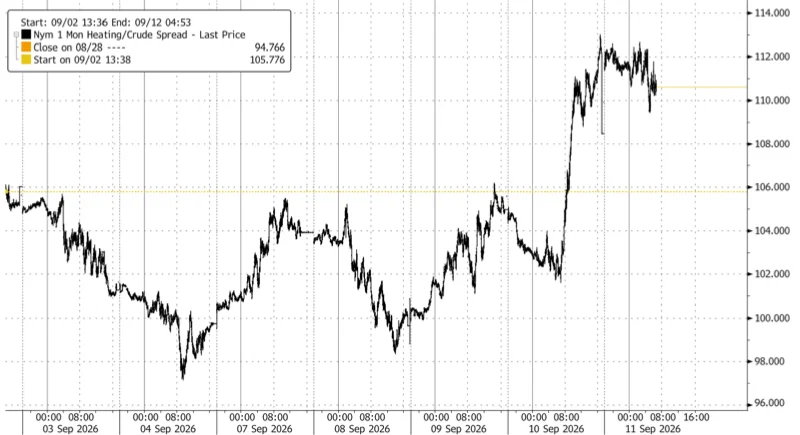
The US diesel crack spread, a key indicator of refining margins for diesel and a proxy for its scarcity, is currently trading around an astonishing $110 a barrel. This figure represents the premium refiners can earn by converting crude oil into diesel, and such a high spread signals extreme tightness in the market. The repercussions are already being felt at the pump. Average prices for industrial fuel in the US have reached a record high of $6 per gallon. In some particularly strained regions, such as parts of California, prices at individual gas stations have reportedly topped an unprecedented $9.99 per gallon.

This diesel crunch is not merely an inconvenience for consumers; it is a structural challenge with profound economic implications. Diesel is indispensable for trucking, rail transport, farming machinery, construction equipment, and backup generators. Sustained high diesel prices translate directly into higher shipping costs, increased food prices, elevated manufacturing expenses, and ultimately, broader inflationary pressures across nearly all sectors of the economy. Businesses reliant on diesel face crippling operational costs, which could lead to reduced activity, layoffs, and ultimately, slower economic growth or even recession. The IEA’s warning about demand destruction is particularly pertinent to diesel, as industries may be forced to scale back operations if fuel costs become prohibitive.
Market Reactions and Broader Economic Implications
Financial markets are reacting with palpable concern to the intertwined crises of geopolitical instability and energy scarcity. UBS analyst Justinus Steinhorst articulated this unease in a recent note: "Brent holding above $105 with Houthi/Bab al-Mandab disruptions raising fears of a double chokepoint. 10y bunds yields highest since 2009, 10y US within reach of the 5% level." This analysis connects the dots between energy market volatility and broader financial distress. Rising bond yields, particularly for benchmark sovereign debt like German Bunds and US Treasuries, indicate investors are demanding higher compensation for holding government debt, reflecting increased inflation expectations and heightened risk aversion. A 10-year US Treasury yield approaching 5% would signal a significant tightening of financial conditions, potentially impacting borrowing costs for businesses and consumers, and posing a challenge for economic growth.
The persistent inflationary pressures stemming from elevated energy prices are forcing central banks globally to maintain aggressive monetary tightening policies. Higher interest rates, while intended to curb inflation, also increase the risk of an economic downturn. The IEA’s "demand destruction" forecast is not merely an abstract concept; it is a very real possibility where consumers and businesses cut back on energy-intensive activities, leading to a deceleration of economic activity. This creates a challenging dilemma for policymakers, who must balance the need to tame inflation with the risk of triggering a recession.
Diplomatic Overtures Amidst Rising Tensions
Amidst this landscape of escalating tensions and economic uncertainty, there is a glimmer of potential diplomatic progress from the Gulf. Bloomberg reported that the six-member bloc of Gulf states is reportedly considering a meeting with Iranian officials next week. The primary agenda for these discussions would be the stability of the Strait of Hormuz, the critical waterway at the heart of much of the current geopolitical concern.
Such a meeting, if it materializes and yields constructive dialogue, could offer a much-needed de-escalation pathway. The Strait of Hormuz is not only vital for oil exports but also crucial for regional trade and stability. Any diplomatic initiative that aims to reduce tensions and ensure the free flow of shipping through this chokepoint would be welcomed by global markets. However, the deeply entrenched animosities and complex geopolitical rivalries in the region mean that any progress would likely be incremental and fragile. The success of such talks would hinge on the willingness of all parties to prioritize regional stability and economic imperatives over entrenched political differences.
In conclusion, the global energy landscape is navigating a treacherous path, marked by a volatile Brent crude market, the ever-present threat of geopolitical escalation in the Middle East, dwindling global inventories, and the pressing, multifaceted crisis of a global diesel shortage. The confluence of these factors not only threatens to keep energy prices elevated but also carries the potential for significant economic headwinds, making sustained diplomatic efforts and prudent energy policy more critical than ever. The world watches closely as these complex dynamics unfold, with profound implications for global trade, economic growth, and international stability.

