
The Iranian ballistic missile attack on an American base in Jordan this week ranks as one of the single biggest missile volleys sent over Jordan since the start of the US-led war, causing substantial material damage to critical US military assets and prompting renewed concerns over regional stability and the efficacy of advanced air defense systems. The meticulously orchestrated strike, which unfolded from Tuesday night into Wednesday, specifically targeted Muwaffaq Salti Air Base, a strategically vital installation for US operations in the Middle East. Initial reports and widely circulated social media videos, some authenticated by reputable outlets like Dropsite News, appeared to show multiple direct impacts on the base, challenging initial assessments that sought to downplay the severity of the incident.
Chronology of the Attack and Initial Responses
The assault commenced under the cover of darkness, with Iranian ballistic missiles traversing Jordanian airspace before impacting Muwaffaq Salti Air Base. This timing is often chosen for such operations to maximize surprise and potentially complicate defensive responses. Following the strikes, US Central Command (CENTCOM) was swift to issue a preliminary statement, indicating that all troops were accounted for but notably omitting any immediate disclosure regarding potential casualties. This initial communication strategy is often employed in the immediate aftermath of such incidents to manage public perception and gather definitive information.
However, as the situation evolved, the Pentagon provided further updates, confirming that no fatalities resulted from the strikes on the Jordanian base. Concurrently, it was revealed that over 30 Patriot missiles, a cornerstone of US and allied air defense capabilities, were deployed as an aerial defensive measure during the attack. Despite this robust defensive effort, the Pentagon, while initially remaining guarded on specifics, later acknowledged "light material damage" at the base. This acknowledgment, though understated, hinted at a more significant impact than initially conveyed.
Unveiling the Extent of Damage
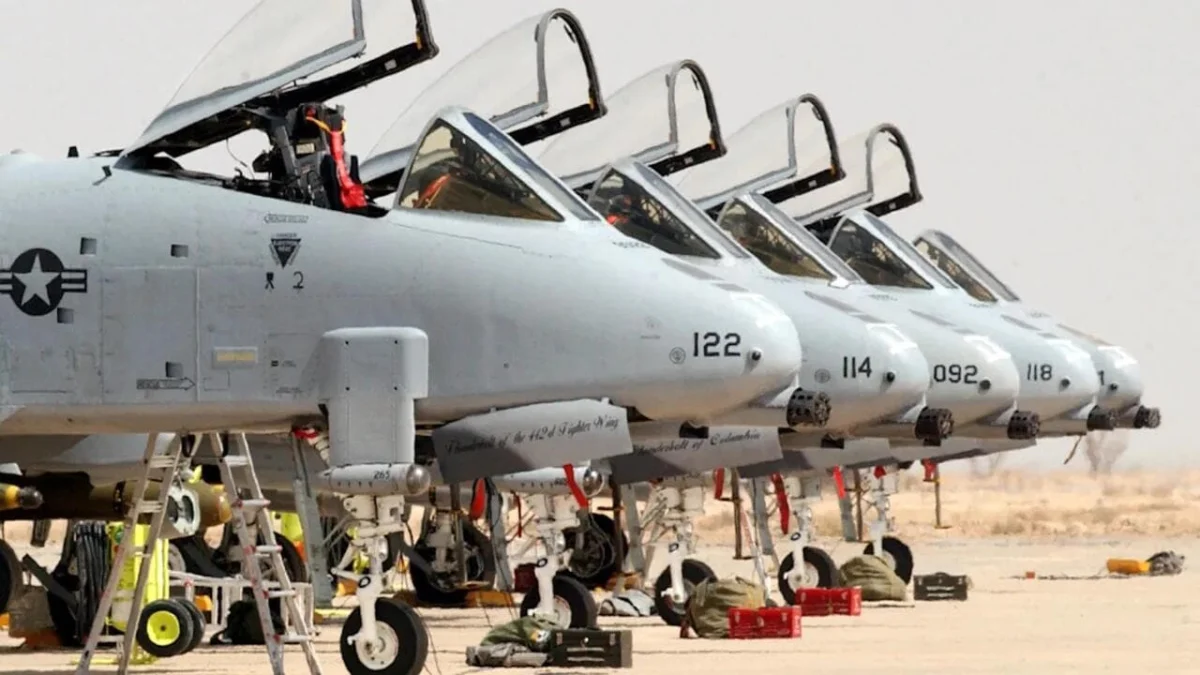
The full scope of the material damage began to emerge through subsequent reporting. CBS News, citing anonymous defense officials with direct knowledge of the matter, provided a more granular account of the destruction. According to their investigation, multiple American military aircraft sustained damage in the Iranian strikes. Most notably, one A-10 Thunderbolt, an attack aircraft colloquially known as the "Warthog" for its rugged design and formidable close air support capabilities, was directly struck and reportedly lost a wing, rendering it "out of commission." This incident represents a significant loss of a specialized combat asset.
Furthermore, the CBS report indicated that approximately eight F-15 fighter jets, versatile multirole combat aircraft crucial for air superiority and ground attack missions, sustained "light damage." While these F-15s were reportedly put back into service, the fact that multiple advanced aircraft were hit underscores the penetration achieved by the Iranian missiles. The extent of repairs required for these aircraft, even for "light damage," can range from minor maintenance to more complex structural work, potentially impacting operational readiness in the short term. The implications of these reports are stark: despite the launch of dozens of Patriot interceptors, a considerable number of Iranian missiles successfully bypassed the aerial defenses and inflicted direct hits on high-value military assets.
Further unconfirmed video evidence circulating on social media, shared by accounts like Ali BKK, purportedly showed the US Army transferring Black Hawk helicopters from Muwaffaq Salti Air Base, including some described as "damaged helicopters." While these specific videos have not been independently verified, they add to the growing narrative of widespread damage beyond fixed-wing combat aircraft, potentially extending to rotary-wing assets and other support infrastructure.
The Role and Limitations of Patriot Missiles
The deployment of over 30 Patriot missiles highlights the advanced nature of the air defense response, yet the damage sustained raises critical questions about the system’s effectiveness in this particular engagement. The Patriot system (MIM-104) is designed to intercept tactical ballistic missiles, cruise missiles, and advanced aircraft. It operates through a sophisticated radar that tracks incoming threats and guides interceptor missiles to engage them.
Several factors could contribute to missiles successfully penetrating a Patriot defense:

- Saturation Attack: A large volley of missiles can overwhelm even advanced air defense systems, forcing them to prioritize targets and potentially allowing some to slip through.
- Decoys and Countermeasures: Ballistic missiles can be equipped with decoys or other countermeasures designed to confuse radar and missile guidance systems.
- Trajectory and Speed: The specific flight path, speed, and maneuverability of the incoming ballistic missiles can present challenges for interception.
- System Malfunction or Human Error: While rare, technical malfunctions or human error in the heat of an attack cannot be entirely ruled out.
The fact that highly valuable aircraft like the A-10 and F-15s were damaged suggests that the incoming Iranian munitions likely possessed a degree of accuracy or were part of a sufficiently large barrage to overcome the layered defenses. This incident will undoubtedly lead to a thorough review of air defense protocols and capabilities at US installations in the region.
Muwaffaq Salti Air Base: A Strategic Hub
Muwaffaq Salti Air Base, located near Azraq in Jordan, serves as a crucial operational hub for US and allied forces in the Middle East. Its strategic location provides a forward operating base for a range of missions, including counter-terrorism operations, surveillance, and regional stability efforts. The base typically hosts various US Air Force assets, including fighter jets, attack aircraft, intelligence, surveillance, and reconnaissance (ISR) platforms, as well as logistical support aircraft. It also plays a vital role in joint training exercises with Jordanian forces, enhancing interoperability and regional security.
The targeting of such a significant base underscores Iran’s intent to demonstrate its capability to strike at US interests and assets, even in a host nation like Jordan, which is a key US ally. The choice of target communicates a clear message of escalation and a willingness to directly confront US military presence.
Iranian Context: "Debasification" and "Operation Epic Fury"
The missile strike on Muwaffaq Salti Air Base is not an isolated incident but appears to be part of a broader, more aggressive Iranian strategy. The original report mentions Iran’s "debasification campaign" and "Operation Epic Fury." While these specific terms might be internal or media-generated descriptors, they clearly refer to a concerted effort by Iran and its proxies to diminish or outright eliminate the US military presence in the Middle East.
This campaign has allegedly involved numerous attacks on US bases and personnel throughout the region, often carried out by Iranian-backed militias in Iraq, Syria, and Yemen. These attacks, ranging from rocket fire to drone strikes, aim to create an untenable security environment for US forces, pressuring Washington to withdraw. The use of ballistic missiles in Jordan represents a significant escalation in the nature and sophistication of these attacks, directly linking Iran to the use of advanced weaponry against a major US installation.
Iran’s long-standing grievance against US military presence in the Persian Gulf and broader Middle East stems from a complex history of geopolitical rivalry, perceived threats to its national security, and a desire to assert its regional hegemony. Tehran views US bases as platforms for destabilization and potential aggression against Iran, making their removal a strategic imperative.
Broader Implications and Escalation Risks
The attack on Muwaffaq Salti Air Base carries profound implications for regional security and the delicate balance of power in the Middle East:
- Escalation Cycle: A direct ballistic missile strike by Iran (or its proxies acting under its clear direction) on a US base in a sovereign nation like Jordan marks a significant escalation. It raises the specter of direct retaliation from the United States, potentially spiraling into a wider regional conflict.
- Deterrence Challenge: The successful penetration of US air defenses and the damage to high-value aircraft challenge the effectiveness of US deterrence strategy in the region. It suggests that Iran perceives a window of opportunity to strike without incurring an overwhelming response, or it is willing to risk such a response to achieve its strategic objectives.
- Force Posture Review: The incident will undoubtedly force the Pentagon to re-evaluate its force posture and defensive measures at bases across the Middle East. The original article hints at a "broad retreat of US forces from ‘frontline’ Gulf bases," suggesting that the cumulative effect of these attacks might lead to a significant reconfiguration of the US military footprint, potentially never fully reconstituted or rebuilt in some areas. This would align with Iran’s "debasification" objectives.
- Impact on Allies: The attack on a base in Jordan places immense pressure on host nations that house US forces. It forces them to weigh the benefits of US military presence against the risks of becoming direct targets in the US-Iran proxy conflict.
- Technological Implications: The successful use of ballistic missiles against an advanced air defense system will prompt intense analysis by military strategists worldwide. It could lead to a reassessment of ballistic missile defense technologies and tactics.
- Economic Consequences: An escalated conflict in the Middle East would have severe global economic consequences, particularly for energy markets, given the region’s pivotal role in oil and gas production.
The United States faces a complex dilemma. A robust response could trigger a wider conflict, while an insufficient response might be perceived as weakness, emboldening Iran and its proxies to conduct further attacks. The nature of any potential US retaliation will be carefully calibrated to deter future aggression without igniting a full-scale war.
Conclusion
The Iranian ballistic missile attack on Muwaffaq Salti Air Base represents a critical juncture in the ongoing tensions between the United States and Iran. It has demonstrated Iran’s enhanced capability to project power and inflict damage on US military assets, even in well-defended locations. The damage to multiple US military aircraft, despite significant Patriot missile deployments, underscores the evolving threat landscape and the persistent challenges of air defense against sophisticated ballistic missile attacks. As the US assesses the full implications of this strike, the imperative to re-evaluate regional force posture, strengthen deterrence, and manage the delicate balance of escalation will dominate strategic discussions, with the potential for profound and lasting impacts on the future of US engagement in the Middle East. The incident serves as a stark reminder of the volatile and unpredictable nature of the region, where proxy conflicts can rapidly escalate into direct confrontations with far-reaching consequences.

