
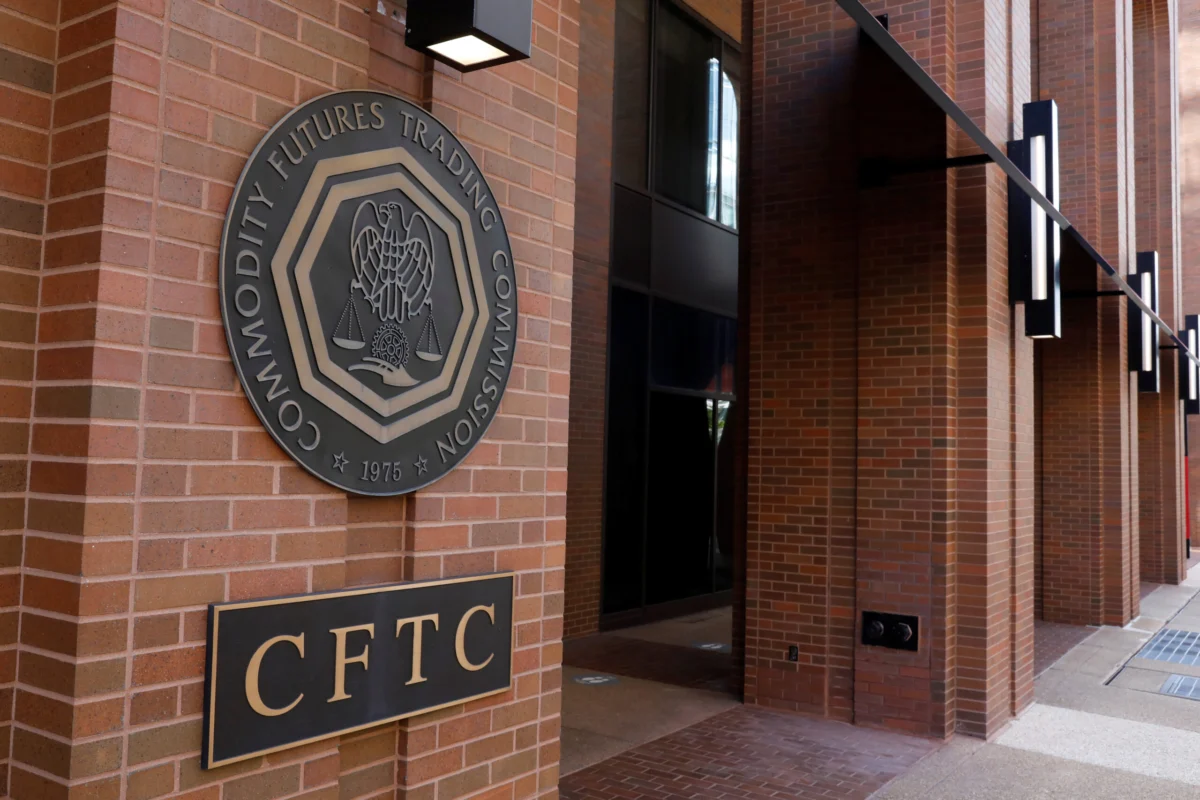
The White House has conducted thorough vetting of potential candidates for the four vacant commissioner positions at the Commodity Futures Trading Commission (CFTC), according to three individuals with direct knowledge of the matter. However, the timing and certainty of any forthcoming nominations remain conspicuously unclear, leaving a pivotal financial regulator operating with just one-fifth of its statutorily mandated leadership. This prolonged vacancy crisis has significant implications for the stability and oversight of the multi-trillion-dollar derivatives markets, as well as for the nascent but rapidly expanding cryptocurrency sector, which eagerly awaits regulatory clarity from Congress and federal agencies.
The Understaffed Watchdog: A Critical Juncture for the CFTC
The Commodity Futures Trading Commission is a vital independent agency responsible for regulating the U.S. derivatives markets, encompassing futures, options, and swaps. These markets, which facilitate risk management and price discovery across a vast array of commodities, financial instruments, and novel assets, are central to the global financial system. The CFTC’s mandate is to protect market users and the public from fraud, manipulation, and abusive practices, while also fostering open, competitive, and financially sound markets.
By statute, the CFTC is designed to operate with a bipartisan five-member commission: three commissioners, including the chair, from the political party of the sitting president, and two from the opposing party. This structure is intended to ensure diverse perspectives, robust debate, and bipartisan consensus in regulatory decision-making. However, at present, the agency is operating with only a single commissioner, Chairman Michael Selig, leaving it severely understaffed at a time of unprecedented innovation and complexity in the markets it oversees.
The ramifications of such a profound leadership deficit are far-reaching. A full commission typically votes on significant enforcement actions, proposes and finalizes new rules, approves budgets, and shapes the agency’s strategic direction. With only Chairman Selig at the helm, the agency’s ability to efficiently process critical regulatory initiatives, respond to emerging market risks, and provide comprehensive oversight is severely constrained. Decisions that would ordinarily benefit from the collective wisdom and varied legal and economic expertise of a five-member body now rest solely on one individual, raising questions about the breadth of deliberation and the potential for policy paralysis or unilateral action. The global derivatives market, a behemoth estimated to be worth hundreds of trillions of dollars in notional value, demands robust and well-resourced oversight, a standard that is increasingly difficult to meet with a largely vacant commission.
A Timeline of Political Inertia and Congressional Frustration
The current state of affairs is the culmination of months of political maneuvering and legislative gridlock. The vacancies at the CFTC are not a sudden occurrence but have progressively deepened as the terms of previous commissioners expired without new nominations.
- Early 2026: Reports from outlets like Bloomberg News surfaced, indicating that the White House was already considering a bipartisan slate of candidates for the open seats. This early stage suggested an awareness of the looming leadership gap and a potential path toward filling the positions.
- May 2026: The House Agriculture Committee, which holds jurisdiction over the CFTC in the lower chamber of Congress, publicly escalated calls for action. Chairman Rep. Glenn "GT" Thompson (R-Pa.) and Ranking Member Rep. Angie Craig (D-Minn.) jointly urged President Trump to nominate commissioners to the vacancies. This bipartisan plea underscored the growing concern within Congress about the agency’s operational capacity.
- Early July 2026: The Trump administration sent a letter to Senate leadership, attributing the delay in filling vacancies at both the CFTC and the Securities and Exchange Commission (SEC) to a perceived lack of recommendations from Democrats. This communication marked a public shift in rhetoric, placing the onus on the opposition party.
- End of July 2026: Senate Minority Leader Chuck Schumer (D-N.Y.) formally responded by sending a letter to the White House containing specific suggestions for the open Democratic slots at both key financial regulatory agencies.
- Present Day (August/September 2026): Despite Schumer’s recommendations and the White House’s reported vetting efforts, no nominations have been formally sent to the Senate for confirmation. A spokesperson for Schumer’s office confirmed that they had "done our part and sent the White House names for the Democratic vacancies on the CFTC and SEC," expressing disappointment that they had "not heard anything back from the White House." The spokesperson emphasized that if the administration had vetted candidates and was prepared to make nominations, it should "act quickly and work with Democrats." The White House, when contacted by CNBC for this story, declined to provide a comment, further obscuring the reasons behind the prolonged delay. CNBC was also unable to independently verify the specific names submitted by Schumer or whether these individuals were included in the White House’s vetting process.
The Clarity Act Conundrum: Crypto Regulation Hangs in the Balance
The urgency surrounding the CFTC vacancies is intensely amplified by the ongoing legislative efforts to pass the Clarity Act, a landmark cryptocurrency market structure proposal. This bipartisan bill aims to provide much-needed regulatory clarity for the digital asset industry by delineating the jurisdictional boundaries between the CFTC and the SEC. The cryptocurrency market, valued at over $2 trillion globally, has long grappled with a fragmented and ambiguous regulatory landscape in the United States, hindering innovation and deterring institutional investment.
The Clarity Act requires 60 votes to pass in the Senate, necessitating significant bipartisan support. Democratic lawmakers, whose votes are crucial for its passage, have voiced serious concerns about delegating substantial authority over novel digital assets to agencies that are operating with incomplete leadership. The prospect of an understaffed CFTC, and similarly, an understaffed SEC, being tasked with implementing and enforcing complex new regulations for a rapidly evolving asset class, is a significant hurdle for many Democrats. They argue that a full, bipartisan commission is essential to ensure robust, well-considered, and broadly supported regulatory frameworks for cryptocurrency.
One individual with knowledge of the White House vetting process and a Republican actively involved in drafting the Clarity Act noted that a commitment from the White House to fill the vacant CFTC seats would likely be a "key concession" necessary to secure the Democratic votes required for the bill’s passage. This linkage highlights the deep intertwining of agency appointments and legislative progress, particularly on contentious and high-stakes policy issues like cryptocurrency regulation. However, the commissioner vacancies are not the sole impediment to the Clarity Act’s advancement. Other challenges include persistent ethics concerns regarding President Donald Trump’s family’s reported interests in the cryptocurrency space, adding another layer of complexity to an already fraught legislative process.
Broader Implications and Market Uncertainty
Beyond the immediate legislative deadlock, the prolonged absence of a full CFTC commission has significant broader implications for market stability, investor protection, and the agency’s standing.
- Regulatory Uncertainty: The lack of a full commission exacerbates regulatory uncertainty across all markets the CFTC oversees. This is particularly acute in emerging sectors like cryptocurrency and prediction markets, where the agency, under Chairman Selig, has taken an aggressive stance in asserting its jurisdiction and pursuing enforcement actions. While Selig has been proactive, a multi-member commission would typically provide a more comprehensive, deliberative, and consensus-driven approach to developing new policies and guidance.
- Impact on Enforcement and Rulemaking: Critical decisions on new rules, market oversight, and enforcement actions may be delayed or lack the broad backing that a full commission would provide. This could slow the agency’s ability to adapt to new technologies, mitigate novel risks, and provide clear guidance to market participants, potentially chilling innovation or creating regulatory arbitrage opportunities.
- International Standing: The U.S. plays a leading role in global derivatives markets. An understaffed CFTC could undermine international confidence in U.S. regulatory oversight, potentially impacting cross-border cooperation and the nation’s influence in shaping global financial standards.
- Chairman Selig’s Unilateral Stance: Operating as the sole commissioner, Chairman Selig has demonstrated a willingness to take an aggressive approach, particularly in defending what the agency views as its "sole right to regulate" growing prediction market platforms and pursuing enforcement actions in the cryptocurrency space. While this ensures continued action, a full commission would offer diverse viewpoints and potentially a more balanced, multi-faceted approach to complex and often novel regulatory challenges.
The Road Ahead: A Tight Legislative Calendar and Lame-Duck Hopes
The immediate future for both the CFTC vacancies and the Clarity Act appears challenging due to the compressed congressional calendar in an election year. The Senate is scheduled to hold a key procedural vote on the Clarity Act on September 15. However, even if it successfully clears this hurdle, the path to becoming law before the November election is fraught with obstacles.
Congress has a limited number of legislative days remaining this fall, as lawmakers are increasingly eager to return to their districts and campaign trails. House Speaker Mike Johnson (R-La.) underscored this reality by canceling votes for the final two weeks of September for that chamber. While the House is expected to reconvene the same week the Senate considers the Clarity Act, it would have only two days to reconcile any differences with the Senate version before members depart again. This severely constrained schedule makes it highly improbable that the legislation will pass both chambers and be signed into law before the election.
Consequently, the most likely scenario for the Clarity Act, and by extension, potentially the CFTC nominations, is the "lame-duck" session following November’s election. During this period, members of Congress who have lost their seats or are retiring continue to serve until their successors take office. Historically, lame-duck sessions can be productive for passing legislation that might be too politically difficult during regular sessions, but they are also unpredictable and subject to shifting political dynamics.
Consequences of Legislative Failure and Agency Autonomy
The political calculus surrounding the CFTC vacancies is further complicated by the fate of the Clarity Act. The Republican working on the legislation informed CNBC that if the proposal fails to gain Senate approval, they anticipate the White House will likely choose not to fill any of the four remaining commissioner seats at the CFTC. This stance, despite the White House’s "personal capacity preferring a full slate," suggests a strategic linkage between the legislative outcome and the executive branch’s nomination strategy.
In the event that Congress fails to pass the Clarity Act, Chairman Selig has publicly stated that the CFTC will "embark on its own rulemaking" to establish a regulatory framework for digital assets. While this demonstrates the agency’s commitment to addressing the issue, agency-led rulemaking presents its own set of challenges. Rules developed solely by the CFTC, particularly by a single commissioner, might be less comprehensive than legislation, potentially face increased legal challenges, and may not achieve the broad industry and political buy-in that a congressional mandate would provide. Such an approach could also place an immense burden on an already understaffed agency, further straining its resources and capacity.
Bipartisan Appeals for Good Governance
Despite the political machinations, calls for filling the CFTC vacancies have remained consistently bipartisan. As early as May, House Agriculture Committee Chairman Rep. Glenn "GT" Thompson and Ranking Member Rep. Angie Craig urged the White House to act. Rep. Craig reiterated this sentiment in a statement to CNBC, emphasizing that "The Trump administration needs to ensure CFTC has the staff and resources it needs to fulfill its mission, and that includes a full bipartisan panel of commissioners."
Rep. Thompson, echoing the frustration of Senate Minority Leader Schumer’s office, also confirmed that he has received no feedback from the White House regarding potential nominations. "I’ve had no feedback," he stated, adding a broader philosophical appeal: "But I truly believe that good governance means that the qualified people are put forth to be Senate confirmed to serve in those positions."
The prolonged absence of a full commission at the Commodity Futures Trading Commission represents more than just a procedural delay; it signifies a critical gap in the nation’s financial regulatory infrastructure. As the White House vets candidates and Congress grapples with the Clarity Act amidst a tumultuous election year, the stability of vital financial markets and the future of cryptocurrency regulation hang in the balance, awaiting decisive action from a deeply divided political landscape.

