
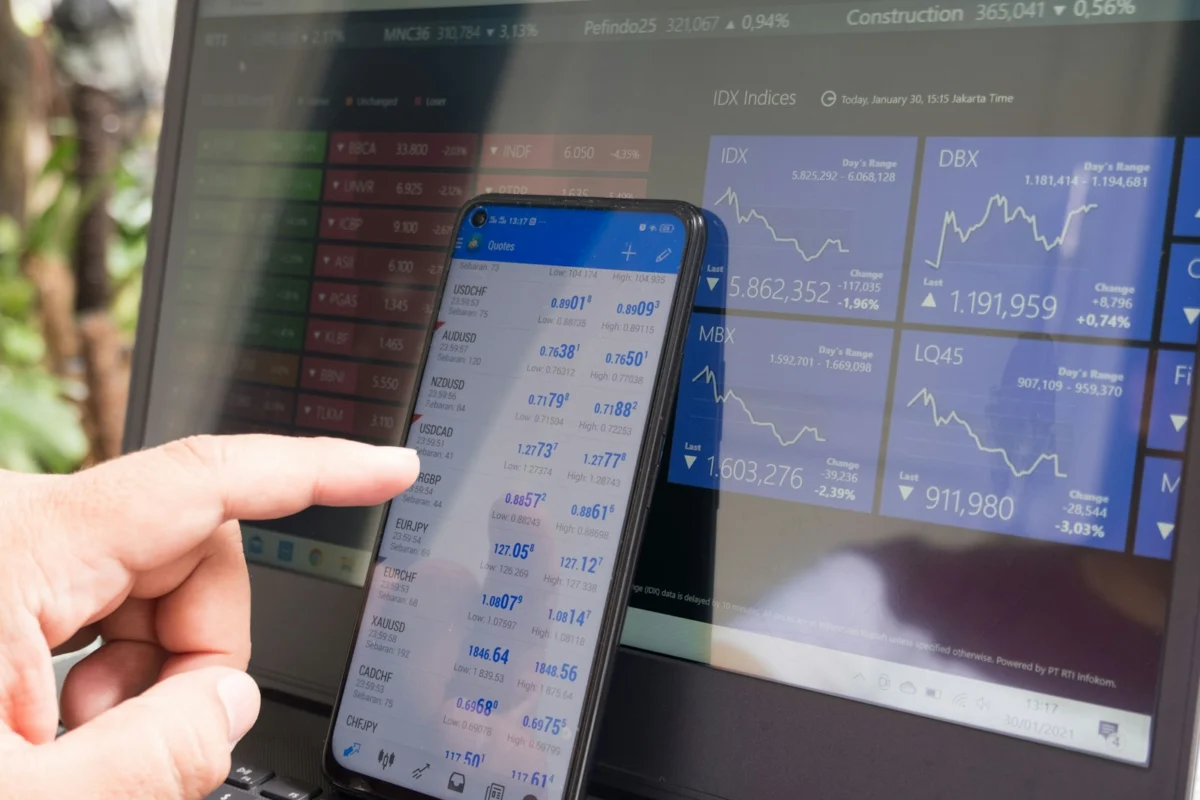
Young individuals exploring the foreign exchange market often seek avenues for financial growth, drawn by the allure of currency trading. While the forex market offers significant opportunities, it is equally fraught with considerable risks, a reality that frequently leads to initial capital losses for novice traders. Consequently, aspiring traders must prioritize two fundamental tenets: never committing capital they cannot afford to lose and approaching the market with a fully informed and realistic perspective. This comprehensive guide delves into the specifics of forex trading within the United States, offering insights into its regulatory framework, cost structures, technological advancements, and the prudent strategies essential for sustainable engagement.
Understanding the US Forex Landscape: Regulation and Structure
The term "forex" is an abbreviation for "foreign exchange," designating the global marketplace where national currencies are traded. Globally, the forex market is largely decentralized, meaning transactions occur directly between participants without a single central exchange. This characteristic allows for 24-hour trading across various time zones, from Monday morning in Asia to Friday evening in North America, making it the world’s largest and most liquid financial market, with daily trading volumes often exceeding $6.6 trillion according to the Bank for International Settlements’ Triennial Survey.
However, the landscape for forex trading in the United States presents a distinct regulatory environment. Unlike many other jurisdictions, the US forex market is highly regulated, primarily by the Commodity Futures Trading Commission (CFTC) and the National Futures Association (NFA). These bodies enforce stringent rules designed to protect retail investors, maintain market integrity, and prevent fraudulent activities. A key distinction for US traders is the limitation to "spot" currency trading. This means that currency pairs are bought and sold immediately, or "on the spot," at the prevailing market exchange rate, with settlement typically occurring within two business days. This contrasts with other international markets where derivatives like Contracts for Difference (CFDs) on currency pairs are prevalent, offering different risk-reward profiles.
The regulatory framework in the US also imposes specific leverage limits. Leverage, the use of borrowed capital to increase potential returns, can amplify both profits and losses. Historically, retail forex leverage in the US has been capped at 50:1 for major currency pairs (such as EUR/USD, USD/JPY) and 20:1 for minor pairs. This stands in contrast to some offshore brokers or less regulated markets that might offer leverage ratios as high as 500:1 or even 1000:1. The CFTC and NFA implemented these lower limits following periods of heightened market volatility and significant retail trader losses, recognizing that excessive leverage is a primary contributor to rapid account depletion. The rationale behind these restrictions is to mitigate systemic risk and safeguard individual investors from catastrophic losses, reinforcing the principle of cautious engagement.
Navigating the Intricacies of Trading Costs and Broker Selection
Before initiating any live trades, a thorough understanding of the fee schedule associated with forex trading is paramount. Trading costs can significantly erode potential profits, especially for active traders. These costs vary considerably among brokers, making careful selection a critical initial step. The primary cost component in forex trading is typically the "spread," which is the difference between the bid (buy) and ask (sell) price of a currency pair.
For instance, if the EUR/USD pair has a bid price of 1.08500 and an ask price of 1.08514, the spread is 0.00014, or 1.4 pips. A "pip" (percentage in point) is the smallest unit of price movement in a currency pair. A lower spread translates to lower trading costs. Brokers like OANDA are known for offering competitive, often variable, spreads, aiming to keep trading costs manageable. It is crucial to understand that spreads can widen during periods of high market volatility or low liquidity, increasing the effective cost of a trade.
Beyond spreads, traders must also consider other potential fees:
- Commissions: While many retail forex brokers operate on a "no commission" model, incorporating their profit into wider spreads, some ECN (Electronic Communication Network) brokers charge a small commission per trade in exchange for tighter raw spreads.
- Swap/Rollover Fees: If a trading position is held open overnight, a swap or rollover fee (either positive or negative) is applied. This reflects the interest rate differential between the two currencies in the pair and the cost of borrowing one currency to hold the other.
- Deposit and Withdrawal Fees: While many reputable brokers offer free deposits and withdrawals via common methods like debit cards and ACH transfers, some might impose fees for less common methods or for excessive withdrawals.
- Inactivity Fees: As highlighted in the example of OANDA, some brokers charge a monthly fee if an account remains dormant for an extended period (e.g., 12 months). Traders must be aware of such terms to avoid unexpected deductions.
Due diligence in broker selection extends beyond just fees. Traders should assess a broker’s regulatory compliance, platform stability, range of tradable instruments, customer support quality, and educational resources. A broker regulated by the CFTC and NFA in the US is a non-negotiable requirement for American citizens or residents.
The Indispensable Role of Demo Accounts and Educational Tools
For new traders, the importance of demo accounts cannot be overstated. These simulated trading environments allow individuals to practice trading strategies, familiarize themselves with the broker’s platform, and understand market dynamics without risking real capital. Most serious brokers offer robust demo accounts, often with virtual funds mirroring real market conditions. This hands-on learning approach is demonstrably more effective than passive consumption of videos or online guides alone. A study by the Financial Conduct Authority (FCA) in the UK, though not directly US-based, frequently emphasizes the high percentage of retail traders who lose money, underscoring the necessity of extensive practice in a risk-free environment.
Furthermore, many trading platforms provide a suite of free analytical and trading tools. For instance, integration with platforms like TradingView offers advanced charting capabilities, technical indicators, and social trading features. Brokers often provide free upgrades for popular platforms such as MetaTrader 4 (MT4) or MetaTrader 5 (MT5), which are industry standards known for their user-friendly interfaces, extensive charting tools, and support for automated trading. Utilizing these tools effectively is a crucial step in developing a comprehensive trading strategy.
Embracing Technology: Automation and Advanced Trading Strategies
As traders gain confidence and develop a deeper understanding of market mechanics, many, particularly younger generations, gravitate towards automation strategies. Algorithmic trading, or "algo-trading," involves using computer programs to execute trades based on predefined criteria. This approach offers several advantages, including the ability to process vast amounts of data quickly, execute trades at optimal prices, and eliminate emotional biases that often plague manual trading.
A background in coding can be highly advantageous in this realm. Brokers often provide Application Programming Interfaces (APIs) that allow traders to integrate their custom algorithms or external analytical tools directly with the broker’s trading infrastructure. OANDA’s US Forex API, for example, offers access to live and historical price data, account management functionalities, and order execution, enabling sophisticated traders to build highly customized automated strategies. The rise of Python, R, and other programming languages has made algorithmic trading more accessible to individuals, moving beyond the exclusive domain of institutional players.
For highly aggressive traders with substantial capital, volume rebate programs are another consideration. These programs are designed to reward high-volume traders with cash rebates or reduced trading costs. However, it is imperative to understand that these programs cater to a very specific segment of the market. Qualification thresholds are typically very high; for instance, OANDA’s "Elite Trader" status might require a minimum monthly trading volume of $10 million. Such requirements underscore that these are not for the casual or undercapitalized trader but rather for institutional-level or extremely well-funded retail traders. This further emphasizes that forex trading, especially at these advanced levels, requires significant capital, expertise, and a robust risk management framework.
The Path to Success: Slow, Steady, and Cautious
It is a disservice to suggest that forex trading offers a swift and effortless path to wealth. Such portrayals are misleading and fail to convey the inherent complexities and risks of the market. Any proposition promising rapid wealth accumulation with minimal risk should be viewed with extreme skepticism. The reality is that successful forex trading is a marathon, not a sprint, demanding patience, discipline, and continuous learning.
The cornerstone of prudent forex trading is robust risk management. This includes never risking more than a small percentage of one’s trading capital on a single trade, consistently using stop-loss orders to limit potential losses, and effectively sizing positions to align with risk tolerance. Furthermore, understanding the fundamental drivers of currency movements—such as interest rate differentials, inflation rates, GDP growth, employment data, and geopolitical events—is crucial for making informed trading decisions. Technical analysis, which involves studying price charts and patterns, complements fundamental analysis by providing entry and exit points.
The journey begins with mastering the basics in a risk-free environment, gradually transitioning to live trading with minimal capital, and continuously refining strategies based on market feedback. Learning to interpret economic calendars, understanding the impact of central bank announcements, and adapting to evolving market conditions are all part of the ongoing education of a successful trader. A disciplined approach, coupled with a commitment to continuous learning and adaptation, significantly enhances a trader’s long-term prospects.
Broader Implications for Young Investors and the Future of Forex
For young investors, engaging with the forex market, even in a simulated environment, can be a valuable component of broader financial literacy. It offers insights into global economics, international finance, and the practical application of economic principles. However, it should be viewed as one component of a diversified financial strategy, not as the sole or primary investment vehicle. Diversification across various asset classes—stocks, bonds, real estate—remains a fundamental principle of sound financial planning.
The future of retail forex trading is likely to be characterized by continued technological advancement, including the integration of artificial intelligence and machine learning for predictive analytics and automated strategy development. Mobile trading platforms will continue to evolve, offering greater accessibility and functionality. Regulatory scrutiny, particularly in the US, is expected to remain robust, ensuring a relatively safer environment for retail participants compared to some less regulated global counterparts.
In conclusion, for young US traders eyeing the forex market, the journey demands prudence, diligence, and a commitment to ongoing education. By understanding the rigorous regulatory environment, meticulously analyzing trading costs, leveraging technological tools responsibly, and adopting a cautious, disciplined approach, individuals can position themselves to navigate the foreign exchange market more effectively. The promise of quick riches is a fallacy; the reality is that sustained effort, informed decision-making, and disciplined risk management are the true catalysts for potential success in this dynamic financial arena.

