

The recent conclusion of the annual county fair in Vermont has served as a focal point for an ongoing longitudinal study in early childhood financial literacy, as parents increasingly seek practical methods to introduce economic concepts to children as young as five and seven years old. Observations from the event underscore a growing movement toward "experiential financial education," a method that moves beyond theoretical concepts of saving and toward the hands-on management of capital, labor, and debt. By utilizing the high-consumerism environment of local fairs and museums, educators and parents are identifying critical windows for teaching resource management, comparison shopping, and the psychological impact of financial obligations.
The Foundation of the Family Money Philosophy
At the core of this educational framework is a structured "Family Money Philosophy," which establishes a clear boundary between essential subsistence and discretionary spending. According to data from child development experts, establishing these boundaries early helps mitigate "pester power"—the tendency of children to relentlessly request purchases—while simultaneously building a foundational understanding of household economics.
In this specific Vermont-based case study, the division of financial responsibility is categorized into two distinct sectors:

- Essential Provisions (Parental Responsibility): This sector covers all primary needs, including housing, healthcare, nutrition, clothing, and educational materials. Furthermore, it includes "experience-based" capital, such as admission fees to cultural institutions like museums and regional fairs.
- Discretionary Expenditures (Child Responsibility): This sector encompasses all non-essential items. Primary examples include "specialty" food items (such as desserts at restaurants), souvenirs or trinkets from gift shops, and supplemental reading materials from commercial entities like the Scholastic Book Fair.
By explicitly stating that parents will provide a "house full of books" through libraries and used sales, but will not fund new commercial book fair purchases, the child is forced to evaluate the opportunity cost of their own capital.
The Labor-Capital Correlation: Chores and Compensation
To facilitate this system, a micro-economy has been established within the household where children earn capital through "fair market value" labor. This model differentiates between communal responsibilities (unpaid) and economic opportunities (paid).
The Unpaid Sector: Civic Responsibility
Developmental psychologists often argue that paying children for basic hygiene or household maintenance can undermine the development of intrinsic motivation and a sense of duty. Consequently, the Vermont model maintains a list of unpaid daily chores, including:
- Management of personal laundry.
- Collection of eggs from household poultry.
- Disposal of compost and organic waste.
- Maintenance of personal living quarters (bed-making and toy organization).
- Post-meal table clearing.
The Paid Sector: Economic Opportunity
Conversely, tasks that provide a broader benefit to the family unit or involve significant labor are compensated. This introduces the concept of "attainment through effort." Current market rates within this household micro-economy fluctuate based on task complexity and seasonal demand. Typical compensated tasks include:

- Organizing communal kitchen cabinetry (valued at approximately $10.00 for a comprehensive project).
- Assisting with the cleaning of the family vehicle.
- Assisting with the cleaning of the chicken coop.
- Seasonal yard maintenance, such as leaf raking or weeding.
- Cleaning communal glass surfaces and windows.
- Vacuuming high-traffic areas.
A critical component of this labor model is the "quality control" requirement. Compensation is only dispensed upon the successful completion of the task to a professional standard. This teaches the economic reality that substandard labor often results in a loss of income or the requirement of unpaid corrective labor.
The Psychology of Debt: The "Unicorn" Case Study
One of the most significant milestones in early financial literacy is the understanding of credit and debt. During a previous iteration of the Vermont county fair, an experiment in "controlled debt" was conducted involving a seven-year-old subject (identified by the pseudonym Kidwoods).
The subject expressed a desire to purchase an inflatable unicorn priced at $13.00, while only possessing $9.00 in liquid assets. The parents opted to provide a $4.00 loan, contingent upon a mandatory labor repayment schedule. The subsequent realization by the child—that labor performed after the acquisition of a good provides less psychological satisfaction than labor performed prior to acquisition—serves as a vital lesson in the pitfalls of consumer debt.
The subject’s observation that "it is not fun to do chores to earn money for something I’ve already bought" highlights a sophisticated grasp of "debt fatigue." Since this incident, data suggests a 100% reduction in the subjects’ willingness to enter into credit agreements, indicating that the visceral experience of debt repayment is more effective than abstract warnings.
Asset Management and Security
Beyond the acquisition of money, the Vermont model emphasizes the importance of asset security. Children are required to maintain their own physical wallets and manage their own transport of funds. This was tested during a visit to a science museum, where the seven-year-old subject misplaced a wallet containing her accumulated savings.
The subsequent "near-loss" experience and the requirement for the child to independently negotiate with museum staff at the "Lost and Found" provided a lesson in the fragility of physical capital. The incident underscored a fundamental economic truth: lost or stolen capital is often unrecoverable, placing the burden of security entirely on the asset holder.
Collaborative Economics and Cost-Sharing
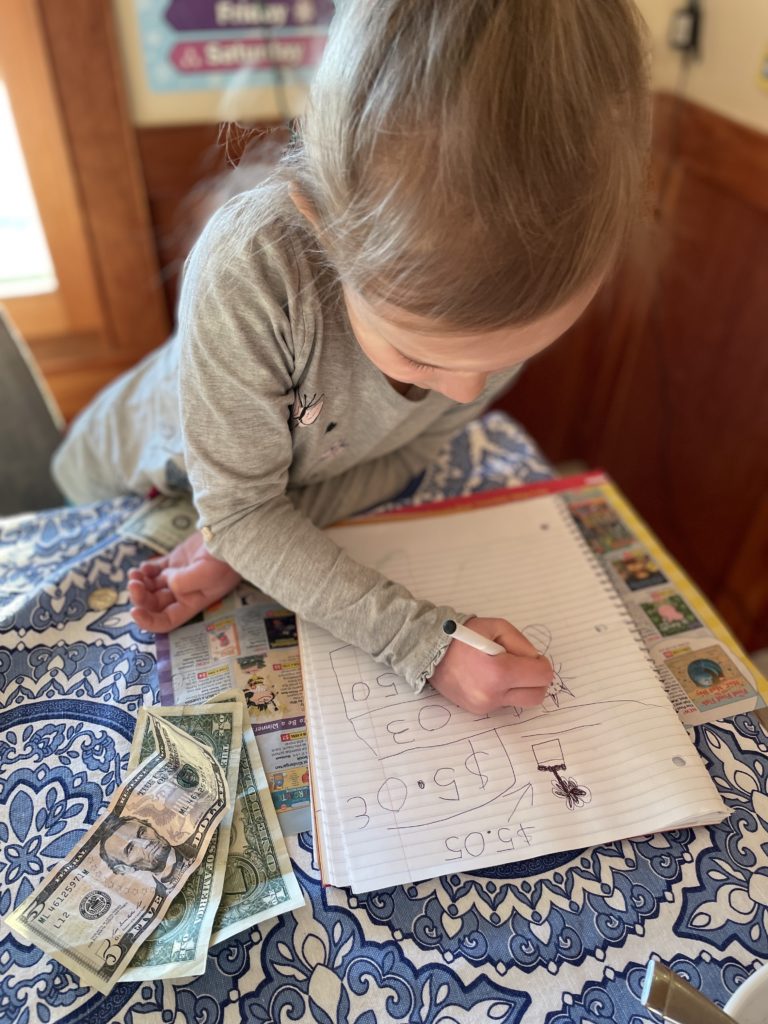
As children progress in their financial education, the model introduces collaborative spending. A recent development involved the purchase of desserts at a local farm event. The elder child (age 7) recognized that she was funding a shared resource (a $7.00 dessert) for herself and her younger sister (age 5), leading to a negotiation for a cost-sharing agreement.
This scenario introduced two secondary educational components:

- Equity in Partnership: The younger child agreed to pay half the cost, acknowledging that her consumption of the resource necessitated a contribution to the capital outlay.
- Applied Mathematics: Because $7.00 cannot be divided evenly into whole dollar amounts, the children were forced to utilize coin denominations, facilitating a practical lesson in currency fractions and basic arithmetic.
National Context and Future Implications
The implementation of these strategies comes at a time when financial literacy in the United States remains a concern for many economists. According to the Council for Economic Education’s 2024 Survey of the States, while more states are requiring personal finance courses for high school graduation, early childhood intervention remains largely the responsibility of the parents.
Research from the University of Cambridge suggests that many basic money habits are formed by the age of seven. This makes the "scaffolded" approach—starting with basic counting and moving toward debt management and interest—crucial for long-term financial stability.
The next phase of the Vermont family’s program involves the introduction of "The Bank of Parental Units," a system designed to teach the concept of compound interest. By offering a high internal interest rate on savings kept within the "parental bank," the educators aim to pivot the children’s focus from immediate consumption to long-term capital appreciation.
Conclusion: Money as a Tool
The overarching objective of this methodology is to demystify the "adult world" of finance and present money as a neutral tool rather than a source of anxiety or a measure of self-worth. By breaking down the equation of "Labor = Capital = Goods," parents are providing children with the analytical tools necessary to navigate a consumer-driven society.

As these children transition into their teenage years, the complexity of the "scaffold" will likely increase to include digital banking, investment strategies, and the management of larger-scale household budgets. For now, the successful navigation of a county fair with a limited budget and a clear plan represents a significant victory in the quest for early childhood financial competence.
The ongoing success of this model suggests that when children are given the responsibility to manage their own small-scale economies, they develop a level of prudence and foresight that far exceeds traditional expectations for their age group. The transition from "looking askance at cows" to "calculating the interest on a savings account" marks a pivotal shift in the developmental trajectory of the next generation of consumers.

