
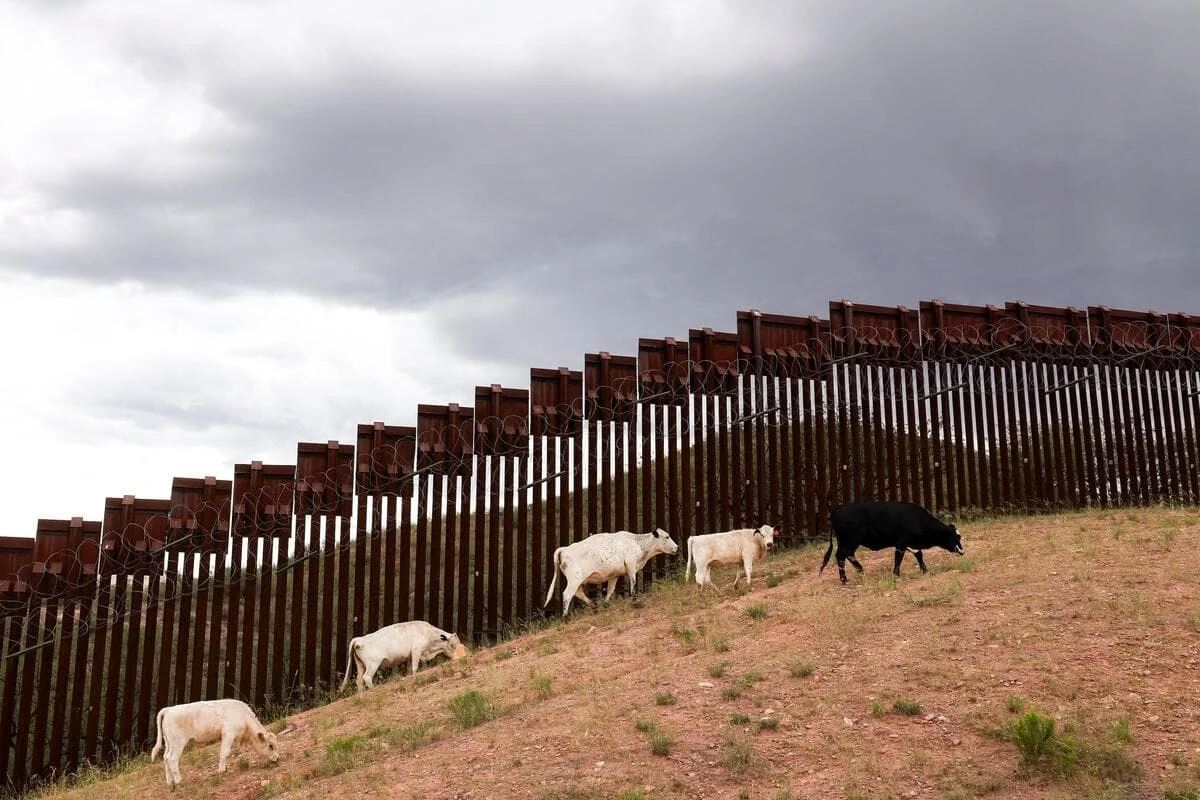
The Trump administration has commenced construction on a new segment of the border wall in southern Arizona, a project designed to fortify the U.S.-Mexico border against illegal immigration and illicit trafficking. This development marks a significant progression in the administration’s ambitious border security agenda, but it simultaneously ignites fresh controversy, particularly due to its location on the ancestral lands of the Tohono O’odham Nation, a Native American tribe that has vehemently opposed the construction. The U.S. Customs and Border Protection (CBP) officially confirmed the initiation of work on August 25 [Year], specifying that the targeted area lies within "one of the most dangerous smuggling and trafficking corridors on the Southwest border."
Background to the Border Wall Initiative
The construction in Arizona is an integral component of a broader, multi-billion-dollar effort spearheaded by the Trump administration to erect approximately 450 miles of new and replacement barriers along the U.S.-Mexico border. This comprehensive initiative, estimated to cost $46.6 billion, envisioned a formidable border infrastructure comprising 30-foot steel bollard walls, enhanced vehicle barriers, and sophisticated detection technology. President Donald Trump’s commitment to building a "big, beautiful wall" was a cornerstone of his political platform, echoing promises made during his 2016 presidential campaign.
The legal and administrative framework for this accelerated construction was largely established through Executive Order 14165, "Securing Our Borders," and Proclamation 10142, "Declaring a National Emergency at the Southern Border of the United States." These executive actions allowed the administration to reallocate funds and streamline regulatory processes, asserting the imperative of national security over potential environmental or cultural impediments. The CBP has consistently articulated that its primary directive is to implement these executive mandates, aiming to eliminate "gaps and easy pathways for illegal entry" along the border. This strategic emphasis on physical barriers reflects a long-standing debate within U.S. immigration policy regarding the most effective methods for border control, with proponents arguing for the deterrent effect of walls and critics advocating for more comprehensive solutions involving technology, personnel, and addressing root causes of migration.
A Critical Smuggling Hotspot
The specific segment of the border chosen for this new construction traverses the remote desert landscape within the Tohono O’odham Nation, an area long identified by federal authorities as a critical nexus for illicit activities. CBP Commissioner Rodney Scott, in his August 25 statement, underscored the rationale behind targeting this particular corridor. He described it as a region that has "facilitated decades of drug loads, migrant deaths, and cartel activity," highlighting the severe human and security challenges posed by its remote and rugged terrain.
The Sonoran Desert, which characterizes much of this border region, presents unique challenges for both migrants and law enforcement. Its extreme temperatures, scarcity of water, and dangerous wildlife make it a perilous journey for those attempting illegal crossings, often leading to tragic outcomes. Simultaneously, these very conditions, coupled with vast stretches of uninhabited land, have made it an attractive route for transnational criminal organizations involved in drug and human smuggling. The cartels exploit the remoteness to move narcotics, including highly potent fentanyl and methamphetamine, into the United States, and to traffic vulnerable individuals, often with devastating consequences.
Statistics from various government agencies consistently corroborate the high volume of illegal activity in the Arizona sector. While specific, recent data for this exact corridor can be difficult to disaggregate, the broader Arizona border region frequently ranks among the busiest for drug interdictions and migrant apprehensions. The dangers are not limited to smuggling; the presence of cartel operatives often leads to violent encounters, posing significant threats to border patrol agents, local residents, and the migrants themselves. The federal government’s decision to prioritize wall construction in this specific zone therefore reflects an assessment of its strategic importance in disrupting established smuggling networks and enhancing overall border security.
Chronology of Contention: Legal Battles and Tribal Protests
The path to construction has been fraught with legal challenges and vocal opposition, primarily from the Tohono O’odham Nation. The tribe, whose ancestral lands span 2.8 million acres and include a 76-mile stretch directly bordering Mexico, views the wall as a profound violation of their sovereignty, culture, and sacred sites.
- June [Year]: The Tohono O’odham Nation formally escalated its opposition by filing a motion to block the construction of the border wall. The tribe’s lawsuit argued that the federal government’s actions would inflict irreparable damage on its land, cultural heritage, and religious practices, which are intrinsically linked to the natural landscape and traditional crossing points along the border.
- August 14 [Year]: A significant legal hurdle was cleared when a federal judge declined the Tohono O’odham Nation’s request for an injunction to halt the construction. This ruling paved the way for the government to proceed with its plans, despite the ongoing concerns raised by the tribe. The court’s decision underscored the broad authority granted to the federal government in matters of national security and border protection, often overriding local or tribal objections.
- August 24 [Year], 4 a.m.: In a highly controversial move, border wall contractors, accompanied by approximately 20 masked and armed CBP agents from the Tucson Sector, entered the Tohono O’odham Nation’s land. The tribe released a statement later that day, describing these personnel as "engaging in pre-construction activities." The deployment was extensive, involving not only CBP but also the Bureau of Indian Affairs (BIA) and the Border Patrol Tactical Unit (BORTAC) SWAT Team, all tasked with protecting the contractors. Federal authorities further utilized a tethered balloon for enhanced aerial monitoring of the site. In an unprecedented coordination effort, the Department of Homeland Security (DHS) also collaborated with Mexican police, who deployed personnel on the southern side of the border to secure the area while contractors worked.
- August 25 [Year]: CBP officially announced the commencement of the wall project, reiterating its strategic importance in combating smuggling and trafficking. This public statement followed the early morning entry onto tribal lands, confirming the government’s determination to move forward.
- August 26 [Year]: Senator Ruben Gallego (D-Ariz.) issued a strong condemnation of the federal government’s actions. In his statement, he criticized the deployment of "dozens of armed agents on the Nation’s land… without so much as a heads up or warning." Senator Gallego’s remarks highlighted the perception of disrespect for tribal sovereignty and the lack of consultation, further fueling the political and social debate surrounding the project.
The Tohono O’odham Nation: A Clash of Sovereignty and Security
The controversy surrounding the border wall construction on Tohono O’odham land transcends a mere land dispute; it encapsulates a fundamental conflict between federal border security imperatives and the inherent sovereignty of Native American nations. The Tohono O’odham have continuously emphasized that their traditional territory predates the establishment of the U.S.-Mexico border, a line that arbitrarily divided their people and ancestral lands. The proposed wall, therefore, is not just a physical barrier but a symbol of continued encroachment on their rights and a threat to their cultural integrity.
The tribe’s spiritual beliefs and traditional practices are deeply interwoven with the landscape, including specific sites, sacred mountains, and historical pathways that will be directly impacted or severed by the wall. The construction process itself, involving heavy machinery, excavation, and the permanent alteration of the environment, is seen as a desecration. Furthermore, the wall threatens to disrupt the natural migration patterns of wildlife, including the Sonoran pronghorn and other endangered species, which are vital to the ecosystem and hold cultural significance for the Tohono O’odham.
The August 24 entry by armed federal agents without prior meaningful consultation was particularly galling to the tribe and its supporters. It evoked historical grievances concerning federal government actions on tribal lands, perceived as authoritarian and dismissive of tribal governance. Senator Gallego’s sharp criticism resonated with many who believe that while border security is important, it should not come at the expense of established tribal rights and respectful engagement. This incident reignited calls for greater recognition of tribal sovereignty and for federal agencies to adopt more collaborative approaches when their operations impact Native American lands and communities.
The "Shadow Wolves": Indigenous Expertise in Border Security
Adding a complex layer to this narrative is the presence of the "Shadow Wolves," a unique and highly effective Native American tracking unit operating under the Department of Homeland Security (DHS). Stationed in Sells, Arizona, on the Tohono O’odham Nation, the Shadow Wolves are the DHS’s only Native American tracking unit assigned to the Mexico-United States border. Their existence highlights a paradox: a federally recognized unit composed of indigenous people actively engaged in border security on the very lands where their tribe is resisting federal border infrastructure.
The Shadow Wolves are celebrated for their specialized skills, which blend modern technology with traditional Native American tracking techniques known as "cutting for sign." This ancient practice involves meticulously locating and interpreting subtle physical evidence left by smugglers – footprints, tire tracks, discarded thread, or clothing fragments – and decoding their meaning to anticipate movements and identify routes. This profound understanding of the desert environment, passed down through generations, gives them an unparalleled advantage in the rugged terrain of the Sonoran Desert.
According to Immigration and Customs Enforcement (ICE), the unit’s evocative name, "Shadow Wolves," reflects their hunting style, which mirrors the stealth, persistence, and teamwork of a wolf pack. All members of this elite unit are required to have at least one-fourth Native American ancestry, ensuring a deep connection to the land and an inherent understanding of its nuances. Their mission specifically focuses on the "interdiction of human and drug smugglers who conduct their illegal operations through the rugged terrain of the Sonoran Desert."
The track record of the Shadow Wolves is impressive. Between 2010 and 2020, their interdiction and investigative efforts led or contributed to 437 drug and immigration arrests. Over the same decade, they were instrumental in the seizure of more than 117,264 pounds of illicit drugs, 45 weapons, 251 vehicles used in smuggling operations, and $847,928 in U.S. currency. These statistics underscore their critical role in border security operations and the invaluable contribution of indigenous knowledge to contemporary law enforcement. Their continued operation on Tohono O’odham land while the tribe battles the wall construction creates a poignant juxtaposition, illustrating the multifaceted relationship between indigenous communities, federal agencies, and border enforcement.
Broader Implications and Ongoing Debates
The construction of the border wall in southern Arizona carries far-reaching implications, touching upon environmental conservation, cultural preservation, economic considerations, and geopolitical relations.
From an environmental perspective, conservation groups and scientists have consistently raised alarms about the wall’s impact on the Sonoran Desert’s delicate ecosystem. The construction fragments habitats, blocks migratory routes for numerous species, and can alter hydrological patterns, potentially exacerbating desertification and impacting scarce water resources. The destruction of unique desert flora and fauna, including rare cacti and protected wildlife, represents an irreversible loss for biodiversity.
Culturally, the Tohono O’odham Nation’s opposition resonates with broader concerns among indigenous communities across the U.S. about the protection of sacred sites and ancestral lands from federal projects. The wall not only physically divides the tribe but also disrupts cultural practices that have spanned generations, including ceremonies and traditional resource gathering. The lack of meaningful consultation, as alleged by Senator Gallego and the tribe, raises questions about the federal government’s commitment to tribal self-determination and treaty obligations.
Economically, the project represents a substantial investment of taxpayer money. The contractor, SLSCO, a Texas-based construction company, has secured over $390 million in funding from the Department of Homeland Security (DHS) since 2023 for this specific project, which includes building 22 miles of primary border wall system and approximately 13 miles of detection technology. These contracts, awarded using funds from the "One Big Beautiful Bill Act," contribute to the significant overall cost of the border wall initiative. The long-term economic efficacy of physical barriers versus alternative border security strategies remains a subject of intense debate among economists and policy analysts.
Geopolitically, the construction of the wall, particularly with coordinated efforts with Mexican police as observed during the August 24 entry, reflects a complex and sometimes strained relationship between the U.S. and Mexico on border management. While cooperation on security matters is often essential, the unilateral construction of a wall can also be perceived as a symbol of distrust and can complicate diplomatic relations, especially when it impacts shared resources or cross-border communities.
As construction proceeds, the Arizona border wall project remains a focal point in the ongoing national conversation about immigration, national security, and the rights of indigenous peoples. Its development underscores the enduring tension between federal power and local autonomy, and the complex trade-offs inherent in securing a vast and diverse international border. The legacy of this project will likely continue to be debated for years to come, shaping policy, influencing environmental advocacy, and impacting the lives of communities along the U.S.-Mexico frontier.

