

Starting a new bullet journal is an endeavor filled with anticipation, a blank canvas awaiting the imprint of thoughts, plans, and aspirations. However, for many, the initial step—the creation of that all-important cover page—can present a unique challenge, a blend of excitement and intimidation. This introductory page is more than just a formality; it’s the digital or physical equivalent of a handshake, setting the tone and personality for the entire journal. It offers a prime opportunity to express creativity, articulate intentions, and infuse the upcoming pages with a sense of purpose and inspiration. Whether one leans towards a minimalist aesthetic, a powerful motivational quote, or an intricate illustrative design, the possibilities for crafting a distinctive and meaningful first page are virtually limitless. This exploration delves into a curated selection of inspiring bullet journal cover page ideas, designed to empower individuals to commence their journaling journey with confidence and clarity. The aim is to move beyond the paralysis of overthinking and encourage the selection of a style that resonates deeply, thereby initiating a fulfilling journaling experience.
The Significance of a Bullet Journal’s Inaugural Page
The bullet journal, often abbreviated as "bujo," has evolved from a productivity system to a multifaceted tool for personal organization, mindfulness, and creative expression. Developed by Ryder Carroll in 2006, the original bullet journal method emphasized a flexible system of bullet points, symbols, and rapid logging. Over time, the community has expanded its application, incorporating artistic layouts, elaborate trackers, and deeply personal reflections. The cover page, or introductory spread, plays a pivotal role in this evolution. It’s the reader’s first impression, the journal’s identity card. A well-designed cover page can serve multiple functions: it can announce the journal’s purpose (e.g., "2024 Goals," "Gratitude Journal"), establish a theme, or simply offer a moment of artistic expression before diving into the more functional aspects of planning and logging.

Giving Your Bujo a Name: Establishing Identity
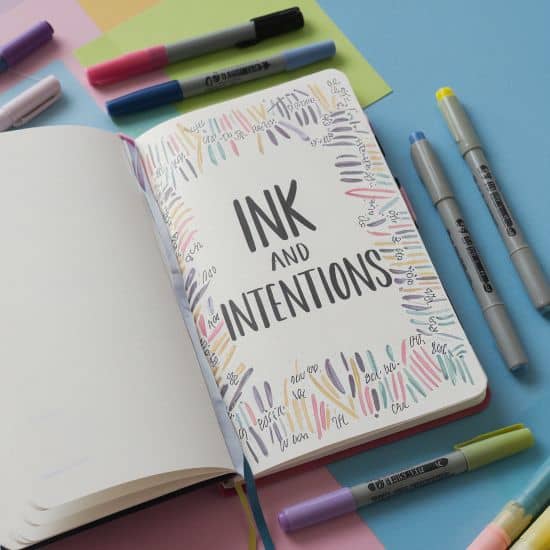
One of the foundational steps in personalizing a bullet journal is bestowing upon it a name. This act imbues the journal with a distinct identity, transforming it from a mere notebook into a trusted companion. The chosen name can range from straightforward designations like "My 2025 Planner" or "Personal Log" to more creative and evocative titles that reflect the journaler’s personality, aspirations, or the overarching theme of the year. For instance, a journal focused on creative pursuits might be named "Ink & Intentions," while one dedicated to self-discovery could be christened "The Journey Within."
The presentation of this name is as crucial as the name itself. It can be rendered in bold, striking lettering, embellished with intricate doodles, or highlighted with carefully selected stickers. This seemingly small but significant detail has the power to elevate the experience of opening the journal each day, fostering a sense of anticipation and connection.
1. A Catchy Tagline: Branding Your Bujo
A tagline can succinctly encapsulate the essence of the journal or the personal philosophy guiding its use. Consider phrases that are aspirational, action-oriented, or reflective of a desired mindset. Examples might include: "Dream, Plan, Do" – a simple yet powerful mantra for goal achievement; "Cultivating Growth, One Day at a Time" – emphasizing a process of continuous improvement; or "My Space for Clarity and Creation" – highlighting the journal’s role in organization and creativity. The visual representation of this tagline, whether through elegant calligraphy, playful lettering, or a combination of fonts, further enhances its impact.

2. A Motivational Statement: Setting the Tone for Success
Beyond a mere name or tagline, a more substantial motivational statement can serve as a powerful anchor for the entire journal. This could be a personal affirmation, a favorite quote from a mentor or inspirational figure, or even a snippet of lyrics that carries significant meaning. The intention is to create a powerful reminder of what the journaler wishes to embody or achieve. For example, "This year is about embracing challenges and celebrating progress," or "I commit to presence, purpose, and passion." Such statements act as a constant source of encouragement, guiding the user’s focus and reinforcing their intentions with every glance.
The Welcome Page: An Invitation to Engage
The welcome page functions as the journal’s introduction, extending an invitation to the user to immerse themselves in its contents. As the very first visual encountered upon opening the journal, its design and message are instrumental in sparking enthusiasm and encouraging daily engagement. It’s an opportunity to set a positive and motivating tone, signaling the unique purpose and value the journal holds for its owner.
3. Encouraging Your Thoughts: A Personal Welcome
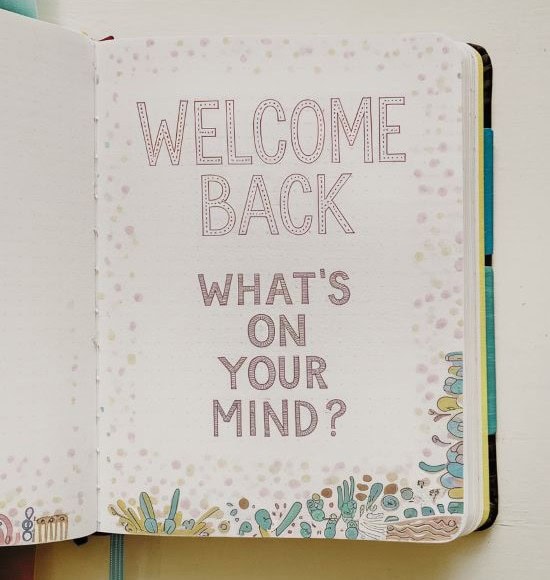
A warm and inviting welcome message can make the journal feel more approachable and personal. Phrases like "Welcome to your space for growth and reflection," or "Step inside and discover your potential," can create an immediate sense of connection. This page can also be used to outline the journal’s intended use or to express the user’s hopes for the journaling process. For instance, "May this journal be a sanctuary for your ideas, a catalyst for your dreams, and a record of your journey," conveys a thoughtful intention. The visual design accompanying such a message can incorporate soothing colors, simple illustrations, or a handwritten script to enhance the welcoming atmosphere.
Embracing the Current Year: A Temporal Anchor
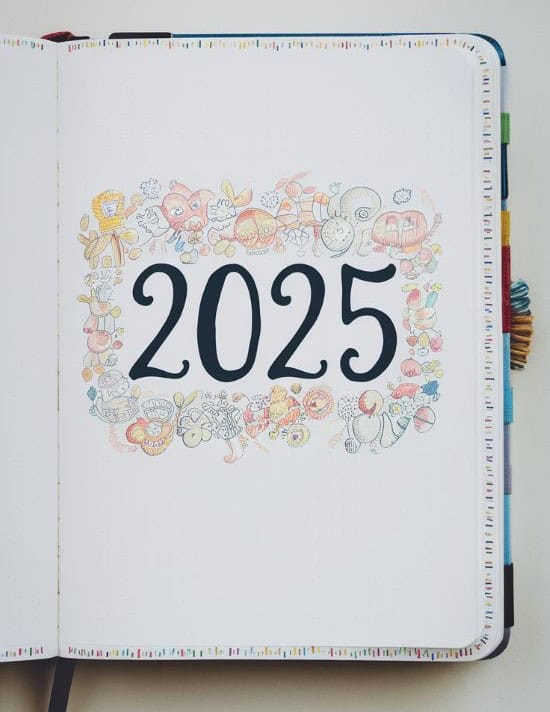
A dedicated page for the current year serves as a crucial anchor, establishing the temporal scope of the bullet journal. This can be achieved through simple yet effective means, such as prominently displaying the year in bold typography. However, the opportunity for creativity extends far beyond mere text. Calligraphy, artistic embellishments, thematic stickers, or minimalist geometric designs can transform this page into a visually engaging marker.
This practice not only signifies a fresh start but also provides a clear visual reference for the period the journal encompasses. It’s a symbolic act of marking a new chapter, a dedicated space for the experiences, achievements, and challenges that the forthcoming months will bring. This can be particularly impactful at the beginning of a new calendar year, reinforcing a sense of renewal and commitment.
4. Make This Year Your Year: A Declaration of Intent
The simple act of declaring the current year, such as "2025," can be amplified into a powerful statement of intent. By presenting the year with a sense of significance, the journaler is implicitly setting the stage for a year of intentional action and personal growth. This can be achieved through dynamic lettering, artistic framing, or even a thematic visual that represents the year’s aspirations. For example, if the year is envisioned as one of exploration, the year might be surrounded by illustrations of maps or compasses. This page becomes a visual pledge, a reminder of the potential and purpose held within the coming twelve months.

The Word of the Year: Defining Your Focus
The concept of a "Word of the Year" has gained significant traction as a method for personal focus and intention-setting. Choosing a single word that encapsulates one’s primary goals, desired mindset, or areas for development for the upcoming year provides a powerful thematic thread for the bullet journal. Words such as "Growth," "Balance," "Courage," "Clarity," or "Resilience" can serve as guiding principles.
Writing this word prominently at the beginning of the journal acts as a constant, potent reminder of how one wishes to navigate the year. It’s an invitation to embody the spirit of that word in daily actions and decisions. Accompanying the word with a brief explanation of its personal significance further solidifies its impact, offering a deeper understanding of the user’s intentions and motivations.
5. Consistent and Present: Embodiments of Intent
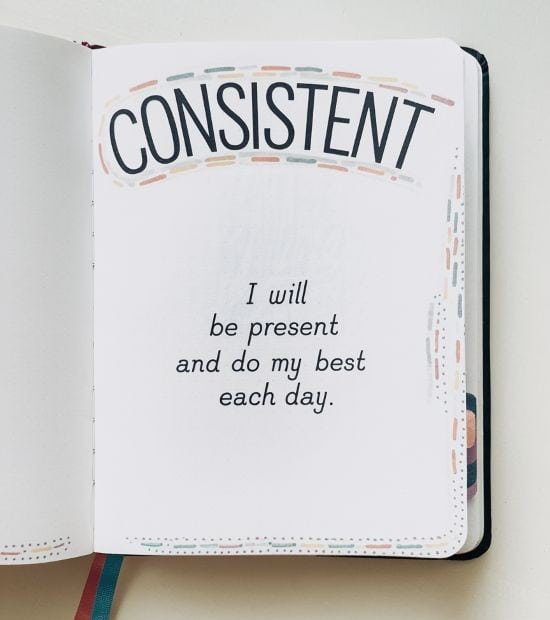
Selecting words like "Consistent" and "Present" for the cover page speaks to a desire for mindful action and enduring habits. "Consistent" might be accompanied by a note about building daily routines or sticking to commitments, while "Present" could be linked to practicing mindfulness and appreciating the current moment. Visually, these words can be presented in a clean, bold font, perhaps with subtle decorative elements that don’t distract from their core message. This approach ensures that the journal’s initial pages are not just decorative but serve a functional purpose in guiding the user’s focus.
6. Achieving Greatness: Aspirational Focus
For those aiming for significant personal or professional milestones, a word like "Greatness" or "Success" can be a powerful motivator. The cover page dedicated to such a word can be designed with an ambitious and inspiring aesthetic. This might involve strong typography, perhaps a touch of metallic ink or gold accents, and a layout that conveys a sense of achievement and aspiration. The underlying message is one of striving for excellence and recognizing the potential for significant accomplishment throughout the year.
Motivational Quotes and Phrases: Daily Inoculations of Inspiration
Motivational quotes and phrases serve as potent daily encouragements, offering a concentrated dose of inspiration and perspective. The selection of such a quote should be deeply personal, resonating with the individual’s values, challenges, or aspirations. This could be a timeless aphorism, a personal mantra, or even poignant lyrics from a favorite song.
The act of writing this chosen phrase boldly on the cover page ensures it remains a readily accessible source of strength and motivation. Whenever feelings of doubt, fatigue, or lack of direction arise, this page acts as a visual anchor, reminding the user to maintain focus, cultivate a positive outlook, and persevere on their journey.
7. Focused and Proactive: Driving Action
A phrase like "I will get focused and take action now" directly addresses the common challenge of procrastination and indecision. This is a call to immediate engagement, a declaration of intent to move forward purposefully. The visual design could be sharp and energetic, perhaps using a sans-serif font with strong lines, or incorporating elements that suggest movement and decisiveness. This cover page serves as a constant nudge to overcome inertia and embrace a proactive approach to tasks and goals.
8. Organized and Productive: The Foundation of Achievement
Phrases such as "Get organized and be productive" or "Streamline your efforts, maximize your impact" highlight the foundational importance of structure and efficiency. These statements underscore the understanding that productivity is often a direct result of effective organization. The visual presentation could be clean and systematic, perhaps using block lettering or a layout that mimics organized elements like checklists or filing systems. This cover page serves as a constant reminder of the value of planning and efficient execution.
Positive Affirmations: Cultivating a Resilient Mindset
A dedicated page for positive affirmations is a powerful tool for cultivating self-belief, confidence, and a resilient mindset. These are empowering statements that, when repeated regularly, can help reprogram negative thought patterns and foster a more optimistic outlook. Examples include affirmations like "I am capable and worthy," "I embrace challenges with courage," or "I choose kindness and empathy in all my interactions."
The key to effective affirmations lies in their personal relevance and emotional resonance. They should be statements that genuinely uplift and inspire the individual. By repeating these affirmations daily, particularly when reviewing the bullet journal, individuals can foster a deeper sense of self-worth and emotional well-being. The visual presentation can be gentle and encouraging, perhaps using softer fonts and colors, to create a calming and supportive atmosphere.
9. Expression of Gratitude: A Foundation of Well-being
Gratitude is a cornerstone of mental and emotional well-being. A page dedicated to expressing gratitude, perhaps with the affirmation "I am grateful for the abundance in my life," serves as a powerful reminder of the positive aspects of one’s existence. This can be a simple, elegantly written phrase, perhaps surrounded by small, symbolic illustrations like leaves or sunshine. This page encourages a shift in perspective, fostering appreciation and contentment.
Artistic Doodles: Infusing Personality and Creativity
For many, the bullet journal is an outlet for artistic expression. Incorporating artistic doodles on the cover page adds a unique layer of personality and creativity, making the journal more engaging and enjoyable to use. The beauty of doodling lies in its accessibility; one does not need to be a professional artist to create appealing designs. The process itself can be a relaxing and therapeutic activity.

Themed doodles can be employed to reflect the season, a particular month, or the overarching theme of the journal. Alternatively, small icons representing personal interests, moods, or significant life events can be incorporated. These visual elements transform the cover page from a simple title into a dynamic and personalized work of art.
10. My Bujo – My Year: A Personal Manifesto
A cover page that reads "My Bujo – My Year" is a declaration of ownership and intention. It signifies that this journal is a personal space, a tool for navigating the year ahead according to the user’s own design. The visual execution can be vibrant and celebratory, perhaps featuring a colorful array of pens, markers, or even collage elements. This page is an affirmation of the user’s agency in shaping their experiences and documenting their journey.
The Bujo Basics: Functional Foundations
For individuals who primarily utilize their bullet journal as a tool for planning and organization, the foundational elements of the system—the key and the index—can themselves serve as compelling cover pages. These components are essential for the efficient functioning of the bullet journal method, enabling users to track tasks, events, and notes effectively and to locate information with ease.

11. Index Page: The Journal’s Roadmap
The index page acts as a comprehensive roadmap for the entire bullet journal. It systematically lists the contents of the journal and the corresponding page numbers, allowing users to quickly locate specific sections, entries, or trackers. A well-designed index page is not only functional but can also be visually appealing. It can be presented with clear headings, organized lists, and perhaps subtle decorative elements that enhance its readability. This page ensures that the journal remains a practical and efficient tool for organization.
12. Key Page: Decoding the System
The key page is the lexicon of the bullet journal, defining the symbols used for rapid logging. These symbols represent various types of entries, such as tasks (e.g., a dot for an open task, an ‘x’ for a completed task), events (e.g., a circle), and notes (e.g., a dash). A clear and well-organized key page is crucial for maintaining the integrity and efficiency of the bullet journaling system. While primarily functional, the key page can be presented with artistic flair, using custom-designed symbols or a visually engaging layout that makes it both informative and aesthetically pleasing.
Conclusion: Embracing the Journey of Creation
The cover page of a bullet journal is far more than a mere formality; it is a potent reflection of the journaler’s intentions, aspirations, and creative spirit. It serves as the initial point of contact, shaping the user’s interaction with their journal and setting the tone for the entire experience. By thoughtfully incorporating personal touches, meaningful words, and functional elements, individuals can transform their cover pages into sources of inspiration and motivation.

Ultimately, there is no single "correct" way to begin a bullet journal. The most effective approach is to embrace the process of creation, allowing the journal to evolve organically. Whether through minimalist elegance, bold declarations, artistic expression, or functional clarity, the aim is to craft a beginning that resonates deeply and encourages a consistent and rewarding journaling practice. The journey of filling those pages is one of self-discovery, organization, and continuous personal growth, and the cover page is the crucial first step in embarking on that adventure.

