

The annual county fair in Vermont serves as a cultural cornerstone for rural communities, offering a blend of agricultural exhibition and high-intensity consumerism. For parents navigating the developmental milestones of children aged five and seven, such events present more than just entertainment; they function as a laboratory for financial literacy. Recent observations from the Vermont fair circuit indicate that early exposure to money management through a structured "family money philosophy" can significantly alter a child’s understanding of labor, debt, and discretionary spending. By transitioning from passive observers to active participants in a micro-economy, school-aged children are beginning to internalize the complexities of the modern financial landscape long before they encounter formal economics in a classroom setting.
The Framework of the Household Economy
At the core of this educational approach is a clear demarcation between "needs" and "wants." In the case study of a Vermont-based family, the parental units have established a rigid but transparent fiscal boundary. The parents assume full responsibility for essential expenditures, which include healthcare, shelter, clothing, educational materials, and basic nutrition. Furthermore, admission fees to cultural and educational venues, such as museums and the aforementioned county fairs, are classified as parental obligations. This ensures that the children’s basic welfare and access to enrichment are never predicated on their personal savings.

Conversely, all discretionary items are the sole financial responsibility of the children. This category includes specialized snacks or desserts at restaurants, souvenirs from gift shops, and supplemental literature from school-sanctioned events like the Scholastic Book Fair. By providing a "house full" of resources—such as library books and second-hand toys—parents create a baseline of sufficiency, rendering any further acquisitions a matter of personal choice and personal cost. This strategy forces children to evaluate the marginal utility of a purchase, a fundamental concept in microeconomics.
The Chore-Based Labor Market
To facilitate this self-funded consumption, the household operates a regulated labor market. Children are offered the opportunity to perform chores that provide a benefit to the entire family, with compensation set at what is described as "fair market value." This system is not static; it involves active negotiation between the "employer" (the parent) and the "employee" (the child). A recent example of this market in action involved a seven-year-old child negotiating a $10 lump sum payment for the comprehensive organization of kitchen cabinets and drawers—a task that required several hours of focused labor.
The household labor market distinguishes between two types of work:

- Communal Chores (Paid): Tasks that benefit the household collective, such as cleaning shared spaces, organizing communal storage, or assisting with seasonal maintenance.
- Personal Maintenance (Unpaid): Daily tasks required for self-sufficiency and participation in the family unit. This includes making beds, cleaning personal bedrooms, clearing individual place settings after meals, and managing personal laundry.
Data suggests that this distinction is crucial for developing a healthy work ethic. According to developmental psychologists, paying children for basic self-care can inadvertently undermine the development of intrinsic motivation. By focusing payment on "above and beyond" tasks, parents simulate the professional world where specialized or extra labor results in financial gain.
Case Study in Debt: The Inflatable Unicorn Incident
One of the most profound lessons in this financial curriculum occurred during the previous year’s county fair. A child expressed a strong desire to purchase an inflatable unicorn priced at $13. At the time, the child possessed only $9 in liquid assets. The parents opted to act as a lending institution, providing a $4 loan to cover the deficit. This created a real-world scenario of debt financing for a depreciating asset.
The aftermath of this transaction provided a visceral lesson in the "cost" of credit. Upon returning home, the child was required to perform mandatory labor to retire the debt. The child reportedly observed that "it is not fun to do chores to earn money for something I’ve already bought." This realization—that debt-funded consumption requires future labor without the reward of a new acquisition—is a concept that many adults struggle to master. Since this incident, the children involved have reportedly avoided debt entirely, opting instead to save until they possess the full purchase price of an item. This shift in behavior highlights the efficacy of experiential learning over abstract instruction.
Asset Management and Physical Responsibility
Financial literacy also extends to the physical management of assets. Children are required to maintain their own wallets and purses, assuming full responsibility for the security of their cash. This has led to "tears of relief" and "near-crisis" situations, such as a misplaced wallet at a science museum. These incidents serve as a practical introduction to risk management. When a child loses their capital, the parents do not provide a bailout, reinforcing the reality that physical currency is a finite and loseable resource.
Furthermore, the "forgotten wallet" serves as a lesson in logistical planning. If a child fails to bring their funds to a venue, they are unable to make purchases, regardless of their savings balance at home. This encourages children to think ahead and prepare for upcoming spending opportunities, a precursor to adult budgeting and cash-flow management.
Statistical Context and Educational Trends
The implementation of these strategies comes at a time when financial literacy in the United States is under increased scrutiny. According to the 2023 TIAA Institute-GFLEC Personal Finance Index, U.S. adults correctly answered only about 48% of index questions, a figure that has remained stagnant for years. Experts suggest that the gap in financial knowledge often begins in childhood.
Data from the Council for Economic Education indicates that while more states are mandating financial literacy in high schools, early intervention in the home remains the most significant predictor of future financial health. The "scaffolded" approach used by the Vermont family—starting with counting coins and moving toward debt management—aligns with educational theories that suggest financial concepts should be introduced as soon as a child can grasp basic addition and subtraction.
Psychological Impact and "Demystifying" Money
A significant hurdle for many parents is the fear that discussing money will cause anxiety. However, the journalistic observation of this Vermont model suggests the opposite. By explaining that "Mama works and is paid money for her work," parents remove the "magic" from the appearance of groceries and toys. This transparency helps children view money as a neutral tool rather than a source of stress or a measure of self-worth.
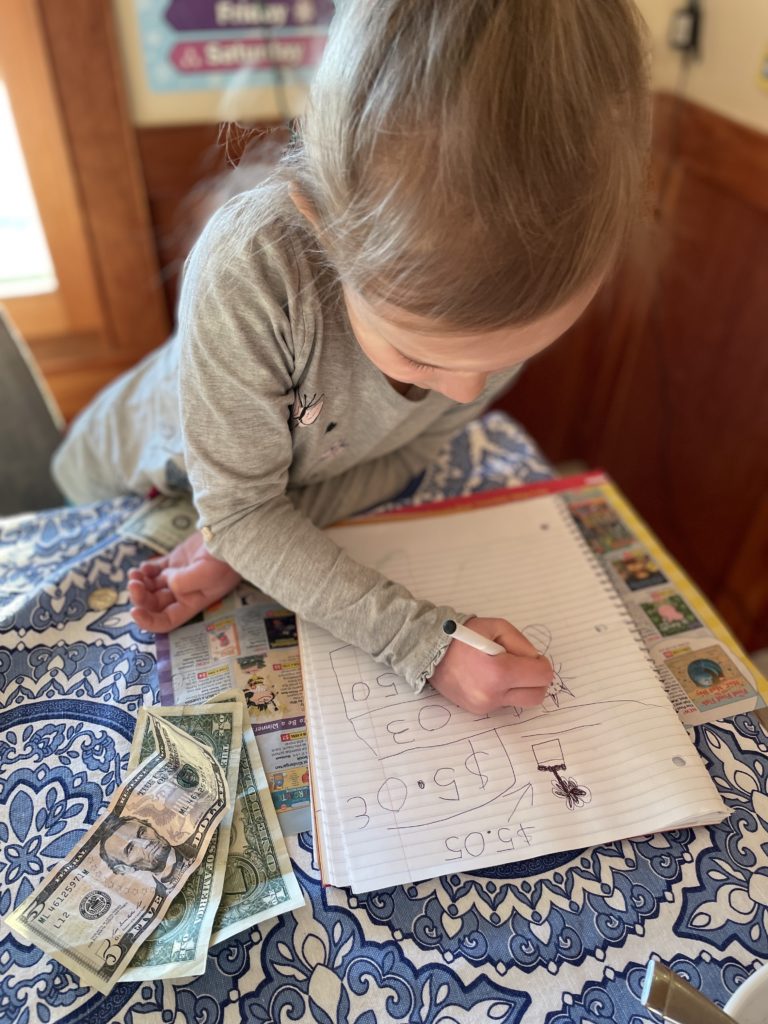
The success of this approach was recently evidenced when the seven-year-old child wrote a short "book" about her mother’s professional life. The child noted that her mother’s job involved "helping other people with their money" and that while the meetings seemed "boring," they were "really important." This indicates a sophisticated understanding for a child of that age—recognizing that professional labor has value, even if the labor itself is not intrinsically entertaining to an observer.

Future Projections: The Bank of Parental Units
As the children transition into higher levels of cognitive development, the "family money philosophy" is set to evolve. The next planned phase involves the introduction of interest rates and long-term savings accounts. The parents intend to establish a "Bank of Parental Units" that will pay a high interest rate on money left in savings. This is designed to incentivize the transition from immediate gratification (spending all chore money on desserts or small toys) to delayed gratification (saving for larger, more significant purchases).
This progression mirrors the historical development of financial systems, moving from simple barter and cash transactions to the more abstract concepts of interest, investment, and compound growth. By the time these children reach adolescence, they will have already navigated the pitfalls of debt, the rigors of the labor market, and the rewards of disciplined saving.
Broader Implications for Parenting
The Vermont case study suggests that the "annoying" instances of kid-directed consumerism at fairs and museums can be repurposed as high-value educational opportunities. Rather than shielding children from the realities of the market, these parents have chosen to enfranchise them within it. The result is a set of children who are not only capable of counting change but are also developing the emotional intelligence required to make sound financial decisions under pressure.

In an era of digital transactions and "invisible" money, the use of physical cash and tangible debt in early childhood may be more important than ever. It provides a concrete foundation upon which the more abstract structures of adult finance can be built. As this family moves toward teaching the concepts of interest and banking, they provide a blueprint for other parents looking to raise financially resilient and literate individuals in an increasingly complex economic world.

