
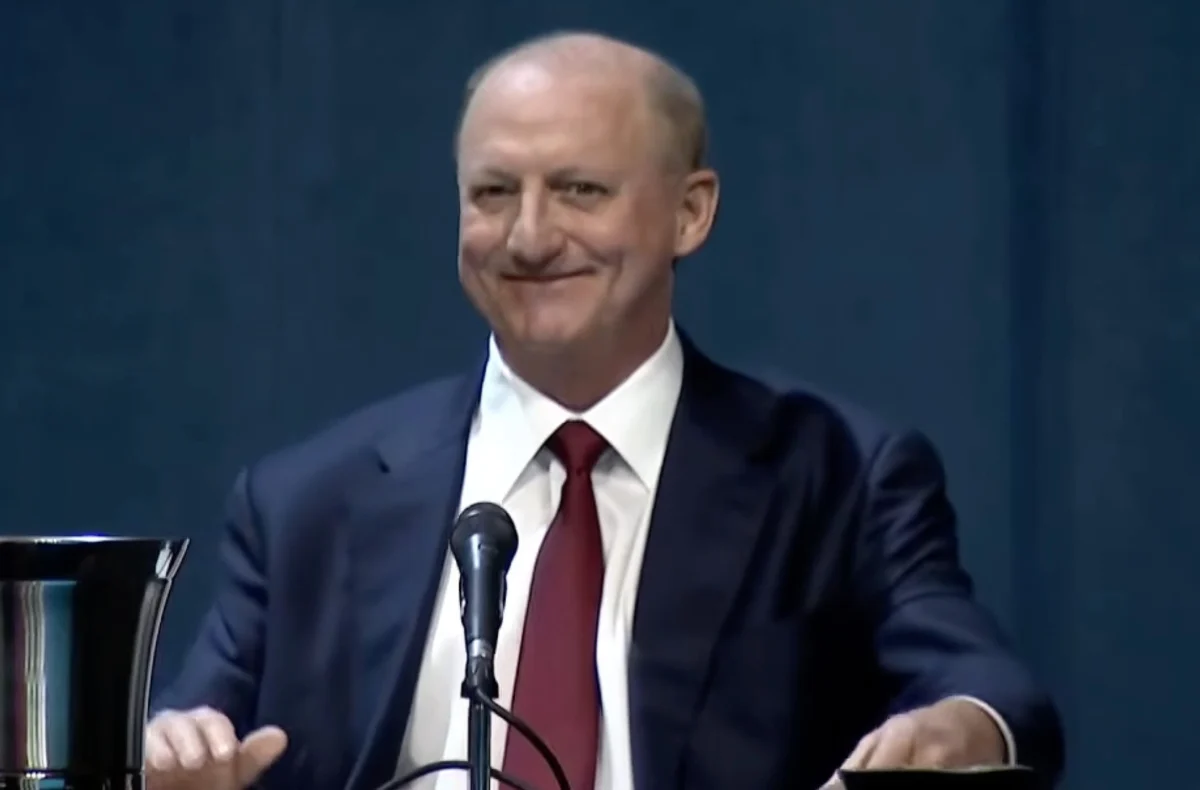
Berkshire Hathaway, the sprawling conglomerate now under the primary operational stewardship of CEO Greg Abel, reported a robust 16% increase in operating earnings for the second quarter of 2026, reaching $12.98 billion, a notable rise from $11.16 billion in the corresponding period a year prior. This impressive financial performance was primarily fueled by considerable strength across its diversified energy, railroad, and manufacturing operations, which collectively managed to more than offset a weaker showing from its vast insurance division. However, beyond the headline financial figures, the quarter’s results delivered a far more profound message: Greg Abel, now 64, is demonstrably initiating a strategic deployment of the monumental cash reserves accumulated under the tenure of legendary investor Warren Buffett, embarking on an accelerated program of share repurchases and a notable return to net stock purchases, marking a pivotal moment in the conglomerate’s history.
Robust Performance Across Core Industrial Segments Fuels Growth
The conglomerate’s diverse portfolio demonstrated significant operational resilience and growth in key industrial sectors, underpinning the strong overall earnings. Earnings from Berkshire’s manufacturing, service, and retailing businesses collectively surged by an impressive 24%, climbing to $4.47 billion. This segment, which encompasses a vast array of companies ranging from industrial product manufacturers like Marmon and Lubrizol to consumer goods and service providers, showcased broad-based strength. This performance reflects positive underlying economic conditions that have benefited industrial output and consumer spending, alongside effective management within these varied enterprises. Analysts had broadly anticipated solid, but perhaps not this level of, growth from these diversified holdings, underscoring the intrinsic value and operational efficiency across the group.
Berkshire Hathaway Energy (BHE), a cornerstone of the conglomerate’s infrastructure holdings, also delivered exceptional results, with its profit soaring by 27% to $891 million. BHE’s portfolio includes regulated electric and gas utilities, pipelines, and renewable energy assets, which typically provide stable and predictable cash flows. This robust growth underscores the strategic importance and steady income generation capabilities of Berkshire’s utility and energy transmission assets, often serving as a defensive play during market volatility and benefiting from long-term infrastructure investment cycles. The BNSF Railway, another critical infrastructure asset within Berkshire’s portfolio and one of North America’s largest freight railroad networks, posted a solid 6% increase in earnings, reaching $1.56 billion. BNSF’s performance is frequently seen as a bellwether for industrial activity and supply chain health across the continent, with increased freight volumes indicating healthy movement of raw materials, manufactured goods, and agricultural products. These strong performances from the industrial and infrastructure arms highlight the operational excellence and diversified revenue streams that form the bedrock of Berkshire’s overall profitability.
Insurance Sector Experiences Unfavorable Headwinds
In contrast to the buoyant performance of its industrial and energy divisions, Berkshire’s historically robust insurance operations, which include giants like GEICO, National Indemnity, and Gen Re, faced challenges during the second quarter. Underwriting earnings for the segment experienced a 13% decline, falling to $1.73 billion from $1.99 billion in the prior year. This reduction could be attributed to a combination of factors, potentially including increased catastrophe losses from severe weather events across various geographies, persistent competitive pricing pressures within certain insurance lines, or adverse reserve development adjustments. The global insurance market has been navigating complex dynamics, including climate change impacts and evolving regulatory landscapes, which can compress underwriting margins.
Compounding this, insurance investment income, a crucial component of the segment’s overall profitability derived from investing the substantial "float" (premiums collected but not yet paid out in claims), also saw a 9% decrease, settling at $3.06 billion. This dip in investment income is particularly noteworthy given the generally rising interest rate environment in early 2026, which theoretically should benefit insurers’ fixed-income portfolios over time. The decline could indicate a shift in asset allocation within the float portfolio, the realization of lower-yielding legacy investments, or specific market conditions affecting the performance of its diversified equity and fixed-income holdings. Despite these headwinds, the insurance businesses remain a vital source of capital and cash flow for Berkshire, providing the legendary "float" that Warren Buffett famously leveraged for decades to fund other long-term investments across the conglomerate. The segment’s long-term strategic importance remains undiminished, even if short-term results fluctuate.
The Abel Era: Accelerating Capital Deployment Signals Strategic Intent
Perhaps the most scrutinized aspect of Berkshire’s Q2 report, and a clear indicator of the unfolding leadership transition, was the definitive signal regarding capital allocation under Greg Abel’s leadership. The conglomerate repurchased approximately $4.5 billion of its own Class A and B shares during the quarter. This figure represents a dramatic acceleration from the mere $235 million spent on buybacks in the first three months of 2026, which had initially disappointed some investors hoping for a more immediate shift. This substantial increase in share repurchase activity is a potent indicator of management’s belief that Berkshire Hathaway’s stock is trading below its intrinsic value, a core tenet of value investing.
This aggressive pace of buybacks is a direct reflection of Abel beginning to imprint his strategic vision on Berkshire’s capital allocation strategy, which formally commenced at the start of the year when he assumed the CEO role from Warren Buffett. For many years under Buffett, buybacks were executed judiciously, often when the stock traded at a specific discount to book value or when Buffett personally deemed the shares significantly undervalued. Abel’s more proactive stance on buybacks, even if below peak historical levels seen in some of Buffett’s most aggressive buyback periods (e.g., late 2020/early 2021), suggests a potentially more consistent approach to capital management, aiming to optimize shareholder returns in an environment where large-scale, value-accretive acquisitions have become increasingly scarce and competitive. Shareholders, who have long clamored for more active capital management, will likely view this as a positive and welcome development.
Addressing the Cash Conundrum: A Record Pile Deployed
A persistent challenge and a subject of considerable discussion for Berkshire Hathaway in recent years has been its colossal cash pile, which had swelled to unprecedented levels, reaching a record $397.4 billion at the end of the first quarter of 2026. This "cash fortress," as it was often dubbed, was a testament to Buffett’s disciplined, patient approach and his difficulty in finding "elephant-sized" acquisitions that met his stringent valuation criteria in an overheated market. Shareholders, however, had grown increasingly vocal about the drag on overall returns imposed by such vast sums sitting primarily in low-yielding U.S. Treasury bills, especially during periods of strong equity market performance where other companies were actively investing or returning capital.
The second quarter saw a notable and anticipated reversal of this trend, with Berkshire’s cash pile declining significantly to $365.5 billion by the end of June. This reduction of over $30 billion in cash within a single quarter indicates a robust deployment of capital through a combination of increased buybacks, strategic stock purchases, and a significant acquisition. This move directly addresses long-standing shareholder calls for more aggressive capital deployment, signaling that the new leadership is committed to actively putting the conglomerate’s substantial financial power to work rather than letting it accumulate indefinitely. The strategic shift is not just about buybacks; it’s about a broader re-evaluation of capital allocation priorities designed to enhance shareholder value and ensure the efficient use of Berkshire’s vast, liquid resources in a way that aligns with its long-term growth objectives.
A Historic Return to Net Equity Purchases Signals Renewed Confidence
Beyond the accelerated buybacks, one of the most significant revelations from the Q2 report was Berkshire’s pivot to becoming a net buyer of equities, with nearly $20 billion in net purchases during the quarter. This marked the emphatic end of an extraordinary 14-consecutive-quarter streak during which the conglomerate had been a net seller of stocks. This sustained period of selling, which saw Berkshire divest billions from its publicly traded portfolio, underscored Buffett’s cautious stance on market valuations and his preference for cash preservation amidst what he perceived as frothy equity prices or a lack of compelling opportunities.
The reversal of this long-standing pattern is a powerful statement. It suggests that Greg Abel, likely in close consultation with Warren Buffett, has identified compelling investment opportunities in the broader equity market that now meet Berkshire’s rigorous criteria for value and long-term potential. This shift could reflect a belief that certain sectors or individual companies are now trading at more attractive valuations, or it could signal a more proactive approach to portfolio management under the new leadership, perhaps embracing a wider universe of potential investments. The return to net buying is a tangible demonstration that Berkshire is once again actively seeking growth through its public market investments, moving beyond a purely defensive, cash-hoarding posture and into a more growth-oriented allocation.
Strategic Acquisitions and Key Portfolio Additions Highlight Evolving Strategy
The second quarter also saw the closing of a significant strategic acquisition: Berkshire’s purchase of Taylor Morrison, a prominent homebuilder. While the specific terms and value were disclosed earlier in the year, the completion of this deal within Q2 adds a substantial asset to Berkshire’s diverse portfolio, particularly strengthening its position in the robust U.S. housing and construction sector. This acquisition aligns with Berkshire’s long-standing preference for businesses with strong economic moats, tangible assets, and predictable cash flows, and it further diversifies its industrial holdings, positioning the conglomerate to potentially benefit from ongoing housing market demand, demographic trends, and the need for new housing inventory.
Furthermore, the filing provided crucial insights into Berkshire’s evolving equity portfolio. Alphabet, the parent company of Google, is now confirmed to be among Berkshire’s five largest equity holdings by market value at the end of June. This places Alphabet alongside long-time Berkshire stalwarts such as American Express, Apple, Bank of America, and Coca-Cola, signifying a notable shift in the composition of its core holdings. Berkshire had previously disclosed a substantial $10 billion investment in the Google parent earlier in 2026, earmarked specifically to help fund AI development. This investment in a leading technology firm, particularly one at the forefront of artificial intelligence, represents a notable evolution in Berkshire’s investment strategy, historically characterized by a cautious approach to the tech sector, though Apple has been a major exception for years.
Intriguingly, Warren Buffett himself confirmed to CNBC that he initiated the Alphabet investment, albeit after consulting with Greg Abel. This detail is highly significant, as it illustrates a collaborative approach to major investment decisions during this critical leadership transition period. It suggests that while Abel is clearly taking the reins of operational and capital allocation decisions, Buffett remains an active and influential voice, particularly in areas where his unique insights and long-term perspective can add considerable value. The Alphabet investment also signals a potential acknowledgment within Berkshire of the transformative power of AI and the necessity to adapt its portfolio to future technological landscapes, even if traditional value principles remain paramount. It underscores a pragmatic evolution rather than a radical departure from its core philosophy.
Market Reaction and Shareholder Sentiment Reflect Growing Confidence
Despite the strong operational results and the strategic capital deployment initiatives, shares of Berkshire Hathaway have shown a relatively modest gain of just 3% year-to-date, slightly underperforming the broader S&P 500’s robust 13% gain over the same period. This discrepancy underscores the persistent challenge of valuing a sprawling, complex conglomerate like Berkshire and the market’s continuous search for clear catalysts that can unlock shareholder value from its massive asset base. Berkshire’s diverse holdings often mean its stock doesn’t move as sharply as single-sector companies.
However, there has been a recent uptick in investor confidence, with the stock rising 9% over the last three months, which largely coincides with the period covered by this earnings report and the visible shift in capital allocation strategy. This recent momentum suggests that investors are beginning to react positively to Abel’s more proactive approach to capital deployment, viewing the increased buybacks and net stock purchases as concrete steps towards improving shareholder returns and more efficient capital management. The market appears to be interpreting these actions as a clear signal that the new leadership is serious about addressing the historical cash drag and optimizing the conglomerate’s financial structure for future growth. Analysts are likely to continue scrutinizing future capital allocation decisions, particularly the sustained pace of buybacks and the nature of new equity investments, as key indicators of Berkshire’s trajectory under Greg Abel.
The Transition of Leadership and Future Outlook
The second quarter of 2026 clearly marks a pivotal moment in Berkshire Hathaway’s history, solidifying the ongoing transition from the legendary Warren Buffett to Greg Abel. While Buffett remains Chairman and continues to offer his invaluable counsel and strategic insights, the day-to-day operational decisions and, critically, the capital allocation decisions are increasingly resting on Abel’s shoulders. His actions in Q2 – the accelerated buybacks, the significant reduction in the cash pile, and the return to net equity purchases – demonstrate a clear willingness to depart from the ultra-conservative holding pattern of recent years and to actively manage the conglomerate’s vast resources for optimal shareholder benefit.
This period represents a delicate but well-managed balance: honoring Buffett’s foundational principles of value investing, long-term perspective, and a focus on strong businesses, while simultaneously adapting to a rapidly changing economic and technological landscape. The Alphabet investment, initiated by Buffett but in close consultation with Abel, serves as a powerful symbol of this evolving strategy – a blend of enduring wisdom with a pragmatic recognition of future growth drivers like artificial intelligence.
Looking ahead, the market will be keenly watching for sustained patterns of capital deployment. Will the pace of buybacks continue or even increase in subsequent quarters? What other sectors or companies will Berkshire target for its renewed equity investments, and will there be a continued focus on technology or other growth areas? And how will the performance of its core businesses, particularly the previously struggling insurance segment, evolve in the coming quarters amidst a dynamic global economic environment? Greg Abel’s first full year as CEO is shaping up to be a period of significant strategic adjustments, aiming to ensure that Berkshire Hathaway remains a formidable and value-creating entity for decades to come, leveraging its unique financial strength and diversified portfolio to navigate an increasingly complex global economy. The Q2 results offer a compelling and promising glimpse into the direction of this new era.

