
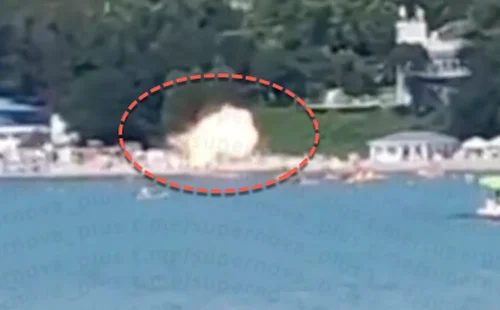
Gelendzhik, Russia – August 3, 2026 – The protracted conflict between Russia and Ukraine witnessed a dangerous and tragic escalation today as a Ukrainian suicide drone reportedly struck a crowded beach in the Russian Black Sea resort city of Gelendzhik. The incident, captured in distressing video footage circulating widely online, resulted in the deaths of three individuals and injuries to at least thirteen others, including children, according to initial reports from Russian authorities. This strike marks a significant and concerning expansion of the conflict into a previously considered safer civilian zone, underscoring the increasing volatility and humanitarian cost of the war in the vital Black Sea region.
Immediate Aftermath and Casualty Reports
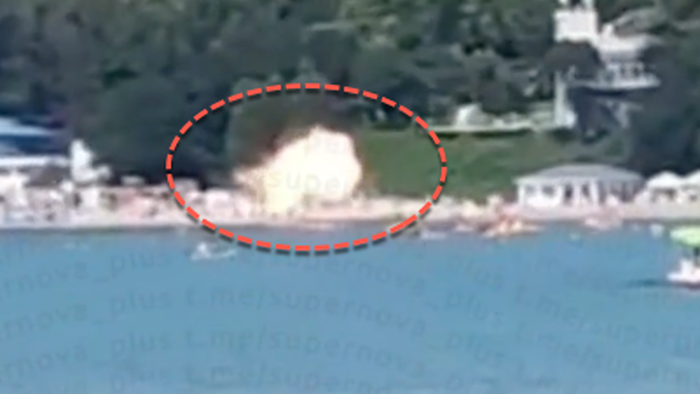
The drone attack unfolded on a bustling Monday morning, shattering the tranquility of what should have been a peaceful summer day for tourists and residents in Arkhipo-Osipovka, a village near Gelendzhik. Video evidence appears to show the unmanned aerial vehicle (UAV) descending rapidly before impact on a beach teeming with people. Audio accompanying the footage suggests that Russian air-defense systems were engaged, attempting to intercept the incoming drone moments before it reached the shore. However, these efforts proved unsuccessful in preventing the tragic outcome.
Local Russian media outlet Interfax, citing Governor Veniamin Kondratyev of the Krasnodar Krai, reported the immediate casualties. "A tragedy has occurred in Gelendzhik," Kondratyev stated via his Max channel. "Three people were killed in the village of Arkhipo-Osipovka due to falling UAV debris, according to preliminary information. Another 13 people, including children, were injured. They are receiving necessary medical care." Kondratyev further emphasized that the "attack targeted civilian infrastructure," a claim that, if substantiated, would carry significant implications under international humanitarian law. Emergency and special services were promptly dispatched to the drone wreckage sites, initiating rescue and recovery operations amidst scenes of chaos and distress. Medical teams worked to triage and transport the injured to local hospitals, with the severity of their conditions yet to be fully disclosed. The psychological impact on survivors and witnesses is also expected to be profound, as the reality of the war encroaches directly upon everyday civilian life.
The Incident: A Chronological Account
The sequence of events leading to the tragic strike began with the drone’s approach over the Black Sea. While the exact launch location and flight path remain unconfirmed, such long-range drone operations typically involve sophisticated planning and navigation. Residents and tourists in the vicinity reportedly heard the distinct hum of an approaching drone, soon followed by the sounds of air defense systems attempting interception.
- Pre-Impact: Witnesses described a period of heightened tension as air defense fire lit up the sky. The distinct sound of automatic gunfire, presumably from anti-aircraft systems, can be heard in several circulated videos, indicating an active attempt to neutralize the threat.
- Impact: Despite defensive measures, the drone made impact directly on the beach. The resulting explosion and fragmentation caused immediate fatalities and injuries among the unsuspecting crowd enjoying the summer weather. The nature of the drone – described as a "suicide drone" or "loitering munition" – implies it was designed to detonate upon impact, maximizing destructive potential at its target.
- Aftermath: Panic ensued as beachgoers scattered, seeking cover or attempting to aid the wounded. Emergency services were quickly mobilized, and the area was secured for investigation. The debris field from the drone and the impact zone became a grim testament to the sudden violence that had descended upon the resort town.
It remains unclear whether the drone was deliberately aimed at the civilian beach or if it was damaged by air defense fire, causing it to deviate from an intended military target. Russian authorities were quick to assert that "civilian infrastructure" was the target, implying a deliberate act. Ukrainian officials, as is often the case with strikes on Russian territory, have yet to issue a direct claim of responsibility or offer clarification, maintaining strategic ambiguity. This ambiguity further complicates the assessment of intent and adherence to the laws of armed conflict.
Strategic Context: The Black Sea as a Contested Zone
The Black Sea has emerged as a critical and intensely contested theater in the broader Russia-Ukraine conflict. From the initial stages of the war, control over its waters, ports, and associated infrastructure has been paramount for both military logistics and economic stability. Both Russia and Ukraine have increasingly utilized drones, naval assets, and missile systems to target each other’s military vessels, port facilities, and energy infrastructure.
Historically, the Black Sea has served as a vital maritime trade route, particularly for grain exports from Ukraine and oil and gas shipments from Russia. However, since the full-scale invasion in February 2022, this vital artery has been weaponized. Naval blockades, attacks on shipping, and extensive mining operations have severely disrupted global supply chains and significantly increased shipping insurance premiums, impacting global food and energy security. Attacks have included:
- Naval Targets: Numerous Russian warships, including the flagship Moskva, have been sunk or damaged by Ukrainian forces using a combination of anti-ship missiles and unmanned surface vessels (USVs). Russia, in turn, has targeted Ukrainian naval bases and port facilities.
- Port Infrastructure: Key Ukrainian ports like Odesa and Mykolaiv have been subjected to relentless missile and drone attacks, aiming to cripple Ukraine’s ability to export goods and receive military aid. Russian ports, particularly those supporting its Black Sea Fleet, have also faced drone and missile threats.
- Energy Infrastructure: Oil and gas terminals, storage facilities, and even offshore drilling platforms in the Black Sea have become legitimate military targets in the eyes of the belligerents. These strikes aim to disrupt energy supplies and inflict economic pain.
- Civilian Shipping: While both sides claim adherence to rules of engagement, numerous incidents have involved civilian cargo ships being caught in the crossfire or becoming targets, further exacerbating the humanitarian crisis and economic disruption. The current incident in Gelendzhik represents a significant escalation, bringing the conflict directly to a civilian recreational area.
The strategic importance of the Black Sea for Russia lies in its access to the Mediterranean and its projection of naval power. For Ukraine, it is crucial for its economy, particularly agricultural exports, and its sovereignty. The increasing use of drones by both sides, including long-range attack drones, has transformed the operational environment, making previously secure areas vulnerable. This technological shift has blurred the lines between front lines and rear areas, placing civilian populations at greater risk.
Gelendzhik: A Civilian Resort Town Under Threat
Gelendzhik, located on the Black Sea coast in Russia’s Krasnodar Krai, is renowned as a popular resort destination. Known for its picturesque bays, pebble beaches, and warm climate, it typically attracts thousands of Russian and international tourists during the summer months. The town, along with neighboring resorts like Sochi and Anapa, forms part of Russia’s major Black Sea Riviera, offering a stark contrast to the active war zones.
The targeting, whether intentional or accidental, of a civilian beach in Gelendzhik represents a profound psychological shock. For many Russians, these coastal towns represented a sanctuary, a place to escape the grim realities of the conflict. The incident shatters this illusion of safety, bringing the war’s direct consequences to a population that, while impacted by the conflict through economic sanctions and national mobilization, had largely been spared direct kinetic attacks on their daily lives. The fact that children were among the injured amplifies the tragedy and is likely to provoke strong emotional responses both domestically and internationally. This event underscores the indiscriminate nature that modern warfare can assume, especially when conducted with long-range, autonomous or semi-autonomous weapons systems.
Official Reactions and Accusations
The immediate reaction from Russian authorities was one of condemnation and resolve. Governor Kondratyev’s statement, swiftly echoed by other officials, unequivocally labeled the incident a deliberate attack on civilian infrastructure. The Russian Ministry of Defense and the Foreign Ministry are expected to issue formal condemnations, likely accusing Ukraine and its Western allies of terrorism and war crimes. Calls for retribution and increased security measures along the Black Sea coast are anticipated. The narrative from Moscow will undoubtedly focus on the targeting of innocent civilians, aiming to galvanize public support and justify potential retaliatory strikes.
Ukrainian officials, consistent with their established communication strategy regarding attacks on Russian territory, are likely to maintain a degree of silence or ambiguity. If they address the incident, it might be framed within the context of Russia’s ongoing aggression and the natural consequences of an invading force. They might emphasize that Russia initiated the conflict, leading to such outcomes, or suggest that any civilian casualties are unintended collateral damage resulting from air defense activities, as the drone might have been targeting a military asset. Direct admission of targeting civilians would contradict Ukraine’s stated adherence to international law and could alienate international supporters.
International bodies and human rights organizations are expected to call for a thorough investigation into the incident. The United Nations, the International Criminal Court, and various NGOs will likely stress the importance of distinguishing between civilian and military targets, as mandated by international humanitarian law, specifically the Geneva Conventions. Calls for de-escalation and protection of civilians will undoubtedly intensify in the wake of this tragic event. The incident also puts pressure on Western nations supporting Ukraine, who consistently urge Kyiv to abide by international law in its defensive operations.
The Evolving Nature of Drone Warfare
The attack on Gelendzhik beach is a stark reminder of the evolving landscape of modern warfare, characterized by the pervasive use of unmanned aerial vehicles. Drones, ranging from small commercial quadcopters adapted for military use to sophisticated long-range combat UAVs, have become indispensable tools for reconnaissance, targeting, and direct attack.
- Accessibility and Cost-Effectiveness: Drones offer a relatively inexpensive and low-risk method for conducting operations deep within enemy territory, circumventing traditional air defense systems that are often designed for larger, manned aircraft.
- Precision and Range: Advances in GPS navigation, sensor technology, and artificial intelligence have significantly enhanced the precision and range of drones, enabling them to strike targets hundreds of kilometers away.
- Asymmetric Warfare: For Ukraine, drones have been crucial in conducting asymmetric warfare against a numerically and technologically superior Russian military, allowing them to project power beyond their immediate front lines. For Russia, drones are equally vital for surveillance and precision strikes.
- Challenges to International Law: The proliferation of drones, particularly those with autonomous capabilities, raises complex questions regarding accountability, intent, and adherence to international humanitarian law. Distinguishing between military and civilian targets becomes more challenging when strikes occur far from conventional battlefields.
The incident in Gelendzhik highlights the inherent risks of drone warfare, where the line between legitimate military targets and civilian infrastructure can become dangerously blurred, either through intent, error, or collateral effects of interception attempts.
Humanitarian Concerns and International Law
The reported targeting of a civilian beach, resulting in multiple casualties, immediately raises serious humanitarian concerns and questions about compliance with international humanitarian law (IHL), also known as the laws of armed conflict. Key principles of IHL include:
- Distinction: Parties to a conflict must at all times distinguish between civilians and combatants and between civilian objects and military objectives. Attacks must only be directed against military objectives. Civilians and civilian objects must not be attacked.
- Proportionality: Even if a military objective is targeted, an attack must be canceled or suspended if it becomes apparent that the expected civilian casualties or damage to civilian objects would be excessive in relation to the anticipated concrete and direct military advantage.
- Precaution: All feasible precautions must be taken to avoid, or at least minimize, incidental loss of civilian life, injury to civilians, and damage to civilian objects.
If the drone was deliberately aimed at a crowded civilian beach, it would constitute a clear violation of the principle of distinction and could be classified as a war crime. If the drone was damaged by air defense fire and then veered off course into a civilian area, the responsibility might be more complex, but the initial intent behind its deployment and the precautions taken would still be scrutinized. The international community will be closely watching for investigations that clarify the intent behind the strike and whether all parties adhered to their obligations under IHL.
Economic and Psychological Impact
Beyond the immediate human cost, the attack on Gelendzhik is expected to have significant economic and psychological repercussions.
- Tourism Industry: The incident will undoubtedly cripple the summer tourist season in Gelendzhik and potentially other Black Sea resorts in Russia. Travelers, both domestic and international, will be deterred by the perceived lack of safety, leading to substantial financial losses for local businesses and the regional economy. This comes at a time when Russia’s economy is already under strain from sanctions.
- Shipping and Trade: While Gelendzhik is primarily a resort, the broader Black Sea region remains critical for trade. Such incidents contribute to an overall climate of insecurity, potentially further driving up shipping costs, insurance premiums, and complicating maritime logistics for all vessels operating in the area.
- Public Morale and Psychology: The direct attack on a recreational civilian area will have a profound psychological impact on the Russian populace. It shatters the sense of normalcy and invulnerability that many citizens in rear areas may have held. This can lead to increased anxiety, fear, and a demand for stronger defensive measures, but also potentially a hardening of attitudes towards the conflict. The war, previously a distant reality for many, has now landed on their shores.
Broader Implications for Escalation
The strike on Gelendzhik beach carries serious implications for further escalation of the Russia-Ukraine conflict. Russia has consistently vowed severe retaliation for attacks on its territory, especially those resulting in civilian casualties. This incident could serve as a pretext for Russia to intensify its missile and drone campaigns against Ukrainian cities and critical infrastructure, potentially leading to a new cycle of retaliatory strikes that further destabilize the region and increase civilian suffering.
The ongoing "drone war" in the Black Sea and across the Russia-Ukraine border demonstrates a concerning trend where both sides are willing and able to strike deep into enemy territory. This expansion of the battlefield underscores the urgent need for de-escalation and adherence to international humanitarian law to prevent an even more catastrophic widening of the conflict. The international community faces the challenge of holding all parties accountable while simultaneously seeking pathways to a peaceful resolution, a task made infinitely more difficult by tragic incidents like the one witnessed today in Gelendzhik. The Black Sea, once a bustling hub of commerce and leisure, now stands as a stark symbol of a conflict spiraling into ever more dangerous and unpredictable territory.

