
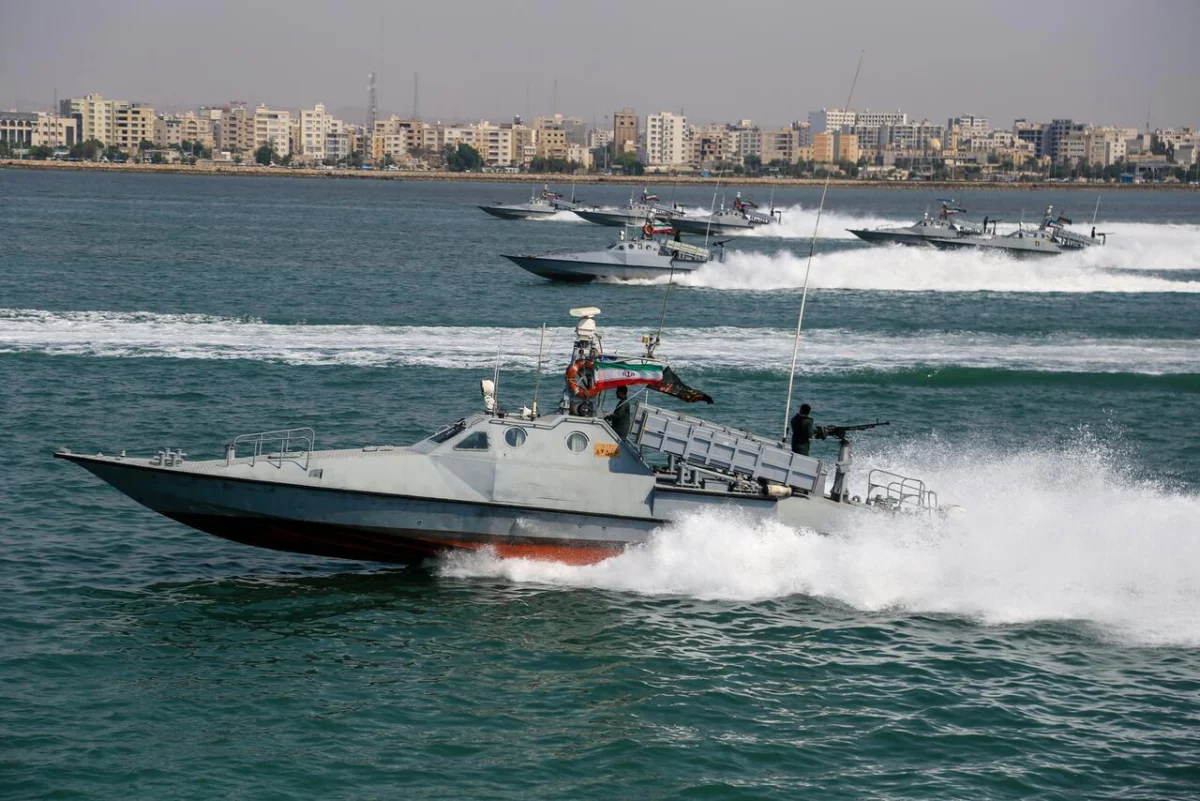
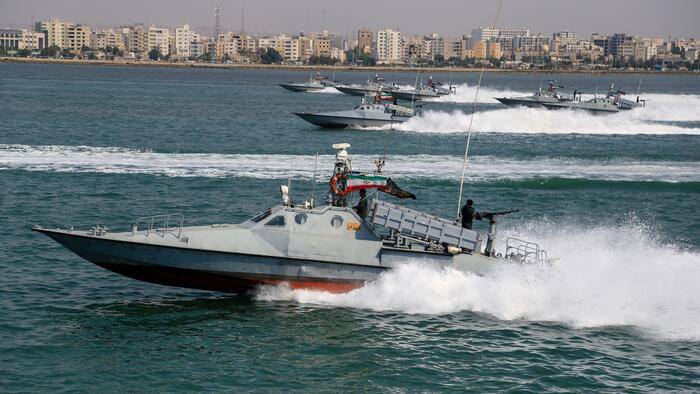
As renewed hostilities between Iran and the United States continue to ripple across the Middle East, extending their reach into Iraq and Yemen, the Hamshahri daily, a publication closely aligned with the Islamic Revolutionary Guard Corps (IRGC), has prominently featured a detailed report on the IRGC’s speedboat fleet in the Persian Gulf. This front-page focus underscores Tehran’s reliance on its unique naval capabilities as a cornerstone of its deterrence strategy amidst heightened regional instability. The Hamshahri report, published on Wednesday, characterized these high-speed vessels as the "winning card in the Persian Gulf," asserting their critical role in counteracting any expansion of US military actions in the region. The daily highlighted the fleet’s adoption of the "swarm attack" tactic, describing it as one of the most complex challenges confronting American naval forces in the Persian Gulf over the past two decades. Furthermore, the report emphasized the speedboats’ strategic importance in maintaining Iran’s influence over the vital Strait of Hormuz, particularly over the preceding five months of increased tensions.
Iran’s Asymmetric Naval Doctrine and the "Swarm Attack"
Iran’s naval strategy, as articulated by the Hamshahri, is fundamentally rooted in an asymmetric approach: the development and deployment of a large number of small, high-speed, and low-cost boats. This doctrine intentionally eschews direct competition with the technologically superior and conventionally larger fleets of global naval powers, particularly the United States. Instead, it aims to achieve strategic objectives by increasing the operational costs for an adversary, limiting their freedom of maneuver, and creating an environment of perpetual threat in confined waterways. The "swarm attack" tactic is central to this doctrine. It involves launching numerous small, agile vessels simultaneously against a larger, more sophisticated warship. These boats, often equipped with anti-ship missiles, rockets, or even explosives for suicide attacks, are designed to overwhelm an enemy’s defenses through sheer numbers and speed, making it difficult for a single, larger vessel to engage all threats effectively.
Historically, the concept of swarm tactics has been explored by various navies, particularly in scenarios where a less powerful force seeks to neutralize the technological advantage of a superior opponent. For Iran, the narrow confines of the Persian Gulf and the Strait of Hormuz provide an ideal operational environment for this strategy. The geography inherently restricts the maneuverability of large capital ships, making them more vulnerable to coordinated attacks from fast, nimble craft operating from numerous hidden coastal positions. This strategy aligns with Iran’s broader military philosophy of "deterrence through denial," where its objective is not necessarily to defeat a superior adversary outright, but to inflict unacceptable costs and complications, thereby deterring aggression or enforcing specific strategic objectives.
The Strategic Significance of the Strait of Hormuz
The Strait of Hormuz is one of the world’s most critical maritime choke points, connecting the Persian Gulf to the Arabian Sea and beyond. Approximately one-fifth of the world’s total petroleum consumption, and a substantial portion of its liquefied natural gas, passes through this narrow waterway daily. Any disruption to shipping in the Strait has immediate and profound global economic repercussions, affecting energy prices, trade routes, and insurance costs worldwide. For Iran, control or the credible threat of closure of the Strait of Hormuz represents its most potent leverage in regional and international relations. The Hamshahri report explicitly linked the IRGC’s naval capabilities to this strategic objective, stating: "The combination of speedboats, naval mines, cruise and ballistic missiles, and drones has completed the puzzle of Iran’s strategic encirclement of the Strait of Hormuz."
This "strategic encirclement" signifies Iran’s layered defense and offense capabilities designed to create a comprehensive deterrent in the Strait. Naval mines, easily deployed and difficult to detect, can severely impede shipping. Cruise and ballistic missiles, launched from coastal batteries or naval vessels, offer long-range strike capabilities against surface targets. Drones, both reconnaissance and armed variants, provide enhanced situational awareness and precision strike options. When integrated with the high-speed speedboat fleet, these elements present a formidable challenge to any naval force attempting to maintain open passage or project power in the region. The implied threat is that Iran possesses the means to make passage through the Strait prohibitively risky or costly, thereby disrupting global energy markets and creating international pressure during times of conflict.
Escalating Regional Tensions and Their Genesis
The Hamshahri‘s report comes amidst a backdrop of significantly escalated tensions between Iran and the United States, alongside their respective proxies, which have increasingly manifested across Iraq, Syria, Yemen, and the broader Red Sea region. The catalyst for this latest surge in hostilities can be traced back to the aftermath of the October 7th, 2023 attacks in Israel and the subsequent Israeli military campaign in Gaza. This conflict ignited a broader regional confrontation, with Iran-backed groups – including Hamas in Gaza, Hezbollah in Lebanon, and the Houthis in Yemen – intensifying their actions against Israel and its allies.
In particular, the Houthi movement in Yemen began launching missile and drone attacks against commercial shipping in the Red Sea, claiming solidarity with Palestinians and demanding an end to the Gaza war. These attacks, which started in mid-November 2023, severely disrupted international maritime trade, forcing many shipping companies to reroute vessels around Africa, significantly increasing transit times and costs. In response, the United States and its allies launched "Operation Prosperity Guardian" in December 2023 to protect shipping and, subsequently, initiated retaliatory airstrikes against Houthi targets in Yemen starting in January 2024. Simultaneously, US forces in Iraq and Syria faced a barrage of drone and rocket attacks from Iran-backed militias, leading to several US casualties and subsequent American retaliatory strikes against militia facilities. These interconnected conflicts underscore a dangerous expansion of the shadow war between Iran and the US, bringing the two powers closer to direct confrontation than at any point in recent memory. The Hamshahri‘s emphasis on Iran’s naval strength in the Gulf is a direct reflection of Tehran’s perceived need to bolster its deterrence posture in this volatile environment.
Diverging Voices within Iran’s Leadership: A Call for Peace
Amidst the hardline rhetoric emphasizing military readiness and deterrence, a notable counter-narrative has emerged from certain influential figures within Iran, advocating for de-escalation and peace. Brigadier General Hossein Alaei, the first commander of the Islamic Revolutionary Guard Corps (IRGC) Navy and a former Iranian defense official, has publicly joined political figures in calling for an end to the ongoing conflicts with the United States and Israel. Alaei, a revered figure who served as a senior IRGC commander during the brutal Iran-Iraq War (1980–1988), carries significant weight within military and political circles. His comments offer a rare glimpse into potential internal debates within the Iranian establishment regarding the wisdom and sustainability of prolonged confrontation.
Alaei’s perspective, as reported, is that Iran’s true victory ultimately lies in the restoration of peace and stability. Reflecting on the conflicts launched against Iran, particularly since the perceived breakdown of diplomatic agreements, he stated, "In war, while it is true that Iran defends itself, stands firm, and strikes back at its enemy, the very existence of war is to the detriment of the Iranian people." This statement suggests a pragmatic assessment of the long-term costs of conflict on the Iranian populace, contrasting with the often triumphalist narratives of victory espoused by more hardline elements. His call for peace is particularly significant given his background as a foundational figure in the IRGC’s naval development, the very force now being lauded for its deterrent capabilities.
Alaei also criticized the collapse of a memorandum of understanding (MoU) between Iran and the United States, describing the agreement as a "complete victory for Iran and a defeat for Israel." While the specific MoU and its dates are not detailed, his comments strongly echo the sentiments surrounding the Joint Comprehensive Plan of Action (JCPOA), or the Iran nuclear deal, which the US withdrew from in 2018. He asserted, "In this agreement, we gave up virtually nothing," arguing that the US mistakenly believed it had "stripped, damaged and destroyed Iran’s nuclear program." Alaei contended that Iran’s position from the outset was not to possess nuclear weapons, and any concession was merely to discuss the nuclear issue in the future. This interpretation suggests that from an Iranian perspective, the JCPOA was a successful diplomatic maneuver that secured sanctions relief without fundamentally compromising its strategic nuclear capabilities or ambitions.
Furthermore, Alaei claimed that the agreement had successfully pressured Israel to halt its military strikes on Lebanon. "Israel wanted to strike Lebanon every day; through this agreement, we stopped Israel’s daily attacks on Lebanon. This is a very big victory," he stated. This perspective highlights a key Iranian objective in any diplomatic engagement: to constrain Israeli military actions against its proxies or allies in the region, particularly Hezbollah in Lebanon. While external analyses of the JCPOA often focused solely on its nuclear provisions, Alaei’s remarks reveal the broader regional security implications that Iran sought to achieve through such an agreement. His advocacy for diplomacy stands in stark contrast to the hardline factions in Iran who, following the resumption of military clashes, have consistently called for an end to all negotiations with the United States and for the continuation of military confrontation. This internal divergence suggests a complex political landscape within Iran, where different factions weigh the benefits of military deterrence against the costs of prolonged conflict and the potential gains from diplomatic engagement.
Broader Impact and Implications
The current trajectory of US-Iran tensions and Iran’s emphasis on its asymmetric naval capabilities carry significant implications for regional stability, global energy security, and international diplomacy.
Regional Stability: The militarization of the Persian Gulf and the Strait of Hormuz by Iran, coupled with the consistent presence of US naval forces, creates a volatile environment ripe for miscalculation. Minor incidents, such as close encounters between vessels or accidental provocations, could rapidly escalate into broader conflicts. The ongoing proxy conflicts in Iraq, Syria, and Yemen further destabilize the region, creating a complex web of interconnected flashpoints that could draw in other regional and international actors. The constant state of alert and the rhetoric of deterrence contribute to a pervasive sense of insecurity among Gulf states.
Global Energy Security: The Strait of Hormuz remains a crucial artery for global oil and gas supplies. Any credible threat to its passage, or actual disruption, would send shockwaves through international energy markets, leading to soaring oil prices, supply chain disruptions, and potentially triggering a global economic downturn. Insurance premiums for shipping through the Gulf have already seen increases during periods of heightened tension, reflecting the perceived risks. The economic fallout would not be limited to energy-importing nations but would also impact oil-producing countries in the region.
US Strategy and Counter-Measures: The "swarm attack" tactic poses a unique challenge to the conventional naval superiority of the United States. While US warships are technologically advanced, they are designed for blue-water operations against peer adversaries, not necessarily for overwhelming numbers of small, fast, and expendable craft in confined littoral zones. The US Navy has been investing in countermeasures, including advanced sensors, defensive systems, and unmanned surface and aerial vehicles (USVs/UAVs) to detect and neutralize such threats. However, effectively countering a large-scale swarm attack without incurring significant losses remains a complex operational dilemma, pushing the US to adapt its naval doctrine and technological investments for asymmetric warfare scenarios.
Diplomatic Avenues and Future Outlook: The divergence of views within Iran, as exemplified by Brigadier General Alaei’s statements, suggests that while hardline elements currently dominate the public discourse on military readiness, there may still be an appetite for diplomatic solutions among certain influential figures. However, the collapse of past agreements like the JCPOA and the deep mistrust between Tehran and Washington make any future diplomatic breakthroughs exceptionally difficult. The current geopolitical landscape, with its array of interconnected conflicts, necessitates a multi-faceted approach involving both robust deterrence and persistent diplomatic efforts to prevent further escalation and to find pathways toward de-escalation and regional stability. The strategic importance of the Strait of Hormuz ensures that the dynamics of Iran’s naval power will remain a central concern for global security and economic stability.

