
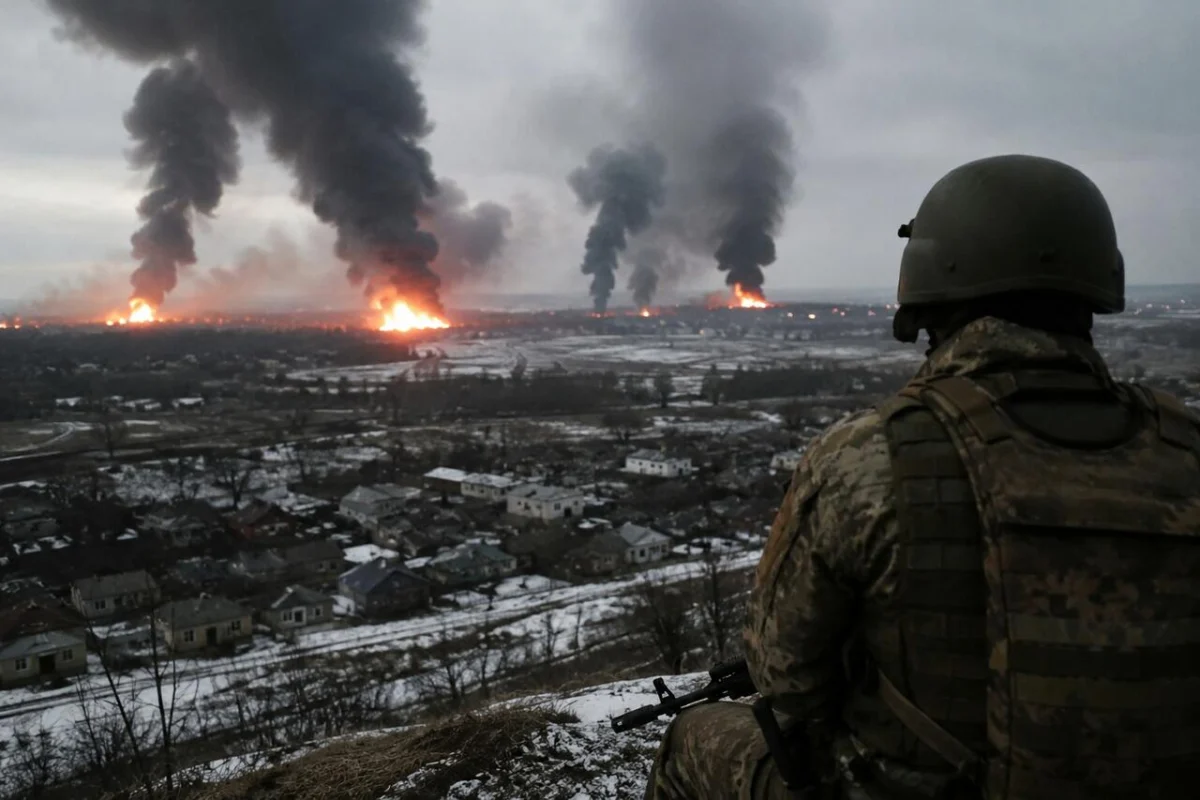
The geopolitical landscape of 2026 is defined not merely by current conflicts but by an unprecedented global rearmament and strategic infrastructure build-up, signaling a profound shift in international relations. Governments across Europe, the Indo-Pacific, and the Middle East are committing extraordinary resources to military production, weapons procurement, and long-term defense planning. This aggressive posture, often justified as deterrence, paradoxically fosters an environment where preparation for war becomes a catalyst for heightened tension, creating a complex and potentially unstable global security architecture. Every new military capability, intended to prevent aggression, is simultaneously perceived as a threat by adversaries, initiating a self-perpetuating cycle of escalation. The result is a collection of sophisticated military projects operating concurrently across multiple regions, each designed to safeguard national interests while inadvertently increasing the stakes and potential consequences of miscalculation.
Recent Escalations Underline Global Volatility
The month of July 2026 has witnessed a series of events that underscore the inherent dangers of this global rearmament trend. On July 23, China initiated two days of live-fire military drills in sections of the Taiwan Strait, particularly near the coast of Fujian province. These exercises followed high-level, contentious discussions between U.S. Secretary of State Marco Rubio and Chinese Foreign Minister Wang Yi, where Taiwan’s status was a primary point of contention. The drills, building upon earlier large-scale Chinese military maneuvers, intensified existing concerns over the escalating military activity around the self-governing island.
Concurrently, the Middle East saw a dangerous intensification of the U.S.-Iran conflict. According to Associated Press reporting on July 23, U.S. forces conducted another night of airstrikes against Iranian targets, amid persistent tensions surrounding the crucial Strait of Hormuz. Iran and its allied forces have continued to threaten or attack shipping and regional infrastructure, leading to significant economic and human costs. Reuters reported that the conflict had already cost the United States approximately $37.5 billion, with 18 American service members killed and over 430 wounded, alongside severe disruptions to maritime trade through key regional chokepoints. Further exacerbating the situation, on the same day, Yemen’s Iran-backed Houthi movement claimed responsibility for attacks on two Saudi oil tankers in the Red Sea, signaling a dangerous geographic expansion of the conflict.
Unprecedented Surge in Global Military Expenditure
The scale of this global transformation is no longer a matter of conjecture but is starkly reflected in recent financial data. The Stockholm International Peace Research Institute (SIPRI) reported that global military expenditure reached an approximate $2.887 trillion in 2025, marking the eleventh consecutive year of growth. This sustained increase highlights a deep-seated apprehension among nations regarding future security challenges.
Regional breakdowns reveal concentrated areas of accelerated spending:
- Europe: Military spending surged by 14% to approximately $864 billion, reflecting a continent-wide effort to rebuild defense capabilities in response to the conflict in Ukraine and broader regional instability. European NATO members, in particular, sharply increased their spending.
- Asia and Oceania: This region experienced an 8.1% rise, reaching around $681 billion. This growth is largely driven by China’s continuous military modernization and the reactive increases by neighboring states.
- Leading Spenders: The United States remained the world’s largest military spender at approximately $954 billion, followed by China at $336 billion, and Russia at $190 billion. Collectively, these three nations accounted for roughly 51% of global military expenditure, underscoring their dominant roles in shaping the international security landscape.
- Specific Increases: China’s military expenditure continued its decades-long upward trajectory with a 7.4% increase, marking the thirty-first consecutive year of annual growth. Taiwan, facing direct pressure, increased its own military spending by approximately 14% to $18.2 billion in 2025, while Japan’s defense budget rose by 9.7% to $62.2 billion.
These figures do not inherently predict an imminent global conflict, but they unequivocally demonstrate an international system where major military powers are simultaneously expanding and restructuring their strategic capabilities, creating a highly militarized environment.
Europe’s Comprehensive Rearmament Project
Europe’s rearmament is a prime example of a strategic project that is defensive in intent but carries significant potential for destabilization in perception. The post-Cold War era saw a decline in conventional military capabilities across the continent, but the conflict in Ukraine served as a profound wake-up call. Governments that previously prioritized other budgetary concerns are now rapidly rebuilding ammunition reserves, expanding weapons production, ordering new aircraft and missile systems, strengthening military logistics, and investing heavily in the infrastructure necessary for the swift movement of large numbers of troops and equipment across the continent.
NATO has established a long-term target for its members to spend 5% of their GDP annually on defense and related security requirements by 2035. In a July 2026 report, the alliance confirmed that European allies and Canada had already increased their core defense expenditure by nearly 20% in 2025 compared to 2024. Furthermore, NATO is actively collaborating with the defense industry to significantly expand production capacity for critical military capabilities, including ammunition stockpiles.
The economic dimension of this transformation is substantial. Expanding military production is a multi-year endeavor, requiring investment in factories, skilled labor, robust supply chains, and advanced production lines. Once these industrial ecosystems are established, they generate their own momentum. Defense companies secure long-term contracts, governments become increasingly reliant on domestic production capabilities, and military planners integrate these new weapons systems, designed to remain in service for decades, into their strategic blueprints. This signifies a structural transformation of European economies, moving beyond a temporary response to a single crisis to a permanent feature of industrial and economic policy.
From Moscow’s perspective, this transformation is likely interpreted very differently. While European governments frame their military expansion as a defensive response to Russian aggression and a means of preventing future conflict, Russia is likely to view the growth of European military capabilities, expanded NATO production, and increased strategic infrastructure as clear evidence of preparation for a prolonged confrontation. This embodies the classic security dilemma, a recurring mechanism behind historical arms races, where two states, acting purely defensively, interpret the other’s defensive actions as aggressive. The increasing permanence of military infrastructure, such as new factories or logistics corridors, further solidifies these strategic realities, making confrontation seem more ingrained and less temporary.
The Taiwan Strait: A Nexus of Military Power and Global Economics
The Taiwan Strait represents a uniquely dangerous flashpoint, intertwining territorial sovereignty, national identity, intense military competition, and the foundational technological elements of the global economy. China maintains its claim over Taiwan as an integral part of its territory, while Taiwan steadfastly upholds its democratic self-governance and rejects Beijing’s sovereignty assertions. The deep involvement of the United States in Taiwan’s security, through extensive arms sales and strategic commitments, renders any significant military confrontation in the region a potential direct clash between the world’s two largest military powers.
The rapid military build-up in and around the Taiwan Strait is a central feature of this strategic equation. As previously noted, Chinese military expenditure soared to approximately $336 billion in 2025, marking its thirty-first consecutive year of annual growth. In response, Taiwan increased its military spending by 14% to $18.2 billion, while Japan, a key regional player, boosted its defense budget by 9.7% to $62.2 billion. This unmistakable pattern of escalating military capabilities creates an increasingly dense and volatile environment, with naval vessels, aircraft, missile systems, and advanced surveillance platforms operating in close proximity.
The Taiwan issue extends far beyond the island itself due to its immense economic implications. Any major conflict would immediately jeopardize one of the world’s most critical technological and commercial regions, leading to profound disruptions in semiconductor manufacturing, global maritime trade, financial markets, and intricate global supply chains. A military crisis in the Taiwan Strait could therefore unleash devastating economic consequences even before a full-scale war fully materializes. While the region’s strategic importance incentivizes the international community to prevent escalation, it also means an exceptionally large number of actors stand to lose significantly from any conflict.

The most dangerous scenario may not necessarily be a meticulously planned invasion but rather an accidental escalation stemming from an unexpected military incident or a political decision made under extreme duress. As military exercises become more frequent and forces operate in closer proximity, the subtle distinction between signaling intent and outright provocation becomes increasingly blurred. The immediate challenge is not solely to ascertain Beijing’s intent to use force, but to determine whether the elaborate military systems being constructed by China, Taiwan, the United States, and their regional partners leave sufficient diplomatic space for de-escalation when unforeseen events occur.
The Middle East: Escalation Already Underway
While Taiwan represents a potential future great-power confrontation, the Middle East offers a stark demonstration of a region where escalation is already a grim reality. The ongoing U.S.-Iran conflict has entered a perilous phase characterized by interconnected military operations, attacks on critical infrastructure, and persistent disruption of maritime trade. The recent U.S. airstrikes against Iran, as reported on July 23, illustrate the relentless cycle of retaliation and counter-retaliation. Iran and its proxies have maintained a consistent pattern of threatening or attacking shipping lanes and regional infrastructure, contributing to a substantial human and financial toll.
The Strait of Hormuz, a narrow passage connecting the Persian Gulf with the Arabian Sea, transforms this regional military confrontation into a global economic crisis. As a critical chokepoint for global energy shipments, any prolonged disruption to traffic through the Strait affects not only the direct combatants but also governments, industries, and consumers worldwide. Reuters reported on July 22 that the conflict had severely worsened the global oil market outlook for 2026, with analysts projecting a global oil deficit of approximately 1.5 million barrels per day as disruptions continued to impact exports from the Gulf. This report also highlighted a sharp rise in Brent crude prices following the renewed escalation.
This situation exemplifies how military escalation can acquire a dangerous momentum of its own. Once energy infrastructure, vital shipping lanes, and civilian economic systems become enmeshed in a conflict, every military action generates consequences far beyond the immediate battlefield. A strike against a port can reverberate through insurance markets; an attack on a tanker can force a rerouting of global shipping; a threat against energy infrastructure can cause oil prices to spike even before a single barrel is physically removed from the market. The conflict morphs into a perilous feedback loop where military decisions fuel economic pressure, economic pressure generates political pressure, and political pressure, in turn, encourages governments to adopt even more aggressive stances.
The Houthi attacks on Saudi oil tankers in the Red Sea, reported on July 23, further demonstrate the danger of geographic expansion. The involvement of additional maritime routes introduces the alarming possibility that the conflict could gradually spread across multiple strategic chokepoints, potentially linking the Strait of Hormuz with the Bab el-Mandeb and the broader Red Sea shipping system, thereby impacting an even larger proportion of global trade.
The Pervasive Military-Industrial Project
The most consequential project underway in 2026 may not be any individual weapon system, but rather the pervasive expansion of global military-industrial capacity itself. Europe is boosting production, NATO is seeking greater industrial output, China is relentlessly modernizing its military, and countries across Asia are responding with their own increased defense budgets. SIPRI’s data confirms that global military expenditure reached its highest recorded level in 2025, with the sharpest increases concentrated in regions already experiencing significant geopolitical tension. While this trend does not establish a direct causal link between military spending and war, it unequivocally demonstrates that the international system is investing heavily in the capacity to sustain conflict at a time when diplomatic trust between major powers is severely eroded.
There is a crucial distinction between preparing for war and actively desiring war. Governments may rationally conclude that the most effective way to deter aggression is to possess overwhelming military capabilities, maintain substantial reserves, and demonstrate an immediate response capacity. From this perspective, rearmament is perceived as a tool for peace and stability. The inherent difficulty, however, lies in the subjective nature of deterrence. A military project that appears purely defensive to the country building it can be interpreted as overtly offensive by an observing adversary. This problem is compounded when multiple states are simultaneously rearming, as each government can cite the actions of others as justification for its own military expansion, creating a dangerous cycle.

The statistical trend of military spending is thus less a direct prediction of war and more an indicator of a prevailing strategic psychology. The world is allocating more resources to defense because governments increasingly believe that the future will be more dangerous and competitive. This belief itself profoundly influences policy, which then reshapes the very environment that initially fostered that belief. The outcome is a self-reinforcing cycle where insecurity drives military investment, military investment breeds suspicion, and suspicion, in turn, generates further insecurity.
Therefore, the most significant projects of 2026 are not limited to specific weapons systems. They encompass the long-term structures being built around them: sophisticated defense industries, resilient military logistics networks, strategic alliances, expanded naval infrastructure, vast ammunition stockpiles, advanced surveillance networks, and procurement programs designed to remain operational for decades. These systems are being constructed under the explicit assumption that strategic competition will not abate quickly. Once established, they will profoundly shape the calculations and decisions of governments long after today’s political leaders have left office.
Navigating a World of Strategic Overload
The geopolitical risk matrix of 2026 illustrates why the danger cannot be reduced to identifying a single country or conflict as the sole source of the next major war. Europe faces a high-intensity military confrontation involving Russia and NATO. Taiwan represents the acute possibility of a direct clash between the United States and China. The Middle East has already demonstrated its capacity to disrupt global energy markets and maritime trade through regional conflict. These theaters, while geographically distinct, are intricately connected through the allocation of military resources, global energy markets, alliance commitments, and complex economic dependencies.
The most troubling scenario is not necessarily a coordinated decision by multiple governments to initiate a global war. Instead, it is the profound possibility that one crisis could destabilize another. A prolonged conflict in the Middle East could divert critical American military resources and attention, while tensions simultaneously escalate in the Indo-Pacific. A European crisis could compel governments to redirect vital weapons and ammunition away from other theaters. A major confrontation around Taiwan could severely disrupt global trade and technological supply chains at precisely the moment when global energy markets are already under immense pressure. In such interconnected circumstances, strategic calculations would become exponentially more complex, as every government would be forced to consider not only the immediate adversary but also the potential for other adversaries to exploit the ensuing distraction.
The modern international system is consequently becoming increasingly vulnerable to strategic overload. The United States, China, Russia, and their respective partners are developing military capabilities designed to operate effectively in an environment of prolonged competition, while regional conflicts are becoming more interconnected through energy, technology, and trade. The inherent danger is not that every military project inevitably leads to war; rather, it is that the sheer number of simultaneous projects and crises increases the pathways through which an accident, miscalculation, or deliberate escalation could spiral into something far larger and more catastrophic than originally intended.
The world is entering a period where the concepts of deterrence and escalation are becoming increasingly difficult to disentangle. Europe is building its industrial capacity for defense, NATO is expanding its long-term military commitments, China is bolstering its power projection capabilities around Taiwan, Taiwan is strengthening its own defenses, and the Middle East is demonstrating the rapid spread of military conflict from battlefields to vital shipping routes and global energy markets. Each of these developments possesses a rational strategic explanation when examined in isolation. However, the deeper and more profound danger emerges when they are viewed collectively, revealing a fragile global order teetering on the edge of unprecedented militarization.
The central risk of the present era is therefore not that war has become inevitable, but that the world is accumulating more weapons, more strategic infrastructure, and more potential points of confrontation than it has diplomatic mechanisms capable of reliably controlling. This dependency on accurate intelligence, disciplined decision-making, and the ability of political leaders to distinguish between preparation and provocation is exceptionally fragile. The statistics reveal an extraordinary expansion in global military expenditure, the geopolitical map shows multiple simultaneous flashpoints, and recent events in Taiwan and the Middle East starkly demonstrate how rapidly military pressure can intensify, pushing the world closer to unforeseen and potentially devastating conflicts.

