
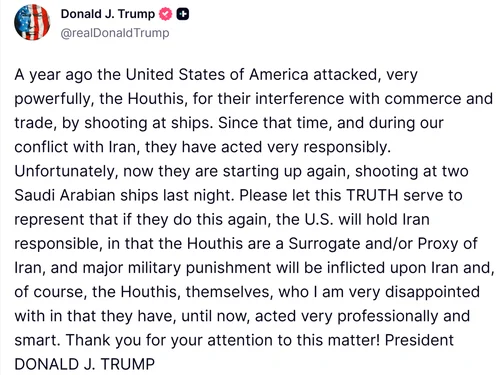
US Secretary of State Marco Rubio delivered a stern rebuke to Iran on Thursday, declaring that Tehran is "begging for a deal" but must "come to their senses" or face a "very heavy price for the things they are doing." Speaking from the sidelines of the ASEAN conference in Manila, Rubio’s assertive statements coincided with a dramatic escalation of hostilities in the Middle East, including Houthi attacks on international shipping in the Red Sea and ongoing US airstrikes against targets within Iran, which have triggered retaliatory missile and drone launches from Tehran’s allies. The confluence of these events paints a grim picture of a region teetering on the brink of wider conflict, with global economic implications already manifesting in surging oil prices.
US Diplomacy and the "Maximum Pressure" Campaign
Secretary Rubio’s remarks underscored a consistent theme of the Trump administration’s foreign policy towards Iran: a combination of unrelenting economic and military pressure designed to compel Tehran back to the negotiating table on terms more favorable to Washington. Rubio claimed, "Iran is begging us, both directly and indirectly, ‘Let’s do a deal. Let’s talk.’" However, this assertion stands in stark contrast to the public posture of the Islamic Republic, which has consistently maintained its "red lines" and responded aggressively to perceived provocations, including recent attacks on international vessels in the Strait of Hormuz.
Rubio attributed the perceived Iranian reluctance to a "fracturing" within the Iranian government, suggesting a takeover by a "hardline" faction. "The problem with Iran is every time they make a deal, the people in charge either break it or they want to change it," he stated, adding, "So it looks like they’re not ready to make a deal, so they’re going to continue to pay a price, and every night the price gets higher and higher." This narrative aligns with the administration’s broader strategy of delegitimizing the Iranian leadership and fostering internal dissent, a strategy previously championed by figures like Treasury Secretary Scott Bessent, who had reportedly boasted of engineering a currency collapse months prior in hopes of instigating a regime change through economic protests. That outcome, however, failed to materialize, leaving the administration in a state of apparent perplexity regarding the efficacy of its "maximum pressure" campaign.
The US Secretary of State further characterized Iran’s policies as being "run by radical clerics" who are "oblivious" to the severe economic hardships faced by their own population. He posited that "Iran can be the richest country in the Middle East if they wanted to be," but instead, its resources are allegedly funneled to proxy groups such as Hezbollah, Hamas, the Houthis, and various Shia militias, fueling "sponsored terrorism all over the world." This framing serves to justify the ongoing US military and economic actions as a response to Iran’s regional destabilization efforts.
Echoing President Trump’s aggressive rhetoric, Rubio addressed Iranian threats of "an eye for an eye" military approach by asserting that the US response would be "a head for an eye." He claimed that Iran’s military-industrial base was being "decimated," suffering "billions" of dollars in damage. This assertion, while difficult to independently verify, aims to project an image of overwhelming US military superiority and a readiness to escalate if necessary.
The Widening Conflict: Maritime Attacks and Regional Repercussions
The backdrop to Rubio’s remarks is a rapidly deteriorating security situation across vital Middle Eastern waterways. For the twelfth consecutive night, the United States has conducted bombing operations against targets within Iran, with the latest reported strike killing at least two people and wounding eleven others at the Shalamcheh border crossing with Iraq. These persistent strikes are part of an undeclared but increasingly overt air campaign designed to degrade Iran’s military capabilities and pressure its leadership.
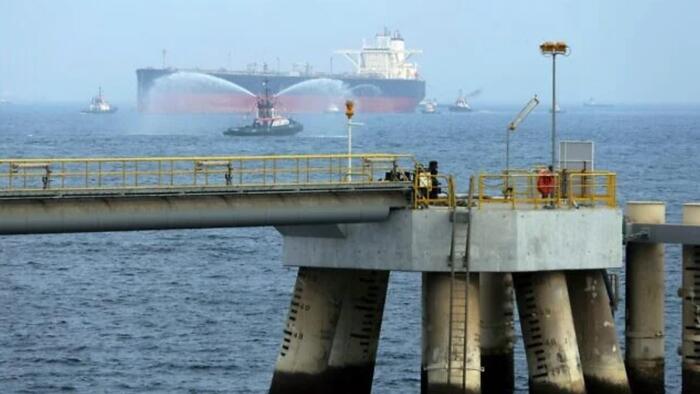
However, Iran and its regional allies have demonstrated their capacity for asymmetric warfare and retaliation. Jordan, Bahrain, and Kuwait have all reported missile and drone attacks emanating from Iran, underscoring the potential for a broader regional conflagration. Most significantly, the Houthis of Yemen, widely regarded as an Iranian proxy, have initiated a dangerous closure of the Bab al-Mandab Strait to all Saudi shipping. This critical choke point, connecting the Red Sea to the Gulf of Aden and onward to the Indian Ocean, is a lifeline for global maritime trade, particularly oil shipments.
Reports from the Red Sea indicate at least two Saudi vessels were attacked, with widely circulating, though unconfirmed, video footage showing one tanker engulfed in flames and in distress. This direct targeting of commercial shipping in such a strategically vital waterway represents a significant escalation. The impact was immediate and global: Brent crude oil prices surged close to $100 per barrel, marking its highest point since May 26th and signaling profound market anxiety over disruptions to global energy supplies. The attacks effectively demonstrated that, despite US claims of Iranian military decimation, Tehran and its proxies still possess substantial "cards to play" in challenging regional security.
Economic Pressure and Unintended Consequences
The US strategy of applying "maximum pressure" through sanctions and economic warfare was predicated on the belief that a weakened Iranian economy would either force the regime to capitulate or lead to its overthrow by a disillusioned populace. However, as noted by the administration’s own apparent perplexity, the January economic protests did not result in regime change. Instead, as some analysts suggest, severe economic hardship often hardens public resolve and rallies support around a nationalistic, anti-foreign intervention narrative, rather than fostering dissent against the incumbent government.
Rubio’s argument that Iran could be an economically prosperous nation if it ceased funding proxies highlights the US perspective on the root cause of Iran’s economic woes. Yet, from Tehran’s viewpoint, supporting these groups is a core component of its national security strategy, a means of projecting power and deterring external threats in a hostile regional environment. This fundamental divergence in strategic outlook makes any path to negotiation exceedingly difficult.

International Reactions and Calls for De-escalation
The escalating crisis has drawn swift reactions from regional and international actors. Pakistan’s Prime Minister Shehbaz Sharif unequivocally condemned the Houthi aggression against Saudi vessels, communicating his country’s strong support to Saudi Crown Prince Mohammed bin Salman. Sharif emphasized that "Such actions are unacceptable, violate international law, threaten freedom of navigation, and undermine regional peace and security," affirming Pakistan’s "firm and resolute" stand with Saudi leadership. This statement underscores the deep concern among regional powers regarding the disruption of critical shipping lanes and the broader threat to stability.
While official statements from other Gulf Cooperation Council (GCC) members were not immediately detailed, it is highly probable that nations like the UAE, Qatar, and Oman share similar anxieties regarding freedom of navigation and the potential for a regional conflict that could severely impact their economies and security. The international community, particularly major powers reliant on Middle Eastern oil and shipping routes, is likely to express growing alarm and call for restraint from all parties, advocating for diplomatic solutions to prevent a full-scale war. The United Nations and international maritime organizations are expected to monitor the situation closely, potentially issuing warnings to shipping and exploring avenues for de-escalation.
Strategic Impasse and Expert Analysis
Amidst the heightened rhetoric and military actions, a critical question arises regarding the overarching strategy. Former National Counterterrorism Center Director Joe Kent articulated this concern, writing on X (formerly Twitter): "This is a bombing campaign in search of a strategy." Kent argued that the US is "choosing escalation when de-escalation remains an option, entrenching ourselves deeper into a broader war that we don’t have the capability or desire to sustain. There is not a military solution here that will lead to a win."
Kent’s analysis suggests a dangerous cycle where military action, far from achieving desired diplomatic outcomes, merely hardens positions and risks drawing the US into a protracted and costly conflict. He further posited that "More bombing will not convince Iran to open the SOH or to give us the deal we want, it will only harden their position. Bombing civilian infrastructure will not make the people rise up against the regime, it will rally them around it." This perspective directly challenges the Trump administration’s underlying assumptions about the effectiveness of its "maximum pressure" campaign.
The notion that Gulf pipelines could render the Strait of Hormuz irrelevant, a sentiment prevalent until recently, has been starkly disproven by the Houthi attacks in the Red Sea. The targeted Saudi oil tanker reportedly carried oil from Yanbu, the terminus of Saudi Arabia’s East-West pipeline to the Red Sea. This incident demonstrates that even alternative export routes are vulnerable to the reach of Iranian-backed proxies, highlighting the comprehensive nature of the threat to maritime security in the region and the interconnectedness of these vital waterways.

The Path Forward: Diplomacy vs. Escalation
Despite the aggressive posturing, Rubio also indicated that the administration has not entirely abandoned efforts to revive talks. "The president always prefers to negotiate and reach a deal… and we are prepared to do that. We’ve tried to do that now for a year and a half," he stated. However, this willingness to negotiate is immediately tempered by deep skepticism about Iran’s reliability. Rubio reverted to the argument that "If there’s any undermining of confidence, it’s confidence that the Iranian system as it currently is structured can reach an agreement." He underscored this by pointing to the recent attacks: "Ships are trying to go through the Straits, and they’re getting blown up. Commercial ships are going through the Straits, and they’re being blown up."
The current situation represents a profound strategic dilemma. The US seeks a comprehensive deal that addresses Iran’s nuclear program, ballistic missile capabilities, and regional proxy network. Iran, conversely, demands an end to crippling sanctions, a return to the Joint Comprehensive Plan of Action (JCPOA), and respect for its sovereignty and regional influence. The chasm between these positions appears to be widening, with each side’s actions reinforcing the other’s perceived intransigence.
The immediate implications are severe: increased volatility in global energy markets, heightened risk to international shipping, and the very real possibility of a broader regional conflict that could draw in multiple actors. The current trajectory suggests a dangerous escalation, where miscalculation or an unintended incident could trigger a wider military confrontation. The challenge for diplomacy is immense, requiring a significant de-escalation of military activities and a renewed, good-faith effort from both sides to find common ground, a prospect that currently seems distant amidst the sounds of bombs and the sight of burning tankers.

