
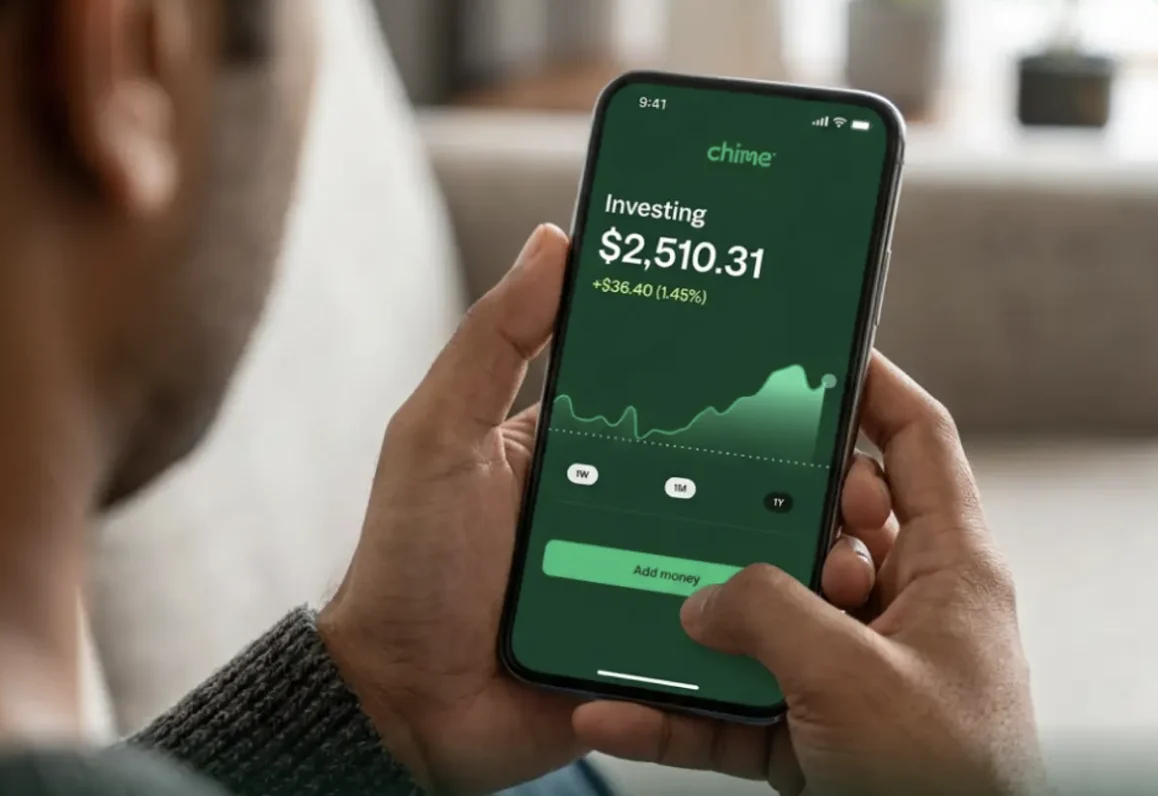
The San Francisco-based digital banking giant Chime has officially announced the launch of Chime Invest, a comprehensive suite of investment tools integrated directly into its mobile application. This strategic expansion marks a significant evolution for the fintech firm, transitioning from a provider of specialized banking services to a multi-faceted financial platform. By offering both self-directed commission-free stock and ETF trading alongside expert-managed portfolios, Chime aims to capture a larger share of its users’ financial lives and provide a bridge to wealth-building for millions of Americans who have historically been excluded from the equities markets.
The introduction of Chime Invest represents a direct challenge to both traditional brokerage firms and established fintech competitors like Robinhood and SoFi. The new feature is designed to eliminate the friction typically associated with starting an investment journey, leveraging Chime’s existing user base which already utilizes the app for daily transactions and savings. By housing investment capabilities within the same ecosystem used for checking and credit building, Chime is positioning itself as a "super app" for the American middle and lower-to-middle income demographic.
Technical Architecture and Partnership with Atomic Invest
At the core of the Chime Invest managed portfolio offering is a strategic partnership with Atomic Invest, an SEC-registered investment adviser. Atomic Invest provides the underlying infrastructure and portfolio management expertise, allowing Chime to offer sophisticated financial products without the heavy regulatory burden of managing individual assets in-house.
The managed accounts are designed to be highly personalized, utilizing algorithms to build diversified portfolios tailored to an individual user’s specific financial goals and risk tolerance. To ensure consumer confidence, these accounts are protected by the Securities Investor Protection Corporation (SIPC) for up to $500,000. This level of protection, combined with the absence of account minimums for certain tiers, is intended to reassure first-time investors who may be wary of the risks associated with the stock market.
The self-directed portion of Chime Invest allows users to purchase individual stocks and Exchange-Traded Funds (ETFs) on a commission-free basis. This aligns with the industry standard set by the "zero-fee" revolution of the late 2010s, ensuring that Chime remains competitive in a market where transaction costs have largely been eradicated for retail investors.
Tiered Membership and Fee Structure
Chime has integrated the pricing of Chime Invest into its existing membership tiers, rewarding its most loyal and active users with lower costs. This tiered approach is a common strategy in the "freemium" model of fintech, designed to encourage users to increase their direct deposit amounts and overall engagement with the platform.
For Chime Prime members—users who typically maintain higher direct deposit volumes—the managed accounts carry no management fees and require no minimum balance. This "free" managed service is a significant value proposition, as traditional robo-advisors often charge between 0.25% and 0.50% of assets under management (AUM).
Chime Plus members are subject to a modest 0.10% annual management fee. For all other Chime members, the fee is set at 0.25% for the managed portfolio option. By scaling the fees based on membership status, Chime creates a clear incentive for users to migrate toward the Prime tier, thereby increasing the "stickiness" of the customer relationship and securing a more stable deposit base for the company.
Addressing the Investment Gap: Supporting Data and Market Context
The launch of Chime Invest is timely, given the current state of financial participation in the United States. According to a recent Gallup Economy and Personal Finance survey, approximately 40% of Americans report that they do not own any stock, either through individual holdings, mutual funds, or retirement accounts like 401(k)s. This gap is particularly pronounced among lower-to-middle income earners, the very demographic that Chime has spent over a decade courting.
Barriers to entry have historically included high minimum balance requirements, complex fee structures, and a general lack of financial literacy or confidence. Chime’s internal data suggests that its members are highly engaged with the app, opening it an average of five times per day and conducting roughly 50 transactions per month. This high frequency of engagement provides a unique opportunity for "nudging" users toward healthier financial habits.
"The hardest part of investing is often getting started and sticking with it," stated Chime CEO and Co-founder Chris Britt during the announcement. "Millions of people already trust Chime with their money every day. By bringing investing into the app they already know and love, we’re making it easier to turn saving into investing and investing into long-term wealth."
A Chronology of Innovation: Chime’s Path to Wealth Management
To understand the significance of Chime Invest, one must look at the company’s decade-long trajectory of disruptive product launches. Since its founding in 2012, Chime has consistently identified pain points in traditional banking and addressed them with technology-led solutions.
- 2012–2014: Founding and Early Growth: Chime launched with a focus on fee-free banking, eliminating the overdraft and monthly maintenance fees that plagued many low-balance accounts at traditional "Too Big to Fail" banks.
- 2018: Earned Wage Access (EWA): Chime introduced a feature allowing users to receive their paychecks up to two days early through direct deposit. This move was revolutionary at the time, providing a safer alternative to predatory payday loans.
- 2019: SpotMe: The company launched SpotMe, an overdraft protection feature that allowed eligible members to overdraw their accounts by up to $200 without incurring fees. This further solidified Chime’s reputation as a consumer-friendly alternative to traditional banks.
- 2020: Credit Builder: Recognizing that many of its users struggled with low credit scores, Chime released a secured credit card designed to help users build credit history using their own money, without interest or annual fees.
- 2022–2023: Tiered Membership Implementation: Chime refined its business model by introducing membership tiers, laying the groundwork for more sophisticated services like the newly announced Chime Invest.
- 2024: The Launch of Chime Invest: The current expansion into wealth management completes the transition from a defensive financial tool (avoiding fees and debt) to an offensive financial tool (building assets).
The Rebundling Trend: Analysis of the Fintech Landscape
The introduction of investment tools by Chime is emblematic of a broader trend in the global financial services industry known as "rebundling." In the early 2010s, the fintech sector was characterized by "unbundling," where startups focused on doing one thing exceptionally well—whether it was payments (Venmo), investing (Robinhood), or lending (LendingClub).
However, the market has shifted. Customer acquisition costs have skyrocketed, making it difficult for single-feature apps to remain profitable. Consequently, fintechs are now rebundling services to increase the lifetime value (LTV) of each customer. By offering checking, savings, credit building, and now investing, Chime creates a comprehensive financial ecosystem that makes it difficult for a user to leave.
This trend is not limited to Chime. Competitors like Revolut in Europe and Cash App in the United States have followed similar paths, adding Bitcoin trading, stock investing, and even tax filing services to their platforms. For traditional banks, this represents a significant threat. While legacy institutions like JPMorgan Chase and Bank of America have robust wealth management divisions, they often struggle to match the seamless, mobile-first user experience that digital natives like Chime provide.
Broader Impact and Implications for the Banking Sector
The launch of Chime Invest carries several long-term implications for the financial sector. First, it accelerates the democratization of wealth management. By removing management fees for Prime members and eliminating account minimums, Chime is effectively commoditizing professional investment advice, making it accessible to those who may only have $5 or $10 to invest at a time.
Second, it underscores the importance of "engagement" as a competitive moat. In the digital age, the financial institution that captures the most "screen time" is likely to capture the most "wallet share." Chime’s high app-usage statistics suggest it has a significant advantage in this regard. When a user can move money from their paycheck to their "SpotMe" account and then into a managed stock portfolio in a matter of seconds, the friction of moving money to an external brokerage like Charles Schwab or Fidelity becomes a significant deterrent.
Third, the move signals Chime’s maturation as a company. As rumors of a potential Initial Public Offering (IPO) continue to circulate in the financial press, expanding into wealth management provides Chime with a more diversified revenue stream. While the company has historically relied on interchange fees from debit card transactions, management fees from Chime Plus and other members—along with the increased deposits that investing tools attract—provide a more robust financial profile for prospective investors.
Official Response and Availability
Industry analysts have reacted positively to the news, noting that Chime is playing to its strengths. By targeting the "under-invested" rather than trying to poach high-net-worth day traders from E-Trade, Chime is staying true to its brand identity as a champion for the "everyday American."
Chime has confirmed that Chime Invest will undergo a phased rollout. While the announcement has generated significant interest, the feature will be made generally available to the broader membership base in the coming weeks. This measured approach allows the company to monitor system performance and ensure that the integration with Atomic Invest remains seamless as millions of potential new investors enter the market.
In conclusion, Chime Invest is more than just a new feature; it is a declaration of intent. Chime is no longer content to be the place where people store their money between paychecks. It now intends to be the place where that money grows. As the lines between banking, technology, and wealth management continue to blur, Chime’s latest move ensures it remains at the forefront of the digital financial revolution.

