
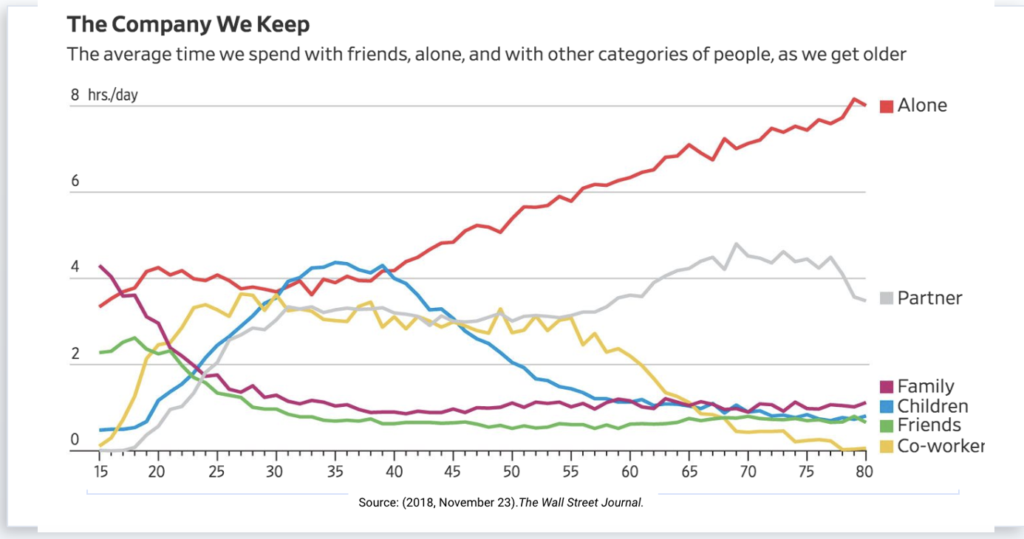
The transition into retirement, a period often lauded for its newfound freedom and expansive leisure, simultaneously introduces a profound shift in an individual’s daily landscape: the significant increase in solitary time. While the liberation from professional obligations is a widely anticipated and celebrated aspect of this life stage, many retirees find themselves unexpectedly navigating a landscape of introspection, spending more time in the company of their own thoughts than they previously imagined. This internal dialogue, often unheard by others, is emerging as a critical component of a fulfilling retirement, shaping an individual’s experience of this new chapter.
This internal discourse is far from monolithic. It encompasses a spectrum of cognitive processes, ranging from proactive planning, imaginative exploration, and reflective reminiscing to, at times, persistent worry, replaying past events, self-questioning, critical self-assessment, and even self-blame. As highlighted in recent discussions on The Retirement Wisdom Podcast, the nature of these internal conversations can either serve to constrict one’s perspective or, conversely, empower individuals to embark on their next chapter with a greater sense of purpose and openness to possibility. Understanding and actively managing this inner narrative has become a key focus for experts in personal development and retirement planning.
Dr. Marilee Adams, Founder and CEO of The Inquiry Institute and author of the newly updated fifth edition of Change Your Questions, Change Your Life, posits that the fundamental questions we pose to ourselves are instrumental in shaping our mindset. Her research delineates two primary operating mindsets: the "Judger" and the "Learner." Judger questions, characterized by a backward-looking or inward focus, often carry an undertone of blame or resignation. Examples include, "What’s wrong with me?" "Why did this happen?" or "Why bother?" In contrast, Learner questions are designed to foster curiosity, agency, and a sense of possibility. These might take the form of, "What do I want now?" "What can I contribute?" or "How else can I think about this?"
The significance of this distinction becomes particularly pronounced as individuals enter retirement. This major life transition inevitably brings existing internal patterns into sharper relief. In the absence of the structured environments, defined identities, and regular feedback loops that characterized professional life, Judger questions can easily gain traction and momentum. Conversely, the deliberate cultivation of wise, Learner-oriented questions can effectively redirect attention toward what truly matters, fostering a deeper engagement with aspirations for greater meaning, joy, contribution, enhanced relationships, and continuous personal growth.
Complementing this perspective, Dr. Ethan Kross, Director of the Emotion & Self Control Laboratory at the University of Michigan and author of Chatter: The Voice in Our Head, Why It Matters, and How to Harness It, delves into the science of self-talk. Kross distinguishes between ordinary negative thoughts and "chatter," a more insidious and repetitive cycle of worry, rumination, and catastrophizing. His work emphasizes that negative emotions are not inherently detrimental; in moderation, they can serve as valuable learning opportunities. The challenge arises when individuals become ensnared in these negative loops, hindering their ability to move forward.
A strong convergence exists between the insights of Adams and Kross: the objective is not to silence the inner voice, but rather to engage with it more skillfully. Both experts underscore the universal presence of an inner critic and advocate for its acceptance. Crucially, they highlight that heightened awareness of one’s internal dialogue creates the space for choice, enabling a transition from automatic reactions to intentional responses.
Adams’s contribution, particularly "The Choice Map," offers a framework for navigating this internal landscape. This model provides a clear language and a practical pathway: identify Judger thinking, pause to interrupt its momentum, and then consciously shift to a Learner mindset. A particularly powerful question proposed by Adams for this transition is, "Who do I choose to be in this moment?"
Kross, meanwhile, offers a "toolbox" approach, recognizing that different situations may necessitate distinct strategies. His recommendations include "distance self-talk," a technique where individuals refer to themselves by their own name and offer coaching as they would to a friend. Another potent tool is "mental time travel," encouraging individuals to consider how a current challenge might appear from a future perspective, such as six months or a year hence. Integrating practices like walking in nature further enhances an individual’s capacity to become a more effective "chatter advisor," equipped with a personalized set of coping mechanisms.
Strategies for Cultivating a More Constructive Inner Dialogue
The insights from Dr. Adams and Dr. Kross converge on practical strategies that can be adopted to foster a more positive and productive internal dialogue, particularly during the transitional period of retirement. These strategies emphasize awareness, intentionality, and the active management of one’s thought processes.
1. Enhancing Awareness of Inner Conversations:
The foundational step involves becoming more attuned to the nature of one’s internal dialogue. This means actively listening to the thoughts that arise throughout the day. Without this initial awareness, it is difficult to identify problematic patterns or to implement corrective measures. This heightened self-observation allows individuals to recognize when they are engaging in unproductive cycles of thought.
2. The "Stop. Breathe. Be." Technique:
Drawing from the work of Dr. Aditi Nerurkar, Dr. Adams advocates for a simple yet powerful physical pause to interrupt the momentum of ingrained thought patterns. This practice involves three distinct actions:
- Stop: Cease the current activity or thought process. This physical cessation can create a crucial break in automatic responses.
- Breathe: Engage in conscious, deep breathing. This simple act can calm the nervous system and create a sense of present moment awareness.
- Be: Acknowledge the present moment without judgment. This allows for a brief period of quiet observation before proceeding.
3. Identifying Question Types:
Following the pause, the next step is to actively examine the questions being posed to oneself. This involves discerning whether the internal query stems from a "Judger" or a "Learner" mindset.
- Judger Questions: These often manifest as self-criticism, blame, or expressions of helplessness. Examples include "Why am I so bad at this?" or "What’s the point of even trying?"
- Learner Questions: These are characterized by curiosity, a desire for understanding, and a focus on solutions or possibilities. Examples include "What can I learn from this situation?" or "What are my options moving forward?"
4. Navigating the "Judger Pit" with the "Switching Lane":
When an individual recognizes they are caught in a negative loop, a "Judger Pit," the "Switching Lane" technique comes into play. This involves intentionally posing a Learner question to shift the mindset. For instance, if the inner voice is saying, "I’ll never be able to figure this out," a switching question might be, "What steps can I take to approach this challenge differently?" This active redirection is key to breaking free from unproductive thought patterns.
5. Employing Kross’s "Chatter" Management Tools:
Dr. Kross’s research offers practical tools to manage the repetitive and often overwhelming nature of "chatter."
- Shifting the Voice: Instead of engaging with oneself in a generalized, often negative internal monologue, Kross suggests using one’s own name. For example, instead of thinking, "I’m so stressed," one might ask, "Ethan, what advice would you give a good friend who is feeling this stressed?" This creates a psychological distance that can foster a more objective and compassionate perspective.
- Altering the Time Frame: Kross also recommends "mental time travel." This involves projecting oneself into the future and assessing the current situation from that vantage point. Asking, "How important will this feel six months from now?" or "What will be my perspective on this in a year?" can help to contextualize current anxieties and reduce their perceived magnitude.
6. Recognizing and Managing Venting:
While expressing feelings can be cathartic, the act of "venting," especially in a repetitive manner, can inadvertently reinforce negative thought loops. The article suggests seeking out individuals who can offer empathy but also help broaden one’s perspective. This involves looking for supportive listeners who can facilitate a shift from dwelling on problems to exploring solutions or alternative viewpoints.
Broader Implications for Retirement and Well-being
The increasing emphasis on managing one’s inner dialogue during retirement is not merely a matter of personal comfort; it has significant implications for overall well-being, life satisfaction, and the ability to adapt to evolving life circumstances. As individuals step away from established careers, the absence of external structures can amplify the impact of internal narratives. A robust and positive inner dialogue can act as a powerful buffer against the potential psychological challenges of this transition, such as feelings of isolation, loss of identity, or diminished purpose.
The insights from experts like Dr. Adams and Dr. Kross underscore a fundamental shift in understanding retirement not just as a period of cessation, but as an active phase of continued growth and self-discovery. By equipping individuals with the tools to consciously manage their thoughts and emotions, retirement can be transformed from a potentially daunting prospect into an opportunity for profound personal development and enriched living. The ability to engage in constructive self-talk, to question effectively, and to harness one’s inner voice as a supportive ally rather than a harsh critic, is increasingly recognized as a cornerstone of a truly fulfilling and resilient post-work life.
The availability of resources, such as The Retirement Wisdom Podcast and the extensive work of The Inquiry Institute, provides accessible pathways for individuals to explore these concepts further. Podcasts featuring interviews with Dr. Adams and Dr. Kross, along with practical tools like "The Choice Map" and books detailing their research, offer tangible avenues for retirees to cultivate these essential skills. This growing body of knowledge and readily available support suggests a proactive approach to navigating the psychological dimensions of retirement, empowering individuals to shape their own narratives and embrace their future with confidence and intention. The freedom retirement offers is most potent when paired with a wise engagement with one’s inner world, transforming the inner voice from a potential source of distress into a valuable partner in life’s ongoing journey.

