
Acclaimed British filmmaker Christopher Nolan’s newest cinematic venture, The Odyssey, opened this week in the United States, immediately drawing significant attention and sparking a multifaceted cultural debate. Known for his intellectually ambitious and often structurally complex films such as The Dark Knight, Inception, Interstellar, and the Oscar-winning Oppenheimer, Nolan’s adaptation of Homer’s ancient epic poem arrived with considerable anticipation. However, even before its widespread release, the film found itself at the center of controversy, prompting discussions on artistic interpretation, historical fidelity, and contemporary representation in media.
Revisiting Homer: The Enduring Legacy of The Odyssey
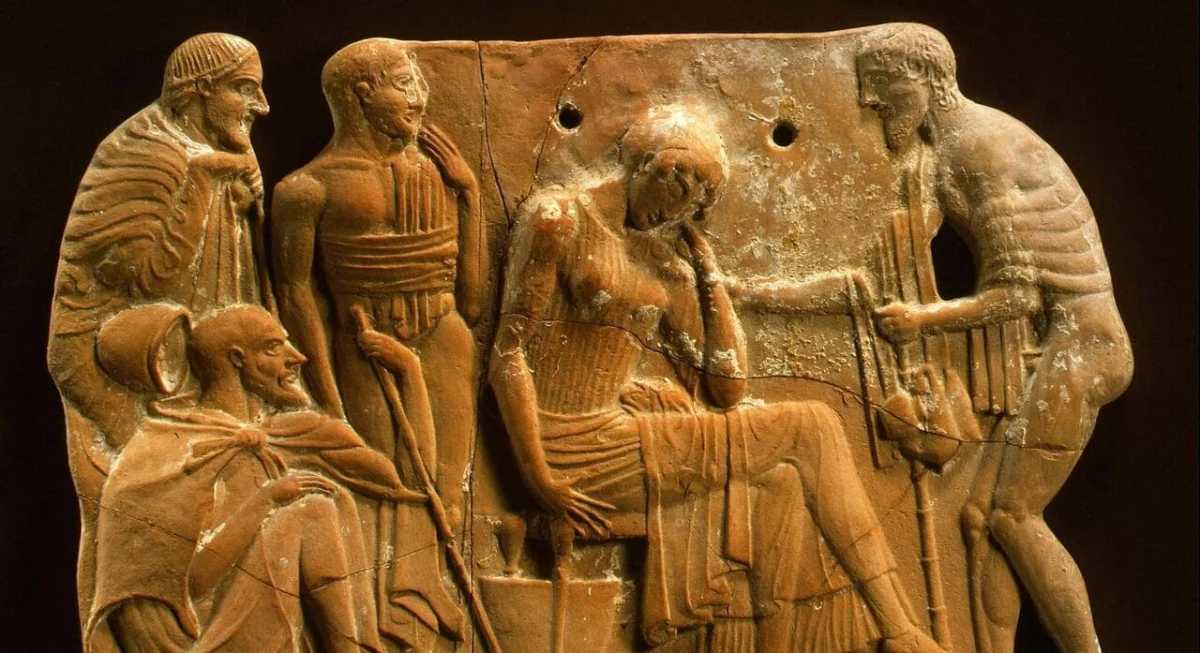
Homer’s Odyssey, composed orally around 750-700 B.C., stands as one of the foundational texts of Western literature. Alongside The Iliad, it chronicles the legendary aftermath of the Trojan War, specifically focusing on the decade-long struggle of the hero Odysseus to return to his kingdom of Ithaca. His journey is fraught with mythical creatures, divine interventions, and profound personal trials, while back home, his loyal wife Penelope fends off a horde of persistent suitors, and his son Telemachus grapples with his father’s absence and the encroaching chaos. The epic explores timeless themes of identity, homecoming (nostos), loyalty, cunning, and the human condition against the backdrop of an unforgiving ancient world. For nearly three millennia, it has been studied, revered, and adapted across countless artistic mediums, cementing its status as a cornerstone of Hellenic culture and a universal narrative of endurance and resilience. Its narrative structure, character development, and poetic language have influenced generations of writers, philosophers, and artists, making any new adaptation a subject of intense scrutiny, especially one helmed by a director of Nolan’s stature.
A Modern Lens on Ancient Women: The ‘Feminist’ Interpretation
One of the primary points of contention surrounding Nolan’s The Odyssey emerged from statements made by some of the film’s actresses, suggesting a distinctly feminist reinterpretation of Homer’s original text. This perspective posits that the ancient epic, despite its enduring literary merit, may be perceived through a modern lens as inherently patriarchal or even sexist. Actress Lupita Nyong’o, who portrays the dual minor roles of Helen and Clytemnestra in the film, has been particularly vocal in her criticism of what she described as Homer’s "purported sexism." Her remarks have ignited a broader discussion about how classical texts should be approached and reinterpreted by contemporary artists, especially concerning gender dynamics.
Scholars and classicists have offered varied responses to these claims. While some acknowledge the validity of re-evaluating ancient narratives through modern sociological frameworks, many have expressed concern that such interpretations might misrepresent the nuanced portrayal of women within The Odyssey. Dr. Elara Vance, a prominent Hellenic scholar from the University of Cambridge, noted in a recent academic panel, "Homer’s depiction of women, while certainly framed within the societal norms of the Late Bronze Age or early Archaic period, is far from monolithic or simply subjugated. To label it ‘sexist’ without deeper engagement risks anachronistically applying 21st-century sensibilities to a text that, in its own context, presented a remarkably diverse and often powerful array of female figures." This sentiment reflects a significant portion of the academic community, which often emphasizes historical context when analyzing classical literature.
Lupita Nyong’o’s Candid Revelation and Scholarly Rebuttals
Further fueling the debate over the film’s feminist framing was Lupita Nyong’o’s candid admission that she had not read Homer’s The Odyssey until she was cast in the film. Despite holding degrees from elite institutions like Hampshire College and Yale, the 42-year-old actress revealed this during a promotional interview, stating, "It’s embarrassing to admit, but my introduction to the epic was through the screenplay. It gave me a fresh perspective, perhaps, unburdened by preconceived notions, but also meant I had a lot of catching up to do." This revelation prompted a wave of discussion, with critics questioning the depth of understanding an actor might bring to such a culturally significant role without prior engagement with the source material. Some commentators viewed it as indicative of a broader trend where intellectual preparation for classical adaptations might be overshadowed by other considerations.
Conversely, supporters argued that an actor’s personal journey with the text should not diminish their artistic contribution, emphasizing that a fresh perspective could also lead to innovative portrayals. A spokesperson for Nolan’s production team, speaking anonymously to a trade publication, stated, "Our casting process prioritizes talent, vision, and the ability to embody a character’s essence. An actor’s prior familiarity with source material is secondary to their artistic merit and their collaborative spirit in bringing a director’s vision to life."
Regardless of Nyong’o’s personal preparation, Victor Davis Hanson, in an article for American Greatness, strongly challenged the notion of Homer’s Odyssey being sexist, presenting a detailed counter-argument by highlighting the epic’s rich gallery of capable and independent women. Hanson points to Penelope, Odysseus’s wife, as a prime example of female agency. Unquestionably loyal, she masterfully outwits a cohort of predatory suitors for years through her unwavering courage and ingenious ruses, ultimately paving the way for Odysseus’s triumphant return and revenge. Her strategic intellect and steadfastness are central to the epic’s climax.
Beyond Penelope, Hanson underscores the significant roles of other powerful female figures. The immortal sorceress Circe and the divine nymph Calypso are depicted not merely as seductresses but as powerful entities who command their own domains, making choices on their "sexual, economic, and political terms." They shelter, bond with, and eventually release Odysseus, demonstrating their autonomy and influence over a demigod. Furthermore, the virgin goddess Athena serves as Odysseus’s constant divine patron, her wisdom and strategic guidance being indispensable to his survival and homecoming. Without her intervention, Odysseus’s journey would undoubtedly have failed. Even figures like the loyal nurse Eurycleia, Penelope’s trusted confidante, and the innocent Phaeacian princess Nausicaa, who befriends Odysseus and secures his safe passage to her parents, are portrayed with kindness, integrity, and agency. Even the monstrous figures, such as Scylla and the Sirens, are depicted as deadly and astute, often outsmarting men, including the "dimwitted Cyclops Polyphemus." This comprehensive view suggests that Homer’s epic, far from being a testament to sexism, offers one of the earliest and most profound portrayals of diverse and powerful female archetypes in Western literature.
Color-Conscious Casting: Helen of Sparta Reimagined
Another significant source of controversy stemmed from Nolan’s casting choice of Lupita Nyong’o as Helen of Sparta. Helen, famously known as "the face that launched a thousand ships," is traditionally depicted as a woman of unparalleled beauty and, crucially, of Spartan (and thus implied Caucasian) ethnicity in Homeric lore. Nyong’o, being a Kenyan-Mexican-American actress, presents a stark racial departure from this traditional portrayal. This decision has reignited fervent debates surrounding "color-blind" casting, cultural appropriation, and fidelity to source material in modern adaptations.
Proponents of Nyong’o’s casting emphasize artistic freedom and the importance of increasing representation in cinema. They argue that an actor’s race should not preclude them from embodying a character, especially in a fictional narrative, and that such choices can broaden the appeal and relevance of classical stories for contemporary, diverse audiences. Filmmakers increasingly advocate for casting based on talent and suitability for a role rather than strict adherence to historical or mythical racial descriptions.
However, critics, including Victor Davis Hanson, raised concerns about what they perceive as an inconsistent application of cultural appropriation charges. Hanson highlighted the paradox where certain cultural elements (e.g., dreadlocks worn by white individuals) are deemed appropriative, while others (e.g., blond wigs on black individuals, or racial re-casting) are celebrated as progressive. This inconsistency, they argue, often leads to accusations of "wokeness" or virtue signaling, rather than genuine artistic or representative integrity. The core of this critique lies in the idea that while diversity is laudable, it should not come at the expense of historical or cultural accuracy when such elements are integral to the character or narrative.
The Nuance of Representation: When Race Defines Character
The debate around Nyong’o’s casting as Helen also delved into the nuanced question of when a character’s race or gender is so central to their identity that altering it fundamentally changes the narrative. Hanson’s analysis on this point offered a pragmatic framework, citing historical examples of successful "color-blind" casting, such as Laurence Olivier’s acclaimed portrayal of Shakespeare’s Othello and Anthony Quinn’s iconic Zorba the Greek. These performances, despite racial or ethnic discrepancies, were lauded for their artistic brilliance and did not undermine the core essence of the characters. Burt Lancaster, Charles Bronson, and Audrey Hepburn also famously portrayed Native American characters, a practice that, while now viewed with more scrutiny, was once common in Hollywood.
The critical distinction, Hanson argues, arises when a literary or historical figure’s race or gender is inextricably linked to their identity and the overarching narrative. For instance, a white actor portraying Martin Luther King Jr. or Muhammad Ali, or a black actor playing Abraham Lincoln, would fundamentally undermine the historical and cultural specificity of these figures. Similarly, a female James Bond would fundamentally alter the character’s hypermasculine, womanizing archetype established by Ian Fleming. In such cases, the alteration becomes a distraction, introducing "extraneous issues" that detract from the central story.
In Nolan’s defense, Hanson concedes that Helen’s role in The Odyssey (as distinct from The Iliad, where she is a central catalyst for the war) is relatively minor. Her presence serves more as a symbol of beauty and consequence rather than a character whose racial identity is integral to Odysseus’s journey home. Therefore, Nyong’o’s casting, while racially divergent, might not "undermine the adaptation of Homer’s poem." However, Hanson posits that if Nyong’o had been cast in a more central role, such as Penelope, the "glaring racial disparity" might have indeed introduced significant narrative challenges and distractions, given Penelope’s deep ties to Spartan royalty and Hellenic culture. This distinction highlights the complexities filmmakers face when balancing creative freedom with cultural sensitivities and narrative integrity.
Absence of Hellenic Voices: A Missed Opportunity?
A final point of contention, subtly yet poignantly raised by critics, concerns the apparent lack of Greek actors or actresses in Nolan’s The Odyssey. Given that the epic is a cornerstone of Hellenic culture, deeply revered in Greece as an iconic symbol of national heritage, some commentators expressed disappointment that Nolan’s production did not feature at least one prominent Greek performer. Victor Davis Hanson explicitly noted this, citing the tradition of brilliant Greek actresses like Irene Pappas and Melina Mercouri, whose powerful portrayals have graced international cinema.
This criticism touches upon broader issues of cultural representation and authenticity in global film productions. While Nolan’s casting decisions are often driven by artistic vision and the pursuit of globally recognized talent, the omission of native voices in a story so profoundly tied to a specific culture can be perceived as a missed opportunity or, in some cases, even a slight. Greek cultural organizations and media outlets, while generally celebrating the global attention brought to their epic, have voiced hopes for greater inclusion of Greek artists in future adaptations of their rich mythological heritage. A spokesperson for the Hellenic Ministry of Culture, in an unofficial comment, expressed, "While we respect artistic interpretation, the Odyssey is part of our soul. To see local talent, especially our remarkable actresses, participating would have been a profound honor and added an invaluable layer of authenticity."
Beyond the Screen: Implications for Adaptation and Cultural Dialogue
The controversies surrounding Christopher Nolan’s The Odyssey underscore the complex challenges faced by contemporary filmmakers adapting classical texts for modern audiences. The film’s release has become a catalyst for wide-ranging cultural discussions, highlighting the tension between artistic license and historical fidelity, the evolving landscape of representation in media, and the enduring power of ancient narratives to provoke contemporary debate.
The box office performance and critical reception of The Odyssey will undoubtedly reflect how audiences and critics navigate these complex issues. Beyond the immediate commercial success, the film’s impact on future adaptations of classical literature will be significant. It forces a critical examination of how filmmakers balance their creative vision with the expectations of diverse global audiences, who increasingly demand both authenticity and progressive representation. The "hullabaloo" surrounding Nolan’s The Odyssey serves as a potent reminder that while ancient stories connect us to our shared past, their reinterpretation in the present continues to shape our understanding of culture, identity, and the very nature of storytelling itself.

