
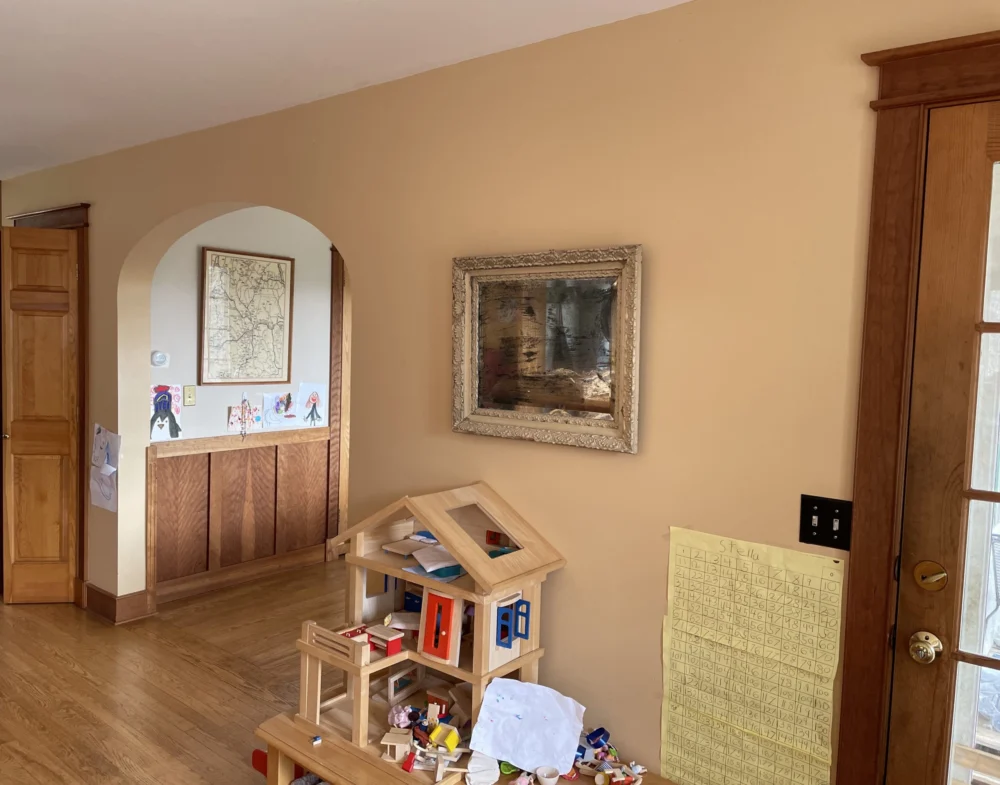
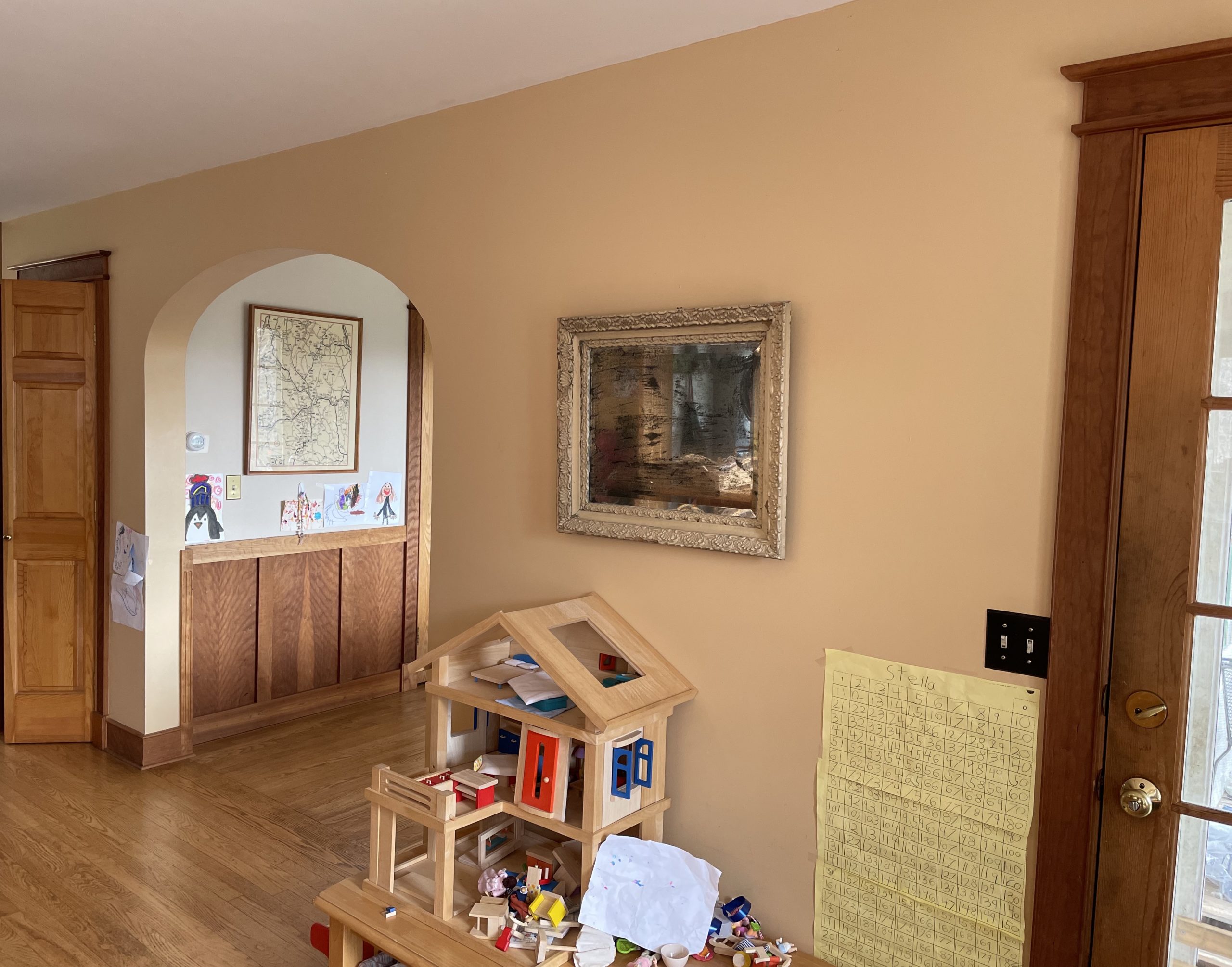
The completion of a significant structural renovation in June has marked a pivotal milestone for a residential property built in 1991, as the homeowners successfully removed a central load-bearing wall that had long restricted the building’s interior flow. This project, part of a multi-year renovation strategy, addressed a common architectural vestige of the early 1990s: the compartmentalization of living spaces. The wall in question previously bifurcated the kitchen and dining areas from the primary living room, utilizing an arched egress that homeowners and visitors alike described as an aesthetic and functional hindrance.
The complexity of the project was driven by the original 1991 construction design, which utilized this specific wall as a primary artery for the home’s vital systems. Beyond its structural load-bearing responsibilities, the wall housed a main plumbing stack, the home’s central electrical panel, and a major structural support post. The successful removal of such a "menace wall" required a multi-disciplinary approach involving architectural engineering, professional trade contracting, and advanced carpentry.
Technical Execution and Engineering Challenges
The renovation was not a standard demolition but a highly technical deconstruction and reconfiguration. The project necessitated the involvement of an architect to perform precise beam calculations, ensuring that the structural integrity of the home remained uncompromised after the removal of the load-bearing elements. According to industry standards, the removal of a load-bearing wall in a two-story residential structure typically requires the installation of a Laminated Veneer Lumber (LVL) or steel I-beam to redistribute the weight to the foundation.

Plumbing and Electrical Reconfiguration
The first phase of the technical work involved the relocation of the main plumbing stack. This was executed by a professional plumber who designed a "zig-zag" routing system through the ceiling joists, eventually directing the stack down a corner of the pantry. To maintain the aesthetic integrity of the pantry, a custom enclosure was constructed around the new plumbing route using reclaimed materials, demonstrating a fusion of utility and resourcefulness.
Simultaneously, an electrician was contracted to re-route the home’s central electrical box and all associated wiring that had been housed within the wall. This phase of the project also allowed for a functional upgrade to the home’s lighting scheme. The installation of a new recessed light over the dining area addressed a significant deficit in the original 1991 design, which notably lacked overhead lighting in the main living areas.
Structural Reinforcement
The most critical stage of the renovation was the installation of a recessed support beam. To achieve a seamless "open concept" look, the beam could not simply sit below the ceiling line; it had to be recessed into the floor joists of the story above. This required the construction of a temporary "support wall" to hold the weight of the upper floor during the transition.
The installation process utilized a "ladder" system and a bottle jack to slowly and safely hoist the new beam into position. Once the beam was secured with specialized Simpson brackets and heavy-duty fasteners, the temporary wall was removed, effectively transferring the structural load to the new horizontal support system.
Project Chronology and Timeline
The renovation followed a deliberate timeline, emphasizing safety and precision over speed.
- Assessment and Planning: Homeowners identified the wall as a primary candidate for removal and consulted an architect for structural load calculations.
- Demolition Phase: The non-structural elements, including drywall and the arched doorway, were removed to expose the internal plumbing and electrical systems.
- Trade Integration: Professional plumbers and electricians were brought in to move the "wet" and "hot" utilities, a process that required several days of specialized labor.
- Structural Installation: The temporary support wall was built, followed by the hoisting and securing of the permanent recessed beam.
- Finishing and Integration: Post-structural work included the application of new drywall, mudding, and preparation for future flooring and paint.
The homeowners have opted to delay final drywalling and flooring until a secondary phase of the kitchen renovation is finalized. This strategic delay allows for the potential installation of additional kitchen wiring while the ceiling remains accessible, preventing the need for future invasive construction.
Financial Analysis of June Expenditures
The wall removal project was the primary driver of the household’s June expenditure report, which totaled $5,044.63. This figure reflects a high-efficiency spending model where professional labor was reserved for high-risk tasks (plumbing, electrical, and engineering), while "grunt work" and advanced carpentry were handled in-house.
Detailed Spending Breakdown
| Category | Expenditure | Notes |
|---|---|---|
| Groceries | $1,147.44 | Includes bulk purchases like 50lb bags of organic oats. |
| Lumber and Drywall | $703.53 | Materials for the temporary wall, the beam, and new drywall. |
| Home Improvement Tools | $600.61 | Procurement of bottle jacks, heavy-duty squares, and fasteners. |
| Professional Electrician | $494.98 | Re-routing of electrical box and new lighting installation. |
| Household Supplies | $302.53 | General maintenance and operational supplies. |
| Medical Expenses | $250.38 | Co-pays and lab work. |
| Transportation (Gas) | $194.85 | Fuel for personal vehicles. |
| Municipal Services | $150.00 | Season pass for local community beach access. |
The financial report also highlights the efficacy of the home’s solar energy system. The monthly electric bill was recorded at just $36.42, which represents the base price for remaining tied to the municipal grid, as the solar panels generate the bulk of the home’s energy needs.

Broader Economic Strategies and Consumer Trends
The renovation project serves as a case study for "frugal" high-value home improvement. By acting as their own general contractors and performing the demolition and carpentry, the homeowners significantly reduced the total project cost, which for a load-bearing wall removal of this complexity can often exceed $15,000 in a fully outsourced model.
Telecommunications and Service Optimization
In addition to large-scale home improvements, the June financial report reveals a continued commitment to minimizing recurring overhead through the use of Mobile Virtual Network Operators (MVNOs). The total cost for two cell phone lines was $28.24, or $14.12 per person. MVNOs, which lease space on major carrier towers (such as Verizon or T-Mobile), offer the same coverage at a fraction of the cost by eliminating the overhead of physical retail locations and massive marketing budgets.
Capital Management and High-Yield Savings
The homeowners emphasized the importance of capital efficiency, particularly in the current interest rate environment. By utilizing high-yield savings accounts offering approximately 4% APY, they have turned their liquid reserves into a passive income stream. This contrasts with traditional brick-and-mortar savings accounts, which often offer negligible interest rates, effectively allowing inflation to erode the value of the held currency.
Implications for Property Value and Lifestyle
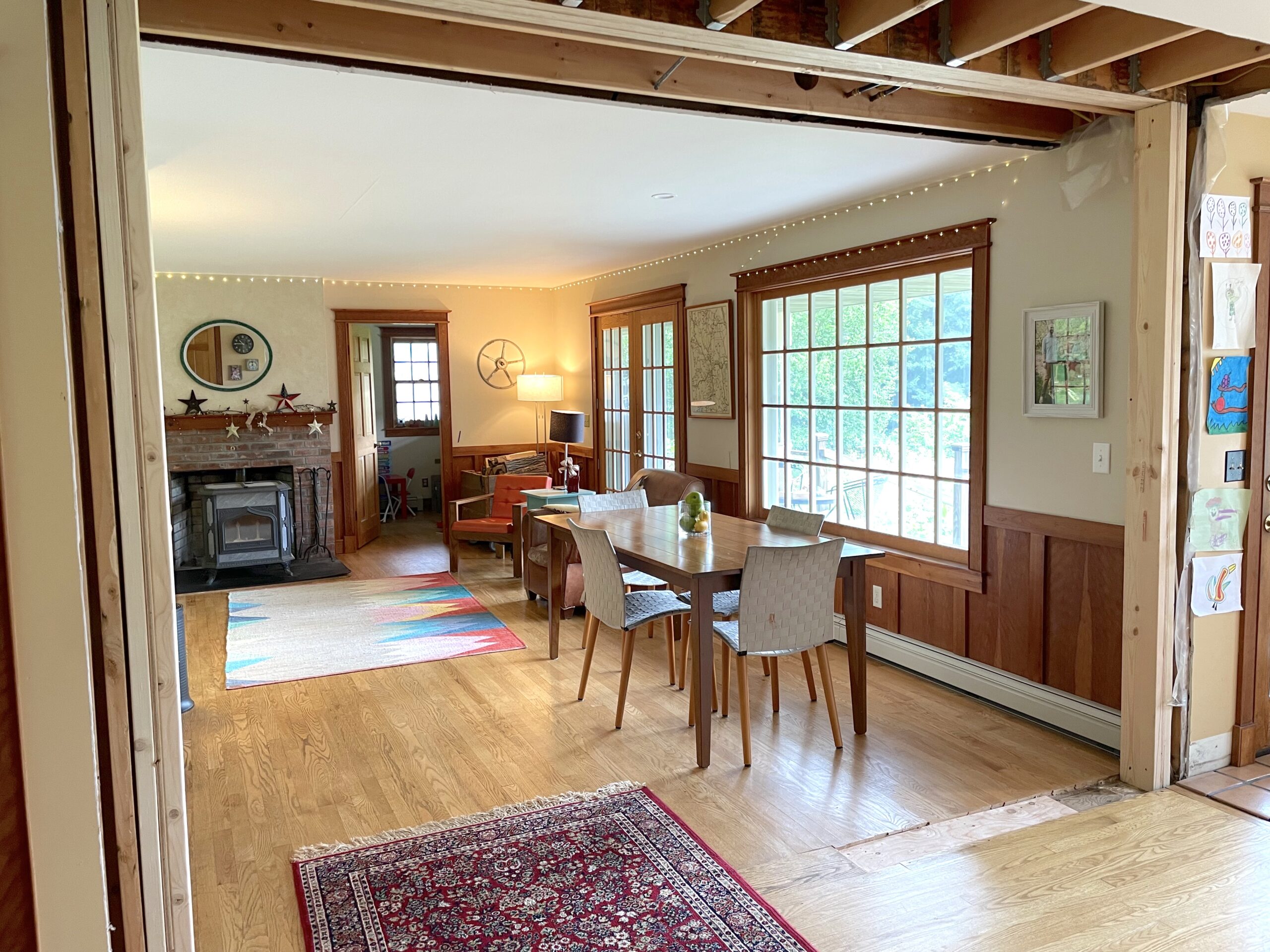
The removal of the central wall has fundamentally altered the property’s interior architecture. Real estate market data consistently shows that "open concept" floor plans are highly desirable for modern buyers, often leading to a higher resale value and shorter time on the market. By integrating the kitchen, dining, and living rooms, the homeowners have created a space better suited for contemporary social interaction and family life.
The project also underscores a growing trend in the "DIY" movement: the strategic use of professional consultants. While many homeowners attempt renovations themselves, the decision to hire an architect for calculations and professional trades for plumbing and electrical work reflects a sophisticated understanding of risk management. This approach ensures that the "sweat equity" invested in the home is backed by professional-grade safety and compliance.
As the property enters the next phase of its "years-long renovation process," the focus will shift toward the kitchen. However, the successful elimination of the structural and visual barrier between the living spaces stands as the most significant transformation of the home’s layout since its construction in 1991. The project demonstrates that with careful planning, professional consultation, and disciplined financial management, even the most daunting structural "menaces" can be overcome to create a more functional and valuable living environment.

