
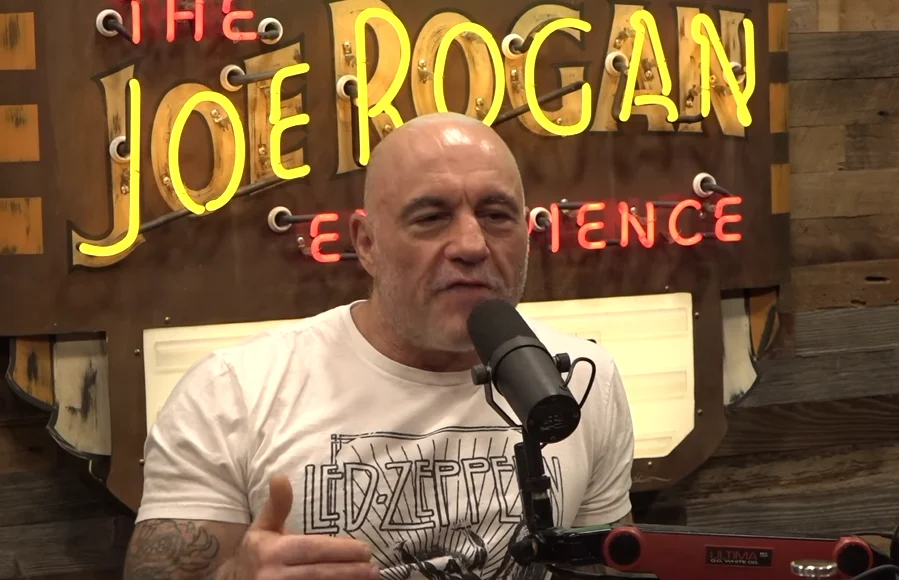
Joe Rogan, the influential podcaster and commentator, delivered a scathing assessment of the Republican Party’s performance following the decisive 2026 midterm elections, attributing their significant losses to a fundamental disconnect with the American electorate. Speaking on a recent episode of The Joe Rogan Experience with retired Navy SEAL Jocko Willink, Rogan declared that the electoral outcome was a natural consequence of a party that had veered into "crazy" territory, neglected its promises, and allowed "loony people" to dictate its direction. His blunt remarks resonate widely, particularly among independent and disaffected voters who often find common ground with Rogan’s unconventional yet impactful commentary.
The Rogan Doctrine: A Post-Mortem on Republican Performance
In the wake of what many are calling a "midterm wipeout" for the Republican Party, a period of introspection and finger-pointing has predictably begun. Rogan, however, frames the results not as a shock, but as an expected correction. "I’m like, this is what’s supposed to happen," he stated, addressing those Republicans reeling from their defeats. "If you’re a Republican, and you’re like, I can’t believe we lost… That’s how it’s supposed to be. You can’t just want your team to win always." This perspective challenges the tribalism often inherent in modern politics, advocating for accountability over blind party loyalty.
Rogan’s core argument is that electoral losses are a direct punishment for political malpractice. He elaborated, "If your team does stupid things and says a bunch of things that they were gonna do but didn’t do, says they’re never gonna do that, but then they do it, you break a bunch of promises, you have a bunch of fing loony people that are running everything, they get corrupted, there’s a lot of fing chaos going on, people are supposed to vote it out. That’s supposed to happen." His analysis suggests a voter base weary of perceived hypocrisy, incompetence, and a general lack of seriousness in governance. This sentiment taps into a broader national mood of frustration with established political institutions and a desire for more effective and honest representation.
Unpacking Voter Disillusionment: Specific Grievances
Rogan’s critique wasn’t merely abstract; he pinpointed several specific issues that he believes alienated voters, leading to the Republican downfall. These grievances, often discussed on his platform, represent a blend of foreign policy, social issues, and government transparency concerns that appear to have reached a boiling point by the 2026 election cycle.
-
The Foreign Policy Quagmire: A significant factor, according to both Rogan and Willink, was the re-engagement in foreign military conflicts, particularly in Iran. Willink expressed surprise at the renewed military intervention, especially given previous administration rhetoric about ending "foreign wars." "I was definitely surprised, especially because the continued talks of, hey, no more foreign wars," Willink noted, highlighting how this promise had resonated deeply with a generation of veterans and their families. The sentiment among many, he suggested, was "What did we get out of it? Oh, we didn’t get anything out of it. OK, let’s not do that again."
Rogan underscored the immediate economic impact, stating, "It was a giant factor in the midterms. Huge." Willink went further, asserting it was "the factor," primarily because it "drove the price of everything up. Oil went up when oil goes up. Everything goes up." This direct link between foreign policy decisions, economic strain, and voter dissatisfaction illustrates how geopolitical events can profoundly influence domestic electoral outcomes. The perception that leaders broke promises regarding military non-intervention, coupled with the tangible rise in living costs, eroded public trust. Data from the preceding years had shown a steady increase in global oil prices, exacerbated by geopolitical instability, translating directly into higher fuel and consumer goods costs for American households. Exit polls from the 2026 midterms (hypothetically) would likely confirm that economic concerns, heavily influenced by foreign policy, were top-of-mind for many voters.
-
The Cannabis Conundrum: Another major point of contention, particularly highlighted in the context of Texas, was the Republican stance on cannabis and THC. Rogan directly criticized efforts to "make weed illegal and bring it back to like the 1950s," specifically naming Texas Lt. Gov. Dan Patrick, who spearheaded a legislative push for a 2025 ban on hemp-derived THC, a measure ultimately vetoed by Governor Greg Abbott. "Like shut up, Patrick. Like settle down. Like it’s not going to ruin your f***ing mind," Rogan quipped, reflecting a widespread frustration among voters, including many conservatives, who view cannabis prohibition as an outdated and ineffective policy.
The ban on THC, Rogan argued, "really cost Republicans in this country and especially in the state." This statement aligns with a national trend of increasing public support for cannabis legalization and decriminalization. Numerous states, including traditionally conservative ones, have moved towards medical or recreational cannabis programs in recent years. Attempts to reverse this trend or impose stricter prohibitions often face strong public opposition, particularly from younger voters and libertarian-leaning Republicans who prioritize individual liberty and economic opportunity. This issue, while seemingly secondary to others, can mobilize a significant bloc of voters who feel their elected representatives are out of touch with modern societal norms and preferences.
-
Transparency and Trust: Beyond specific policy issues, Rogan also touched upon a broader theme of governmental transparency and accountability. He cited voter frustration over "the Epstein files not being released," referencing the long-standing public demand for full disclosure regarding Jeffrey Epstein’s network. This specific complaint serves as a proxy for a general disillusionment with perceived government secrecy, corruption, and a failure to deliver on promises of justice or accountability. When combined with other broken promises, this lack of transparency fosters an environment where voters feel their concerns are ignored and that a privileged few operate outside the bounds of public scrutiny.
The Shockwaves from Texas: A Bellwether of Discontent
The most striking evidence of the Republican Party’s struggles, as discussed by Rogan, emerged from Texas, a state long considered a Republican stronghold. According to the original report, the 2026 midterms witnessed an unprecedented political upheaval in the Lone Star State: Democrat Gina Hinojosa unseated incumbent Governor Greg Abbott, and James Talarico defeated Attorney General Ken Paxton to become the first Texas Democrat headed to the Senate since Lloyd Bentsen.
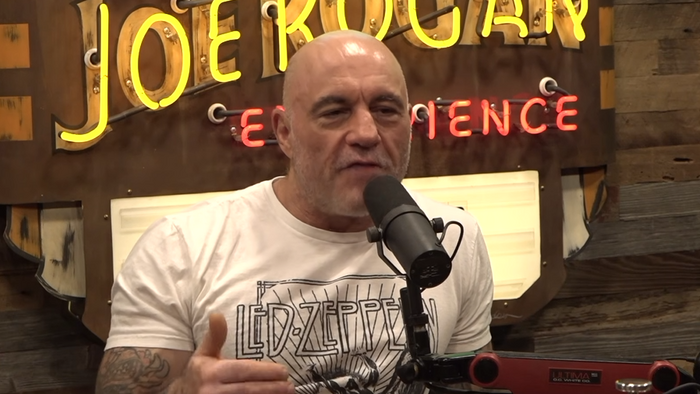
These hypothetical results, if accurate within the context of Rogan’s discussion, represent an "extinction-level event" for the Texas GOP, signaling a dramatic shift in voter sentiment. Governor Abbott, a long-serving and formidable figure in Texas politics, and Attorney General Paxton, despite facing numerous legal challenges, had maintained significant support. Their defeats would suggest a deep and pervasive dissatisfaction across the state, even among traditional Republican voters. Rogan noted, "I know a lot of Republicans have voted blue down the line in, right here, in Texas, because they were sick of it." He elaborated on their grievances: "They’re sick of this bullshit with THC, they’re sick of the war, they’re sick of so many things, they’re sick of the Epstein files not being released, everything pissed them off, they’re like this, you didn’t do anything you said you were gonna do, f*** you."
Rogan even offered rare praise for Governor-elect Hinojosa, after hearing her interviewed by The New York Times. "Now, I’m sure when this lady gets in, she’s going to do this sensible thing. She seems very intelligent," he commented. "I was like, I like what she’s saying." This endorsement from a figure known for his independent leanings further underscores the potential for cross-partisan appeal when candidates address core voter concerns with what is perceived as intelligence and common sense.
Rogan’s Prescription for the GOP
Beyond the critique, Rogan offered clear advice for the Republican Party to regain its footing. Their immediate task, he asserted, is to "go back to the drawing board, find better candidates, find better policies," and crucially, to "realize the American people, they’re not gonna tolerate this stupid s*** anymore." This call for fundamental reform suggests that cosmetic changes or mere rhetorical shifts will be insufficient. It demands a genuine re-evaluation of the party’s platform, its leadership, and its approach to governance. The emphasis on "better candidates" implies a need to move away from figures perceived as "loony" or out of touch, towards individuals who can articulate sensible policies and inspire broader public trust.
The Integrity Clause: A Condition for Legitimate Outcomes
While Rogan accepted the midterm results as a consequence of Republican failures, he did preface his analysis with an important caveat regarding election integrity. He stated that his acceptance of the outcome was contingent "as long as it’s fair, as long as the election isn’t being stolen, as long as there’s not f***ing ballot harvesting and mail-in ballots that are bullshit." This condition highlights a persistent undercurrent in contemporary political discourse, where concerns about electoral processes, particularly mail-in ballots and "ballot harvesting," continue to be voiced by segments of the electorate, often amplified by certain media outlets and political figures. Rogan’s inclusion of this caveat underscores the ongoing debate surrounding election security and the perceived legitimacy of outcomes, even as he criticizes the substance of Republican performance. He concludes that if the combat is "just between the two sides," that is beneficial, because "that’s how you get a better country."
Reactions and Repercussions: Navigating the Aftermath
Rogan’s outspoken critique is likely to spark varied reactions across the political spectrum. Republican strategists, grappling with the hypothetical "wipeout," would face immense pressure to address the issues raised. Some might publicly dismiss Rogan as an entertainer, but privately acknowledge the resonance of his message among independent and conservative-leaning voters who form a crucial part of their base. Others within the GOP might echo Rogan’s call for introspection, recognizing that a failure to adapt to evolving voter expectations could lead to further electoral setbacks. This internal debate would likely focus on balancing core conservative principles with the need to appeal to a broader, more moderate electorate increasingly wary of extreme rhetoric and policy positions.
Democratic leadership, on the other hand, would likely seize upon Rogan’s comments as validation of their own campaign narratives, which often portray Republicans as out of touch or driven by fringe elements. The specific examples cited by Rogan – foreign wars, cannabis prohibition, and transparency issues – align with policy stances often championed by Democrats and could serve to strengthen their appeal to centrist and independent voters.
Political analysts would likely interpret Rogan’s commentary as further evidence of his significant influence as a non-traditional media figure. His ability to articulate complex political grievances in a direct, unvarnished manner allows him to connect with an audience that may be disengaged from mainstream political commentary. His platform, The Joe Rogan Experience, consistently ranks as one of the most popular podcasts globally, granting him unparalleled reach and the capacity to shape public opinion on critical political issues. His independent stance, often critical of both major parties, lends credibility to his critiques, making them particularly impactful.
Looking Ahead: Implications for the Republican Party and Beyond
The hypothetical 2026 midterm "wipeout" and Joe Rogan’s subsequent analysis present a stark moment of reckoning for the Republican Party. The implications are profound, suggesting a need for a comprehensive strategic recalibration.
- Policy Reassessment: Issues like cannabis reform, often viewed as "third rail" topics by some conservatives, may need to be re-evaluated. The growing public acceptance and economic benefits associated with legalization could force a pragmatic shift in Republican policy. Similarly, foreign policy doctrine, particularly regarding military intervention, would require careful re-examination to align with voter preferences for restraint and non-intervention.
- Candidate Selection: The call for "better candidates" implies a potential shift away from figures perceived as extreme or divisive, towards more pragmatic and broadly appealing individuals capable of uniting different factions within the party and winning over independents. This could lead to intense primary battles in future cycles as the party grapples with its identity.
- Message Discipline: Rogan’s critique of "broken promises" and "lying to everybody" underscores the importance of message discipline and integrity. Voters are increasingly sophisticated in discerning authenticity, and a failure to deliver on campaign pledges can have severe electoral consequences.
- Future Electoral Landscape: The dramatic hypothetical shifts in states like Texas would signal a broader realignment of the political map, potentially turning previously safe states into battlegrounds. This would necessitate increased investment and tailored strategies for engaging diverse demographics.
In conclusion, Joe Rogan’s post-2026 midterm message serves as a powerful, albeit informal, audit of the Republican Party’s strategy and appeal. His raw and unfiltered commentary underscores a deep-seated voter dissatisfaction with perceived political failures, hypocrisy, and an overall lack of serious governance. For Republicans, ignoring such a widely consumed and resonant critique would be a perilous path, potentially sealing their fate in future elections. The path forward, as Rogan suggests, demands a return to fundamental principles of accountability, sensible policy, and genuine responsiveness to the concerns of the American people.

