
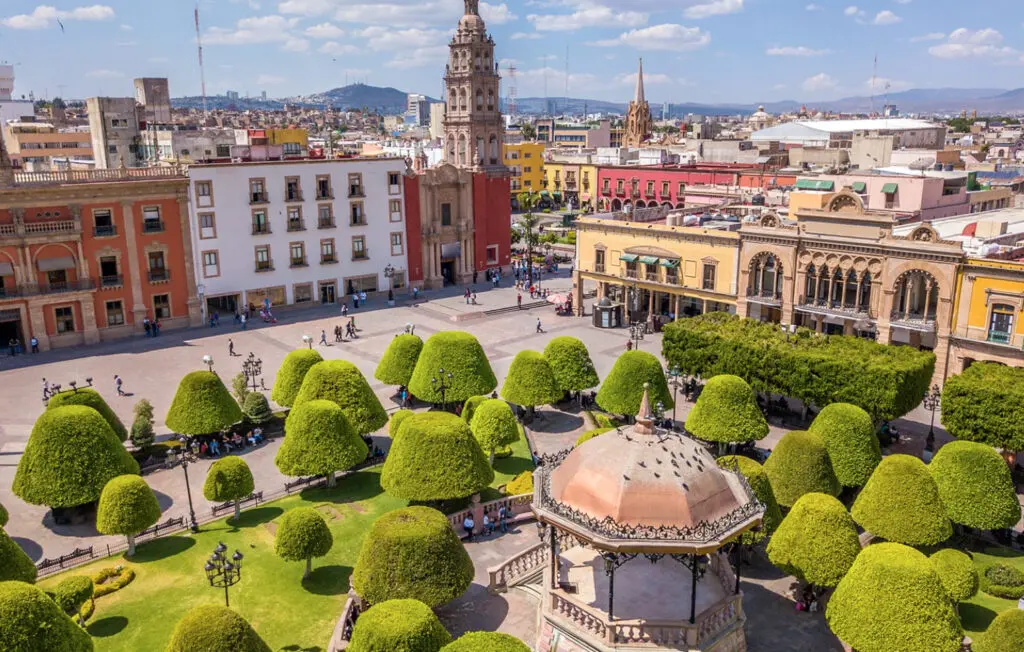
The allure of retirement often sparks dreams of new horizons, a chance to trade familiar routines for enriching experiences. For an increasing number of Americans, this dream involves embracing life beyond national borders, a phenomenon known as expatriation. Anne Nicolai, a writer and entrepreneur, has navigated this path since 2008, trading her corporate career and Minnesota residence for a vibrant life as a freelance writer and karaoke host in San Miguel de Allende, Mexico. Her journey, marked by personal growth and cultural immersion, offers valuable insights for those contemplating a similar retirement.
The Evolving Landscape of Retirement Expatriation
The trend of Americans retiring abroad is not a recent development, but it has gained significant momentum in recent decades. Factors such as the rising cost of living in the United States, the search for more affordable healthcare, a desire for cultural enrichment, and the increasing accessibility of global communication technologies have all contributed to this shift. According to a 2022 survey by International Living, Mexico remains a top destination for American retirees, cited for its affordability, proximity, and established expat communities. Other popular destinations include Portugal, Panama, Costa Rica, and Ecuador, each offering unique benefits and challenges.
Nicolai’s move in 2008 predates some of the more pronounced digital advancements that now facilitate expat life, yet her experience underscores the fundamental human capacity for adaptation and the profound rewards of stepping outside one’s comfort zone. Her platform, MoveToMexico.org, serves as a testament to her commitment to sharing practical advice and personal narratives with aspiring expatriates.
Learning #1: Unlocking Latent Capabilities Through Challenge
Nicolai’s first key takeaway from her expat experience is a profound realization of her own untapped potential. "You are capable of more than you give yourself credit for," she asserts. This sentiment is deeply rooted in her initial struggles and subsequent triumphs. Upon arriving in San Miguel de Allende, Nicolai faced linguistic hurdles, currency conversion challenges, and a perceived lack of cultural fluency. Fourteen years later, she describes herself as a bilingual karaoke host who has mastered the local currency and even embraced the rhythm of salsa dancing.
This transformation is not merely anecdotal; it represents a significant cognitive and practical shift. Nicolai’s ability to navigate the complex bureaucratic labyrinth of obtaining and renewing residency visas, a process that often involves multiple government agencies and extensive documentation, demonstrates a level of resilience and problem-solving far beyond her previous corporate responsibilities. Her repeated solo cross-country drives between San Miguel and Minneapolis, a journey spanning thousands of miles and fraught with potential challenges like navigation issues and even encounters with corruption, have demonstrably expanded her personal boundaries and instilled a deep sense of self-reliance. This process of confronting and overcoming obstacles is a hallmark of personal growth, often amplified when transplanted into an unfamiliar environment.
Learning #2: The Strategic Advantage of Community and Familiarity
The practicalities of ensuring personal safety are paramount for any individual relocating to a new country, and Nicolai emphasizes the critical role of community in mitigating these concerns. Her observations about the visible security measures in Mexico, such as decorative ironwork on windows and glass or razor wire atop garden walls, highlight a stark contrast to typical American residential security. The constant awareness required to prevent theft, such as never leaving electronics unattended in a vehicle, underscores the need for heightened vigilance.
However, Nicolai points to a crucial strategy for navigating these risks: "There is safety in numbers." She explains that establishing a presence within a sizable expat community, regardless of the host country, often correlates with improved security infrastructure and a greater degree of local understanding and accommodation. In San Miguel de Allende, this translates to English-speaking emergency services and direct access to consular support from the American agency. Furthermore, the integration of expats into the local social fabric often leads to a higher prevalence of English speakers among the local population, facilitating communication and mutual understanding. Nicolai’s personal choice to reside in an entirely Spanish-speaking neighborhood, while demonstrating a deeper immersion, is underpinned by a strong network of neighbors, reinforcing the idea that personal safety is intrinsically linked to strong interpersonal connections and mutual trust. This reliance on community support echoes research on social capital, which consistently links strong social networks to enhanced well-being and resilience in the face of adversity.
Learning #3: Bridging Distances Through Digital Connectivity
In an era defined by rapid technological advancement, the ability to maintain connections across vast distances has become a cornerstone of modern living, and this holds true for retirees living abroad. Nicolai’s third lesson centers on the indispensable role of technology in bridging geographical divides. The widespread availability of high-speed internet and affordable mobile services globally ensures that expatriates can remain connected to their loved ones and essential services back home.
Applications such as WhatsApp, Duo, and Facetime provide free voice and video calling capabilities, enabling retirees to participate in significant life events, from birthday celebrations to holiday gatherings, virtually. The rise of telemedicine has also revolutionized healthcare access for expats, allowing for remote consultations with doctors and therapists. Financial management is similarly streamlined, with direct deposit options for Social Security benefits into many foreign bank accounts, offering flexibility in currency management.
Beyond personal connections, technology serves as a vital tool for integrating into the new community. Nicolai highlights the utility of expat forums on social media platforms, which disseminate crucial information ranging from local events and garage sales to crime alerts and recommendations for goods and services. Navigational tools like Google Maps and Waze, when coupled with reliable internet access, empower individuals to explore their surroundings with confidence, locating essential amenities such as shops, restaurants, and public transportation hubs. This digital infrastructure not only enhances convenience but also fosters a sense of belonging and reduces the isolation that can sometimes accompany a move abroad.
Learning #4: Cultural Immersion as a Catalyst for Personal Transformation
Nicolai’s decision to relocate to Mexico was driven by a desire for a richer, more vibrant lifestyle, encompassing greater sunshine, increased ethnic diversity, and the intellectual stimulation of learning a new language. She candidly admits to having been a "Type A" personality in the United States, accustomed to a consumerist lifestyle characterized by a large home, multiple vehicles, and a penchant for indulgence.
Her fourteen years in Mexico have, however, cultivated a profound appreciation for values such as patience, humility, and simplicity. This transformation is evident in her altered consumption patterns; she now prioritizes needs over wants, rarely purchasing items beyond food and music. Her wardrobe, largely consisting of the clothes she brought with her, has remained functional, partly due to a lifestyle that encourages more walking, dancing, and healthier eating habits. This observation aligns with broader trends observed among expatriates worldwide, who often report a shift towards a more mindful and less materialistic existence. The immersion in a different cultural ethos, with its distinct pace of life and emphasis on human connection over material accumulation, has evidently fostered a more balanced and fulfilling approach to living.
Learning #5: The Unwavering Option of Returning Home
A crucial aspect of easing the anxieties associated with relocating to a foreign country is the understanding that the decision is not necessarily irreversible. Nicolai’s fifth and perhaps most reassuring lesson is that "You can always go home." She observes that many expatriate retirees, some of whom have resided abroad for decades, have made the choice to return to their home countries due to health concerns or a desire to be closer to family. The reverse is also true; individuals have transitioned from one foreign country to another, such as moving from Mexico to Portugal or Thailand.
This perspective reframes the act of expatriation not as a definitive, irreversible leap, but as an exploration and an experiment. Nicolai emphasizes that there is no singular "right" way to retire, nor is there a perfect time or place. The process is inherently one of trial and error, devoid of inherent success or failure. For Nicolai, Mexico has become her home, and she anticipates spending her final years there. Yet, she acknowledges the freedom to change her mind, to return to the United States, or to embark on a new adventure elsewhere. This ultimate autonomy, the ability to chart one’s own course and to redefine one’s life at any stage, is a powerful testament to the liberating potential of embracing a life less ordinary. The very act of considering such a significant life change signifies an "intellectual curiosity and an adventurous spirit," as defined in the accompanying note on expatriation, qualities that enrich not only the individual but also their understanding of the world. The phenomenon of retirement expatriation, therefore, is not merely about seeking financial advantage or a change of scenery; it is a profound journey of self-discovery, resilience, and a redefinition of what it means to live a fulfilling life.

