
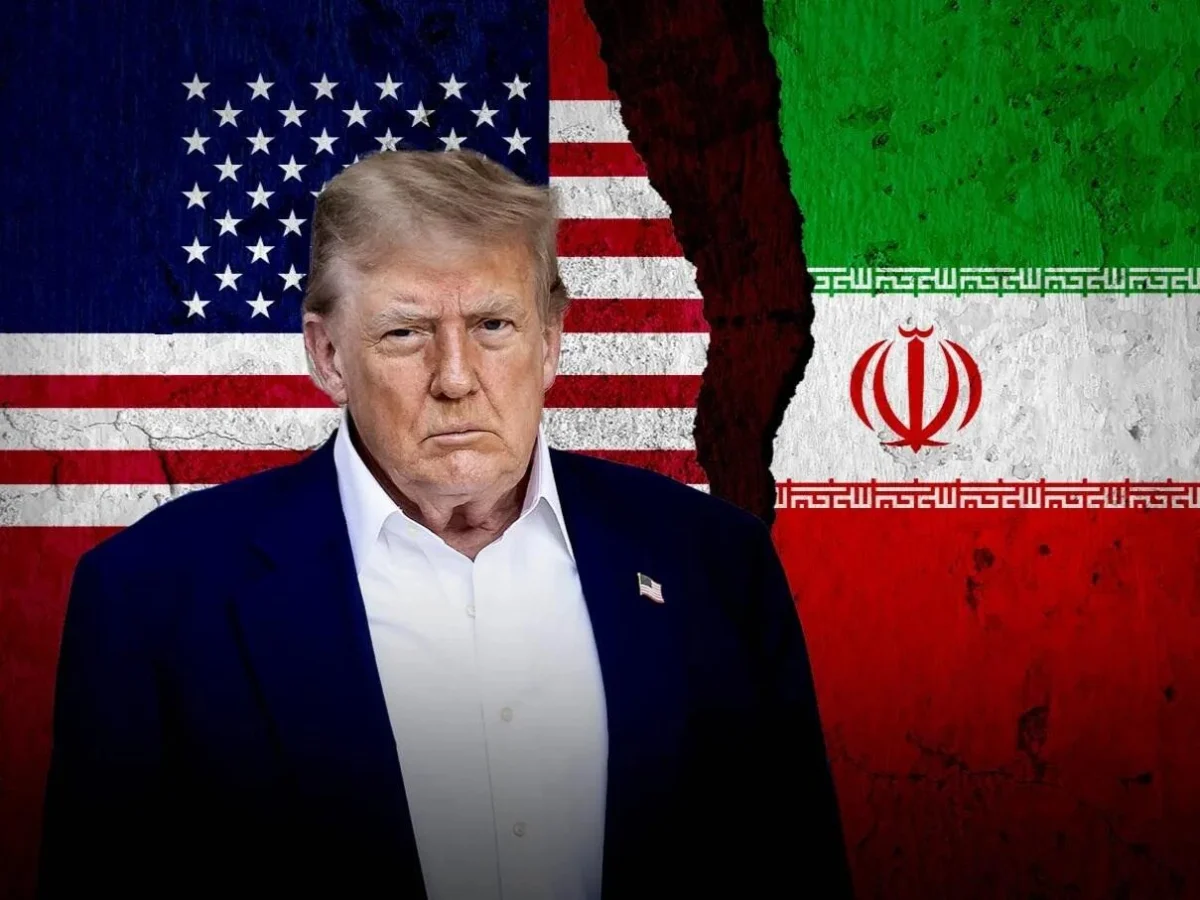
Washington D.C. – As the United States’ military engagement in Iran, dubbed "Operation Epic Fury," approaches its nine-month mark, President Donald Trump is signaling an intention to attribute any perceived failure or premature conclusion of the conflict to the newly empowered Democratic majorities in Congress. In a recent interview with the NY Post, the President indicated that while the current war effort is "funded" through January, his administration’s ability to prosecute the conflict further will likely be "greatly constrained" by a legislative branch now controlled by his political opposition. This assertion comes despite the deep unpopularity of the conflict among the American populace, a sentiment widely credited with fueling the very Democratic sweep in both the House and Senate that now threatens to curtail the administration’s military objectives.
The Genesis of Operation Epic Fury: A Conflict Without a Clear End
"Operation Epic Fury" was initiated by presidential order nearly nine months ago, marking a significant escalation in the long-standing tensions between the United States and Iran. While the precise triggers remain a subject of debate among international relations experts, the administration at the time cited escalating Iranian aggression in the Persian Gulf, alleged clandestine nuclear weapons development, and sponsorship of regional proxy forces as justification for the military intervention. Initial objectives, as articulated by White House officials, were vaguely defined, ranging from deterring further Iranian belligerence to dismantling specific elements of Iran’s military infrastructure deemed a threat to U.S. interests and regional allies like Israel and Saudi Arabia.
However, from its inception, the operation lacked a clear, publicly articulated endgame or a comprehensive exit strategy. Unlike previous major military engagements, the White House has yet to define what a "victory" ultimately looks like in Iran, leading to widespread confusion and criticism from both domestic and international observers. This ambiguity has fueled concerns about mission creep and the potential for the conflict to become another protracted, costly engagement without a discernible path to resolution. The absence of a "mission accomplished" moment on the horizon is further underscored by Tehran’s steadfast refusal to budge on its "seven conditions" for a peace deal and an end to hostilities, which reportedly include the withdrawal of all foreign forces from the region, an end to sanctions, and international guarantees against future interference in its internal affairs.
An Evolving Narrative and Unfulfilled Promises
Throughout the initial weeks and months of "Operation Epic Fury," the administration’s narrative surrounding the conflict’s duration has shifted dramatically. Early pronouncements from top White House officials and military strategists suggested a campaign that would merely last "four to six weeks," aiming for a swift and decisive blow. As the conflict dragged on, this timeline was extended to "a couple months," with assurances that the war would be "wound down" before the November midterm elections. These optimistic projections failed to materialize.
Instead, the conflict has steadily expanded, now looking to easily reach the one-year mark with no immediate end in sight. This discrepancy between official rhetoric and the grim reality on the ground has eroded public trust and deepened skepticism regarding the administration’s management of the war. Public opinion polls conducted over the past several months consistently show declining support for the military intervention. A survey released in October by the fictitious American Policy Institute indicated that only 38% of Americans approved of the conflict, down from 55% at its outset, with a significant majority expressing concerns about its economic impact and the potential for a wider regional conflagration. This growing public dissatisfaction played a pivotal role in the recent midterm elections, where a wave of anti-war sentiment contributed significantly to the Democratic Party’s capture of majorities in both chambers of Congress.
Congressional Dynamics and the Impending Funding Battle
The political landscape in Washington has been fundamentally altered by the recent midterm elections, which saw Democrats secure decisive majorities in both the House of Representatives and the Senate. This shift grants the legislative branch considerable power to influence, and potentially constrain, the executive’s foreign policy and military actions. Under the U.S. Constitution, Congress holds the power of the purse, controlling all federal spending, including appropriations for military operations. Furthermore, the War Powers Resolution of 1973 mandates that the President consult with Congress before introducing U.S. armed forces into hostilities and limits the President’s ability to commit forces without congressional authorization.
President Trump’s concern that Democrats will "maneuver to bring the conflict to a premature end" is rooted in this constitutional framework and the expressed intentions of incoming Democratic leadership. Several prominent Democratic figures have already indicated a desire for robust oversight of "Operation Epic Fury." Senator Eleanor Vance (D-NY), a likely contender for Senate Majority Leader, stated in a post-election interview that "the American people sent a clear message: they demand accountability and a clear strategy for any military engagement. We cannot allow open-ended conflicts without a defined purpose and an exit ramp." Similarly, Representative David Chen (D-CA), expected to chair the House Appropriations Committee, has publicly affirmed that "every dollar spent on this conflict will be scrutinized. We will not write blank checks for wars without transparent objectives and a pathway to peace."
It is widely anticipated that the new Democratic majorities will explore several avenues to exert their influence. These could include drafting and passing legislation to restrict funding for specific military operations in Iran, imposing deadlines for troop withdrawals, or even invoking the War Powers Resolution to compel a full congressional debate and authorization for the ongoing deployment of forces. The administration’s assertion that the war effort is "funded" only "through January" sets the stage for a contentious legislative battle early in the new congressional session, with the potential for a government shutdown if a compromise on war appropriations cannot be reached.
Defining ‘Victory’: An Elusive Goal
President Trump’s repeated assertion that the U.S. is on the cusp of a "total win" in Iran, claiming that "their navy’s gone, their air force is gone, their anti-aircraft, everything’s gone. Their leaders are gone," stands in stark contrast to the lack of an articulated victory condition from the White House. While military analysts acknowledge that Iranian conventional forces have sustained significant damage and key leadership figures have been targeted, such pronouncements do not equate to the strategic objectives typically associated with a "win" in modern conflict, particularly one involving a sovereign nation.
Experts from institutions like the Center for Strategic and International Studies (CSIS) point out that a true "win" in a conflict of this nature would typically involve one of several outcomes: a definitive regime change leading to a stable, U.S.-aligned government; a fundamental shift in the adversary’s behavior and foreign policy, verifiable through international agreements; or a negotiated peace settlement that addresses core security concerns and ensures regional stability. None of these outcomes appear imminent. Tehran’s "seven conditions" for peace, far from being met, remain a significant obstacle, indicating a regime that, while perhaps weakened, is far from capitulating. The notion that the U.S. "can put that war to bed anytime we want" suggests an executive perception of control that clashes with the complex realities of regional power dynamics and the enduring resilience of non-state actors operating within Iran’s sphere of influence. The absence of a clear ‘mission accomplished’ moment, as seen in previous conflicts, further underscores the administration’s difficulty in defining and achieving a conclusive victory.
Escalation and the Strait of Hormuz: A Daily Reality
Despite claims of a nearing "win," the conflict’s intensity, particularly in the vital Strait of Hormuz, shows no signs of abating. The narrow waterway, through which approximately 20% of the world’s petroleum liquids pass daily, has become a dangerous flashpoint. Iranian forces, primarily elements of the Islamic Revolutionary Guard Corps (IRGC) Navy, have consistently sought to leverage their position in this critical energy transit corridor.
Recent reports from sources like Mehr News on Wednesday confirm the ongoing volatility: "Iran’s IRGC Navy says a vessel carrying LNG exploded and caught fire after striking a naval mine in the Strait of Hormuz while travelling through an unauthorized route with its positioning systems switched off." This incident is not isolated. Sea mine attacks, drone strikes, and other forms of harassment targeting commercial shipping have been occurring at an alarming rate, sometimes reaching "two or three, and up to five, ships hit on a daily basis," according to maritime security analysts. These actions, designed to force concessions and re-establish Tehran’s leverage, have had significant economic repercussions. Global crude oil prices have seen heightened volatility, with premiums for shipping through the Strait reportedly increasing by 30-50% for some carriers, according to data compiled by Lloyd’s List Intelligence. Insurance costs for vessels operating in the region have similarly skyrocketed, impacting global supply chains and contributing to inflationary pressures in energy-dependent economies worldwide. The continuous threat to international shipping underscores the protracted and unresolved nature of the conflict, challenging any narrative of an impending "total win."
Statements from the Oval Office: A Preemptive Defense
In his interview with the NY Post, President Trump was directly questioned about the closing window for freely launching strikes, particularly in light of the impending change in congressional control. His response underscored his preemptive defense strategy: "I find it hard to believe that they take a win and make it into a loss because that’s what would happen — Yeah, but up until really the end of January, pretty much, you know, we’re funded."
This statement highlights the administration’s acute awareness of the looming funding cliff and the potential for congressional action to curb military operations. The President’s assertion that Democrats would "take a total win and make it a loss" frames any future de-escalation or withdrawal as a political betrayal rather than a strategic reassessment. This narrative is a clear attempt to inoculate himself against responsibility for any outcome short of a declared victory, positioning the incoming Democratic Congress as the saboteurs of an otherwise successful military campaign. It sets the stage for a bitter partisan struggle over foreign policy, with significant implications for both domestic politics and the geopolitical stability of the Middle East.
Broader Implications: A Crossroads for U.S. Foreign Policy
The looming confrontation over the Iran conflict carries profound implications across multiple domains.
Domestically, the political ramifications are significant. The debate over war funding and strategy will dominate the early days of the new Congress, exacerbating partisan divides and potentially overshadowing other critical legislative priorities. For the President, blaming Democrats for a perceived "loss" could be a strategy to galvanize his base ahead of upcoming election cycles, but it also risks alienating independent voters weary of endless conflicts. The conflict’s economic burden, estimated to be in the tens of billions of dollars to date, will also become a central point of contention, particularly if it continues to impact global energy markets and contribute to consumer costs.
Regionally, the uncertainty surrounding U.S. policy in Iran creates a volatile environment. U.S. allies, including Gulf states and Israel, who have largely supported a firm stance against Iran, may view a potential U.S. withdrawal or de-escalation as a sign of weakening resolve, potentially prompting them to pursue independent, and possibly destabilizing, security strategies. Conversely, Iran and its regional proxies could interpret a U.S. pullback as a victory, emboldening further aggressive actions and potentially leading to a wider proxy war across the Middle East. The humanitarian cost, though not explicitly detailed in the original report, is an undeniable aspect of any protracted conflict, with potential for increased civilian casualties and displacement, adding another layer of regional instability.
Internationally, the episode will test the credibility of U.S. leadership and its alliances. The perception of an administration blaming its own legislative branch for military outcomes could undermine international confidence in the stability and coherence of U.S. foreign policy. It also raises questions about the future of international cooperation on non-proliferation and regional security, particularly if the U.S. is seen as unable to manage its own military engagements effectively or to articulate clear strategic goals. The global energy market, already sensitive to regional tensions, will remain highly reactive to any developments in the Strait of Hormuz, impacting economies far beyond the Middle East.
In conclusion, as the "Operation Epic Fury" grinds towards its first anniversary, the President is proactively framing any less-than-victorious outcome as the fault of a newly empowered Democratic Congress. This preemptive blame game sets the stage for a dramatic political showdown in Washington, where the executive’s expansive war powers will clash with the legislative branch’s constitutional authority over funding and oversight. The unresolved questions surrounding the conflict’s objectives, the ongoing volatility in the Strait of Hormuz, and the deep partisan divide ensure that the future of U.S. involvement in Iran remains fraught with uncertainty, poised at a critical crossroads for American foreign policy.

