
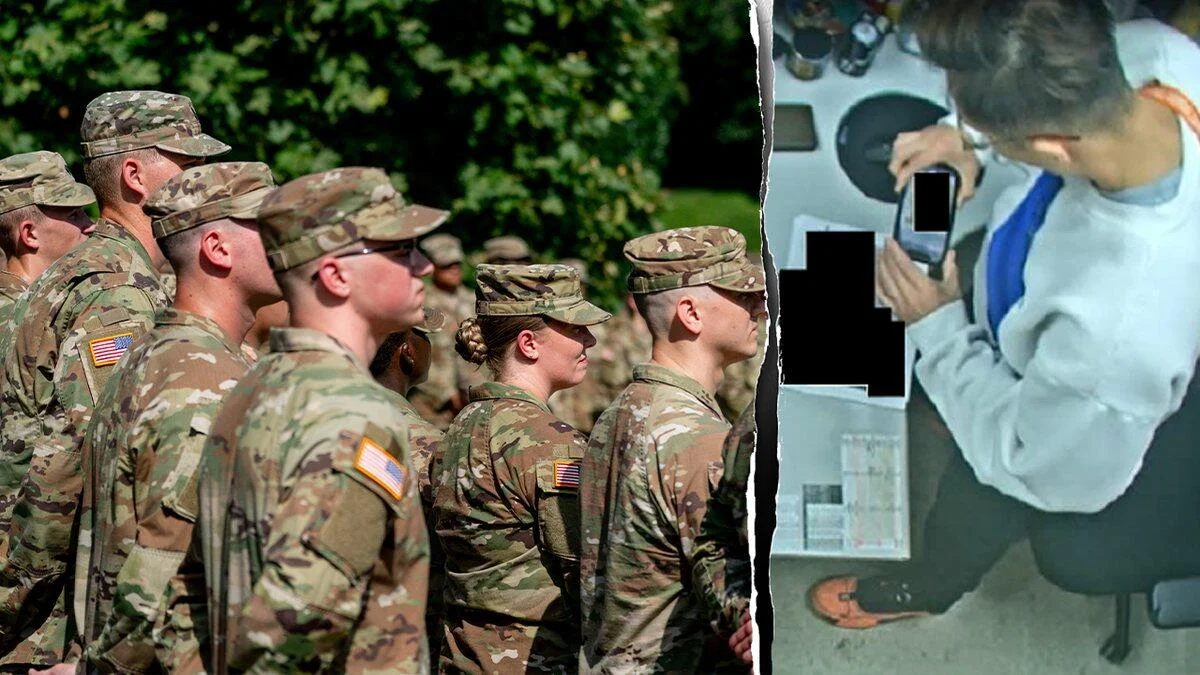
A significant breach of national security has come to light with the guilty plea of an active-duty U.S. Army sergeant, Jian Zhao, stationed at Joint Base Lewis-McChord (JBLM). Zhao, 37, admitted on Monday in federal court in Portland, Oregon, to a concerted conspiracy spanning over three years, during which he systematically funneled critical U.S. military intelligence, including manuals for the advanced High Mobility Artillery Rocket System (HIMARS), Army hard drives, and photographs of restricted briefings, to individuals connected to China in exchange for substantial cash payments. This admission underscores a profound betrayal of trust and duty within the armed forces, highlighting the persistent threat of insider espionage targeting sensitive U.S. defense capabilities.
The Unfolding Conspiracy: A Systematic Betrayal
Jian Zhao, who enlisted in the U.S. Army in 2017, held the position of a battery supply sergeant. This role inherently granted him a security clearance and privileged access to a wide array of sensitive military information, equipment, and classified documents. According to the U.S. Attorney’s Office for the District of Oregon, Zhao’s conspiratorial activities to gather, transmit, and transfer national defense information to Chinese contacts commenced around November 2021 and continued until his arrest in March 2025. This extended period allowed for the sustained leakage of potentially invaluable intelligence to a foreign power.
Prosecutors detailed the breadth of Zhao’s illicit activities, which included providing excerpts from technical manuals pertaining to the High Mobility Artillery Rocket System (HIMARS), a cornerstone of modern U.S. artillery capabilities. Beyond these critical operational documents, Zhao also actively offered military computers and government hard drives for sale. His methods further extended to covertly photographing restricted military presentations and documents. These photographed materials covered a spectrum of vital information, encompassing U.S. Army operations, intricate communications networks, specifications of various rocket and missile systems, and detailed plans for military exercises. To facilitate these transfers, Zhao utilized his personal cell phone to capture images of controlled military documents and unauthorizedly removed military storage devices from secure facilities.
The nature of the materials compromised is particularly alarming. The HIMARS, for instance, is a mobile, rocket artillery system capable of launching multiple guided rockets, including the M31 Guided Multiple Launch Rocket System (GMLRS) with a range of up to 70 kilometers, and the Army Tactical Missile System (ATACMS) with a range exceeding 300 kilometers. Its manuals would contain crucial information on its operational parameters, maintenance, targeting systems, and potential vulnerabilities. The sale of military computers and government hard drives, some reportedly marked "SECRET" and "TOP SECRET" according to the initial indictment, could expose vast repositories of data, from troop movements and logistical details to intelligence reports and cryptographic keys. Photographs of restricted briefings on Army operations, communications networks, and military exercises offer adversaries an invaluable insight into U.S. strategic thinking, tactical approaches, and technological advancements, potentially compromising future operations and endangering service members.
Zhao actively marketed these stolen materials, describing them as "sensitive, secret, or top secret" to his overseas buyers. Over the course of the conspiracy, he received thousands of dollars in payments. When federal agents apprehended him at his residence in Lacey, Washington, on March 6, 2025, they recovered approximately $30,000 in cash, alongside electronic devices and multiple Army hard drives, tangible evidence of his illicit enterprise.
Chronology of a Criminal Conspiracy
The timeline of Zhao’s actions and the subsequent legal proceedings paints a clear picture of the duration and consequences of his espionage:
- 2017: Jian Zhao enlists in the U.S. Army, eventually serving as a battery supply sergeant at Joint Base Lewis-McChord.
- November 2021: The conspiracy to gather and transfer national defense information to individuals connected to China begins.
- March 6, 2025: Federal agents arrest Jian Zhao at his home in Lacey, Washington.
- September 2026: Ruoyu Duan, a former U.S. Army soldier and alleged recruiter in the espionage ring, pleads guilty to charges related to gathering and transmitting national defense information.
- December 10, 2026: Ruoyu Duan is scheduled to be sentenced.
- Monday, November 23, 2026: Jian Zhao pleads guilty in federal court in Portland to one count of conspiracy to gather, transmit, and transfer national defense information.
- March 1, 2027: Jian Zhao is scheduled to be sentenced.
Under the terms of his plea agreement, Zhao has consented to forfeit $17,500, identified as proceeds of his crime, and will relinquish his claim to the approximately $30,000 seized during his arrest. The charge of conspiring to gather, transmit, and transfer national defense information carries a maximum penalty of 10 years in federal prison and a $250,000 fine.
Official Condemnation and the Betrayal of Trust
The guilty plea has elicited strong condemnation from U.S. officials, emphasizing the profound breach of national security and the betrayal of public trust.
U.S. Attorney Scott Bradford, in a video statement released Monday, unequivocally stated, "Members of our armed forces are entrusted with protecting our nation’s security. And when they betray that trust for personal gain, I will find them and hold them accountable." He further elaborated that "Protecting our national security depends on holding accountable those who compromise their oath and endanger the security of our armed forces. Jian Zhao violated that trust by exploiting his access to military information and equipment for personal profit while knowingly jeopardizing national security."
Brigadier General Sean Stinchon, who leads the Army Counterintelligence Command, echoed this sentiment, underscoring the gravity of Zhao’s actions. "This guilty plea reflects a deliberate betrayal of the oath every Soldier takes to defend our nation and safeguard our fellow service members," Brig. Gen. Stinchon asserted. He added that by trading military information and government equipment for personal profit, Zhao "undermined our Army’s operational security and put Soldiers at risk." These statements collectively highlight the severe impact of insider threats not only on classified information but also on the morale, trust, and operational effectiveness of the military. The integrity of the armed forces relies heavily on the unwavering loyalty and discretion of its members, making acts of espionage particularly damaging to the institution’s core values.
The Broader Espionage Network: Duan and Tian
Zhao’s confession is not an isolated incident but part of a larger, coordinated espionage network. The investigation revealed that Zhao was recruited by Ruoyu Duan, 41, a former U.S. Army soldier from Hillsboro, Oregon, who served from 2013 to 2017. Prosecutors contend that Duan played a central role, actively recruiting other active-duty troops, including Zhao, and acting as the primary conduit for communications and payments with the China-based buyers. Duan himself pleaded guilty in September, admitting to orchestrating a ring that sought to acquire a wide array of sensitive materials. These included computer equipment, training materials, intelligence reports, and technical manuals concerning critical U.S. military platforms such as the Bradley Fighting Vehicle, the Stryker Armored Vehicle, and the HIMARS. Duan is slated for sentencing on December 10, 2026.
The third defendant implicated in this sprawling conspiracy is Captain Li Tian, a health administrator at Joint Base Lewis-McChord. Tian was indicted alongside Duan in March 2025 on charges of conspiring to commit bribery and theft of government property. He stands accused of providing Duan with classified material related to the Bradley and Stryker fighting vehicles in exchange for monetary compensation. Court records cited by Stars and Stripes indicate that Tian received over $4,000 for his involvement. Zhao’s guilty plea marks him as the second of the three defendants to admit culpability, following Duan’s earlier plea.
The original indictment against Zhao painted an even more dire picture of the potential damage, accusing him of selling hard drives explicitly marked "SECRET" and "TOP SECRET" to individuals in China. Furthermore, it alleged the sale of a stolen encryption-capable government computer and highly sensitive information detailing U.S. military readiness in the event of a conflict with China. These transactions reportedly totaled at least $15,000. Attorney General Pam Bondi had, at the time of the arrests, promised "swift, severe, and comprehensive justice." While Zhao’s plea to a single conspiracy charge with a 10-year maximum sentence reflects the legal process, the initial accusations underscore the extreme peril posed by such intelligence breaches.

A Troubling Pattern: Espionage at Joint Base Lewis-McChord and Beyond
The case of Jian Zhao is not an isolated incident but rather the latest in a series of alarming espionage cases involving U.S. service members attempting to pass sensitive information to China. Joint Base Lewis-McChord, a critical military installation in the Pacific Northwest, has unfortunately become a recurring nexus in these betrayals.
- Joseph Schmidt: In October 2025, Joseph Schmidt, a former sergeant whose last posting was JBLM, was sentenced to four years in federal prison for attempting to deliver national defense information to China. His case highlighted vulnerabilities in post-service monitoring and the enduring appeal of financial incentives for former personnel.
- Korbein Schultz: An Army intelligence analyst, Korbein Schultz, received a seven-year sentence in April 2025. Schultz was convicted of selling highly sensitive information, including details on HIMARS and other critical systems, to a contact he believed was working for Beijing. This case underscored the insider threat from intelligence specialists who possess direct access to classified data.
- U.S. Navy Sailors: Beyond the Army, similar incidents have plagued other branches of the U.S. military. A U.S. Navy sailor was sentenced to nearly 17 years in prison for selling military secrets to China, a case that drew national attention to the extent of Beijing’s espionage efforts against the U.S. fleet. Another Navy sailor was sentenced to 27 months for similar offenses, emphasizing the widespread nature of these threats across service branches.
These repeated incidents point to a concerning trend, suggesting that foreign adversaries, particularly China, are actively and successfully targeting U.S. service members for intelligence acquisition. The motivations behind these betrayals often revolve around financial gain, exploiting economic vulnerabilities or personal greed. The sophistication of the recruitment tactics, as exemplified by Ruoyu Duan’s role, indicates a deliberate and organized effort by foreign intelligence services to cultivate and exploit insider threats within the U.S. military.
Implications for National Security and Counterintelligence
The implications of Jian Zhao’s actions and the broader espionage network are far-reaching and deeply concerning for U.S. national security. The compromise of technical manuals for systems like HIMARS, details on communication networks, military exercises, and operational readiness directly undermines the technological superiority and strategic advantage of the U.S. military. Adversaries gaining access to such information can develop countermeasures, adapt their own technologies, and potentially anticipate U.S. movements and capabilities in future conflicts.
The sustained nature of the conspiracy, spanning several years, suggests a systemic failure in detection mechanisms or a highly sophisticated operational security posture by the conspirators. This necessitates a rigorous review of security protocols, access controls for sensitive information, and vetting processes for service members, especially those in roles like supply sergeants who, despite not being directly involved in intelligence gathering, possess access to critical logistical and operational data.
Moreover, these cases exacerbate the already strained geopolitical relationship between the United States and China. Beijing’s persistent efforts to acquire U.S. military technology and intelligence are a well-documented facet of its broader strategy to modernize its armed forces and challenge U.S. global influence. Such espionage cases fuel distrust and heighten tensions, influencing policy decisions and military posturing in the Indo-Pacific region and globally.
From a counterintelligence perspective, the challenge lies in identifying and neutralizing insider threats before significant damage occurs. This requires a multi-layered approach, combining robust digital security measures, vigilant human intelligence, psychological profiling, and clear channels for reporting suspicious behavior. The fact that thousands of dollars were exchanged over years without immediate detection underscores the difficulty of this task, particularly when individuals exploit their trusted positions for personal profit.
Conclusion
Jian Zhao’s guilty plea represents a crucial step in holding accountable those who betray their nation for personal gain. His actions, facilitated by a network of co-conspirators, underscore the enduring and evolving threat of insider espionage to U.S. national security. As the U.S. military grapples with these breaches, the focus will undoubtedly intensify on strengthening internal security measures, enhancing counterintelligence efforts, and reinforcing the ethos of loyalty and integrity among its ranks. The upcoming sentencings of Zhao and Duan will serve as a stark reminder of the severe consequences awaiting those who choose to compromise the safety and security of their country and fellow service members for illicit profit. The broader fight against foreign intelligence efforts to penetrate U.S. defense systems remains an ongoing, critical challenge requiring continuous vigilance and adaptation.

