
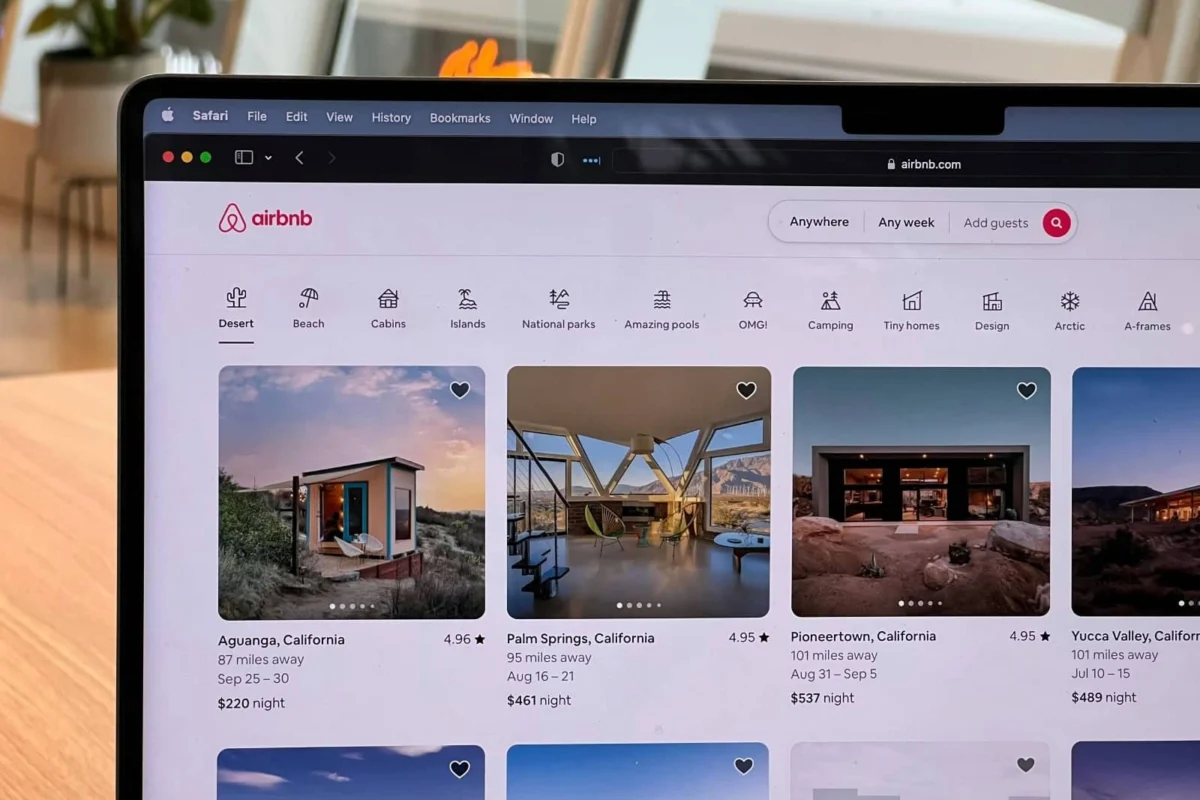
The highly anticipated Summer 2026 release from Airbnb, spearheaded by CEO Brian Chesky, has officially rolled out, introducing a suite of new features aimed at enhancing the guest experience. While initial media attention has gravitated towards expansions into adjacent travel sectors like car rentals and the integration of boutique hotels and grocery delivery services, the true transformative potential of this update lies in four understated, yet profoundly impactful, artificial intelligence-driven functionalities. These AI features, operating largely outside the immediate spotlight, are poised to fundamentally alter how properties are discovered, evaluated, and ultimately booked, creating a new paradigm for hosts and property managers seeking to capture market share.
The core of this seismic shift is Airbnb’s strategic deployment of AI to personalize the booking journey at the individual listing level. This is not a broad, platform-wide adjustment, nor a category-specific tweak; rather, it is a granular, visitor-by-visitor customization of the content presented on each property’s page. The implications are far-reaching: the specific photos highlighted, the reviews emphasized, and the compelling narratives designed to encourage a booking will now dynamically adapt based on Airbnb’s sophisticated understanding of each prospective guest’s unique profile, travel intent, and inferred preferences. This means that even for the same property, the presentation to one guest can differ significantly from that offered to another, all derived from the same underlying data. This marks a departure from previous optimization strategies, redefining what it means for hosts to "optimize their listing" in the current market.
Background and Chronology of the Announcement
The Summer 2026 release event, held recently, was a culmination of Airbnb’s ongoing investment in artificial intelligence and its commitment to creating a more personalized and efficient travel marketplace. For years, the company has been meticulously gathering data, not just on booking patterns and property attributes, but also on guest preferences, past travel behaviors, and stated interests. This extensive data corpus, combined with advancements in AI and machine learning, has now enabled Airbnb to move beyond simple search filters and keyword matching to a truly predictive and adaptive booking engine.
The event itself showcased a range of new initiatives. However, as is often the case with major tech announcements, the more visible consumer-facing features tend to capture immediate headlines. The introduction of integrated car rentals, partnerships with boutique hotel chains to expand lodging options, and the pilot programs for in-home grocery delivery are significant developments that address convenience and expand the platform’s utility. Yet, for those invested in the short-term rental ecosystem – the hosts and property managers who are the backbone of Airbnb’s supply – the underlying AI enhancements represent a more profound and potentially disruptive change.
The Four AI-Powered Features Reshaping Property Bookings
Airbnb’s strategic pivot towards AI-driven personalization is anchored in four key features that warrant deep examination by anyone looking to succeed on the platform:
Feature 01: Personalized Listing Highlights
This feature leverages AI to dynamically adjust the emphasis placed on different aspects of a property listing based on the individual guest’s detected trip purpose and known preferences. For instance, a family traveling with children might be presented with highlighted sections detailing extra bedrooms, child-friendly amenities, or a secure backyard. Conversely, a digital nomad or remote worker is more likely to see prominent features such as high-speed Wi-Fi, a dedicated workspace, or proximity to co-working facilities. This is not achieved by hosts creating multiple versions of their listing. Instead, Airbnb’s AI intelligently curates and presents the most relevant information from a single, comprehensive listing to each prospective guest.
The implication for hosts is clear: every attribute of a property now carries potential value for a specific segment of travelers. Previously overlooked details, vague descriptions, or incomplete amenity lists can now become significant disadvantages. Hosts must ensure their listings are meticulously detailed and descriptive, providing a rich tapestry of information that the AI can draw upon to tailor the presentation to diverse guest needs.
Feature 02: AI-Curated Review Highlights
With over a billion reviews collected on its platform, Airbnb is now employing AI to meticulously surface specific reviews and even extract key phrases within those reviews that directly address a guest’s particular interests or concerns. This is a significant evolution from generic review summaries. It represents a form of highly targeted social proof, intelligently organized around a property’s strongest attributes and personalized for each visitor.
The quality and comprehensiveness of a property’s review profile are now elevated to active conversion assets. Listings with sparse reviews or those lacking detailed commentary on crucial amenities or aspects of the stay will not merely receive lower overall ratings; they risk becoming effectively invisible to guests seeking information in those specific areas. This necessitates a proactive approach to encouraging detailed and attribute-specific feedback from guests.
Feature 03: "Ask About the Home," Answered by Your Content
This innovative feature empowers guests to pose natural-language questions about a property, with Airbnb’s AI providing answers drawn directly from the listing’s existing content – including reviews, photos, and map data. Questions like, "Is there a hiking trail nearby?", "Does the backyard offer shade during the afternoon?", or "Is the kitchen spacious enough for a group preparing meals?" can now be answered instantaneously and accurately.
Previously, such inquiries might have been left unanswered, prompting guests to search external resources like Google Maps, potentially leading them away from the booking process. Now, Airbnb acts as an intelligent concierge, leveraging the host’s own provided information. If the necessary detail exists within the listing – whether in a specific review, a well-captioned photo, or the property description – the AI can formulate a relevant response. Conversely, if the information is absent, the question may go unanswered, potentially leading to a lost booking opportunity.
Feature 04: AI-Generated Listing Comparisons
When a guest curates a list of potential properties, Airbnb now provides an AI-generated comparison. This is not a static table of amenities but a dynamic, personalized assessment of each property, highlighting key differentiators based on the guest’s observed preferences, the salient themes from reviews, and other critical distinctions relevant to that specific traveler.
The competitive arena for short-term rentals is thus evolving beyond simple price and star ratings. Hosts are now competing on how effectively Airbnb’s AI can construct a compelling case for their property. Listings that possess richer, more comprehensive, and more relevant data are inherently better positioned to "win" these AI-driven comparisons and capture guest interest.
Data-Driven Insights for Hosts and Property Managers
The strategic implications of these AI advancements underscore the critical importance of data-informed decision-making for hosts and property managers. As the original article notes, optimizing a listing is only effective when one understands the competitive landscape. For example, understanding neighborhood-level occupancy rates and average daily rates (ADRs) provides a crucial baseline against which a host can measure their own listing’s performance. This data allows for informed decisions about pricing, amenities, and overall listing presentation, moving beyond guesswork to strategic optimization.
Tools that provide access to comprehensive short-term rental (STR) data, such as Mashvisor’s Real Estate Data API, offer invaluable insights. This data, covering millions of listings across the U.S., provides hosts and property managers with granular information on Airbnb occupancy rates, capitalization rates, estimated cash flow, and neighborhood-level comparable property data. This enables hosts to benchmark their properties against the market and identify areas for improvement with precision.
Implications for STR Strategy Today
The overarching trend signaled by Airbnb’s Summer 2026 release is that passive or superficially optimized listings are destined to lose ground. Properties that actively provide the AI with a wealth of detailed, high-quality information will be the ones that thrive.
For individual hosts, this translates into a re-evaluation of their listing content. Descriptions, photo captions, amenity lists, and even house manuals are no longer merely informational documents for guests; they are critical training data for Airbnb’s booking engine. Vague or generic content will yield similarly vague results, failing to capture the attention of the right guests at the opportune moment. Conversely, specific, rich, and multi-dimensional content will be more effectively surfaced to precisely the guests who are most likely to book.
Property managers will need to recalibrate their review strategies. The focus must shift beyond simply accumulating high star ratings. Encouraging guests to provide detailed reviews that mention specific attributes – such as fast Wi-Fi, a quiet location, or proximity to popular attractions – is now paramount. These detailed reviews become indexable and surfaceable content that the AI can utilize. Post-checkout guest communication should be strategically designed to elicit these granular insights.
Furthermore, the approach to photography is undergoing a significant transformation. Beyond aesthetically pleasing images, hosts must now prioritize photos that are functionally informative. These visuals should serve to answer common guest questions, showcasing aspects like workspace setups, backyard amenities, or available parking. Airbnb’s AI can now reference these images in real-time to address guest inquiries, making visual content a critical component of the AI’s decision-making process.
The Broader Ecosystem Impact
The changes introduced by Airbnb’s Summer 2026 release are not merely a series of isolated product updates. They represent the logical culmination of a long-term strategy championed by CEO Brian Chesky: to build the most comprehensive data profile of both guests and hosts in the travel industry and then to strategically activate that data. The platform has now achieved a critical mass of data density – encompassing guest profiles, property attributes, and booking behaviors – enabling personalization capabilities that individual hosts or property managers could never replicate manually.
The positive aspect of this data advantage is that its foundation is built upon the very content provided by the hosts themselves: their reviews, their photos, and their listing details. Hosts who have invested in creating rich, detailed, and honest listings over time now possess a significant competitive asset. Conversely, those who treated their listings as a mere administrative checkbox are now more vulnerable.
This moment calls for a thorough audit of existing listings, focusing not just on visual appeal but on informational depth. Hosts should critically assess what attributes remain undescribed, what potential guest questions their current photos fail to answer, and which review themes are insufficiently covered. The booking algorithm has become considerably more sophisticated, and the content of listings must evolve to match this enhanced intelligence.
Conclusion
Airbnb has fundamentally personalized the booking process, enabling the platform to construct a real-time, data-driven case for or against a property in the eyes of every potential guest. The hosts and property managers who embrace their listing content as a strategic asset will undoubtedly secure more bookings. Those who fail to adapt will find themselves increasingly overlooked, not due to any inherent deficiency in their properties, but because their data profiles are less robust. The algorithm is now actively engaged in the selling process; it is incumbent upon hosts to ensure they have provided it with ample, high-quality information to work with. As Airbnb’s platform continues its trajectory of sophistication, so too does the bar for effective competition. Understanding one’s market position through reliable STR data is the essential first step before embarking on any optimization efforts.

