
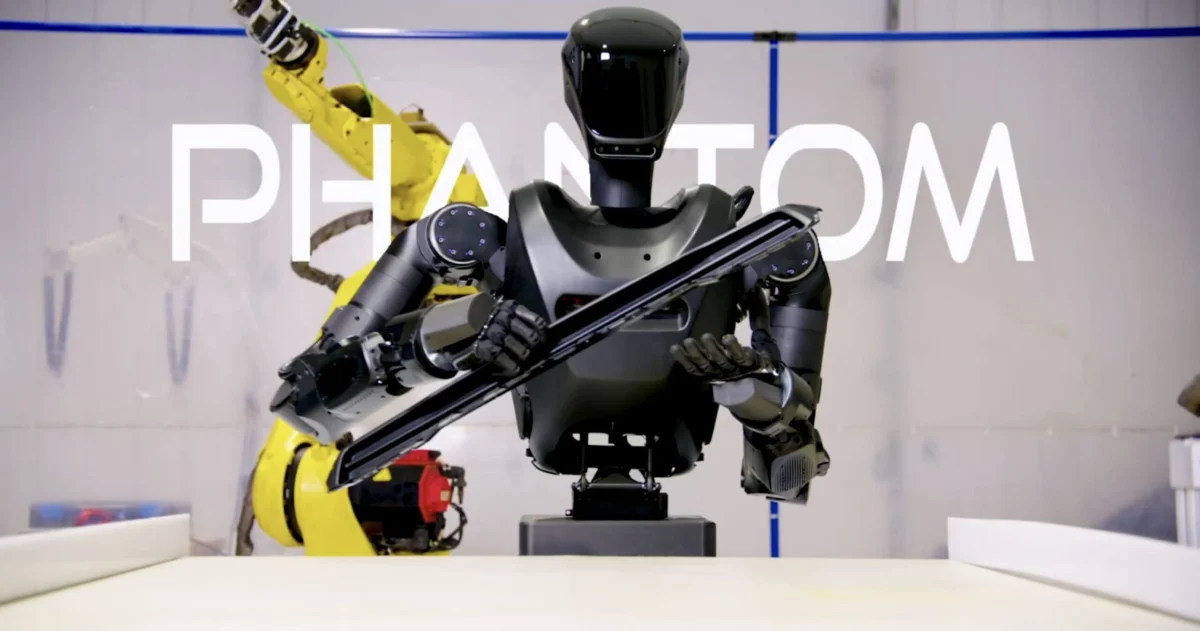
Foundation Future Industries, the ambitious humanoid robot startup launched in 2024 with a stated aim to revolutionize military and industrial applications rather than consumer-facing roles, has plunged into a severe financial crisis, culminating in the abrupt termination of employee health benefits. The move, disclosed to staff in a Friday evening memo, adds to a growing list of distress signals, including missed payrolls and a controversial $4.6 million loan taken by its co-founder, Sankaet Pathak, from the company itself. The unfolding situation has left hundreds of employees in a precarious position, grappling with immediate financial hardship and uncertainty over their medical coverage, while the company scrambles to secure a vital rescue investment advised and backed by Eric Trump.
A Cascade of Financial Woes
The signs of instability at Foundation Future Industries have been mounting for several months, intensifying into a full-blown crisis by late 2026. The company, which had garnered attention for its bold claims regarding advanced humanoid robotics and their potential deployment in high-stakes environments like war zones, began experiencing significant financial strain in August. This deterioration rapidly escalated, leading to employees being last paid on October 15. With another scheduled payday on November 30 fast approaching, workers are now bracing for a third consecutive pay cycle without income.
The immediate and most pressing concern for many employees became apparent when they were informed that their health benefits, administered through Rippling, had been retroactively terminated to October. The company advised staff that they would be offered coverage through COBRA, the federal law designed to allow workers to temporarily maintain their health insurance after losing benefits, provided they pay the full premium out of pocket. This development, conveyed in a memo from a Foundation human resources manager, stated, "Because our last pay run through Rippling was in October, they have ended our benefits with them retroactive to October. COBRA will be offered to all employees to cover November."
Foundation attempted to mitigate the impact by blaming Rippling for the disruption and promising to reimburse COBRA premiums while onboarding a new benefits provider. However, this assurance has done little to quell the anxiety among staff. Many employees, particularly those with family members undergoing critical medical treatments, expressed deep skepticism that the financially strapped company would have the necessary funds to honor its reimbursement pledge or reinstate comprehensive coverage promptly.
Rippling, for its part, countered Foundation’s narrative, issuing a statement that clarified the cause of the termination. "If a client enrolled in Rippling’s [Professional Employer Organization] is unable to meet their payroll and benefits obligations for multiple months, they will first receive a warning and if not met, they are terminated," a spokesperson for Rippling explained. This statement strongly indicated that Foundation’s failure to pay for its employee benefits was the direct cause of the disruption, not an arbitrary action by the administrator.
Sankaet Pathak’s Leadership Under Scrutiny
At the center of Foundation Future Industries’ tumultuous journey is its co-founder, Sankaet Pathak. Pathak has been known for making ambitious assertions about his ventures, a trait that previously characterized his fintech startup, Synapse, which collapsed in 2024. Synapse, a banking-as-a-service platform, faced a spectacular downfall marked by allegations of mismanagement, regulatory scrutiny, and a protracted bankruptcy process that left numerous partner fintechs and their customers in limbo. The collapse of Synapse served as a stark warning about the challenges of rapidly scaling innovative but complex technology businesses, particularly when faced with operational and financial pressures.
The echoes of Synapse’s collapse are now reverberating through Foundation Future Industries. Employees’ trust in Pathak’s leadership has been severely eroded, particularly after CNBC reported earlier this month on the $4.6 million loan he took from the company in 2025. This revelation, occurring while the company was demonstrably struggling to meet its most basic obligations to its workforce, sparked significant outrage.
In an all-hands meeting following the CNBC report on November 14, Pathak addressed the controversy, defending the loan by asserting that he had invested his own substantial personal funds into the startup and was drawing only a nominal salary. He reportedly told employees that he was deeply committed to securing Foundation’s future. Furthermore, in an attempt to alleviate immediate hardship, he instructed employees facing dire financial straits to contact human resources for assistance with personal bills – an offer that many viewed with cynicism given the company’s inability to pay salaries or benefits. "I’m burning through savings just to afford my apartment," one employee candidly told CNBC, articulating the widespread despair. "It’s extremely unfortunate we’re in this situation."
Despite the firm’s evident financial instability, Foundation continued to hire for open roles until very recently. This puzzling decision has led to an additional layer of complexity and distress, as some newly hired workers have reportedly never received a full paycheck. To stem the tide of resignations and retain critical talent in anticipation of a potential lifeline investment, Pathak has reportedly floated the idea of offering workers equity in the startup. However, this incentive comes amidst a backdrop of severe employee frustration, with many actively interviewing for other positions and attendance at the company’s San Francisco headquarters sharply declining.
Adding to the ethical concerns, human resources staff have reportedly warned employees against pursuing legal action with the state of California to recover their wages. According to individuals familiar with the situation, workers were told that any employee filing complaints with the state would face dismissal. Such warnings, if substantiated, raise serious questions about employee rights and potentially constitute illegal retaliatory practices, especially in a state like California which has robust labor protections.
The Desperate Search for a Lifeline: The Base Group Investment
Foundation Future Industries’ immediate survival hinges on securing a critical influx of capital. The company has been actively seeking a bridge loan to cover outstanding payroll and operational expenses since its financial troubles began in August. Pathak has informed employees that the company is in discussions with three or four venture capital firms, including existing investor Tribe Capital, though Tribe Capital has not responded to requests for comment.
The bridge loan is intended to serve as a stopgap measure, providing enough liquidity to sustain operations until a much larger, potentially transformative investment materializes. This prospective investment, a substantial $150 million, is anticipated from the South Korean conglomerate Base Group and could land as early as December or January, according to Pathak’s communications with employees.
Base Group, an industrial powerhouse primarily known for aluminum production, with additional interests in real estate and hospitality, confirmed to Reuters in recent days that it was indeed considering an investment in Foundation. However, the conglomerate emphasized that the funding has not yet been finalized, introducing an element of uncertainty into Foundation’s precarious recovery plan. The delay in finalization, while not uncommon in large-scale venture deals, exacerbates the anxiety within Foundation, where employees are keenly aware that their livelihoods depend on the swift closure of this deal.
The Trump Connection and Ethical Scrutiny
The potential investment from Base Group is not merely a financial transaction; it also deepens existing and often scrutinized business ties between the Trump family and the South Korean conglomerate. Eric Trump, son of former President Donald Trump, holds an investment in Foundation Future Industries and serves as its chief strategy advisor. His involvement has naturally drawn attention to the startup, particularly given the Trump Organization’s past dealings with Base Group.
According to a New York Times article published in July 2026, Base Group paid the Trump Organization $2 million in 2025. This transaction, among others, had previously drawn scrutiny from Democratic senators who raised conflict-of-interest concerns, particularly given Donald Trump’s past presidency and potential future political ambitions. Base Group has also pursued other business relationships with the Trump Organization, including proposals for a Trump-branded golf course in South Korea, highlighting a pattern of intertwined business interests.
Eric Trump, who also co-founded World Liberty Financial, has not immediately responded to requests for comment regarding Foundation’s current crisis or his role in advising the struggling company. His silence, while perhaps strategic, adds another layer of opacity to an already complex situation, leaving many to wonder about the extent of his involvement and influence in the company’s dire predicament. The optics of a company advised by a prominent political family member struggling with basic employee obligations while pursuing a large investment from a past business partner raises ethical questions that extend beyond typical startup financing challenges.
Broader Implications for the Robotics Industry and Startup Ecosystem
Foundation Future Industries’ predicament is not just a cautionary tale for a single startup; it carries broader implications for the nascent humanoid robotics industry and the wider venture capital ecosystem. Humanoid robotics is an incredibly capital-intensive field, requiring significant investment in research and development, advanced manufacturing, and highly specialized talent. The promise of these robots for military and industrial applications is immense, but the path to commercial viability is often long, arduous, and fraught with technical and financial hurdles.
The high burn rate typical of such ventures necessitates continuous and substantial funding rounds. When a company fails to secure these funds, or mismanages existing capital, the consequences can be catastrophic, as evidenced by Foundation’s current state. The termination of health benefits and missed payrolls not only impact the direct employees but also send a chilling signal to potential investors and future talent about the inherent risks in backing even the most ambitious technological endeavors.
Moreover, the saga highlights the importance of transparent financial management and robust corporate governance, especially in high-growth startups where executive compensation and loans can easily become points of contention. The $4.6 million loan to Pathak, regardless of its stated justification, has demonstrably eroded employee morale and trust, critical elements for any company navigating a crisis.
As the tech sector faces a more challenging fundraising environment compared to the boom years, investors are exercising greater caution and demanding clearer paths to profitability. The difficulties faced by Foundation Future Industries may serve as a stark reminder that even with celebrity backing and ambitious visions, fundamental business practices and employee welfare cannot be overlooked.
An Uncertain Future
The coming weeks will be critical for Foundation Future Industries. The fate of hundreds of employees and the ambitious vision of leveraging humanoid robots for high-stakes applications hang precariously in the balance, contingent on the finalization of the Base Group investment. If the $150 million lifeline materializes, it could provide a much-needed reprieve, allowing the company to rectify its financial defaults, re-establish employee trust, and continue its development efforts. However, if the funding falters or is delayed further, Foundation Future Industries could face an irreversible collapse, leaving a trail of unpaid wages, medical bills, and shattered dreams. The unfolding narrative underscores the intense pressures and inherent risks in the world of high-tech startups, where innovation often walks a tightrope between groundbreaking success and devastating failure.

