
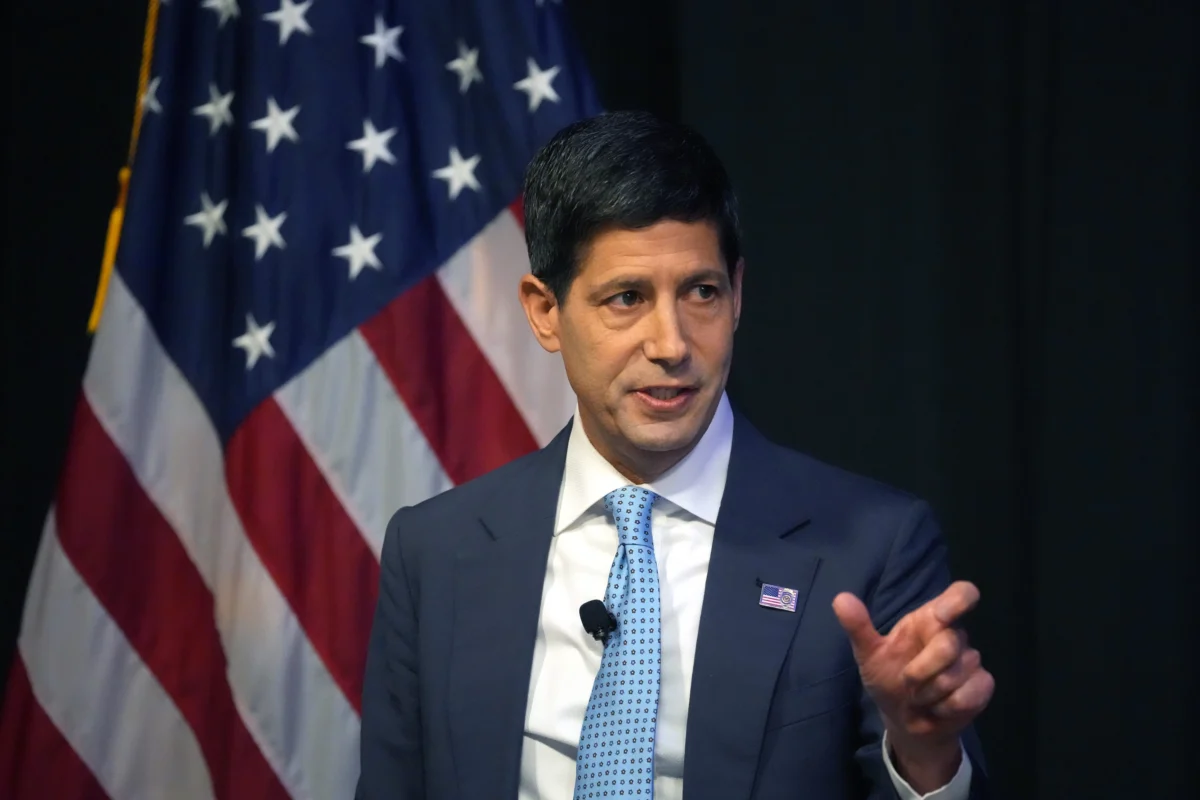
Federal Reserve Chairman Kevin Warsh on Monday underscored the profound, dualistic impact of artificial intelligence on the American economy, highlighting its capacity to unleash unprecedented productivity gains while simultaneously posing risks of widespread job displacement or even economic disillusionment. Speaking in San Francisco before a newly convened blue-ribbon task force dedicated to examining productivity and employment, Chairman Warsh emphasized that this burgeoning "super intelligence" stands poised to significantly reshape economic life, carrying crucial implications for future monetary policy decisions. The remarks, delivered during his inaugural visit to a regional Federal Reserve bank since assuming the chairmanship, signaled a clear prioritization of AI’s economic ramifications within the central bank’s strategic agenda.
The Chairman’s Vision: Embracing "Super Intelligence" as a New Economic Force
Chairman Warsh’s address resonated with a sense of both urgency and cautious optimism regarding the future trajectory of the U.S. economy in an age increasingly defined by advanced technological innovation. Since his appointment to the helm of the Federal Reserve, Warsh has consistently championed the importance of understanding and leveraging artificial intelligence, viewing it as a pivotal driver for improved productivity and a potential disinflationary force. His Monday speech further cemented this perspective, describing "super intelligence" – a term he explicitly used in lieu of the more common "artificial intelligence," aligning with a recent directive from President Donald Trump – as "an entirely new force in economic life and society." This strategic shift in nomenclature, ordered by President Trump in late September, underscores a national ambition to lead in this transformative field, signifying a belief that the technology’s capabilities extend beyond mere automation to encompass cognitive functions traditionally reserved for human intellect.
Warsh’s conviction stems from a broader economic concern: a period of persistently sluggish productivity growth that has characterized many advanced economies for over a decade. While some economists attribute this slowdown to measurement issues or secular stagnation, others see the potential for breakthrough technologies like AI to reverse this trend decisively. The Chairman’s focus on AI, therefore, is not merely academic but directly linked to the Fed’s dual mandate of maximizing employment and maintaining price stability, both of which are inextricably tied to the economy’s productive capacity. By convening a blue-ribbon task force, Warsh is signaling a proactive approach, aiming to gather diverse perspectives from industry, academia, and policy circles to comprehensively analyze AI’s multifaceted impact.
The Productivity Promise: A New Era of Growth and Disinflation?
In his remarks, Warsh meticulously outlined three distinct scenarios for AI’s integration into the economy, starting with the most optimistic. Under this "upside" scenario, AI could catalyze extraordinary productivity gains, accelerating real economic growth significantly beyond its current, often anemic, range. The Chairman painted a picture where technological breakthroughs, driven by super intelligence, could optimize supply chains, automate complex tasks, enhance research and development, and create entirely new industries. This surge in efficiency and output, Warsh suggested, could occur while maintaining employment near full capacity, as new jobs emerge to complement or manage AI systems, or as economic growth creates demand in sectors less susceptible to automation.
This optimistic outlook holds profound implications for monetary policy. A sustained period of robust productivity growth could allow the economy to grow faster without triggering inflationary pressures. Indeed, AI could act as a potent disinflationary force, driving down the costs of goods and services through enhanced efficiency and automation. For the Federal Reserve, this would mean a potential shift in its understanding of the economy’s "potential output" and "neutral interest rate." A higher potential growth rate might allow for a more accommodative monetary policy without risking overheating, or conversely, could necessitate higher nominal interest rates to reflect a stronger underlying economy. Such an environment would challenge the Fed’s traditional models, requiring adaptability and a keen eye on evolving economic indicators. Economists often cite historical parallels like the advent of electricity or information technology in the late 20th century, which led to significant, albeit often lagged, productivity booms. Initial estimates from leading research institutions like McKinsey Global Institute suggest AI could add trillions of dollars to global GDP over the next decade, potentially boosting annual productivity growth by 1.5 percentage points in some sectors. This kind of transformative impact is precisely what Warsh’s "upside" scenario envisions.
The Peril of Displacement: Automation and Labor Market Upheaval
However, Chairman Warsh was quick to temper optimism with a stark warning about the "less positive" outcomes, particularly the potential for widespread job displacement. He articulated a scenario where the rapid advancement of super intelligence, especially in automation, could lead to significant portions of the workforce becoming redundant. This isn’t merely about blue-collar jobs in manufacturing; AI’s capabilities extend to sophisticated cognitive tasks, potentially impacting white-collar professions in areas like data analysis, customer service, accounting, and even certain aspects of legal and medical fields.
The historical record offers precedents for technological unemployment, though often temporary and localized. The industrial revolution, for instance, saw agricultural workers transition to factory jobs. However, the speed and scope of AI’s potential impact are unprecedented. Projections from organizations like the World Economic Forum and Oxford University researchers have estimated that tens of millions of jobs globally could be automated or significantly altered by AI within the next two decades. For the U.S., this could translate into a substantial rise in structural unemployment, where job seekers lack the skills required for newly created positions. The social and economic consequences would be immense: increased income inequality, pressure on social safety nets, and potentially widespread social unrest.
For the Federal Reserve, a scenario of widespread job displacement presents a formidable challenge. The traditional tools of monetary policy—adjusting interest rates and managing the money supply—are designed to address cyclical unemployment, not deep-seated structural shifts. A persistently elevated unemployment rate, even amid some economic growth, would force the Fed to reconsider its approach. It might face pressure to maintain ultra-low interest rates for extended periods or even explore unconventional policies, while simultaneously advocating for robust government-led initiatives in workforce retraining, education reform, and potentially new forms of income support like universal basic income. The central bank would need to carefully differentiate between cyclical downturns and permanent job losses driven by technological change, a distinction critical for effective policy formulation.
The Risk of Disappointment: An AI Bust?
Chairman Warsh’s third scenario outlined a more sobering, yet equally plausible, outcome: that AI could simply "disappoint." This scenario posits that despite significant capital investment and soaring stock market gains driven by AI-related excitement, the expected returns might fail to materialize. This could lead to a sharp correction in equity valuations, triggering an economic slowdown and a more notable rise in unemployment. Warsh warned, "After significant capital investment and stock market gains, expected returns could turn down and equity valuations could fall, leading to an economic slowdown and a more notable rise in unemployment." He added that while the economy would eventually recover, it would do so "without the productivity gains" that were initially promised.
This "AI bust" scenario draws parallels to historical asset bubbles, such as the dot-com crash of the early 2000s. In that period, massive investments poured into internet companies, many of which had unproven business models, leading to inflated valuations that ultimately collapsed. Today, the enthusiasm surrounding AI has fueled a significant run-up in the stock prices of technology companies heavily invested in AI research and deployment. Venture capital funding for AI startups has surged, reaching unprecedented levels year after year, with billions of dollars flowing into the sector. The market capitalization of leading AI players has soared, often based on future growth potential rather than current profitability.
Should these lofty expectations not be met, perhaps due to technological limitations, slower-than-anticipated adoption, or regulatory hurdles, the economic fallout could be severe. A sharp correction in AI-related stocks could trigger a broader market downturn, impacting investor confidence and consumer spending. Companies might cut back on capital expenditures, further dampening economic activity. For the Federal Reserve, navigating such a downturn would be complex, as it would need to restore confidence, stabilize financial markets, and stimulate a recovery, all while facing the disillusionment of unfulfilled technological promise. This scenario highlights the delicate balance between fostering innovation and guarding against speculative excess, a perpetual challenge for central banks.
Monetary Policy in an AI-Driven Future: A Moving Target
The core of Chairman Warsh’s address underscored the immense challenges and complexities AI presents for monetary policy. The Federal Reserve operates with tools designed for a relatively predictable economic landscape, where factors like inflation, employment, and growth respond to traditional levers. However, super intelligence introduces unprecedented variables that could fundamentally alter these relationships.
In the "productivity boom" scenario, the Fed might need to recalibrate its understanding of full employment and non-inflationary growth, potentially allowing for lower unemployment rates or higher growth rates without tightening policy. Conversely, in the "job displacement" scenario, the Fed’s tools might prove insufficient to address structural unemployment, pushing the central bank to advocate for fiscal policy interventions or even question the relevance of its current mandate in a dramatically reshaped labor market. The "disappointment" scenario, meanwhile, would require the Fed to manage a deflationary bust, potentially necessitating aggressive stimulus to prevent a prolonged recession.
Each scenario presents a "moving target" for policymakers. The traditional Phillips curve, which posits an inverse relationship between unemployment and inflation, could be dramatically altered by AI’s disinflationary potential or its impact on wage dynamics. The natural rate of interest, a theoretical rate consistent with full employment and stable inflation, would become increasingly difficult to ascertain. Chairman Warsh’s creation of other task forces addressing "Fed communication," "data reliance," "balance sheet policy," and "inflation frameworks" further highlights his comprehensive approach to modernizing the central bank’s operations and intellectual toolkit for an era of rapid technological change. This holistic approach signals a recognition that AI’s impact cannot be isolated but will permeate every aspect of economic measurement, analysis, and policy response.
The Blue-Ribbon Task Force and Broader Fed Initiatives
The productivity and employment task force, before which Chairman Warsh delivered his speech, is a cornerstone of his strategy to tackle these complex issues. Comprising leading business executives, economists, and academics, the task force is designed to be a crucible for ideas, fostering robust debate and generating actionable insights. The conference itself featured discussion panels, culminating in a highly anticipated fireside chat between Chairman Warsh and Marc Andreessen, co-founder of the influential venture capital firm Andreessen Horowitz and a prominent AI advocate. Andreessen’s presence underscores the Fed’s commitment to engaging directly with the innovators and investors who are at the forefront of AI development, recognizing that their perspectives are crucial for informed policymaking. His insights into the practical challenges and opportunities of AI deployment will undoubtedly enrich the task force’s deliberations.
Warsh’s broader agenda extends beyond AI. His establishment of four other task forces signals a comprehensive effort to modernize the Federal Reserve for the 21st century. The task force on "Fed communication" aims to enhance transparency and effectiveness in conveying policy decisions. "Data reliance" focuses on improving the quality and timeliness of economic data, critical in a fast-evolving economy. The "balance sheet policy" task force will review the Fed’s vast asset holdings post-crisis, while the "inflation frameworks" group will re-evaluate how the Fed targets and measures inflation in a potentially disinflationary or volatile environment. This extensive reform effort, initiated shortly after Warsh assumed the chairmanship, demonstrates a proactive stance toward ensuring the central bank remains agile and relevant amidst unprecedented economic and technological shifts. His visit to a regional bank, a departure from typical Washington-centric engagements, also signifies an intent to connect directly with diverse economic realities across the country.
Global Leadership and the Geopolitical Dimension of AI
Beyond the purely domestic economic considerations, Chairman Warsh’s emphasis on American leadership in "super intelligence" carries significant geopolitical weight. The race for AI dominance is increasingly seen as a critical component of national power and global competitiveness. Nations around the world, from China to the European Union, are investing heavily in AI research and development, recognizing its potential impact on everything from defense and cybersecurity to healthcare and manufacturing.
For the United States, maintaining its technological edge in AI is not just about economic prosperity but also about national security and geopolitical influence. Warsh’s statement, "I stress that while I’m not here to offer predictions, I’m not exactly impartial about American leadership in a time so filled with both challenge and possibility," underscores this broader strategic context. The development of robust regulatory frameworks that foster innovation while mitigating risks, significant government investment in fundamental AI research, and the cultivation of a skilled workforce are all critical elements in securing this leadership. The Fed, while primarily focused on monetary policy, understands that a strong, adaptable economy is the bedrock of national strength, and its discussions on AI are intrinsically linked to this larger narrative.
In conclusion, Federal Reserve Chairman Kevin Warsh’s address on super intelligence marks a pivotal moment in the central bank’s engagement with transformative technology. His nuanced exploration of AI’s potential to unleash economic booms, trigger widespread job displacement, or even lead to market disillusionment underscores the immense uncertainty and complexity ahead. By convening a dedicated task force and integrating AI discussions into his broader reform agenda, Warsh is positioning the Federal Reserve to proactively address these challenges, ensuring that the institution remains adaptive and effective in navigating an economy increasingly shaped by the powerful, yet unpredictable, forces of artificial intelligence. The stakes are high, influencing not only the nation’s economic trajectory but also its global standing in an increasingly competitive technological landscape.

