
As the United States enters another pivotal election year, the economic discourse has become a central battleground, often characterized by a divergence between objective data and political rhetoric. While campaign cycles inherently involve candidates attempting to sway public opinion, a critical examination reveals that many economic claims advanced by politicians often prioritize emotional appeal over factual accuracy, potentially misleading voters about the nation’s true financial health. This disparity underscores the importance of a well-informed electorate capable of distinguishing between campaign narratives and the underlying economic realities.
The Current Economic Climate: Strength Amidst Skepticism
Contrary to narratives often pushed by opposition parties, particularly the assertion of a "bad economy" by the Trump campaign against the Biden-Harris administration, the US economy demonstrates considerable strength. Key indicators point to a robust economic environment:
- Unemployment: The national unemployment rate has consistently remained at historically low levels, frequently hovering below 4%. For instance, recent data from the Bureau of Labor Statistics (BLS) has shown rates near a 50-year low, signaling a tight labor market where job opportunities are abundant. This suggests widespread employment and strong demand for labor across various sectors.
- GDP Growth: The US economy has shown resilience, with Gross Domestic Product (GDP) growth demonstrating positive trends, indicating a healthy expansion of economic activity. While specific quarterly figures fluctuate, the overall trajectory has been one of growth following the post-pandemic recovery.
- Inflation Control: After a period of elevated inflation stemming from unique post-COVID supply chain disruptions, robust consumer demand fueled by government stimulus, and historically low interest rates, inflation has largely moderated. The Consumer Price Index (CPI) has seen a significant deceleration, moving closer to the Federal Reserve’s target of 2%. Current figures indicate inflation is well within manageable levels, a testament to monetary policy adjustments.
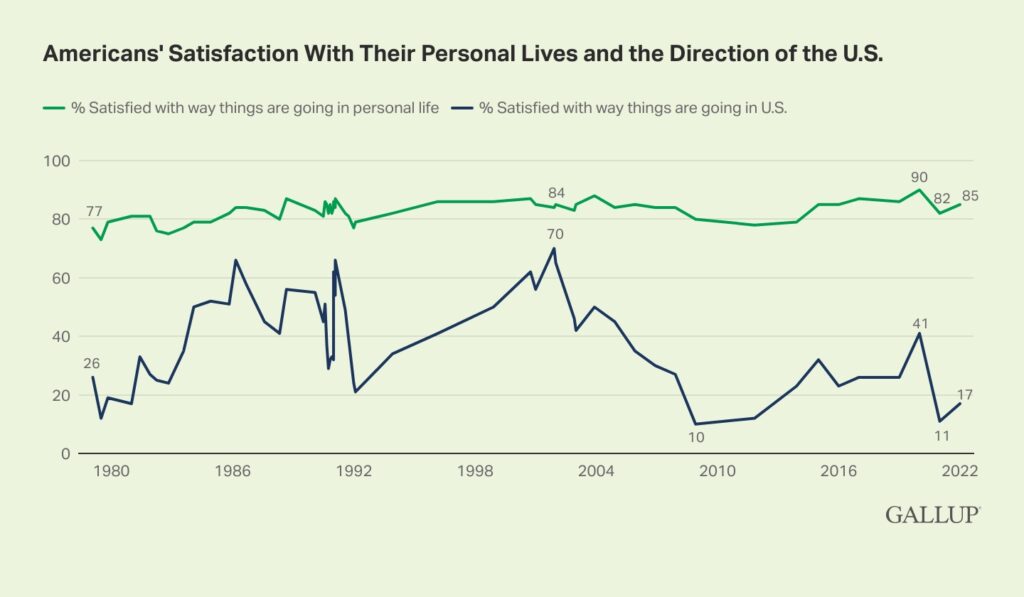
Despite these positive metrics, public perception often lags or diverges significantly. A Gallup poll cited in recent analyses highlighted that while a vast majority of Americans (around 85%) reported doing well personally, only a small fraction (approximately 17%) believed the national economy was performing well. This disconnect, where individual prosperity is perceived as personal good fortune rather than a reflection of broader economic health, is a curious phenomenon, often exacerbated by the rapid dissemination of information and misinformation through social media channels.
Debunking Common Political Economic Myths

The election cycle invariably brings forth a series of oversimplified or misleading economic claims. Understanding the nuances behind these issues is crucial for an informed citizenry.
1. The Myth of Presidential Control Over the Economy
A recurring theme in US politics is the attribution of economic booms or busts directly to the sitting president. While a president’s administration can influence economic policy through fiscal measures (taxation, spending) and regulatory frameworks, the US economy is a vast and complex entity, far too large and decentralized to be singularly controlled by any individual.
The American economy, a gargantuan machine converting labor, capital, and resources into goods and services, represents approximately 26% of the global economic output. It is inherently influenced by international trade, geopolitical events, technological advancements, and autonomous market forces. Economic cycles, characterized by periods of "irrational exuberance" leading to booms and subsequent corrections marked by "fear and pessimism," are largely driven by market dynamics and investor psychology, as seen in historical events like the 2007 housing boom and the 2008 financial crisis. Government policies, while impactful, often have delayed and sometimes unpredictable effects, akin to adjusting the rudder of a massive ship amidst unpredictable ocean currents.
2. The President’s Influence on Interest Rates
Another common misconception is that the president directly controls interest rates. Campaign rhetoric often features candidates promising to "fight" to lower borrowing costs for consumers. This claim fundamentally misunderstands the role and independence of the Federal Reserve.
The Federal Reserve, the US central bank, operates with a mandate for maximum employment and price stability. Its primary tool for achieving these goals is monetary policy, specifically setting the federal funds rate, which influences broader interest rates for everything from mortgages to credit cards. The Fed’s independence from political interference is a cornerstone of its effectiveness, shielding it from short-term political pressures that could lead to destabilizing monetary decisions. Countries where central bank independence is compromised, as sometimes observed in nations like Argentina, often face severe economic volatility, including hyperinflation. When the economy overheats, leading to inflation, the Fed typically raises interest rates to cool demand; conversely, during economic downturns, it lowers rates to stimulate growth. This mechanism is an essential, apolitical lever for economic management.
3. Inflation, Wages, and the "Harder Life" Narrative
The narrative that recent inflation has unequivocally made life harder for Americans, and that a president can magically reverse price increases, is often oversimplified. While the post-COVID period did see a significant surge in inflation, peaking at over 9% year-over-year in mid-2022, a crucial piece of context is often omitted: wage growth.
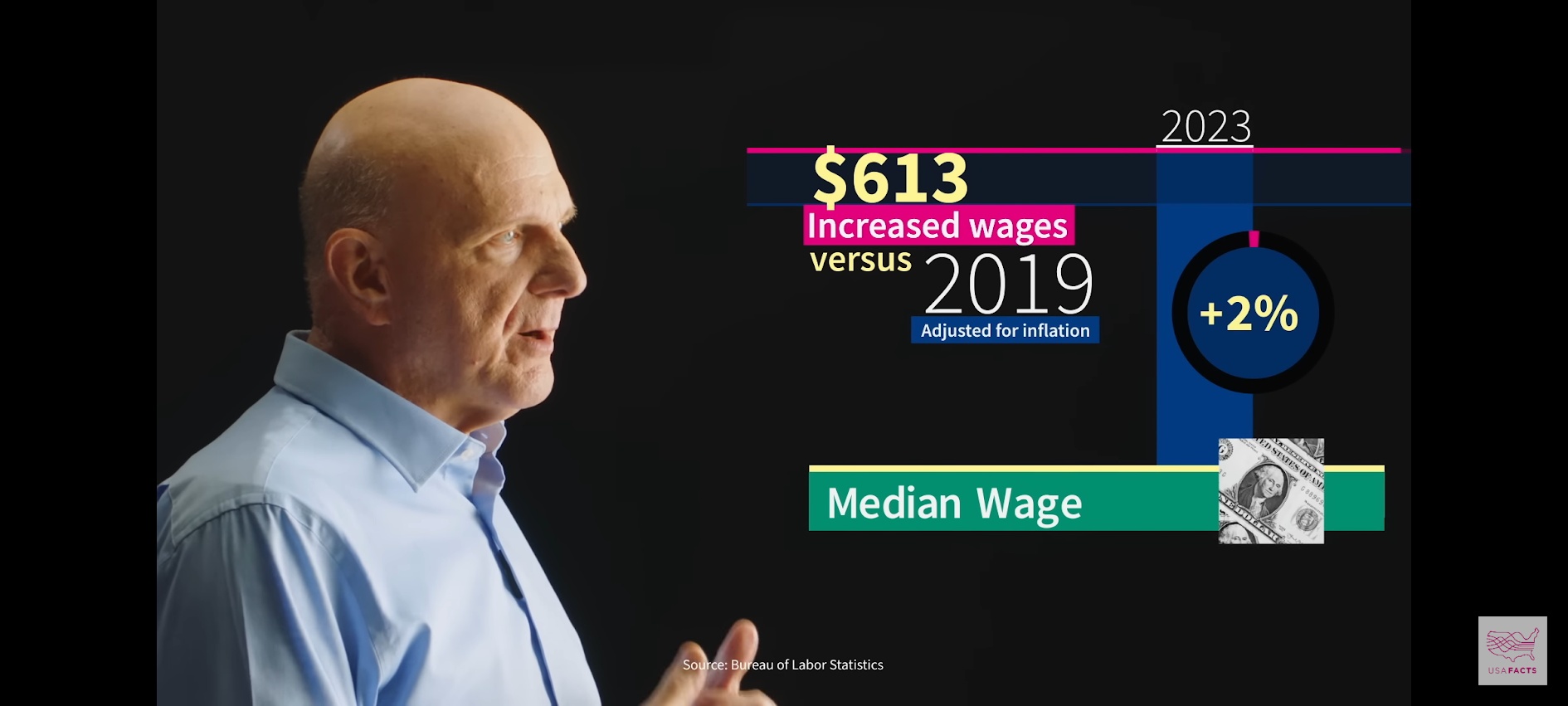
Data from sources like the Bureau of Economic Analysis (BEA) and the BLS indicate that over the past few years, aggregate wage growth has largely outpaced inflation. For example, since 2019, while overall consumer prices might have risen by approximately 19%, average wages have increased by around 21%. This means that, on average, Americans’ purchasing power has actually improved, not deteriorated, despite the higher price levels. The perception of a "bad economy" stemming from "higher wages and prices" is a misinterpretation; generally, higher wages coupled with moderate inflation are indicative of a healthy, growing economy. Furthermore, the notion of "greedy corporations" being the sole driver of inflation, while a politically convenient accusation, is often not supported by comprehensive economic analysis. Studies, such as an NPR analysis on grocery prices, have shown that corporate profit margins in sectors often blamed for "greedflation" did not experience windfall profits directly attributable to the recent inflation surge, suggesting more complex supply-demand dynamics were at play.
4. The President’s Limited Sway Over Housing Prices
The housing market presents a unique challenge, with both home prices and rents having risen significantly faster than general inflation and wages over the past decade. This has created affordability crises in many regions, exacerbated by rising interest rates which increase the cost of mortgages. Politicians frequently propose interventions such as first-time homebuyer subsidies or schemes to reduce interest rates. However, these solutions, while well-intentioned, often exacerbate the underlying problem by artificially stimulating demand without addressing the fundamental issue of insufficient supply.
The core problem in the US housing market is a supply shortage, driven by a confluence of factors including restrictive zoning laws, cumbersome permitting processes, escalating building material costs, and local opposition (NIMBYism – "Not In My Backyard") to new development. Genuine solutions lie in supply-side reforms: streamlining permitting, modernizing building codes, liberalizing zoning regulations to allow for denser housing, and reducing the power of local interest groups to veto construction projects. These measures could significantly reduce the cost and time associated with building new homes, thereby increasing supply and naturally moderating prices.
5. Gas Prices: An Outdated Indicator?
Gasoline prices often become a disproportionately highlighted issue in election cycles, despite their diminishing relevance as a primary economic indicator for most households.
- Historical Context: When adjusted for inflation, gasoline prices today ($3-4 per gallon range) are comparable to what they were in the 1950s. The perception of "high" prices is often divorced from historical and inflationary context.
- Household Spending: Even with relatively high fuel costs, the average American household dedicates a modest portion of its disposable income—around 2.5%—to gasoline. This figure is dwarfed by other vehicle-related expenses such as insurance, maintenance, depreciation, and financing, which collectively represent a much larger financial burden.
- Technological Shift: Perhaps most significantly, the rapid advancement and adoption of electric vehicles (EVs) have made gasoline an increasingly obsolete concern for a growing segment of the population. New and used EVs are becoming competitive in price with their internal combustion engine counterparts, offering lower operating costs (due to cheaper electricity per mile and reduced maintenance) and superior performance. Focusing on gasoline prices in an era of accelerating EV adoption is akin to debating the price of rotary phones in the age of smartphones – a discussion rooted in a bygone era.
Broader Implications: Economic Literacy and Well-being
The constant political bickering over economic metrics, often presented through a distorted lens, diverts attention from more fundamental truths about national prosperity and individual well-being. While economic growth and stability are vital, the relentless pursuit of "more" often overshadows the concept of "enough."
The American middle class, despite expressing concerns about economic hardship, lives at a level of material abundance unprecedented in human history. The focus on perceived deficits, rather than acknowledging widespread affluence, resembles an "overfed person at a buffet wishing for just one more flavor of donuts." While income and wealth inequality are legitimate concerns that warrant progressive tax policies and social safety nets for a more equitable and peaceful society, it is also true that beyond a certain point of material security, additional wealth does not necessarily correlate with increased happiness or fulfillment.
True well-being is often more closely tied to one’s mindset, financial literacy, and the development of practical life skills—what some might call "Mustachianism"—than solely to a growing paycheck or fluctuating economic indicators. If political discourse genuinely aimed to enhance societal happiness and resilience, it would prioritize fostering financial independence, sustainable living, and critical thinking skills over pandering to specific interest groups or promoting economically unsound policies.
Ultimately, while engaging in the democratic process by casting informed votes is crucial, advanced citizens recognize the need to filter political noise through a factual lens and maintain focus on their personal "circle of control." By understanding the true mechanics of the economy and resisting the allure of simplistic political narratives, individuals can better navigate their financial lives and contribute to a more economically literate society. The challenge for voters remains to look beyond the campaign trail’s emotional appeals and demand fact-based discussions on economic policy.

