
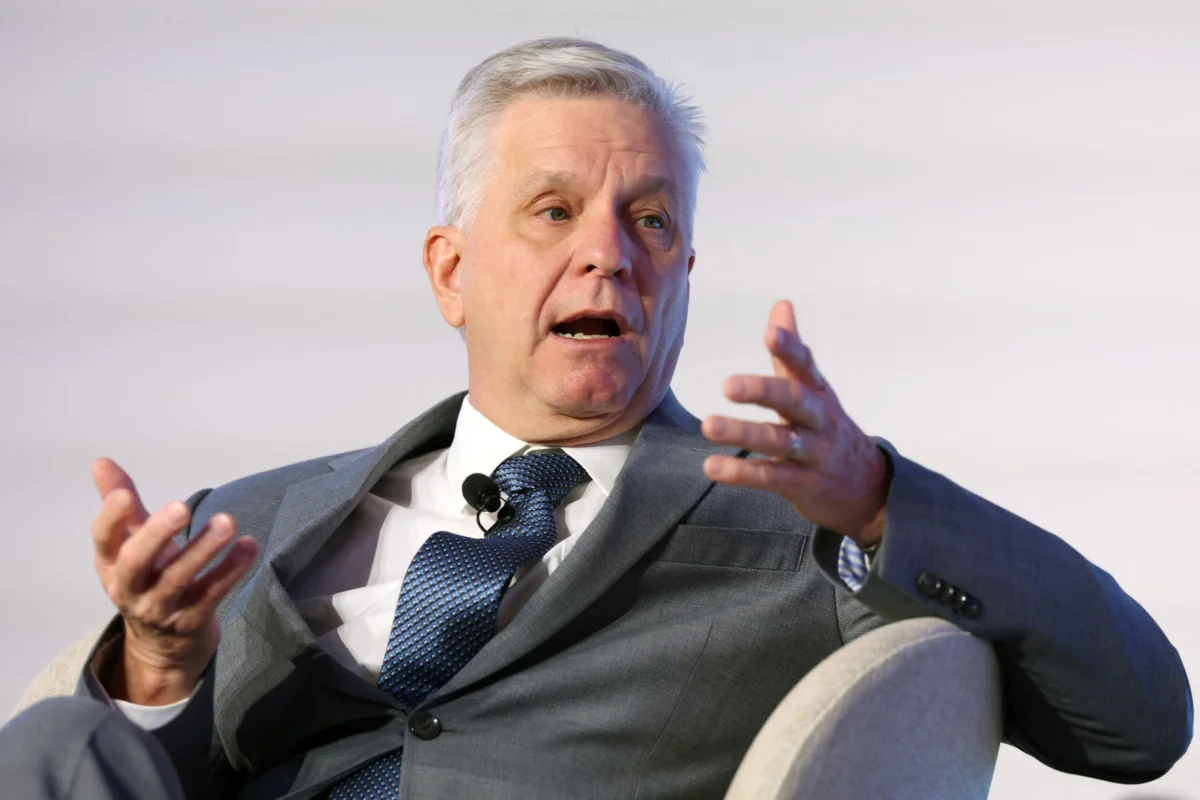
Federal Reserve Governor Christopher Waller on Wednesday issued a forceful call for aggressive measures to combat stubbornly high inflation, asserting that the central bank must "shock people" as price increases continue to outpace expectations. In a live interview with CNBC, the influential policymaker indicated that a half-percentage point increase in the Fed’s benchmark interest rate is likely necessary at the upcoming December 8-9 meeting of the Federal Open Market Committee (FOMC). Waller emphasized that the central bank needs to reverse the three quarter-point rate reductions enacted last year and may need to go even further to bring inflation under control.
"I’m very, very concerned about inflation. It’s kind of headed in the wrong direction, and it’s spreading out," Waller told CNBC’s Steve Liesman during a "Squawk Box" interview. "If you really want to get it down, you’ve got to start taking more aggressive actions." His stark warning underscored a growing impatience among some Fed officials with the pace of disinflation and the potential for elevated prices to become entrenched in the economy. The phrase "shock people" reflects a belief that conventional, gradual adjustments may no longer suffice to alter inflationary expectations and consumption patterns.
Waller’s Rationale: A Deep Dive into Inflationary Pressures
Waller’s advocacy for a more forceful approach stems from a belief that the current inflationary environment is more persistent and widespread than initially anticipated. He highlighted two key concerns: inflation heading "in the wrong direction" and "spreading out." This latter point is particularly significant, suggesting that price increases are no longer confined to volatile sectors like energy or specific supply chain-constrained goods, but are broadening across the economy, potentially affecting services and wages more deeply. Such a phenomenon would indicate a more entrenched inflationary problem, harder to dislodge with incremental policy adjustments.
The Federal Reserve targets an average annual inflation rate of 2%, as measured by the Personal Consumption Expenditures (PCE) price index. For months, and indeed for over a year, both the headline and core PCE indices, along with the more commonly cited Consumer Price Index (CPI), have consistently remained above this target. Recent data, as referenced by Waller, has shown most inflation readings above 3%, indicating a persistent gap between the Fed’s goal and economic reality. This sustained divergence fuels concerns that inflation expectations could become unanchored, leading to a self-fulfilling prophecy of higher prices and wages.
The Policy Imperative: Reversing Course and Setting a New Trajectory
At the heart of Waller’s proposal is the necessity to "take back the three insurance cuts we put in last year." In 2025, the Federal Reserve approved three quarter-point rate cuts, primarily driven by concerns over the labor market’s trajectory and a prevailing belief that inflation would naturally moderate toward the central bank’s 2% target. These cuts were often framed as "insurance" against a potential economic slowdown, intended to provide stimulus and support growth.
However, the economic landscape shifted dramatically. Waller argued that if the policy rate in the summer of 2025, even after these cuts, was not effectively bringing inflation down, then merely returning to that level would be insufficient. "So we may have to go above … three hikes plus maybe some more to get it to start actually coming back down," he asserted. This implies that the current neutral rate of interest—the rate at which monetary policy is neither stimulative nor restrictive—may be higher than previously thought, or that the economic momentum driving inflation requires a more restrictive stance.
Waller outlined a direct path for the upcoming FOMC meeting: a 50 basis point hike in December. He acknowledged an alternative: a quarter-point hike (25 basis points) coupled with a clear signal for another move in January. However, he quickly dismissed this option, citing Fed Chairman Kevin Warsh’s historical stance against such explicit forward guidance, which Warsh believes can unduly tie policymakers’ hands and limit future flexibility. "If you’re not going to signal this very clearly to markets, you’re going in January, my view is then you have to go 50 [basis points] in December to put it in place and get it done," Waller stated, emphasizing the need for decisive action if market signaling is constrained.
Market Expectations Versus a More Aggressive Reality
Current market expectations, as reflected in futures prices, largely anticipate a more modest approach from the Federal Reserve. According to the CME Group’s FedWatch gauge, futures are fully pricing in a quarter-percentage point hike at the FOMC’s December meeting. Beyond that, markets are anticipating another similar move in January, followed by at least one additional increase before the end of 2027.
Waller’s call for a 50 basis point hike in December, therefore, represents a significant divergence from these consensus market expectations. Such a move would be seen as a more aggressive tightening of monetary policy, potentially catching some market participants off guard and leading to increased volatility in equity, bond, and currency markets. The immediate reaction could involve a strengthening dollar and a further rise in Treasury yields, reflecting higher borrowing costs across the economy.
A Chronology of Recent Fed Actions and Inflationary Drivers
Understanding the Fed’s current predicament requires a look back at the recent timeline of events:
- 2025: The Federal Reserve, amidst concerns about the labor market and a prevailing belief in temporary inflation, implemented three quarter-point interest rate cuts. This period was characterized by a cautious approach, with officials emphasizing their willingness to support economic growth.
- Late February (Current Year): A significant geopolitical event—the strikes launched by the U.S. and Israel against Iran—sent ripples through global markets. This military action directly contributed to a sharp spike in energy prices, particularly crude oil, which is a major input cost for many industries. Simultaneously, lingering tariff impacts continued to exert upward pressure on import costs. These factors reignited inflationary pressures that had shown some signs of moderating.
- September (Current Year): Responding to persistent inflation and a robust economy, the FOMC approved its first interest rate hike in more than three years. This marked a pivotal shift from an accommodative stance to one focused on tightening monetary policy.
- October (Current Year): At its subsequent meeting, the FOMC opted to hold interest rates steady, allowing policymakers time to assess the impact of the September hike and gather more economic data. While inflation continued to run hot, some officials expressed a preference for a more measured approach.
- November (Current Year): Federal Reserve Governor Christopher Waller makes his public call for aggressive action, highlighting the central bank’s internal debate on the appropriate pace and magnitude of future rate hikes. The FOMC is also set to release the minutes from its October meeting later on Wednesday, which will offer further insights into the committee’s thinking and the spectrum of opinions among its members.
- December 8-9 (Upcoming): The next scheduled meeting of the Federal Open Market Committee, where policymakers will decide on the next course of action regarding the federal funds rate.
This chronology illustrates the dynamic and often unpredictable nature of economic forces and geopolitical events that shape monetary policy decisions. The shift from "insurance cuts" to urgent calls for aggressive hikes underscores the Fed’s challenge in navigating an evolving economic landscape.
Divergent Views Within the Federal Reserve: A Policy Balancing Act
Waller’s strong statement highlights a growing divergence of opinion within the Federal Reserve regarding the optimal path forward for monetary policy. While most officials agree that some degree of further policy tightening is necessary, the pace and magnitude remain subjects of intense debate.
- Alberto Musalem (St. Louis Fed President): In a speech on Tuesday, Musalem suggested a significantly aggressive trajectory, hinting at the possibility of as many as four rate hikes by the spring of 2027. While a longer timeframe, this indicates a belief in the need for sustained tightening.
- Beth Hammack (Cleveland Fed President) and Lorie Logan (Dallas Fed President): These regional Presidents have publicly endorsed a more gradual approach to tightening. Their preference suggests a desire to avoid overtightening, which could trigger an unnecessary economic slowdown, and to allow previous rate hikes more time to filter through the economy.
- John Williams (New York Fed President): Speaking with Axios on Tuesday, Williams struck a more cautious tone, stating, "I don’t think the situation calls for dramatic action." He added, "I think what we’ve been doing over the last past few months is … working well. We’re collecting the data, analyzing it, having the debate and making a decision." Williams’s comments suggest a belief that the Fed’s current, data-dependent, and deliberative approach is appropriate and effective, contrasting sharply with Waller’s call for a "shock."
This spectrum of views underscores the complex challenge facing the FOMC. On one hand, there is the imperative to tame inflation and restore price stability, a core component of the Fed’s dual mandate (which also includes maximum employment). On the other hand, there is the risk of stifling economic growth, potentially pushing the economy into a recession if rates are raised too quickly or too high. The delicate balancing act requires careful consideration of incoming economic data, evolving inflationary pressures, and the potential impact of policy decisions on various sectors of the economy.
Broader Economic Context and Implications
The debate within the Fed unfolds against a backdrop of several critical economic factors. Beyond the direct impact of the U.S. and Israel strikes against Iran on energy prices, broader supply chain issues, though easing in some areas, continue to contribute to cost pressures. A tight labor market, characterized by low unemployment and robust wage growth in some sectors, also plays a role, as rising labor costs can feed into services inflation.
If the Federal Reserve were to adopt Waller’s more aggressive stance, the implications for the broader economy would be significant.
- Borrowing Costs: A 50 basis point hike would immediately translate into higher borrowing costs for consumers and businesses. Mortgage rates, auto loan rates, and credit card interest rates would likely climb further, potentially dampening consumer spending and housing market activity.
- Business Investment: Businesses facing higher costs of capital might scale back investment plans, impacting job creation and economic expansion.
- Economic Growth: While designed to cool inflation, overly aggressive rate hikes carry the risk of slowing economic growth too much, potentially leading to a recession. This is the tightrope the Fed must walk.
- Market Volatility: A surprise 50 basis point hike could trigger significant market volatility as investors adjust their portfolios to a more restrictive monetary policy environment.
- Global Impact: As the world’s largest economy, U.S. monetary policy has global ramifications. Higher U.S. rates can attract capital, strengthening the dollar and potentially putting pressure on other countries’ currencies and economies.
The Federal Reserve’s ultimate decision in December will signal its conviction regarding the current state of inflation and its willingness to endure potential economic headwinds to achieve its price stability mandate. The minutes from the October FOMC meeting, to be released later today, will offer crucial insights into the arguments and considerations that shaped the committee’s prior decisions and will undoubtedly inform the intense deliberations leading up to the December meeting. The path forward remains uncertain, but the urgency conveyed by Governor Waller underscores the critical juncture at which U.S. monetary policy now stands.

