

The integration of financial literacy into early childhood development remains a critical objective for educators and parents seeking to prepare the next generation for the complexities of the modern economy. In rural Vermont, a recent case study involving a family with children aged five and seven highlights the efficacy of using local community events, such as the county fair, as pedagogical tools for teaching money management. By transforming a landscape of high-pressure consumerism into a classroom for experiential learning, these guardians have established a framework that distinguishes between essential needs and discretionary desires, while introducing the foundational concepts of labor, debt, and fiscal responsibility.
The Framework of the Family Money Philosophy
The core of this educational approach is a clearly defined "family money philosophy." This system operates on a binary structure that establishes clear boundaries for the children regarding financial responsibility. Under this model, the parents assume all costs associated with essential requirements, including housing, healthcare, nutrition, and standard clothing. Furthermore, the parents provide access to educational and cultural enrichment, covering admission fees for museums, historical sites, and the county fair itself.

However, the philosophy shifts the burden of discretionary spending entirely onto the children. This includes three primary categories of consumer activity: supplemental food items, such as desserts at restaurants; souvenirs and trinkets from gift shops or fairgrounds; and non-essential literature, specifically items from school-based commercial book fairs. By delegating these costs to the children, the parents create a controlled environment where the consequences of spending are immediate and tangible, yet the children’s basic welfare remains secure.
The Chore-Based Labor Economy
To facilitate this spending, the family has implemented a labor-for-wage system. This micro-economy allows the children to earn capital by performing specific tasks that benefit the household. Unlike "citizenship chores"—unpaid daily requirements such as making beds, clearing tables, or collecting eggs from the family’s chickens—the paid chores are viewed as professional contributions to the family unit.
The compensation for these tasks is based on a "fair market value" model, which includes a mechanism for negotiation. For instance, the seven-year-old subject recently negotiated a ten-dollar lump sum for the comprehensive organization of kitchen cabinetry, a task that required several hours of focused labor. The current roster of available chores, which fluctuates based on seasonal needs and the children’s evolving skill sets, includes:

- Waste Management: Emptying household trash and recycling bins into larger collection units.
- Interior Maintenance: Vacuuming common areas and cleaning windows.
- Automotive Care: Cleaning the interior of the family vehicle.
- Administrative Assistance: Filing documents and organizing mail.
- Outdoor Labor: Seasonal tasks such as weeding garden beds or assisting with woodpile stacking.
A critical component of this labor model is the requirement for quality control. Wages are only disbursed upon the successful and complete execution of the task. Incomplete or substandard work, such as spilling refuse while transporting trash, requires the child to return to the site and rectify the error before payment is rendered. This reinforces the professional standard that compensation is tied to the successful delivery of a service.
Debt and the Psychological Impact of "Buy Now, Pay Later"
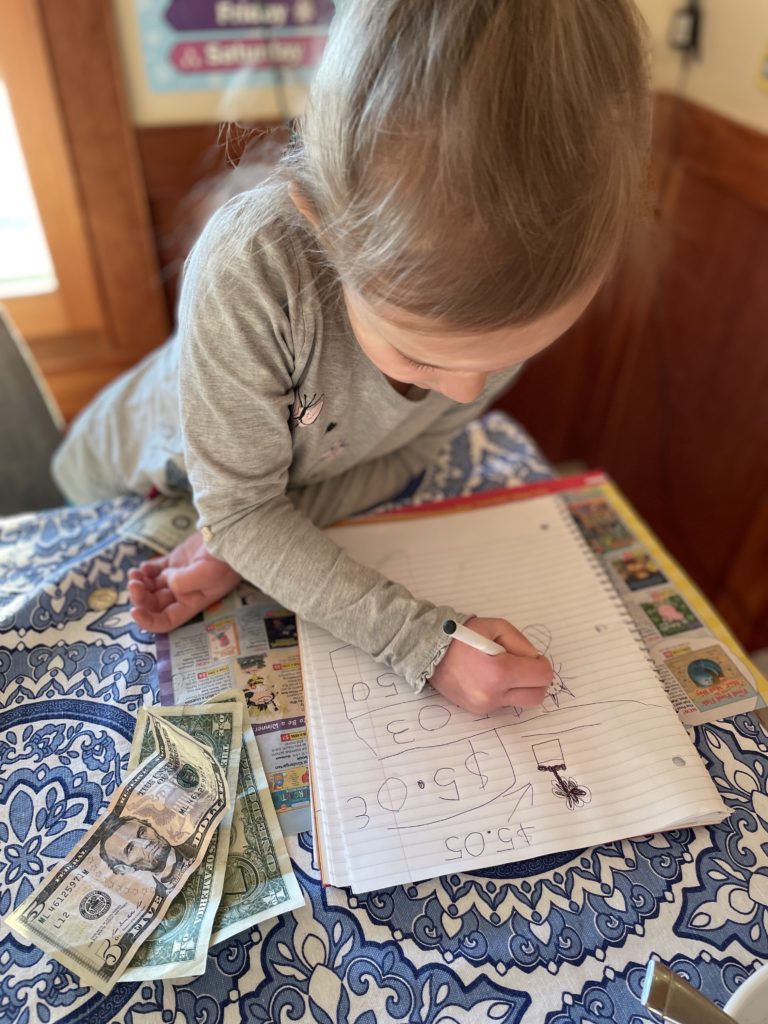
One of the most significant milestones in this financial education occurred during the previous year’s county fair. The elder child expressed a desire to purchase an inflatable toy priced at thirteen dollars, despite only possessing nine dollars in personal savings. The parents opted to act as a lending institution, providing a four-dollar loan to cover the deficit, contingent upon the child "working off" the debt through mandatory chores upon returning home.
The subsequent resolution of this debt provided a visceral lesson in the burden of credit. The child observed that performing labor to pay for an item already in her possession was significantly less rewarding than working to accumulate future purchasing power. This realization—that debt effectively "steals" the joy of future labor—has resulted in a year-long period where neither child has sought to spend beyond their current means.
According to data from the Jump$tart Coalition for Personal Financial Literacy, early exposure to the concepts of interest and debt is highly correlated with better credit management in adulthood. By allowing a small-scale "default" or debt burden in a safe environment, the parents provided a vaccination against the more predatory forms of consumer credit that the children will encounter later in life.
Navigating Targeted Marketing and Consumerism
The Vermont county fair serves as a microcosm of the broader consumer landscape. Marketing directed at children is a multi-billion-dollar industry, often utilizing "the nag factor" to influence parental spending. By placing the financial burden on the children, the parents in this case study effectively neutralized the marketing pressure. When the child is the one holding the wallet, their perspective shifts from that of a passive solicitor to an active, discerning consumer.
This shift was evidenced by the seven-year-old’s recent experience at a science museum gift shop. After spending three hours evaluating various options, the child selected a small ring. The process was nearly derailed when the child misplaced her wallet, leading to a brief period of emotional distress. The subsequent recovery of the wallet and the completion of the transaction served as a lesson in the physical security of capital. The realization that lost cash is often irrecoverable underscored the responsibility inherent in ownership.
Supporting Data and Economic Context
The necessity of such early interventions is supported by national economic trends. A 2023 report by FINRA (the Financial Industry Regulatory Authority) found that individuals with higher levels of financial literacy are more likely to plan for retirement and maintain an emergency fund. Furthermore, T. Rowe Price’s "Parents, Kids & Money" survey indicates that children whose parents discuss financial matters with them are significantly more likely to have a basic understanding of how to manage a budget by the time they reach age eighteen.
In the context of the Vermont agricultural economy, fairs are more than just entertainment; they are vital economic hubs. By participating in these events with their own capital, the children are gaining a rudimentary understanding of the local economy. They are observing the exchange of goods and services, the cost of artisanal production (such as the seven-dollar farm-produced desserts), and the logistics of commerce.
The Evolution of Financial Scaffolding
The educational strategy employed by the family follows the psychological principle of "scaffolding," where complex concepts are broken down into manageable, age-appropriate steps. At ages five and seven, the focus remains on the tangible: counting currency, reading price tags, and comparison shopping. The parents deliberately avoid abstract topics like retirement accounts or stock market volatility, focusing instead on the direct relationship between work and the ability to acquire goods.

A recent "book" authored by the seven-year-old regarding her mother’s professional life as a financial consultant demonstrates the success of this demystification. The child noted that while the work involved "boring meetings," it was "important" and focused on "helping people with their money." This indicates that the child views money not as a source of anxiety or a marker of status, but as a tool that requires management and expertise.
Future Implications and the "Bank of Parental Units"
The next phase of the family’s financial curriculum involves the introduction of long-term savings and the concept of interest. The parents intend to establish a "Bank of Parental Units," a ledger-based system where the children can deposit their earnings and receive a high-yield interest rate. This is designed to incentivize capital retention over immediate consumption.
As the children transition from the "spending phase"—where they currently exhaust most of their earnings on immediate rewards like fairground treats—to the "saving phase," they will begin to understand the power of compound growth. This transition is a critical step in moving from a subsistence-level understanding of money to a wealth-building mindset.

The broader implication of this case study suggests that financial literacy does not require a formal classroom setting to be effective. Instead, by integrating fiscal lessons into the fabric of daily life and community events, parents can instill a sense of agency and responsibility in their children. The goal is to produce adults who view money as a neutral tool—one that, when mastered, provides the freedom to make choices, rather than a source of perpetual stress. As these children continue to navigate the fairs and gift shops of their youth, they are building the cognitive architecture necessary for a lifetime of financial stability.

