
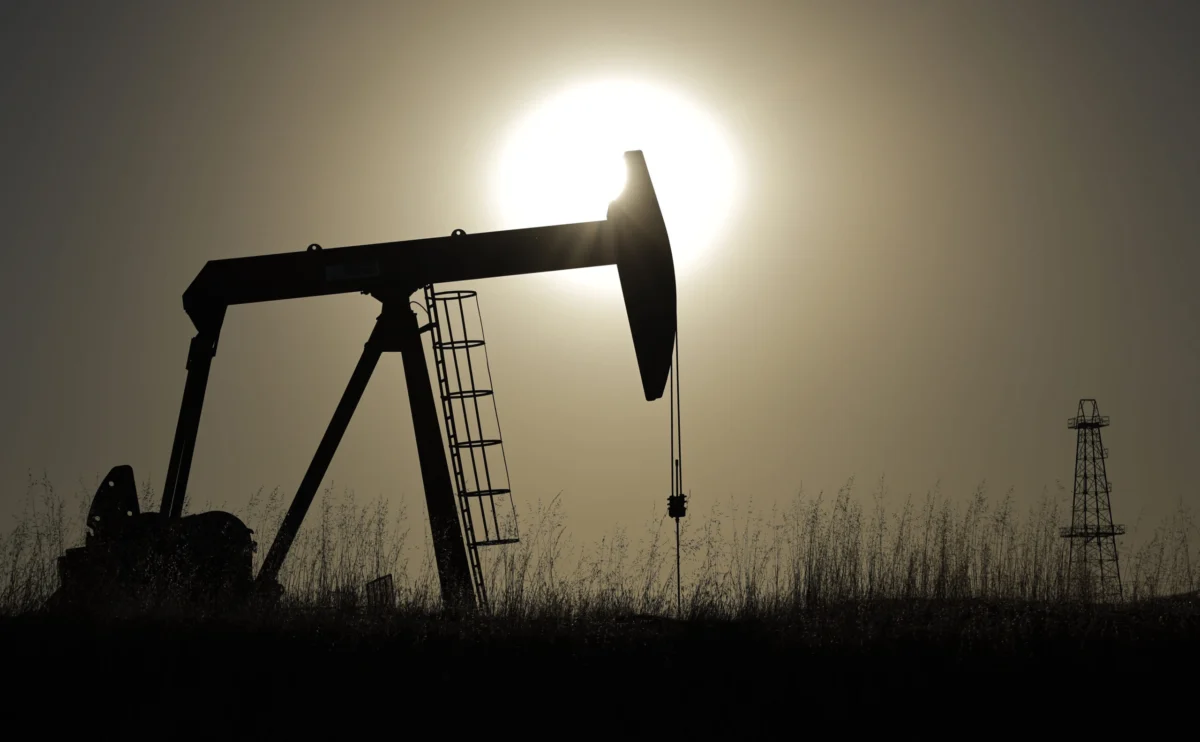
Oil prices experienced a notable downturn on Tuesday, extending losses from the preceding trading day, following statements by former U.S. President Donald Trump indicating that military action against Iran was not deemed necessary "at this point." These remarks served to alleviate immediate concerns regarding potential prolonged disruptions to the vital Middle East oil supply, a region historically central to global energy security. The market reaction underscored the profound influence of geopolitical developments, particularly those involving major oil-producing nations and critical transit routes, on commodity pricing.
The decline in oil futures reflected a broader recalibration of risk premiums that had been building in the market. Brent crude, the international benchmark, and West Texas Intermediate (WTI), the U.S. benchmark, both retreated as traders digested the implications of Trump’s softened stance. This recent volatility comes after a period where oil prices had been under considerable pressure, with WTI witnessing a significant 16% drop in November and Brent losing 20% during the same month, largely attributed to evolving geopolitical narratives and broader macroeconomic concerns impacting demand forecasts.
The Strategic Significance of the Strait of Hormuz
At the heart of the geopolitical tensions impacting oil markets lies the Strait of Hormuz, a narrow waterway connecting the Persian Gulf to the open ocean. This maritime chokepoint is arguably the world’s most critical oil transit lane, with approximately one-fifth of the world’s total petroleum liquids consumption, or about 21 million barrels per day (bpd) in recent years, passing through it. Any threat to shipping in this strait, whether perceived or real, sends immediate shockwaves through global energy markets, manifesting as increased risk premiums in oil prices, higher shipping insurance costs, and heightened supply uncertainty.
Iran, bordering the northern side of the Strait, has historically leveraged its strategic position as a tool in its foreign policy and in response to international sanctions. Threats to disrupt shipping or actual incidents involving vessels in or near the Strait of Hormuz have, in the past, directly correlated with spikes in global oil prices. The mere possibility of military confrontation in the region, therefore, inherently injects a substantial "geopolitical premium" into crude oil futures, reflecting the potential for significant supply disruptions.
Chronology of Escalation and De-escalation
The recent shifts in market sentiment are best understood within a brief chronology of U.S.-Iran relations and related events:
- 2018-2019: The Trump administration withdrew from the Joint Comprehensive Plan of Action (JCPOA), commonly known as the Iran nuclear deal, and subsequently re-imposed stringent sanctions on Iran’s oil exports and financial sector. This move initiated a period of heightened tensions, with Iran responding by gradually rolling back its commitments under the nuclear deal and engaging in what many perceived as provocative actions in the Gulf.
- Mid-2019: A series of attacks on oil tankers in the Gulf of Oman and the Strait of Hormuz, along with drone attacks on Saudi Arabian oil facilities, were attributed by the U.S. and its allies to Iran. These incidents led to significant spikes in oil prices and intensified fears of a broader regional conflict.
- Early 2020: A U.S. drone strike killed Iranian General Qassem Soleimani in Baghdad, leading to retaliatory missile strikes by Iran on U.S. bases in Iraq. While immediate military escalation was averted, the incident brought the region to the brink of war, reinforcing the fragility of peace and the potential for rapid escalation.
- Post-U.S. Midterm Elections (Recent Context): Following the U.S. midterm elections, the political landscape subtly shifted. Initial concerns about potential renewed aggressive posturing by the U.S. towards Iran were gradually eased by a series of statements from Donald Trump.
- Sunday, November X (Implied): Trump reportedly stated that fresh attacks were "highly unlikely" as talks to end the conflict progressed. This came despite both countries reporting that shipping had been hit in or near the Strait of Hormuz, indicating ongoing, albeit perhaps low-level, friction.
- Monday, November Y (Implied): Oil prices began to ease slightly, reacting to the initial hints of de-escalation.
- Tuesday, November Z (Article Date): Trump reiterated his position, stating that further military action did not appear necessary "at this point," further dampening the geopolitical premium on oil. In a post on Truth Social, he asserted, "We don’t need a deal with Iran. Those days have long since passed. We’ve got their money, Hundreds of Billions of Dollars, and we’ve got their Strait!" This statement, while containing provocative elements, was interpreted by markets as leaning towards non-military engagement for the immediate future.
Market Reaction and Expert Analysis
The market’s immediate response to Trump’s de-escalatory comments was a visible easing of oil prices. However, analysts caution against overly optimistic interpretations. John Kilduff, a partner at Again Capital, suggested that investors might have been too quick to price in an end to the fighting. "The market may have gotten ahead of itself on pricing in a cessation of hostilities," Kilduff told CNBC, adding a warning that renewed doubts about a deal would likely push the security premium in oil prices higher once more.
Kilduff also highlighted a crucial aspect of Trump’s recent rhetoric: the assertion that the U.S. "controls" the Strait of Hormuz. Such a declaration, he argued, could be perceived by Iran as a direct challenge to its sovereignty and leverage, potentially spurring further Iranian actions against shipping. This, in turn, could increase the risk of prolonged supply disruptions, counteracting the very de-escalatory effect intended by the market.
Andy Lipow, president of Lipow Oil Associates, offered a nuanced perspective on the strategic deadlock. He noted that the President’s strategy might involve a prolonged economic blockade, hoping to compel Iran to negotiate or lead to a regime change due to economic collapse. However, Lipow cautioned that "The Iranians might have different ideas and continue to attack Middle East Infrastructure that results in higher prices and forces the President to the negotiating table."
Lipow’s analysis underscored the fundamental divergence in negotiating positions that remains unresolved. Iran consistently demands an end to the blockade, the lifting of sanctions, and a ceasefire, including in Lebanon. Conversely, the U.S. seeks Iran to dismantle its nuclear stockpile and guarantee free transit through the Strait of Hormuz. "In any event, it does not seem to me that either side’s negotiating position has changed," Lipow concluded, emphasizing the persistent underlying tensions despite the temporary de-escalation in rhetoric.
Broader Implications and Future Outlook
The current state of U.S.-Iran relations, characterized by a fragile equilibrium between economic pressure and implicit military threats, carries significant implications for various sectors:
- Global Energy Security: While immediate fears of disruption have eased, the underlying vulnerability of the Strait of Hormuz remains. Any renewed escalation could swiftly trigger a surge in oil prices, impacting global energy consumers and potentially hindering economic growth. Major consuming nations, such as China, India, and European Union members, are highly dependent on Middle Eastern oil and are therefore keenly watching developments.
- Economic Impact: Elevated oil prices contribute to inflationary pressures globally, affecting transportation costs, manufacturing expenses, and ultimately, consumer prices. Conversely, a sustained period of lower oil prices, driven by de-escalation, could provide some relief to economies grappling with inflation. However, the volatility itself creates uncertainty, complicating economic planning for businesses and governments.
- Shipping and Logistics: The maritime industry is particularly sensitive to geopolitical tensions in the Gulf. Increased risk premiums on shipping insurance, rerouting of vessels, and heightened security measures can significantly increase operational costs and delivery times. Any credible threat to commercial shipping could lead to substantial disruption in global supply chains.
- Regional Stability: The U.S.-Iran dynamic is a central axis of Middle Eastern geopolitics. The actions and rhetoric of both parties directly influence the stability of neighboring countries, many of which are key oil producers themselves (e.g., Saudi Arabia, UAE, Iraq). A perceived weakening of U.S. resolve or an emboldened Iran could alter regional power balances and alliances.
- Diplomatic Pathways: Despite the public rhetoric, back-channel diplomacy or indirect negotiations are often ongoing. The current de-escalation, however temporary, might provide a window for further diplomatic efforts to address the core grievances. However, the entrenched positions outlined by Lipow suggest that a comprehensive resolution remains a formidable challenge.
The market’s reaction to Donald Trump’s statements highlights the delicate balance of power and rhetoric in international relations. While the immediate concerns about military conflict have receded, the underlying geopolitical fault lines between the U.S. and Iran remain active. The strategic importance of the Strait of Hormuz, coupled with the deeply divergent interests of both nations, ensures that oil markets will continue to respond acutely to every pronouncement, incident, and diplomatic maneuver emanating from this critical region. The sustained vigilance of investors and policymakers alike will be crucial in navigating the inherent uncertainties of this complex geopolitical landscape.

