
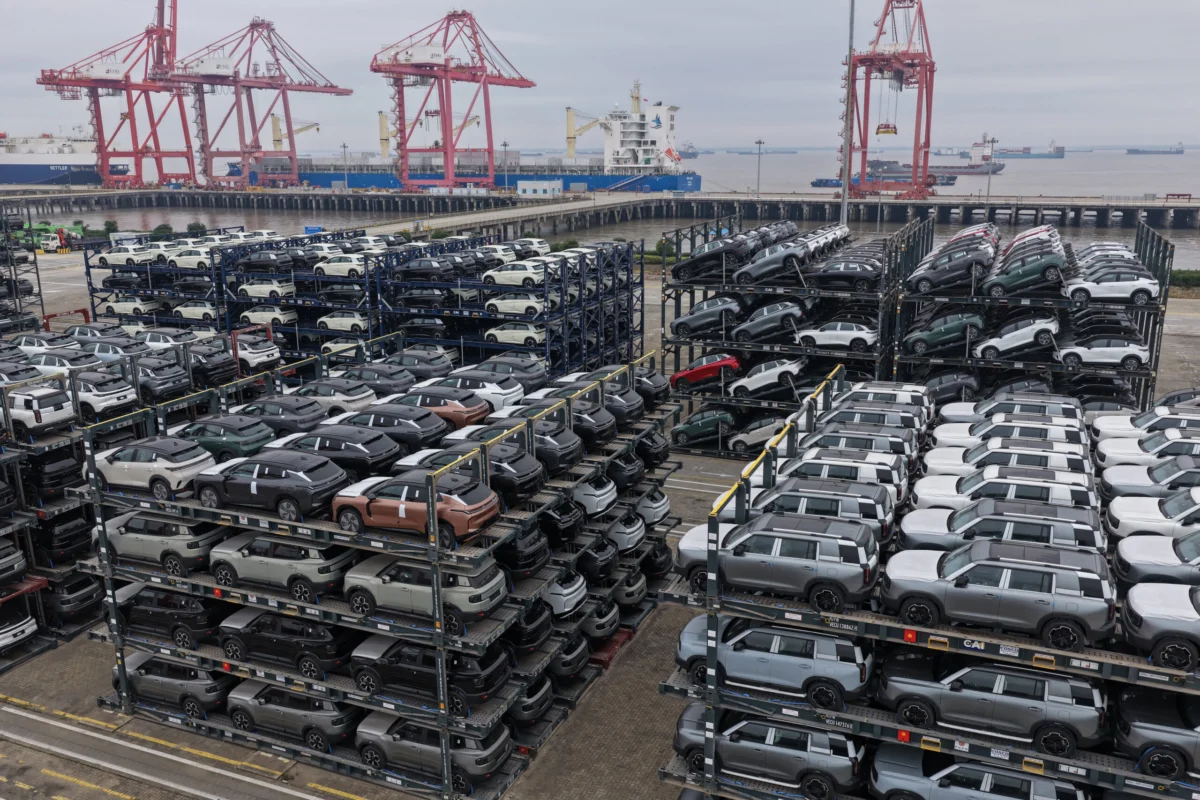
Beijing – China’s external trade sector demonstrated remarkable resilience and robust growth in September, with exports expanding by an impressive 36.3% year-on-year, marking their fastest pace since February. This surge underscores the continued strength of the nation’s manufacturing and export capabilities amidst a complex global economic landscape. Official data released on Wednesday further revealed that imports climbed by 31%, the most rapid increase recorded since June, significantly picking up from the 28.2% growth observed in August. Both figures comfortably surpassed estimates from a Reuters poll, which had projected 25.5% for exports and 24.5% for imports, signaling a stronger-than-anticipated performance.
Overview of Trade Performance and Key Drivers
The stellar September trade figures are indicative of several converging factors. A primary catalyst has been the escalating global demand for China-made components essential for data centers powering artificial intelligence, a burgeoning sector experiencing explosive growth worldwide. Concurrently, a discernible stabilization in trade tensions with the United States, China’s largest trading partner on a single-country basis, has provided a crucial impetus. Exports to the U.S. alone surged by nearly 39.6% in September, outstripping the growth of overall exports and contributing to a monthly trade surplus that reached its highest level since January 2025, according to customs data analyzed via Wind Information. This bilateral trade momentum reflects a cautious but evident thawing of relations, following recent diplomatic engagements and tariff adjustments.
Economists and analysts have largely welcomed these figures, albeit with a degree of scrutiny regarding underlying domestic conditions. Hao Zhou, head of research and chief economist at Guotai Junan International Holdings, commented in a recent note, "The resulting trade surplus of $133.5 billion, a record monthly high, underscores the continued strength of China’s external sector despite lingering concerns over domestic demand." This record surplus highlights China’s pivotal role in global supply chains and its capacity to meet international market needs, even as its internal consumption patterns remain a subject of ongoing debate and policy focus.
A Deeper Dive into Export and Import Dynamics
The detailed breakdown of September’s trade data reveals intriguing trends across various product categories and sectors. One of the most striking developments is the performance of China’s integrated circuit board exports. Globally, the value of these exports surged by a staggering 136% in September from a year ago. However, a closer examination reveals that the number of units exported only rose by a modest 1%, according to CNBC calculations of official figures. This disparity strongly suggests a significant shift towards higher-value, more sophisticated integrated circuits, or a substantial increase in the average selling price of these critical components. This trend aligns with China’s long-term strategic ambitions to move up the technology value chain, reducing reliance on foreign advanced chips and asserting greater control over its high-tech manufacturing base. The global race for AI supremacy and advancements in other digital technologies are undoubtedly fueling this demand for advanced Chinese-made semiconductors.
On the import side, while overall growth was robust, specific patterns emerged. The volume of China’s crude oil imports fell by double-digits for the sixth consecutive month, even as their value rose for the first time since May. This paradoxical situation can be attributed to elevated global crude oil prices, which have offset the decline in volume. Furthermore, it points towards China’s ongoing efforts to diversify its energy sources, enhance domestic energy production, and potentially strategically draw down existing stockpiles. Both crude oil and natural gas imports have seen a decline in volume since the start of the year, signaling a broader strategic shift in China’s energy policy aimed at greater energy security and efficiency.
The context of China’s trade performance earlier in the year also merits attention. Both exports and imports had each grown at their fastest pace in five years, setting a precedent for the current strong showing. This sustained momentum throughout the year indicates a robust recovery trajectory for China’s trade sector following various global economic disruptions.
The Automotive Sector: A Global Powerhouse
Perhaps one of the most dynamic areas of China’s export growth is the automotive sector. China’s overall car exports surged by an astonishing 56.3% in September, reaching a total of 1.18 million vehicles. The value of these exports climbed even higher, by 62%, underscoring a global appetite for Chinese-made vehicles, particularly in the burgeoning electric vehicle (EV) and hybrid segments. This expansion positions China as a formidable player in the global automotive market, challenging traditional manufacturing powerhouses.
However, this rapid ascent has also triggered international responses. Just last week, the European Union announced that China had agreed to halve its exports of hybrid-powered cars to the bloc, following high-level trade talks in Beijing. This agreement, while potentially limiting a specific segment of China’s automotive exports to the EU, highlights the increasing scrutiny and trade friction that can accompany such rapid market penetration. It also reflects efforts by recipient countries to protect domestic industries or manage trade imbalances. Despite this specific concession, the overall growth in automotive exports signals China’s undeniable manufacturing prowess and its strategic push into global vehicle markets. The image of Chinese-made cars meticulously loaded onto specialized vehicle racks at Taicang Port, Suzhou, for export on October 12, 2026, vividly captures this ongoing industrial transformation and global reach.
Geopolitical Context and Trade Diplomacy
The robust trade figures arrive amid a backdrop of intensifying global scrutiny on the economic impact of China’s surging exports, particularly in light of sluggish domestic demand within China. Concerns have escalated in recent years regarding potential trade imbalances, industrial overcapacity, and the implications for global markets. International trade partners are closely watching how China manages its internal economic rebalancing while maintaining its export engine. The AI-related demand and a coinciding rise in prices of core products have also played a role in supporting import growth, suggesting a complex interplay of global supply and demand dynamics.
Significant diplomatic efforts have been underway to manage these trade relationships. Last month, the U.S. and China announced plans to roll back tariffs on $30 billion worth of goods from each country, alongside extending a broader trade truce by two months to January. This move signals a pragmatic approach from both economic superpowers to de-escalate trade tensions that have characterized their relationship for years. Such agreements provide a more stable environment for businesses and contribute to the growth seen in bilateral trade figures. The extension of the truce suggests a willingness to continue dialogue and find common ground on contentious trade issues.
For the first three quarters of the year, China’s exports grew to every major country tracked by its customs agency, demonstrating a broad-based global demand for Chinese goods. However, imports from specific countries such as Malaysia, Germany, and the U.K. fell during the same period, indicating shifts in global supply chains or changes in China’s sourcing priorities.
Strategic Commodities and Future Outlook
Reflecting the impact of export controls and strategic stockpiling, the volume of China’s rare earths and fertilizer exports dropped during the first three quarters of this year. Simultaneously, fertilizer imports surged, suggesting efforts to bolster domestic agricultural production and ensure food security, particularly in the face of global supply chain uncertainties. Rare earths, critical for high-tech industries, are often subject to strategic considerations due to their vital role in advanced manufacturing.
Looking ahead, economists anticipate that China’s trade sector will likely maintain a strong, albeit potentially moderating, growth trajectory. While the current momentum is undeniable, the sustainability of such high growth rates will depend on several factors, including the global economic outlook, geopolitical stability, and China’s ability to navigate ongoing challenges related to domestic demand and structural economic reforms. The strong external performance provides a crucial buffer for China’s economy, offering stability even as policymakers grapple with internal adjustments. The interplay between global demand for advanced technology, strategic energy policies, and evolving trade diplomacy will continue to shape China’s trade landscape in the coming months and years.

