
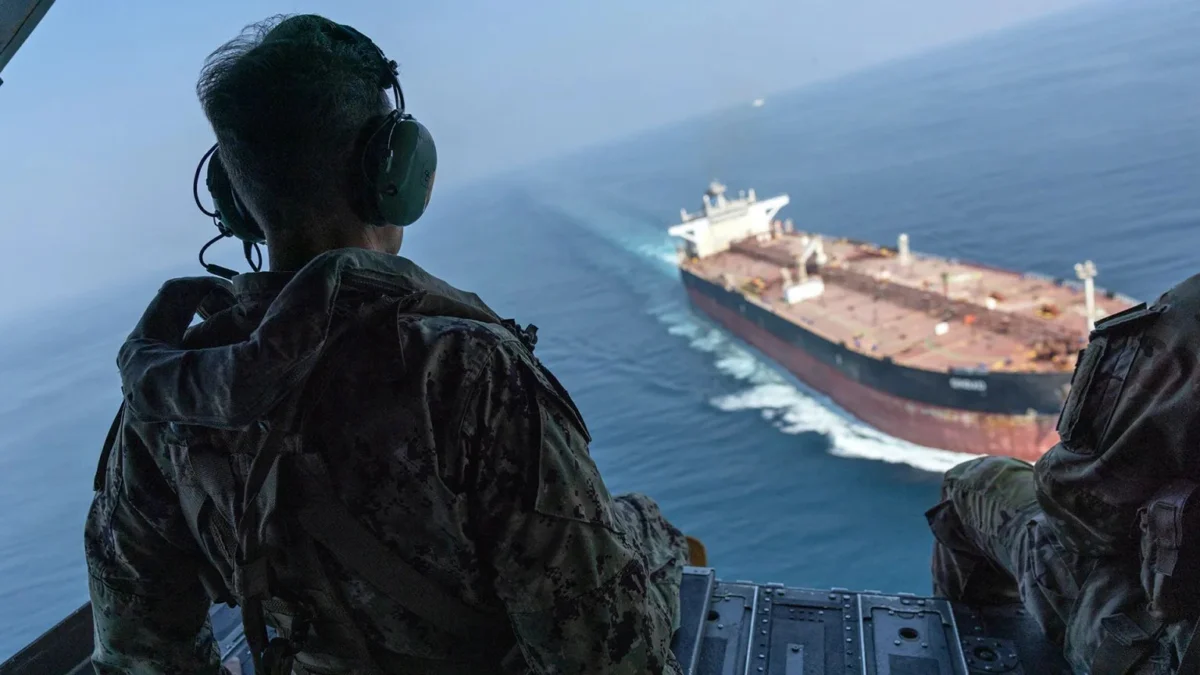
The volatile waters of the Strait of Hormuz have witnessed a significant escalation in maritime incidents, with at least four alleged attacks on international shipping reported within a concentrated 24-hour period spanning from Friday into Thursday. These incidents, primarily attributed to sea mines, have culminated in a particularly concerning development: the disabling of an international tanker by limpet naval mines. This method, unseen in the current seven-month period of heightened regional tensions, marks a critical shift in tactics, raising alarms across the global maritime industry and among international security analysts.
A New Tactic in a Critical Chokepoint
The fourth reported attack, involving the disabling of a tanker by limpet naval mines, has garnered widespread attention and concern. Limpet mines are distinct from conventional sea mines in their deployment and nature. They are relatively small, magnetic explosives designed to be affixed directly to a ship’s hull, typically by divers or individuals operating from small, fast boats. Their use suggests a more audacious and direct approach than the deployment of passive sea mines or remote-controlled drones, which have been the predominant methods of alleged attacks in recent months.
According to reports from Al-Monitor, citing the UK Maritime Trade Organization (UKMTO), a UAE-owned crude oil tanker, identified as the M/T Louise-1, sustained damage late Thursday night. The incident reportedly occurred while the vessel was transiting the Strait of Hormuz. Two limpet mines, allegedly attached to its hull above the waterline by attackers operating from a small boat, detonated, triggering a fire in the engine room after 10 p.m. local time. Crucially, the crew of the Louise-1 was reported unharmed, a testament to modern vessel design and emergency protocols, but the incident underscores the grave risks posed to commercial shipping.
This particular method of attack is highly significant because it had not been publicly associated with Iranian actions in the ongoing period of conflict. The last widely reported limpet mine attack in the region occurred in 2019, an incident that itself marked a considerable escalation at the time. The reappearance of limpet mines now, after a sustained period dominated by other forms of alleged aggression, signals a potential recalibration of strategy by the Islamic Revolutionary Guard Corps (IRGC), Iran’s elite military force. Such a tactic implies a direct, close-quarters engagement, potentially indicating a willingness to take greater risks to disrupt international shipping in the strategic waterway.
The Strait of Hormuz: A Geopolitical Lifeline
The Strait of Hormuz is arguably the world’s most critical oil chokepoint, connecting the Persian Gulf to the Arabian Sea and beyond. It is a narrow maritime passage, only about 21 miles wide at its narrowest point, through which approximately 20% of the world’s total petroleum liquids consumption and about one-third of all seaborne traded oil passes daily. Tankers carrying crude oil and refined petroleum products from major producers like Saudi Arabia, Iran, Iraq, Kuwait, Qatar, and the United Arab Emirates must navigate these waters to reach global markets. Any disruption in this strait has immediate and profound implications for global energy prices, supply chains, and the broader international economy.
The strategic importance of the Strait of Hormuz has historically made it a flashpoint for regional and international tensions. Iran, situated along its northern coast, has repeatedly threatened to close the strait in response to international sanctions or military pressure, leveraging its geographical advantage as a powerful deterrent. The recent wave of alleged attacks, culminating in the sophisticated use of limpet mines, reinforces Iran’s capacity and apparent willingness to exert pressure on this vital maritime artery, even in the face of significant international condemnation and potential retaliation.
Chronology of Escalation and Tactical Evolution
The current wave of maritime incidents forms part of a longer, more complex chronology of tensions in the Persian Gulf region. Over the past seven months, there has been a discernible pattern of alleged attacks on international shipping, primarily involving unmanned aerial vehicles (drones) and various types of sea mines. These incidents have often been attributed to Iran or its proxies, although Tehran consistently denies direct involvement, instead accusing external actors of destabilizing the region.
The prior 24-hour period, however, marked an acceleration in both frequency and potentially, in tactical sophistication. The initial reports of four attacks within such a short timeframe, largely involving alleged sea mines, already suggested an intensified campaign. The subsequent revelation of a limpet mine attack on the M/T Louise-1 elevates this escalation to a new level. Unlike traditional sea mines, which can be deployed remotely and pose a broader, less precise threat, limpet mines require a more direct, often clandestine, approach. They are typically attached to a vessel’s hull by hand, often by specially trained operatives, highlighting a degree of precision and audacity that differentiates them from other forms of naval warfare observed recently.
The use of limpet mines in 2019, which saw several tankers damaged in incidents also attributed to Iran, prompted a significant international response, including increased naval patrols and diplomatic efforts to de-escalate tensions. The re-emergence of this tactic now, especially in the context of what has been referred to as "Operation Epic Fury" – a generalized term for the ongoing period of heightened regional conflict – suggests that Iran may be testing new boundaries or responding to specific pressures with a more aggressive posture.
Official Responses and Attributions
Following the M/T Louise-1 incident, the UK Maritime Trade Organization (UKMTO) played a crucial role in disseminating initial information, confirming the damage to the UAE-owned crude oil tanker and the method of attack. UKMTO, an information fusion center operated by the Royal Navy, serves as a primary point of contact for mariners in the region, providing vital alerts and monitoring maritime security incidents. Their prompt reporting underscores the seriousness with which such events are viewed by international maritime authorities.
While official attribution from the United States or its allies often follows detailed investigations, the implicit suggestion from regional news sources like Al-Monitor, and the broader context of recent events, points towards Iran’s Islamic Revolutionary Guard Corps (IRGC). The IRGC has a known history of operating small, fast boats, which are ideally suited for clandestine operations like limpet mine deployment. These vessels are a cornerstone of Iran’s asymmetric naval strategy, designed to challenge larger, more technologically advanced naval forces through swarming tactics and unconventional warfare.
As of yet, Iran has not formally acknowledged or claimed responsibility for these specific attacks, consistent with its past denials regarding similar incidents. Tehran typically frames such accusations as part of a broader hostile campaign by the U.S. and its allies to demonize the Islamic Republic and justify military intervention. However, the operational details of the limpet mine attack, particularly the necessity of close-quarters deployment, strongly align with known IRGC capabilities and doctrines.
The Looming Specter of U.S. Military Action
Coinciding with this escalation in maritime aggression, there are increasingly visible signs of a significant U.S. military buildup in the Middle East. Reports emerging from the region suggest an unprecedented airlift of American military assets, signaling potential preparations for renewed major combat against Iran. This development is particularly noteworthy given its timing, just days before the U.S. midterm elections, an event often seen as a potential inflection point for foreign policy decisions.
Israel’s Channel 14, through its English-language account on X (formerly Twitter), reported on Friday an "unprecedented US military airlift has swept across the Middle East" over the preceding 48 hours. This included the arrival of at least ten heavy transport aircraft in Israel, alongside roughly 80 aerial refueling tankers. Such a substantial deployment of refueling capabilities is indicative of preparations for sustained air operations, potentially involving long-range strike missions. Additionally, reports suggest that some military assets are being strategically withdrawn from ‘frontline’ areas in the Gulf, ostensibly in anticipation of likely Iranian retaliation should the U.S. initiate strikes against the Islamic Republic.
The White House has been signaling the possibility of renewed military action, with speculation mounting that a significant decision could be made in the aftermath of the midterm elections. This strategic timing could be intended to provide the administration with maximum political maneuverability, free from immediate electoral pressures. The military buildup, therefore, serves multiple purposes: it acts as a deterrent, projects American power, and potentially positions forces for offensive operations if deemed necessary. The question on the minds of many international observers is whether the coming week could witness a dramatic escalation, with "bombs away again" becoming a stark reality.
Implications for Regional Security and Global Markets
The implications of these developments are far-reaching. The reintroduction of limpet mines as an alleged weapon of choice marks a significant tactical escalation. It suggests a willingness by the perpetrators to employ more precise and high-risk methods, potentially indicating a heightened resolve to disrupt maritime trade. This could lead to:
- Increased Risk and Insurance Premiums: Shipping companies will face higher risks of attack, leading to substantially increased insurance premiums for vessels transiting the Strait of Hormuz. This, in turn, translates to higher operating costs and potentially higher prices for goods, particularly oil.
- Disruption to Global Oil Markets: While immediate supply disruptions might be localized, the perception of increased risk can drive up global oil prices due to speculative trading and concerns over future supply stability. Major energy consumers worldwide rely heavily on the uninterrupted flow of oil through Hormuz.
- Escalation of Conflict: The direct nature of limpet mine attacks increases the likelihood of casualties and severe damage, which could prompt a more forceful international response. The presence of a significant U.S. military buildup further amplifies the risk of miscalculation, potentially spiraling into a wider regional conflict.
- Challenging Coastal Defenses: The success of a small fast boat in attaching limpet mines to a tanker’s hull, even if coastal weapons sites were to be neutralized, underscores the persistent threat posed by agile, unconventional naval units. This highlights the difficulty in fully securing vast maritime areas against asymmetric threats.
- Diplomatic Impasse: The escalating maritime incidents complicate any potential diplomatic efforts to de-escalate tensions or revive international agreements related to Iran’s nuclear program. The hardened positions on all sides make a peaceful resolution increasingly challenging.
In conclusion, the recent alleged limpet mine attack in the Strait of Hormuz represents a concerning evolution in the ongoing maritime incidents in the region. Coupled with the substantial U.S. military buildup, it paints a picture of heightened tensions and an increasingly precarious geopolitical landscape. The coming days and weeks are poised to be critical, as regional and international actors weigh their responses to this latest escalation in one of the world’s most vital strategic waterways. The global community watches with bated breath, hoping that diplomacy and restraint can prevail over the growing specter of conflict.

