

Research consistently underscores the profound impact of articulating aspirations. A seminal study published in the Journal of Applied Psychology found that individuals who wrote down their goals were not only more likely to achieve them but also reported higher levels of self-efficacy and commitment. This phenomenon is attributed to several key psychological mechanisms: writing down goals clarifies objectives, making them more concrete and less abstract. It fosters accountability, as the written record serves as a tangible reminder of commitments. Furthermore, the act of writing reinforces dedication, solidifying intentions in the mind and encouraging persistent effort.

In this landscape of personal development, the bullet journal (BuJo) has emerged as a uniquely versatile and powerful tool. Whether one favors a minimalist aesthetic, vibrant, artistic expressions, or meticulously structured trackers, a BuJo can be tailored to suit individual preferences and the specific demands of goal setting and progress monitoring. This article explores 14 creative and practical bullet journal goal page ideas designed to inspire and guide individuals in transforming their aspirations into tangible achievements. From charting overarching life visions to meticulously planning monthly objectives, these layouts offer a framework for sustained focus and effective progress tracking.
The Power of the Written Word: Psychological Underpinnings of Goal Setting
The efficacy of writing down goals is not merely anecdotal; it is supported by robust psychological research. Dr. Gail Matthews and her colleagues at Dominican University conducted a study that divided participants into five groups, each tasked with setting goals but employing different methods of tracking. The group that wrote down their goals, shared them with an accountability partner, and updated their progress weekly demonstrated significantly higher achievement rates compared to groups that merely wrote their goals or shared them without consistent tracking. This research highlights that the act of externalizing goals, combined with a system for regular review, creates a powerful feedback loop that propels individuals toward success. The bullet journal, by its very nature, facilitates this process, offering a dynamic platform for setting, monitoring, and adapting goals.

Goals Bullet Journal Page Ideas For The Minimalist
For those who value clarity, simplicity, and an uncluttered mind, minimalist goal pages offer an elegant solution. These layouts prioritize essential elements, utilizing ample white space, clean lines, and deliberate design choices to foster sharp focus without visual distraction. Whether the preference is for a single-page overview or a more structured grid system, these approaches ensure that goals remain organized and aesthetically pleasing, avoiding the potential overwhelm of excessive detail. The philosophy here is to maintain functionality and practicality, ensuring that the journal serves as a clear, efficient tool for aspiration management.
1. Black, White, And Functional
A classic approach to minimalist goal setting involves a stark black and white palette. This strategy emphasizes content over embellishment, making the goals themselves the focal point. Such layouts often feature clean typography and well-defined sections for different goal categories, such as "Life," "Wellness," and "Work." The absence of color and complex graphics ensures that the user’s attention is directed solely towards the tasks and objectives at hand, promoting a sense of calm efficiency and purpose. This method is ideal for individuals who find visual stimulation distracting when trying to concentrate on strategic planning.

2. Soft Colors With New Spring Buds
Introducing subtle pastels can add a touch of gentle aesthetic appeal to minimalist designs, particularly for those who associate goal setting with growth and renewal. Pages featuring soft hues like muted greens, blues, or lavenders, perhaps accompanied by delicate floral or botanical motifs, can create an atmosphere of calm ambition. The goal here is to evoke a sense of organic progression, much like the unfolding of spring. These layouts might incorporate simple boxes or lists, with the color serving as a subtle accent that enhances the visual experience without compromising the minimalist ethos.
3. Pastels On A Blank Slate
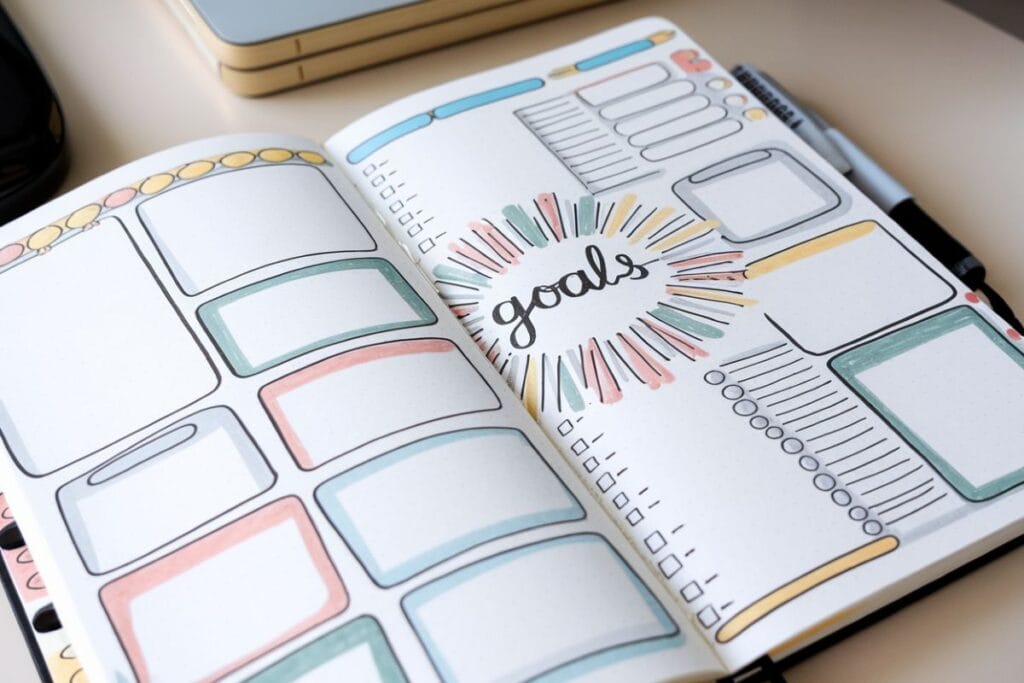
Building on the appeal of softer palettes, this approach utilizes pastel colors to define distinct goal categories on an otherwise clean, white page. The contrast between the pastel blocks and the ample white space creates a visually balanced and inviting layout. Each pastel section can be designated for a specific area of life or a particular type of goal, such as personal development, career advancement, or creative pursuits. This method offers a slightly more structured approach than a purely monochrome design, providing visual cues that help users navigate their objectives efficiently.

4. Simple Quadrant Layout
A simple quadrant layout divides a page into four equal sections, each dedicated to a distinct area of focus. This is a highly effective method for ensuring a balanced approach to goal setting across different life domains. For instance, one quadrant might be for "Health & Wellness," another for "Career & Professional," a third for "Personal Growth & Learning," and the fourth for "Relationships & Social." The clean lines of the quadrants provide structure, while the open space within each allows for detailed goal setting and tracking. This layout promotes holistic development by ensuring that no area of life is overlooked.
Annual Goal Setting: Laying the Foundation for the Year Ahead
An annual goal spread serves as a crucial roadmap, allowing for the articulation of significant, big-picture objectives for the entire year. This comprehensive view is invaluable for strategic planning and maintaining long-term vision. By dedicating a spread to yearly goals, individuals can systematically break down their aspirations into manageable themes, ensuring a clear direction from the outset.

5. Annual Goals By Major Category
This layout encourages a structured approach to annual goal setting by categorizing objectives into broad life areas. Common categories include:
- Health and Wellness: Goals related to physical fitness, mental well-being, nutrition, and self-care.
- Career and Professional Development: Objectives concerning job advancement, skill acquisition, project completion, or business growth.
- Financial Goals: Targets for saving, investing, debt reduction, or income generation.
- Personal Growth and Learning: Aims for acquiring new knowledge, developing new habits, or pursuing hobbies.
- Relationships and Social Life: Goals focused on strengthening connections with family, friends, or community.
Within each category, users can list specific, measurable, achievable, relevant, and time-bound (SMART) goals. This organized structure provides a comprehensive overview of the year’s ambitions, making it easier to allocate resources and track progress across different facets of life.

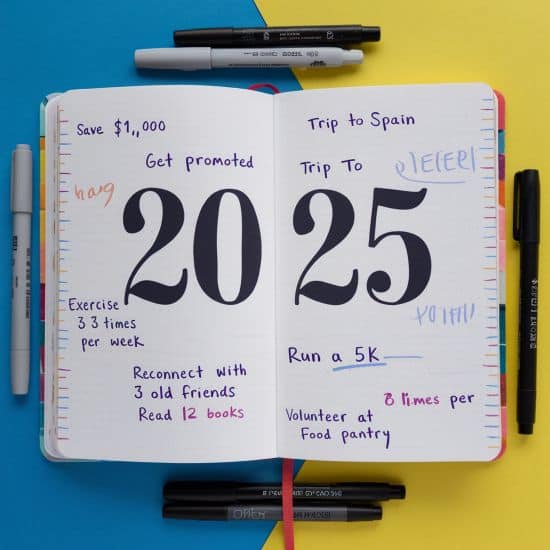
6. The Year In Bold
This approach emphasizes a bold, impactful presentation of annual goals, often using larger font sizes and striking design elements to highlight key aspirations. The "Year in Bold" layout might feature a central, prominent heading for the year, followed by distinct sections for major goals. Visual elements like bold lines, accent colors, or even simple graphic icons can be used to draw attention to critical objectives. The underlying principle is to create a visually arresting spread that serves as a constant, motivating reminder of the year’s most important aims. This can be particularly effective for individuals who respond well to strong visual cues and declarative statements.
7. Colorful Quadrants
Expanding on the quadrant concept, this design incorporates a vibrant color scheme to differentiate the four or more quadrants. Each color can be assigned to a specific life category, creating a visually distinct and engaging spread. For example, blue might represent career goals, green for health, yellow for personal growth, and red for finances. The use of color not only makes the page more aesthetically pleasing but also aids in quick visual identification of goal areas. This method combines the organizational benefits of a quadrant layout with the motivational boost of a colorful design, making goal review a more dynamic and enjoyable experience.
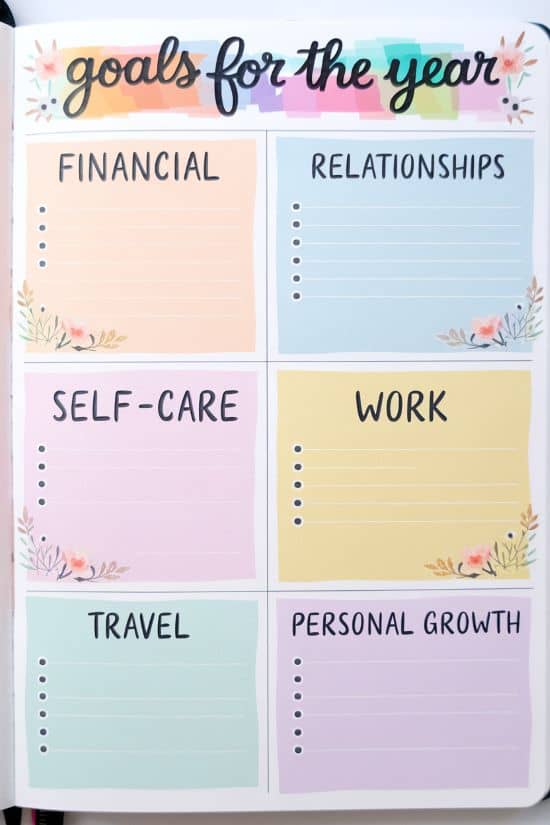
Goals Bullet Journal Page Ideas For Monthly Goals
Breaking down larger ambitions into monthly objectives is a cornerstone of effective goal achievement. A monthly goal spread allows for focused effort on immediate targets, making progress feel more tangible and manageable. This approach helps prevent the feeling of being overwhelmed by long-term aims by focusing on actionable steps within a defined timeframe.
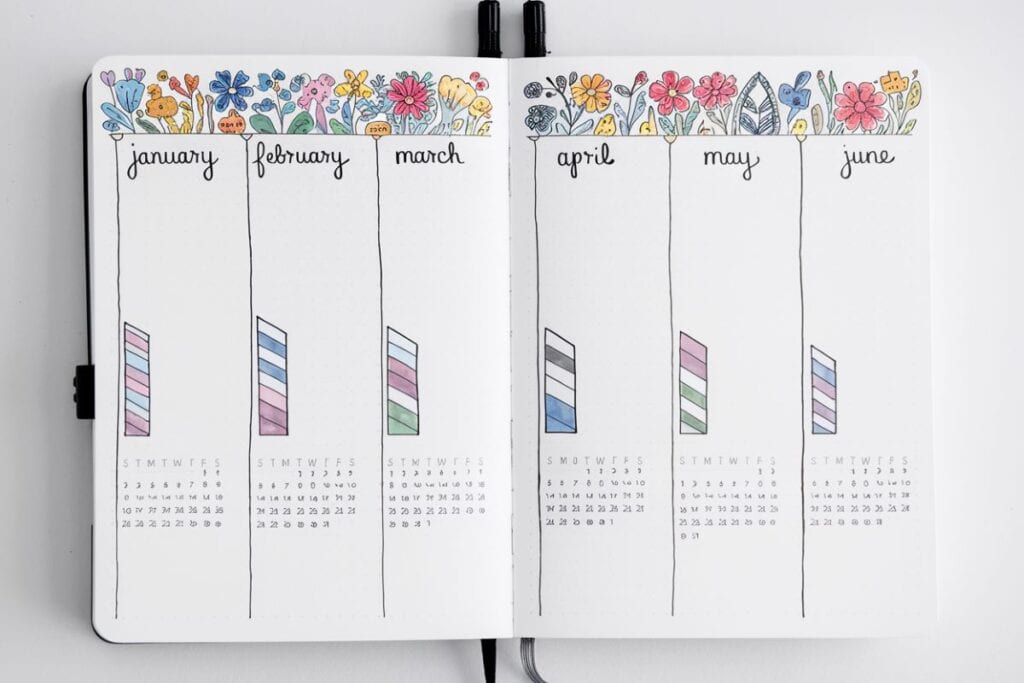
8. Goals By Month
This layout is a straightforward yet highly effective way to organize goals on a monthly basis. Each month is given its own dedicated space, allowing users to list specific objectives for that period. This can be structured as a simple list under each month’s heading, or it can be integrated into a more comprehensive monthly planner spread. The advantage of this approach is its direct relevance to the present, encouraging immediate action and providing a clear sense of monthly accomplishment. Research suggests that setting shorter-term goals, such as monthly targets, can increase motivation and persistence, as they offer more frequent opportunities for feedback and reinforcement.
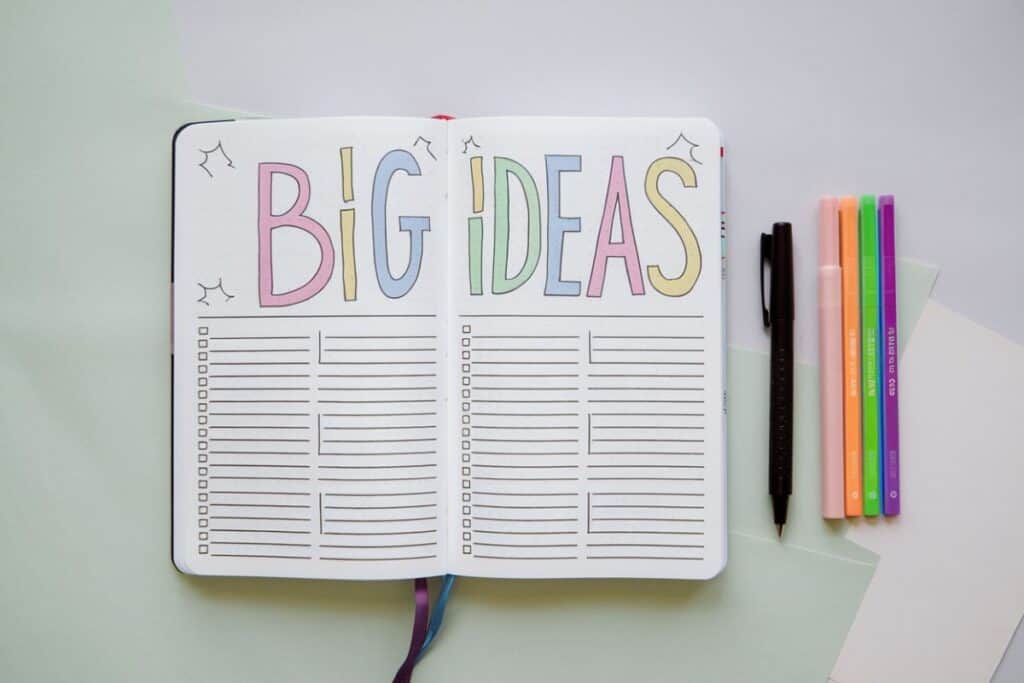
9. Big Ideas
The "Big Ideas" spread is designed for freeform brainstorming and exploration of aspirations that may not yet be fully defined. This layout encourages a less structured, more expansive approach to ideation. It’s a space to capture nascent dreams, abstract concepts, and potential future directions without the immediate pressure of creating actionable goals. Techniques like mind-mapping, free-writing, or collecting inspirational quotes and images can be employed here. The purpose is to allow for creative thinking and to let significant ideas emerge organically, which can later be refined and integrated into more concrete goal-setting frameworks. This is particularly useful at the beginning of a planning cycle, such as the start of a new year or a significant life transition.
Goals Bullet Journal Page Ideas With Plenty Of Color
For those who thrive on visual stimulation and find color a powerful motivator, vibrant goal spreads can transform planning into an energizing activity. The strategic use of color can enhance engagement, boost morale, and make goals more memorable.

10. Blocks Of Goals
This design utilizes colorful blocks or sections to visually demarcate different goal categories or individual objectives. Each block can be filled with a distinct color, creating a dynamic and visually appealing layout. This approach is excellent for categorizing goals thematically—for example, using a bright orange block for fitness goals, a calming blue for learning objectives, and a vibrant green for creative projects. The visual separation provided by these blocks helps users quickly identify and focus on specific areas of their ambition, making the page feel both organized and stimulating.
11. Crush Your Goals
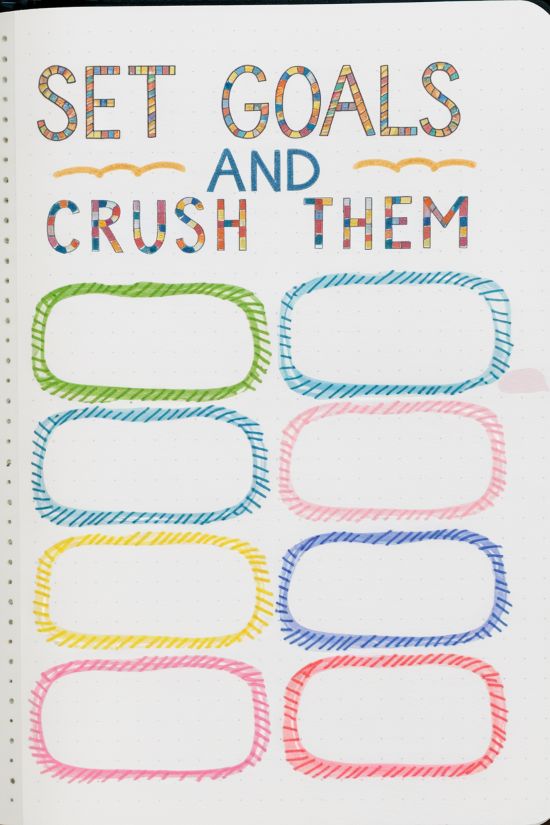
The "Crush Your Goals" spread embodies an energetic and proactive approach to ambition. The title itself is a call to action, and the design typically reflects this with bold lettering, dynamic layouts, and vibrant color schemes. This spread might feature a central area for listing primary goals, surrounded by motivational elements, progress trackers, or even small habit trackers. The use of bold colors and perhaps even playful illustrations can inject enthusiasm into the planning process, encouraging users to approach their goals with a sense of determination and excitement. This layout is ideal for individuals who are motivated by a sense of momentum and achievement.
12. My Goals
"My Goals" offers a versatile template that can be adapted to various styles, but when infused with color, it becomes a vibrant personal manifesto. This spread might feature a prominent title, "My Goals," adorned with colorful lettering or decorative elements. Below this, space is provided for listing individual goals, perhaps with each goal assigned a different color or a colorful icon. The use of color here personalizes the experience, making the journal a truly individual space for aspirations. It can also serve as a visual representation of the diversity of one’s ambitions, making the overall planning process more engaging and reflective.
Goals Bullet Journal Page Ideas For Conquering Overwhelm
For many, the sheer number of potential goals can lead to feelings of being overwhelmed. Strategic simplification and prioritization are key to maintaining momentum and avoiding burnout.
13. Top 3 Goals
This focused approach deliberately limits the number of goals being tracked at any given time to a select few—typically the top three most important objectives. This strategy helps combat the paralysis that can arise from an overly ambitious to-do list. By concentrating effort on a small, manageable number of high-priority goals, individuals can achieve a sense of progress and accomplishment more frequently, which in turn fuels further motivation. This layout is perfect for those who benefit from laser-like focus and tangible milestones.
14. Must Do – Should Do Goal Spread
This practical layout introduces a crucial element of prioritization by dividing goals into two distinct categories: "Must Do" and "Should Do." The "Must Do" section is reserved for essential tasks and goals that require immediate attention and are critical for progress. The "Should Do" section accommodates goals that are important but less time-sensitive or can be addressed once the "Must Do" items are completed. This categorization helps individuals navigate their responsibilities effectively, ensuring that the most critical objectives are addressed first, thereby reducing stress and increasing the likelihood of achieving core targets. This method is a direct application of principles of time management and prioritization, often found in productivity methodologies.
Conclusion: Transforming Aspirations into Achievements
Setting a goal is merely the initial step in a journey of personal growth and achievement. The crucial element lies in actively engaging with those aspirations. A thoughtfully designed bullet journal goal spread transcends mere aesthetics; it functions as a dynamic tool that keeps ambitions visible, tracks progress diligently, and sustains motivation throughout the pursuit.
Regardless of whether one gravitates towards meticulously structured layouts or the fluid exploration of free-flowing idea pages, the ultimate aim is to cultivate a system that resonates with individual needs and working styles. As the adage goes, consistent, incremental actions pave the way for significant outcomes. It is therefore imperative to dedicate time to reflection, to adapt strategies as needed, and to celebrate every milestone achieved along the path. By embracing this approach, individuals can transform their journals from mere notebooks into powerful engines for realizing their potential and turning their most cherished goals into tangible realities.
Inspirational And Practical Bujo Goals Page Layouts
The journey of goal setting is deeply personal, and the tools we use to navigate it should reflect that individuality. The bullet journal, with its inherent flexibility, offers an unparalleled canvas for this endeavor. By exploring the diverse range of goal page ideas—from minimalist designs that emphasize clarity to vibrant layouts that ignite passion, and from broad brainstorming spaces to highly structured prioritization tools—individuals can discover the perfect framework to not only articulate their aspirations but also to systematically and joyfully work towards achieving them. The key takeaway is that consistency, clarity, and a personalized approach are the most potent ingredients for turning dreams into tangible successes.

