

Almost two decades into a lifestyle characterized by complete financial independence and early retirement, a nuanced understanding has emerged regarding the profound implications of absolute freedom. While often idealized as the ultimate goal, this unbridled autonomy presents a unique set of psychological challenges, revealing itself as a double-edged sword for many who achieve it. The initial euphoria of liberation from conventional employment often gives way to a subtle struggle for sustained purpose, motivation, and discipline.
The Allure and Abyss of Early Retirement
The Financial Independence, Retire Early (FIRE) movement has gained significant traction globally, advocating for aggressive savings and investments to allow individuals to exit traditional workforces far earlier than the conventional retirement age. Proponents laud the myriad benefits: unparalleled time with family, the ability to pursue passions without financial constraint, and the flexibility to shape one’s days entirely. For many, this translates into thousands of hours dedicated to raising children, fostering health, nurturing friendships, embarking on adventures, engaging in creative projects, and contributing to personal or public discourse through platforms like blogging. The freedom to design one’s life without the compromises necessitated by a nine-to-five job is, in theory, the epitome of self-actualization.
However, beneath this veneer of idyllic freedom lies a less discussed reality. The absence of external pressure and mandatory obligations can inadvertently erode internal drive. As some individuals discover, when there is no longer a need to "do anything I don’t want to do," the motivation to engage in challenging, yet ultimately rewarding, activities can wane. This paradox of choice, where an abundance of options can lead to inaction or decision paralysis, becomes particularly acute for those accustomed to structured environments and external deadlines.

Psychological Underpinnings of Motivation in Autonomy
Psychological research offers insights into why absolute freedom can be a motivational quagmire. Self-determination theory, for instance, posits that humans have innate psychological needs for autonomy, competence, and relatedness. While early retirement fulfills the need for autonomy, it can inadvertently undermine competence and relatedness if not actively managed. The pursuit of competence often requires overcoming challenges, which may be neglected in a life devoid of external demands. Similarly, relatedness, or the feeling of connection to others, can suffer if one retreats into an insular existence.
Moreover, the human brain is wired for efficiency. Without external deadlines or consequences, the path of least resistance – often comfort and passive consumption – becomes increasingly appealing. Studies on procrastination reveal that individuals often delay tasks that are perceived as difficult, unpleasant, or requiring significant mental effort, even when these tasks align with long-term goals. In a fully autonomous environment, the mechanisms that typically counteract procrastination – social accountability, immediate repercussions, or structured routines – are significantly diminished.
A Gradual Erosion of Drive: The Personal Trajectory
For many navigating this landscape, the transition is not immediate. An initial period of high engagement, fueled by pent-up desires and the novelty of freedom, often characterizes the first years of early retirement. This can manifest as intense involvement in parenting, home renovation projects, extensive travel, or community engagement. However, over time, a subtle shift can occur. The sustained effort required for "harder" activities – those demanding significant planning, energy, or focused concentration – gradually becomes more daunting.

This phenomenon has been observed in various contexts. For instance, individuals may find themselves increasingly drawn to passive forms of entertainment, such as scrolling through social media or consuming digital content, rather than pursuing more demanding, yet ultimately more fulfilling, endeavors like creative work, intensive physical training, or complex learning projects. The internal dialogue shifts from proactive engagement to a passive "wishing" for energy and focus, even for activities once genuinely enjoyed. This self-sabotage, often masked by rationalizations, involves leveraging the very freedom gained to avoid discomfort or effort. The distinction between productive leisure and unproductive idleness blurs, and the potent advantage of freedom begins to manifest as a disadvantage.
The "Hesitation as a Trigger" Strategy
Recognizing this insidious pattern of self-sabotage is the first critical step toward reasserting control. A powerful counter-strategy involves identifying the exact moment of hesitation that precedes inaction and immediately converting it into a trigger for action. This technique bypasses the elaborate internal negotiations and rationalizations that typically lead to procrastination.
Consider the common struggle with consistent exercise. A typical internal monologue might involve: "I want a good workout today, but I don’t feel like it because it’s hard. I’ll make it easier by waiting for the perfect time, ideal weather, and high energy levels. I’ll prepare my gym in advance." This often results in inconsistent effort and suboptimal results. The "hesitation as a trigger" approach, however, short-circuits this process: "I want to work out today. I don’t feel like it. AHA! This is my brain trying to sabotage me. I am now putting on my shoes and walking to the gym."
This seemingly counterintuitive method leverages the very feeling of reluctance as a cue for immediate engagement. It transforms an internal barrier into a launchpad for productive behavior, effectively bypassing the conscious mind’s tendency to seek comfort over challenge. This strategy, rooted in behavioral psychology principles like "implementation intentions" (if X happens, then I will do Y), has proven effective in fostering consistent habits across various domains, from physical fitness to creative output and social engagement.

Drawing Inspiration from Extreme Discipline: The Goggins Effect
While internal strategies are crucial, external inspiration can play a significant role in recalibrating one’s perception of personal limits. The human capacity for endurance and discipline is often underestimated, largely due to self-imposed mental barriers. Exposure to individuals who operate at the extremes of human performance can provide a powerful catalyst for change.
David Goggins, a former Navy SEAL, ultra-marathon runner, ultra-distance cyclist, triathlete, and world record holder for pull-ups, embodies an unparalleled level of mental fortitude and physical endurance. His life story, marked by overcoming severe childhood trauma and systemic disadvantages, is a testament to the power of the human will to transcend perceived limitations. Goggins compulsively seeks out and conquers extreme hardships, not merely achieving seemingly impossible feats, but doing so repeatedly. His achievements include pushing through multiple near-death experiences to qualify for the Navy SEALS, completing multiple Hell Weeks, and running hundreds of miles over several days without sleep. He famously set a world record by completing 4,025 pull-ups in 24 hours, enduring immense physical pain and injury in the process.
Goggins’ philosophy, encapsulated in his mantra "Can’t Hurt Me," posits that most human barriers are predominantly mental constructs, not physical or external limitations. While his extreme methods are not universally applicable or advisable, his narrative provides a stark contrast to typical self-imposed constraints. For individuals struggling with moderate levels of procrastination or a lack of motivation, witnessing such an extreme example can fundamentally shift their perspective on what is truly possible. It highlights the vast untapped potential within the "40% rule" – Goggins’ belief that when the mind tells you you’re done, you’re actually only 40% of the way to your true capacity. This realization can empower individuals to challenge their own comfortable boundaries and recognize that their perceived limits are often far from their actual capabilities.
Redefining Personal Boundaries and Sustaining Momentum
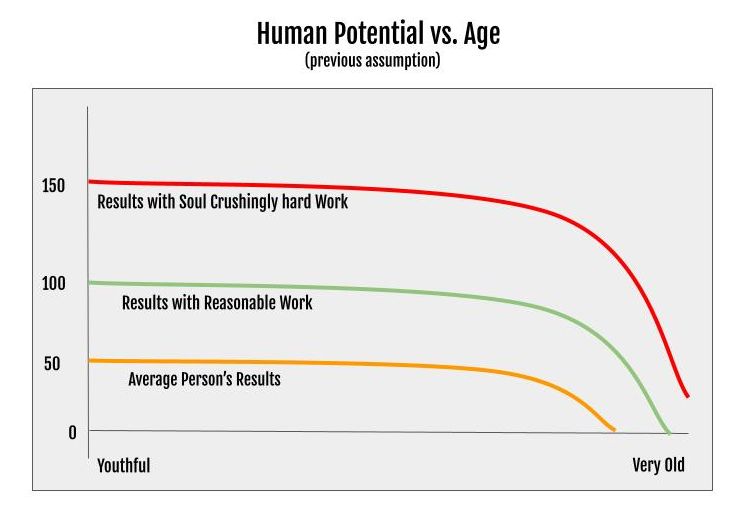
The integration of these insights—the "hesitation as a trigger" method combined with inspiration from extreme achievers—can lead to tangible improvements in personal productivity and well-being. For example, applying this mindset to physical training can transform inconsistent workouts into daily routines, leading to significant gains in strength, flexibility, and overall physical health, even in middle age. The mental shift allows individuals to reclaim vigor and resilience that might have been dormant for years.
Beyond physical fitness, this renewed discipline extends to other areas of life: increased engagement in challenging professional projects, more consistent creative output, and a greater willingness to participate in activities that require effort but yield high rewards. The core principle remains consistent: when the mind registers resistance or a desire to avoid a task, it becomes the immediate signal to commence that task.
Sustaining this heightened level of motivation and discipline often requires ongoing reinforcement. Engaging with motivational content, such as audiobooks and podcasts from figures like Goggins, Peter Attia (a physician focused on longevity and performance), and Jocko Willink (another former Navy SEAL and author on discipline), can provide a continuous source of inspiration. While these sources may sometimes be critiqued for "bro science" or "toxic masculinity," the key lies in discerning and absorbing the messages that resonate and contribute to personal growth, while discarding elements that do not. The objective is to harness the energy and insights of high-performers to elevate one’s own standards and push beyond self-imposed plateaus.
Broader Implications and a Balanced Approach
The experience of navigating the motivational challenges of extreme freedom carries broader implications for individuals and society. As more people pursue early retirement or seek greater autonomy in their professional lives, understanding the psychological landscape of self-direction becomes increasingly critical. Societies traditionally rely on external structures—jobs, educational systems, social expectations—to provide purpose and drive. When these structures are removed or diminished, the responsibility for creating and maintaining purpose shifts entirely to the individual.
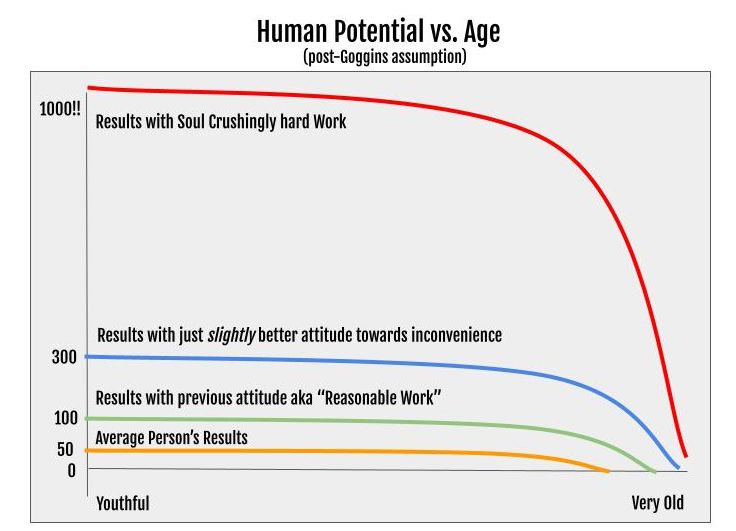
This shift necessitates a greater emphasis on developing robust internal discipline, self-awareness, and adaptive motivational strategies. It highlights the importance of fostering intrinsic motivation, where actions are driven by internal satisfaction rather than external rewards or pressures. The insights gained from overcoming the "paradox of freedom" suggest that true liberation is not merely the absence of obligation, but the active cultivation of meaningful engagement, even when it requires effort and discomfort.
Ultimately, the goal is not to emulate the extreme hardships of a David Goggins, but to internalize the core lesson: human potential is far greater than commonly perceived, and many limitations are self-imposed. By recognizing and challenging these mental barriers, individuals can transform the immense freedom of early retirement or autonomous living into a powerful engine for sustained growth, purpose, and profound personal fulfillment. The path to a truly rich and rewarding life, even in the absence of external demands, often involves running directly towards, rather than away from, the very things one initially resists.

