
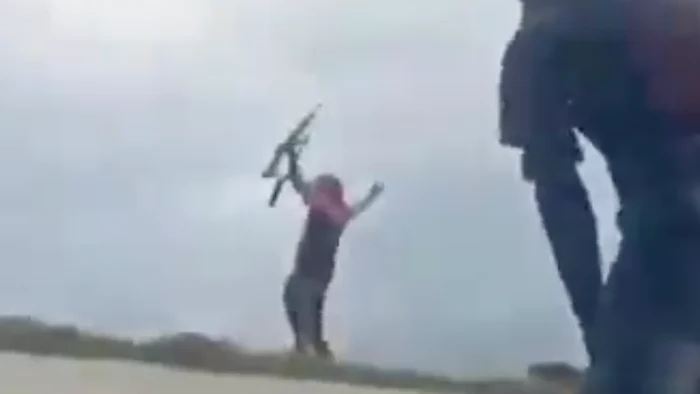
In a dramatic escalation of regional security dynamics, El Salvador has initiated a direct military intervention in Haiti, deploying special forces units to rescue four Salvadoran aviation technicians kidnapped amidst the Caribbean nation’s escalating gang crisis. The operation, publicly announced by Salvadoran President Nayib Bukele, marks a significant departure from traditional multilateral approaches to Haiti’s instability and underscores a growing assertiveness from Central American nations in addressing regional threats. Reports emerging late last week confirmed the deployment of at least 100 Salvadoran special forces operators, with unconfirmed footage circulating online depicting intense confrontations with Haitian gangs, highlighting the perilous nature of the mission.
The intervention follows the abduction of four aviation technicians on October 18, 2026, who were reportedly part of an international mission in Haiti focused on medical evacuations and humanitarian aid. President Bukele, known for his uncompromising stance against criminal organizations within El Salvador, wasted no time in issuing a stern warning to Haitian gangs. On October 21, 2026, in a direct message posted on X (formerly Twitter) in Creole, Bukele declared, "We have already finished with the gangs in El Salvador, and we can finish with you too," demanding the immediate and safe return of his compatriots. This declaration was not merely rhetoric; it was swiftly followed by tangible military action, drawing international attention to a crisis that has long plagued Haiti and now threatens to spill over its borders.
Chronology of a Crisis and a Bold Response
The sequence of events leading to this unprecedented intervention began in mid-October. On October 18, four Salvadoran aviation technicians, described as non-combatants involved in life-saving medical evacuation missions, were ambushed and kidnapped while returning from purchasing food in Haiti. This incident immediately triggered a high-level response from San Salvador.
President Bukele’s public announcement of a military operation on October 21, 2026, signaled an immediate and decisive shift from diplomatic channels to direct action. His message, directly addressed to gang leaders in Haiti, emphasized the non-military role of the abducted individuals and warned of severe consequences if they were not released unharmed. The deployment itself was first reported by major news outlets like the Miami Herald and the Associated Press on Friday, October 25, 2026, indicating that 100 special forces personnel had already landed in Haiti. Social media platforms, particularly X, became a conduit for unconfirmed but widely circulated footage over the weekend, purportedly showing Salvadoran special forces engaged in fierce firefights with notorious Haitian gangs, including elements identified as the "400 Mawozo" gang. The reports suggested further deployments might be imminent, intensifying the scale of the operation. The mission’s stated objective is singular: to secure the safe return of the four aviation technicians, a task that now places Salvadoran forces directly into the heart of Haiti’s anarchic conflict zones.
Haiti’s Descent into Anarchy: A Broader Context
The current military operation by El Salvador unfolds against a backdrop of profound and protracted instability in Haiti, a nation grappling with a deepening humanitarian and security crisis. Following the assassination of President Jovenel Moïse in July 2021, Haiti has been plunged into a political vacuum, exacerbating existing fragilities. The absence of a stable government, coupled with endemic corruption and widespread poverty, has allowed powerful criminal gangs to expand their influence exponentially.
These gangs, often operating as federations like the G9 Family and the 400 Mawozo, now control vast swathes of the capital, Port-au-Prince, and increasingly, key infrastructure and strategic routes across the country. They leverage their power through extortion, kidnapping, and violent territorial disputes, effectively holding the state hostage. Essential services, including healthcare, food distribution, and fuel supplies, are frequently disrupted, leading to a severe humanitarian crisis. According to UN data, the period between July and September alone saw over 1,000 people killed and more than 100 kidnapped, reflecting a sharp deterioration in security conditions. The United Nations has repeatedly highlighted the dire situation, reporting that an estimated 5.2 million Haitians—nearly half the population—are in urgent need of humanitarian assistance.
Efforts to stabilize Haiti have been largely unsuccessful. Overdue nationwide elections remain elusive, hindered by the pervasive insecurity and the inability of interim authorities to establish control. The international community, including the UN, has recognized the severity of the crisis, authorizing the deployment of a multinational security support mission. Last year, the UN Security Council sanctioned the deployment of up to 5,550 security personnel and over 50 civilian staff to aid the Haitian National Police in dismantling gang command structures. However, this Kenyan-led initiative has faced numerous delays and legal challenges, leaving a critical security void that El Salvador’s unilateral action now attempts to fill, albeit for a specific, immediate objective. The current state of Haiti is characterized by a fractured government, a beleaguered police force, and a populace living under the constant threat of gang violence, making any external intervention fraught with complex challenges and potential ramifications.
Bukele’s "Mano Dura": A Model Exported?
President Nayib Bukele’s decision to launch a military operation in Haiti is deeply rooted in his highly successful, albeit controversial, domestic security strategy in El Salvador. Upon taking office, Bukele declared an "all-out war" on gangs, primarily MS-13 and Barrio 18, which had historically plagued the Central American nation, making it one of the most violent countries in the world. His administration implemented a "mano dura" (iron fist) policy, characterized by a state of emergency, mass arrests, and the construction of mega-prisons designed to incapacitate gang leadership and membership.
This aggressive approach, while criticized by human rights organizations for alleged abuses and due process violations, has undeniably transformed El Salvador’s security landscape. Homicide rates have plummeted dramatically, and citizens report a newfound sense of safety. Bukele’s popularity soared domestically, and his model has garnered attention from other Latin American nations struggling with similar gang-related issues. His declaration to Haitian gangs, "We have already finished with the gangs in El Salvador, and we can finish with you too," is not merely a threat but a direct assertion of this domestic success, projecting El Salvador’s perceived capability onto a regional stage.
The Haitian intervention, therefore, can be seen as an extension of Bukele’s "security export" strategy. It signals a willingness to project Salvadoran military power beyond its borders to protect its citizens and perhaps even to demonstrate the efficacy of his hardline tactics in a new, even more challenging environment. This move could potentially enhance El Salvador’s regional influence and solidify Bukele’s image as a strong leader capable of delivering security where others have failed. However, the complexities of Haiti’s fractured political landscape, the multitude of entrenched gangs, and the distinct operational environment present a far greater challenge than the domestic campaign in El Salvador, raising questions about the scalability and sustainability of such an approach.
Operational Details and Reported Clashes
The deployment of Salvadoran special forces to Haiti signifies a highly complex and dangerous undertaking. While specific details of the operational plan remain confidential, reports indicate that the contingent of 100 operators represents an elite fighting force, likely drawn from units specialized in counter-terrorism, hostage rescue, and urban warfare. Their mission objective is clear: locate and extract the four kidnapped aviation technicians alive and unharmed.
The geographical focus of the initial search and engagement appears to be Croix-des-Bouquets, a commune approximately 10 kilometers northeast of Port-au-Prince. This area is known as a stronghold for several powerful gangs, including the notorious 400 Mawozo, which has been implicated in numerous high-profile kidnappings, including that of American and Canadian missionaries in 2021. The unconfirmed footage circulating on social media, depicting intense firefights, suggests that Salvadoran forces quickly encountered significant resistance from these well-armed and entrenched criminal organizations. These clashes underscore the volatile nature of the Haitian environment, where gangs possess considerable firepower and knowledge of the local terrain. The reported arrival of 100 operators, with an additional 100 potentially awaiting deployment, suggests a substantial commitment of resources for a mission of this type. The involvement of Salvadoran forces directly in combat operations against Haitian gangs is a stark illustration of the deteriorating security situation and the desperate measures being taken to address it. The success of this initial phase will likely dictate the broader trajectory and duration of El Salvador’s involvement in Haiti.
Official Reactions and International Implications
The unilateral military intervention by El Salvador in Haiti has significant implications for regional sovereignty, international law, and the broader humanitarian response. While there has been no immediate official statement from the fractured Haitian interim government, their capacity to respond or even consent to such an operation is severely limited by their lack of control over the country. The UN, which had previously authorized a multinational security force for Haiti, is now faced with a different kind of intervention. While the UN has consistently called for international support to stabilize Haiti, a unilateral military operation by a member state raises questions about coordination, legal frameworks, and the potential for unintended consequences.
International observers are watching closely. The move could set a precedent for other regional powers to intervene directly in unstable neighboring states without explicit multilateral mandates, potentially challenging established norms of sovereignty. For some, Bukele’s swift action might be seen as a necessary, albeit unconventional, response to a crisis that the international community has struggled to contain. For others, it could be viewed as a dangerous escalation, risking mission creep and further destabilizing an already volatile nation. Critics may also point to the potential for human rights violations in a combat environment and the risk of exacerbating the humanitarian crisis.
The long-term implications are manifold. If successful, the operation could enhance Bukele’s regional standing and potentially influence future approaches to transnational organized crime. If it falters, it could undermine El Salvador’s credibility and further complicate the already dire situation in Haiti. The intervention also adds another layer of complexity to the ongoing efforts to organize overdue elections and restore legitimate governance in Haiti, potentially diverting resources and attention from political stabilization to direct military engagement. The world awaits not only the outcome of the rescue mission but also the full diplomatic and political fallout of El Salvador’s bold gambit in the heart of the Caribbean.

