

The global financial landscape has witnessed a remarkable surge in equity markets over the past several years, prompting investors and economists alike to scrutinize the sustainability of current valuations. The S&P 500 index, a critical benchmark for the U.S. stock market and a common repository for retirement savings held in index funds, has experienced an extraordinary ascent, climbing approximately 57 percent in just the last two years and more than doubling its value over the past five. This significant appreciation has had a profound impact on individual net worth, with many investors finding their retirement goals accelerated or their existing portfolios expanding to unprecedented levels, raising questions about whether this growth is indicative of genuine economic strength or a nascent financial bubble.
A recent inquiry from an investor encapsulated the prevailing sentiment: "The market seems to be in a huge bubble right now due to all sorts of hype around Artificial Intelligence. Does this make it more vulnerable to a huge crash in the future, and will it affect my retirement?" Addressing this query requires a comprehensive examination of the current market dynamics, the foundational principles of stock valuation, and the transformative, yet uncertain, role of Artificial Intelligence.

Understanding Stock Valuation: The Price-to-Earnings Principle
To accurately assess the market’s current state, it is essential to revisit the fundamental nature of a stock. Conceptually, a stock represents an ownership stake in a business, entitling the owner to a share of the company’s future earnings. This is analogous to owning a rental property, where the owner collects rent, covers expenses, and retains the profit. The value of this property, or business, is intrinsically linked to the income stream it generates.
Consider a rental house generating $2,000 per month ($24,000 annually). If this property sells for $240,000, an investor is acquiring it at a price-to-earnings (P/E) ratio of 10 ($240,000 / $24,000). If, however, the same property is sold for $480,000 with no increase in rent, the P/E ratio doubles to 20. While this represents a favorable outcome for the seller, it implies a less attractive future return for the buyer, as the initial investment yields a lower percentage of income.

Applying this principle to the stock market, data from analysis sites like Multpl.com reveal a significant divergence between stock price appreciation and underlying corporate earnings. An investment of $100,000 in the S&P 500 in 2019, with reinvested dividends, would now be worth approximately $256,960—a 157 percent gain. However, the share of company earnings from that same basket of stocks has only increased from $5,290 to $7,540, a comparatively modest 42 percent gain. This disparity has driven the S&P 500’s P/E ratio from around 20 in 2019 to approximately 30 today. Such an expansion indicates that investors are paying a substantially higher premium for each dollar of corporate earnings, suggesting that future returns, as a percentage of current portfolio value, may be lower than in periods of more modest valuations.
The AI Phenomenon and Market Concentration
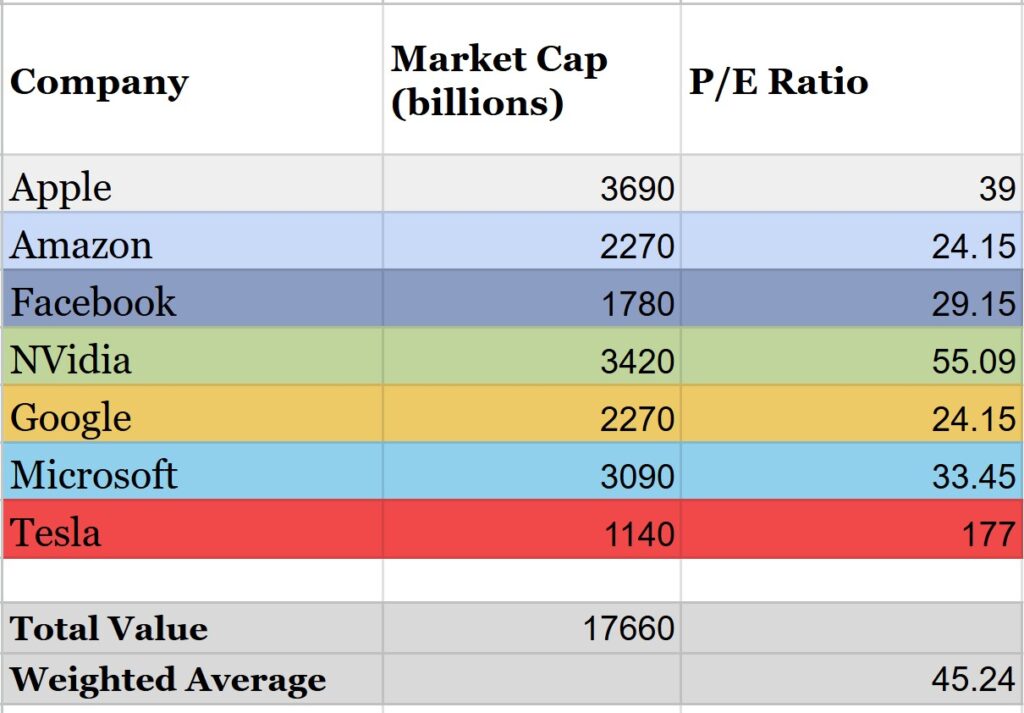
The current market euphoria, however, is not evenly distributed across the entire economy. A closer inspection of the S&P 500’s composition reveals that a disproportionate share of recent growth—estimated at roughly three-quarters—has originated from just seven colossal technology companies: Apple, Nvidia, Microsoft, Amazon, Alphabet (Google), Meta Platforms (Facebook), and occasionally Tesla. These entities, collectively dubbed the "Magnificent Seven" (MAG7), represent a significant concentration of market capitalization, exceeding 25 percent of the S&P 500’s total value, which stands at an impressive $17.66 trillion.

These companies boast substantially higher weighted-average P/E ratios, often around 45, far surpassing the P/E of the remaining 493 companies in the index, which hovers closer to 20. This indicates a strong investor belief in the MAG7’s continued rapid growth, largely fueled by the transformative potential of Artificial Intelligence.
The recent breakthroughs in AI, particularly in areas like large language models and advanced computational capabilities, have ignited a frenzy across the business world. Six of the Magnificent Seven are channeling hundreds of billions of dollars into constructing vast data centers brimming with supercomputers, as evidenced by projects like OpenAI’s "Stargate Project." The seventh, Nvidia, is a primary beneficiary of this infrastructure boom, supplying the specialized chips (GPUs) essential for AI processing, allowing them to command premium prices amidst insatiable demand.
The Promise and Peril of Artificial Intelligence
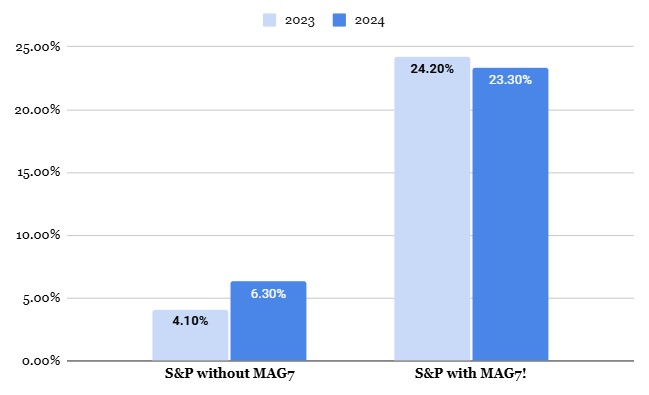
The underlying premise driving these valuations is the widespread expectation of an unprecedented era of productivity growth. AI’s capabilities are expanding rapidly, demonstrating human-like reasoning in diverse fields, from analyzing complex legal documents and debugging software to developing novel pharmaceuticals, powering autonomous vehicles, and even animating humanoid robots for industrial applications. The vision is one of an "infinite workforce" of highly intelligent, cost-free AI employees, potentially removing the historical constraints of human intelligence and labor supply.
While many experts, including those observing the field closely, anticipate many of these advancements will materialize, the precise timeline and the ultimate impact remain uncertain. Critical questions persist regarding the realization of projected profits: Will companies face unforeseen cost overruns in AI development and deployment? How will intense competition in the AI space affect profitability? What are the potential societal ramifications, such as widespread job displacement and increased wealth concentration, if this technology scales as rapidly as some foresee? These uncertainties introduce a speculative element into current valuations.
Historical Context and Economic Growth
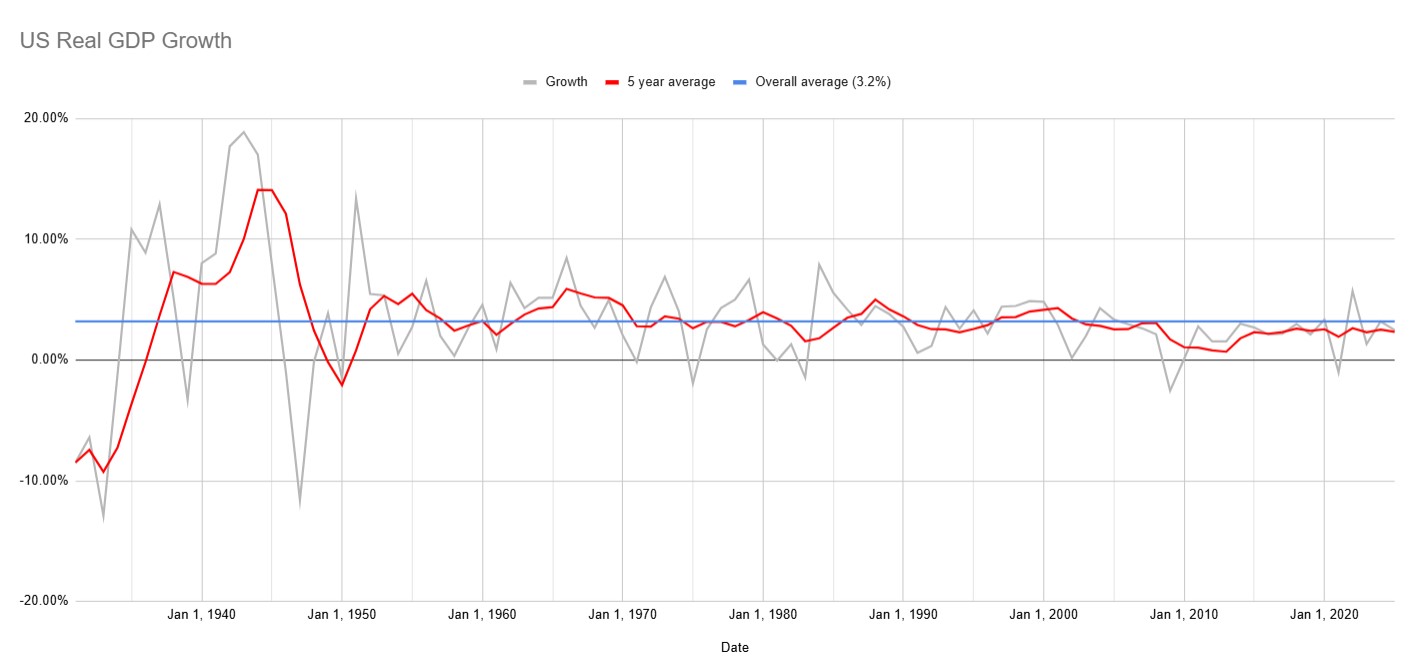
Historically, the U.S. economy has demonstrated remarkable resilience and consistent growth, averaging approximately 3 percent annually after inflation over many decades. This steady growth, illustrated by long-term real GDP trends, has persisted despite profound technological shifts and global events. Interestingly, recent decades have shown a slightly slower average growth rate, which further complicates the justification for current elevated stock market valuations solely based on broad economic expansion.
Throughout history, periods of rapid technological innovation have often been accompanied by speculative market booms, such as the Dot-com bubble of the late 1990s. While the current AI-driven enthusiasm has tangible technological underpinnings, the rapid ascent of a few dominant companies and the high valuations they command bear some resemblance to past cycles where investor expectations outpaced immediate profitability.
Expert Perspectives on Market Outlook

Leading financial institutions and veteran investors offer varying, yet often cautious, perspectives on the current market.
Vanguard’s Forecasts: Vanguard, a cornerstone of the index fund industry, annually issues 10-year annualized return projections. Their latest forecasts suggest that international stocks and even bonds are expected to outperform U.S. stocks in the coming decade. This projection is largely underpinned by the significantly lower P/E ratio of international equities (e.g., the VXUS fund has a P/E of approximately 15.9), implying that non-U.S. markets are currently "on sale" compared to their American counterparts. However, it’s noteworthy that Vanguard’s similar predictions in previous years have not fully materialized, partly because the AI boom has been largely concentrated within U.S.-based tech giants.
Warren Buffett’s Caution: The "Oracle of Omaha," Warren Buffett, through Berkshire Hathaway’s actions and shareholder letters, has consistently signaled a cautious stance on current market valuations. Berkshire Hathaway currently holds an extraordinary $334 billion in uninvested cash, a reflection of Buffett’s difficulty in finding businesses at attractive prices that meet his stringent value investing criteria. Even Berkshire Hathaway’s own shares, trading at a P/E ratio around 21 in recent years, are considered slightly overvalued for share repurchases, underscoring the prevailing challenge of identifying bargains in the current environment.
Implications for Investors: Strategies and Considerations
Given the elevated valuations and the concentrated nature of recent market growth, investors are naturally seeking guidance on navigating the future. While predicting market crashes or timing market entries and exits is notoriously difficult and often leads to suboptimal outcomes, adopting a disciplined, long-term approach remains paramount.
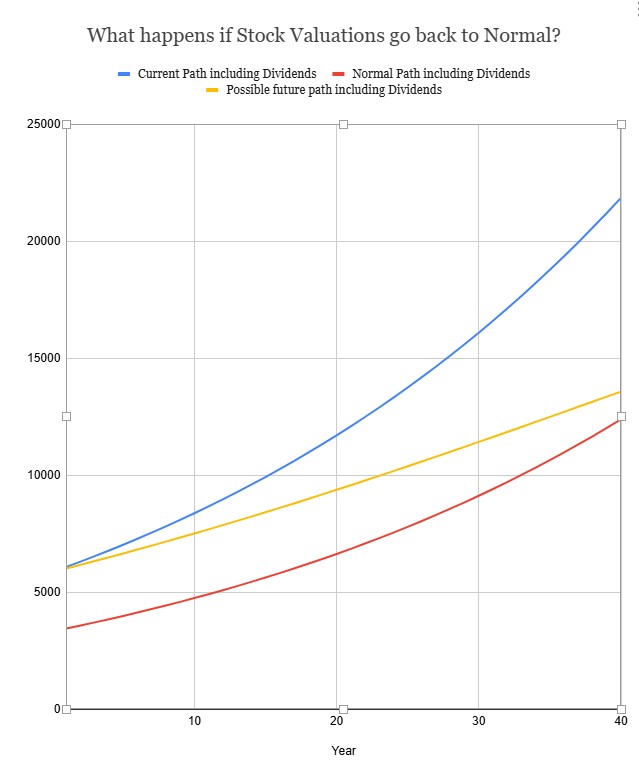
Long-Term Profitability: Despite higher P/E ratios suggesting potentially lower future returns as a percentage of current portfolio value, owning stocks for the long term is still widely expected to be profitable. Economic growth and corporate earnings will continue to expand over time, albeit perhaps at a slower rate relative to current prices. The trajectory of returns might resemble a more gradual "yellow line" scenario rather than a steeply ascending "blue line," but consistent growth is anticipated.
Diversification: The current market concentration highlights the importance of diversification. Portfolios solely focused on U.S. equities, particularly those heavily weighted towards the Magnificent Seven, carry inherent risks. Diversifying across different asset classes (e.g., equities, bonds), geographies (e.g., international markets), and market capitalizations can help mitigate risk and potentially enhance returns over varying market cycles. Robo-advisors like Betterment, which allocate investments across a broader range of categories and rebalance automatically, offer a practical approach to diversification, aiming for higher returns with lower volatility over the long run, despite having lagged a U.S.-only portfolio in the recent past. A typical diversified portfolio might yield a weighted average P/E of around 22, offering a more balanced valuation profile.
Mortgage Repayment vs. Investment: In an environment of potentially lower expected stock returns and higher interest rates (e.g., a 7% mortgage), the decision to pay off a mortgage versus investing surplus cash into index funds becomes a more nuanced trade-off. Paying off a 7% mortgage effectively yields a guaranteed 7% return, which, for many, is a compelling and risk-free alternative to potentially lower and uncertain market returns. Beyond the financial calculus, the psychological benefit of being mortgage-free is a significant factor for many individuals.
The Final Word: Discipline and Perspective

Ultimately, the core principles of sound investing endure: maintain a long-term perspective, consistently invest, and avoid emotional reactions to daily market fluctuations. While staying informed is crucial, particularly through reputable economic analyses, attempting to time market peaks and troughs is generally a losing proposition.
The current market environment, characterized by significant AI-driven growth and elevated valuations, demands thoughtful consideration. Investors who maintain a diversified portfolio, focus on long-term goals, and adhere to disciplined saving and investing habits are best positioned to navigate potential market volatility and benefit from the ongoing evolution of the global economy. As history consistently demonstrates, sustainable financial well-being is built not on speculative fervor, but on patience, prudence, and a clear understanding of fundamental value.

