
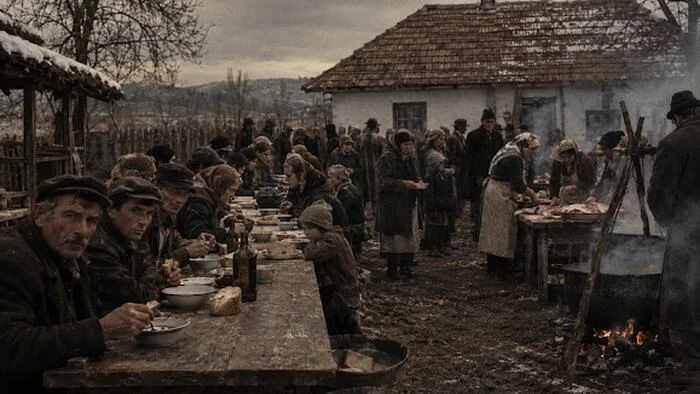
For generations, the notion of food scarcity in America has been relegated to the annals of history, a grim specter from the Great Depression, or a distant concern for less fortunate nations. Yet, a subtle, insidious transformation is reshaping the nation’s relationship with sustenance, moving away from an era of unparalleled abundance towards a quiet precarity. This shift is not marked by dramatic breadlines or widespread starvation, but by a creeping erosion of affordability, consistency, and quantity that, while individually almost bearable, collectively signals a profound change in the American dietary landscape. This emerging reality echoes the pragmatic wisdom of a past generation, like the "just-in-case" cupboard maintained by a grandmother who had lived through the Depression – a stark, edible reminder that plenty is a proposition, not an immutable fact.
A Retrospective on Unprecedented Plenty
For much of the latter half of the 20th century and into the early 21st, the United States cultivated a national identity around abundant, inexpensive food. Post-World War II agricultural innovations, coupled with sophisticated logistics and a globalized supply chain, created an environment where food became cheaper relative to income than at almost any other point in history. This era fostered consumer habits characterized by convenience, variety, and, often, significant waste. A third of purchased food could be discarded without a second thought, and the concept of "hunger" largely receded from everyday vocabulary, becoming synonymous with charity drives or faraway crises. To question this assumption of perpetual fullness in the 1990s felt anachronistic, like preparing for a siege in a suburban utopia. The expectation was that supermarket shelves would always be stocked, prices would remain manageable, and the primary challenge of food security would forever be managing excess, not battling scarcity.
The Inexorable Grind: Symptoms of a Slow Decline
The erosion, however, began quietly, manifesting not as an abrupt crisis but as a gradual shift in the economic mood. What once cost forty dollars at the grocery store now totals sixty, yielding fewer items. A familiar bag of chips feels lighter; a preferred cut of beef transforms from a weekly staple to a monthly indulgence. These changes, often unannounced and unquantified in their immediate impact, settle into a new baseline, against which subsequent shifts are measured. This incremental nature is the particular cruelty of slow decline: it is perpetually "almost bearable," and thus rarely galvanizes sufficient urgency for collective resistance.
The unfolding narrative is not a prediction of a return to the soup kitchens of 1932. Instead, it posits a more disturbing future: a subtle regression towards the conditions that shaped the Depression-era diet, visible to those attentive enough to scrutinize price tags, package weights, or the occasional empty shelf. The most probable trajectory is not an outright collapse, but a prolonged, grinding narrowing of options, where the appearance of abundance is maintained even as its reality slowly dissipates.
Decoding the Register: Where Prices Confess
The most immediate indicators of this shift are found at the point of sale, where official statistics often diverge sharply from lived experience. The Bureau of Labor Statistics (BLS) reported a roughly 2.9% rise in grocery prices over the twelve months leading to September 2026, with overall food inflation hovering near 2.5%, and government forecasts for the coming year around 3%. These figures, typically presented as reassuring, are largely an artifact of averaging. A 3% increase for a broad "basket" of goods masks significant volatility: some items may have fallen, others remained stable, while essential staples have seen explosive price increases. Consumers do not buy an average; they buy the specific items their households need, and these items frequently fall into the "detonated" category.
Beef exemplifies this trend, serving as a critical load-bearing protein for many working families. Ground beef, often the most economical way to put red meat on the table, surged by approximately 18.9% year-over-year, averaging close to $6.75 a pound. Steak prices approached $12.80 a pound by May 2026 – figures that would have been unimaginable a decade prior. The Department of Agriculture (USDA) projects further increases of 5% to 9% for beef and veal throughout the year, citing structural rather than temporary reasons. These include prolonged droughts in key ranching regions, escalating feed costs, and ranchers making rational economic decisions to reduce herd sizes rather than incur losses. These factors suggest that price pressures will persist beyond the current news cycle.
Beyond beef, other staples have seen dramatic appreciation. Coffee, for instance, has risen approximately 55% since February 2024, a figure exacerbated by the fact that nearly all coffee is imported, leaving its supply vulnerable to weather patterns and geopolitical events thousands of miles away. Lettuce prices climbed 39% over a comparable period, sirloin steak 21%, and orange juice 15%. Even small comforts like sugar and sweets, often sought when other foods become expensive, are forecast to climb close to 7% in 2026 alone.
Beneath these headline figures lies a less visible but equally impactful layer: tariffs. Levies on Brazilian coffee, punitive rates on European pasta, and duties on imported cheese, olive oil, seafood, and out-of-season produce – each is small enough to be overlooked individually, but collectively they impose a substantial surcharge on the entire act of eating. These policy-driven costs combine with slower, systemic pressures such as climate change-induced droughts driving up feed prices, and ranchers reducing herds due to unmanageable costs. The rebuilding cycle for cattle herds is measured in years, not months. No single factor represents a cliff edge; rather, it is a consistent, upward slope in costs, month after month.
Eggs offer a particularly instructive case. Following a grotesque price spike that briefly transformed a carton of eggs into a luxury item and a national talking point, prices did fall by roughly a quarter by mid-2026. This relief was real but narrow. A family saving two dollars on eggs likely redirected that saving to beef, which had risen by an amount exceeding the egg price drop. This apparent victory in one aisle was, in effect, a transfer of cost, flattering the overall grocery basket into appearing calmer than it truly was. This dynamic—one category collapsing while another detonates—characterizes the current economic rhythm, forcing households to constantly guess where the next financial bleed will occur.
The Invisible Tax: Shrinkflation’s Insidious Spread
Beyond overt price increases, another form of erosion hides within product packaging: shrinkflation. This arguably more insidious practice is largely unmeasured by official indices that focus on sticker prices rather than contents. A bag of chips that once weighed 300 grams now holds 250 for the same price. A carton of ice cream quietly loses a scoop; a loaf of bread, a slice; a bottle of oil, an ounce; a chocolate bar shrinks while its wrapper maintains its familiar size. Each instance is a price increase cleverly disguised as continuity, invisible on a receipt, and precisely why the practice has become nearly universal.
The mechanism thrives on human perception, which is calibrated to price, not weight. Consumers remember the cost – "it was two dollars" – but rarely the exact weight, because they seldom scrutinize it. Manufacturers exploit this cognitive gap legally, and consumers absorb the loss without consciously feeling robbed. Over a year, the cumulative effect of shrinkflation across a household’s entire grocery basket can add several percentage points to the true cost of eating. These "phantom" inflation points never appear in official statistics, which measure the price of an item, not its quantity. In this crucial sense, government-reported numbers often reflect labels more than actual food volumes.
The practice feels less like an accounting trick and more like a betrayal because it undermines consumer competence. A diligent shopper comparing prices, noting brand X is cheaper than brand Y, is still quietly fleeced if brand X shrinks its box faster. The traditional tools of thrift—a sharp eye, a good memory, a mental ledger of expected costs—are systematically defeated by a form of increase the eye cannot easily detect and the memory cannot consistently track. To truly defend against shrinkflation, one would need a kitchen scale, a tool few households possess, and that asymmetry is precisely the point of its effectiveness.
Supply Chain Fragility: When Shelves Forget
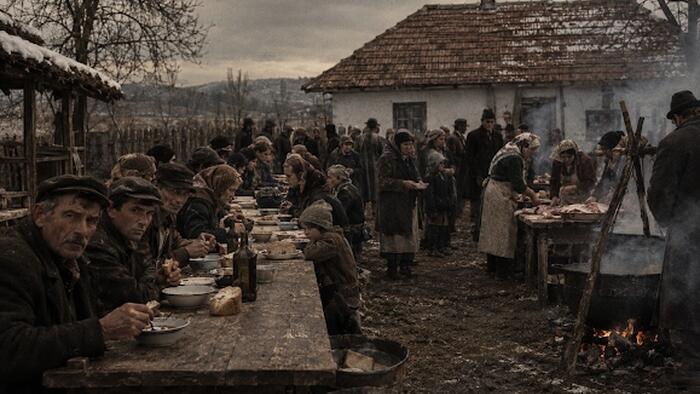
Prices communicate the cost of food; absence reveals its fundamental nature. The spring of 2020, with its sudden, bizarre run on toilet paper, offered a stark lesson: abundance is a habit, not a guarantee, and it can be withdrawn from shelves without warning. This lesson, once dismissed as an anomaly, has been quietly re-emphasized through a recurring pattern of smaller, localized shortages.
The recent litany of disappearing items, while individually trivial, collectively paints a worrying picture. Baby formula vanished for months, exposing the precarious dependence of infant nutrition on a handful of manufacturing plants. Sriracha disappeared due to a failed chili harvest. Cream cheese, canned pet food, popcorn, and even mustard have experienced intermittent absences. Each instance comes with its own tidy explanation—a factory closure, a poor harvest, a thinned-out labor force affecting transport—but cumulatively, they sketch a system less like a robust machine and more like a nervous organism prone to increasingly frequent flinching.
A crucial shift in this fragility deserves greater attention: the weak point in the food supply has migrated. For most of the post-war period, production (bad harvests, disease, drought) was the primary vulnerability. Now, the bottleneck often resides in labor and logistics—half-staffed warehouses, an aging trucking workforce, and a "last mile" delivery system growing thinner by the year. This creates a strange paradox: a store’s distribution center can be full, yet its shelves gape empty because the human hands required to move goods from truck to aisle are simply unavailable. The failure has become human and systemic, rather than purely agricultural, making it far harder to address through conventional policy adjustments.
Agricultural Headwinds: The Herd at the Edge
To understand the full scope of the squeeze, one must follow the trajectory of beef. The American cattle herd currently stands at a 75-year low, approximately 86.2 million head. This reduction is a direct consequence of relentless drought conditions across the Midwest and Southwest, persistently high feed costs, and the perfectly rational decision by ranchers to sell off animals rather than feed them at a loss. Unlike a factory that can be ramped up, a cattle herd cannot be instantly replenished. Rebuilding takes a minimum of eighteen to thirty months, with most forecasts pushing any significant relief past 2028. This means the price of a steak consumed today is being determined by decisions made years ago and by animals not yet born.
The arithmetic of a shrinking herd is brutally simple. When feed costs rise, ranchers cull their herds. Initially, this increases supply and briefly dips prices, creating a false sense that the problem is resolving. However, once the culling catches up, supply tightens dramatically, and prices climb beyond their original levels. Ranchers attempting to rebuild face a market where the cost of breeding animals has also risen. This cycle operates on a multi-year clock, a timeline that no government policy, however energetic, can compress. Cattle, unlike software, cannot receive a quick patch.
Set against the historical record, this parallel ceases to be merely poetic and becomes a stark warning. In 1930, New York City operated 83 breadlines, Philadelphia 80. Even figures like Al Capone opened soup kitchens in Chicago, as official machinery buckled under the strain. Peanut butter, at ten cents a pound, became a poor household’s primary protein source because meat had become unaffordable. A generation learned to construct meals around legumes and grains, not out of dietary conviction, but economic necessity. A haunting detail from Depression-era photographs is the scarcity of women in breadlines; women, often the first laid off and holding a quarter of the workforce, frequently hid their hunger at home while men queued publicly. Something of this shape is faintly visible today: shrinking roasts, legumes quietly appearing on plates, restaurant meals demoted from routine to rare occasion—affecting households with the least financial buffer first.
The Credibility Gap: When Statistics and Sensation Diverge
An awkward truth hovers over this entire narrative: the persistent gap between official statistics and lived experience. More than 80% of shoppers report that food prices have risen more sharply than official figures suggest. While tempting to dismiss this as ignorance or alarmism, this divergence has rational explanations. Statisticians measure a fixed basket of goods, weighted according to an "average" household. However, individual shoppers purchase the specific basket their family actually consumes, which is rarely "average." It often skews towards staples that have seen the fastest price increases, towards cheap proteins that have "detonated," and towards items that a stretched budget cannot easily substitute. The statistician measures the temperature of a vast lake; the swimmer, meanwhile, is standing in the one spot that is boiling.
A second, less flattering reason for this gap lies in how official baskets account for "substitution." When beef becomes too expensive and a family switches to chicken, the statistician records that the family is now buying chicken, and since chicken is cheaper, the inflation index improves. However, the family experiences this switch as a loss—they desired beef and settled for chicken. The index measures what they now buy; it fails to measure what they have given up. This explains why an economy can report modest inflation numbers while a population feels it is eating worse—because, in terms of preference and quality of life, they often are, and official statistics lack a field to record this disappointment.
For those attempting to discern future trends, the implication is clear: official numbers should be treated as a floor, not a ceiling, and the lived experience at the checkout counter as the more accurate signal. When statistics and sensations diverge so widely for so long, the statistic is typically the lagging indicator. The human body often registers the true price of food long before the spreadsheet does, and for several years now, the body has been telling a darker story. Prudence dictates believing the body.
Echoes of Want: The Anatomy of a Modern Scarcity
Stripped of its sepia romance, the 1930s diet was a brutal consequence of economic collapse and widespread unemployment. Money vanished, unemployment soared to a quarter of the workforce, and diets narrowed to whatever could be stretched: beans, cornbread, potato soup, wild dandelion greens, organ meats once discarded, and breads baked without costly eggs or yeast. Malnutrition became rampant, and for millions, the only square meal came from a soup kitchen, eaten standing, swallowed with a measure of shame. This era did not produce a cuisine of pleasure; it forged a discipline of scarcity, a body of practical knowledge for rendering the inedible edible and making the edible last.
The specific dishes of that period are a testament to ingenious desperation: "Hoover stew," a thin vegetable and macaroni concoction named after a president blamed for the hunger; "mock apple pie," crafted from Ritz crackers when apples were unaffordable, often convincing enough to fool a child; milk toast, cream of wheat, "chipped beef on toast" (nicknamed SOS by soldiers, served by mothers without apology); cornmeal mush, fried the next morning. Empty pockets turned inside out, dubbed "Hoover flags," became a bitter joke embodying a generation’s humiliation. Every such dish represented a small, agonizing negotiation between a family’s desires and its financial limits, with affordability invariably winning.
What is resurfacing today is not the exact recipes, but the underlying discipline, adapted for a modern context. The Depression era lacked freezers, vacuum sealers, warehouse clubs, or discount apps; it had gardens, canning jars, and stoves burning cheap fuel. The modern household inherits the instinct of frugality without the unbroken chain of traditional skills. Consequently, substitutions first appear in behavior: store brands replacing national brands, bulk buying when staples are on sale, the meatless dinner transitioning from a cost-saving decision to a quiet habit, and takeout demoted from routine convenience to an occasional indulgence. Beneath these shifts lies a realization that our great-grandparents arrived at slowly, and we are reaching at speed: a full shelf is a proposition, and propositions can be withdrawn.
The Social Fabric: The Shame of the Line, Revisited
Hunger possesses both economic and psychological dimensions, with the latter often overlooked by history books. During the Depression, accepting charity carried a profound stigma, a public confession of failure in a society that preached hard work as the ultimate guarantor of success. People hid their faces from photographers in breadlines, and this shame profoundly shaped how a generation ate, long after prosperity returned. Families developed elaborate codes to disguise substitutions: meat stretched with breadcrumbs, guests served the best portions first, mothers claiming not to be hungry while eating the least. Scarcity was real, but the performance of plenty served as a vital form of armor.
A subtler version of this performative instinct has re-emerged. Today, it’s less about hiding from a photographer and more about managing appearances within social circles—the holiday meal meticulously assembled to conceal corners cut, the birthday cake that looks more expensive than it was, the dinner party host eating plainly all week to ensure the evening appears abundant. When scarcity manifests in a wealthy nation, it rarely arrives with the drama of a breadline. Instead, it appears as a quiet series of marginal choices, which households diligently work to keep out of sight.

A darker implication is embedded here: the true scale of this narrowing may remain invisible precisely because people are adept at disguising it. If everyone is performing plenty, it becomes difficult to gauge how many are genuinely struggling, leading to underdiagnosis by institutions that rely on visible distress to justify action. The Depression announced itself through breadlines because the shame eventually became too heavy to conceal. The current squeeze announces itself through almost nothing—a lower cut of meat, a cheaper coffee, a smaller chocolate bar—and a population conditioned to perform comfort may inadvertently hide the strain from itself as effectively as it hides it from its neighbors.
Adaptive Strategies: The New Kitchen and Beyond
Examining what people are actually cooking, rather than what recipe sites promote, reveals the clear trend of substitution. Meat is often the first item rationed by price, pushing kitchens towards ingredients that sustained the Depression era: dried beans and lentils (cheap, filling, nutritionally dense), root vegetables (store well, forgiving of neglect), eggs, rice, oats, and cornmeal. Cheaper cuts of meat that reward long cooking, and canned tomatoes that transform odds and ends into a sauce, become central. This is not deprivation in the strictest sense; a pot of beans with a smoked bone and a heel of bread constitutes a decent meal. A skilled cook can feed a family well on a budget that a careless one might spend on a single restaurant meal.
The critical catch, however, is time. Cheap food is almost universally slow food. Households saving money on ingredients often pay for it in hours, a cost that busy modern families struggle to absorb. Soaking beans overnight, simmering a tough cut for three hours, or baking bread from scratch all trade the scarcest resource in a modern household—time—for the resource that has become tightest in the wallet. This "cruel trade" was less pronounced during the Depression, when time was less monetized and life rhythms slower. Today’s families must find these hours, often by sacrificing rest.
The current generation acquiring these skills does so largely without traditional teachers, representing its own form of loss. Depression-era families inherited cooking knowledge through an unbroken chain from mothers or grandmothers, a chain that transmitted not just recipes but technique, judgment, and the subtle calibrations absent from written instructions. Two generations of convenience eating fractured this chain. What is being rebuilt now is often learned imperfectly from online videos and guesswork, by individuals whose parents never soaked a bean and whose grandparents are too distant to consult. The skills are returning; the continuity, however, is not.
Cultivating Resilience: Personal Defenses in a Changing World
The most fundamental defense against this erosion is also the oldest and cheapest: a patch of ground, a windowsill, a few pots, planted with something that provides sustenance. A garden converts sunlight and patience into calories that no supermarket can reprice, yielding returns unmatched by any savings account. It need not be grand—a strip of beans along a fence, a few tomato plants, a pot of herbs by a kitchen window can often exceed a beginner’s expectations and cost less than purchasing the same harvest from a store by autumn. The goal is not self-sufficiency, which is often a fantasy, but achievable resilience.
High-yield crops reward effort with disproportionate harvests, and surplus, unlike money, does not depreciate with inflation; a glut of courgettes in August remains valuable when prices spike later. Beyond the tangible yield, gardening offers an invaluable, though harder to quantify, benefit: it restores a sense of agency. When the entire food system feels distant and uncontrollable—weather in Brazil, tariffs in Brussels, herds in Texas—a garden is small enough to be understood and immediate enough to be influenced. This psychological return can be as valuable as the produce itself.
Preservation stands as the second, more serious defense. A garden produces gluts, and gluts rot; the distinction between a household that eats from its summer all winter and one that does not often boils down to a willingness to spend a hot afternoon at a stove. Canning, once viewed as a grandmother’s eccentricity, is now a quiet form of self-insurance against shelves that may not hold what one needs at a bearable price. Preservation methods vary significantly in difficulty. Water-bath canning is suitable for high-acid foods like fruits and pickles, while freezing is easy and versatile for most vegetables, meats, and leftovers. Dehydrating works well for herbs and jerky, and fermenting—the oldest and cheapest method—requires no electricity and improves with age, ideal for cabbage or hot sauce. Pressure canning, though intimidating, is the only safe way to preserve low-acid vegetables and meats at room temperature. A jar of preserved food is more than a memory; it is a small, compounding refusal to let market prices dictate every meal.
Beyond the individual fence and jar lies the deeper question of food sourcing. For most households, food travels through a supply chain so long and leveraged that its fragility is inherent. Shortening this distance is a lifelong endeavor: buying directly from farmers, joining cooperatives, subscribing to Community Supported Agriculture (CSA) shares, and viewing local growers not as quaint alternatives but as foundational elements of household food security. The shorter the chain, the fewer points at which it can break, and the more money remains within the community where the food is consumed.
Permaculture and urban farming initiatives push food production closer to urban consumption centers. Seed networks protect genetic diversity, preventing reliance on a few vulnerable commercial strains—a form of insurance that pays dividends only when it suddenly matters most. Reducing food waste offers the cheapest yield of all; food bought and thrown away is the most expensive, paid for twice and eaten once. A household that halves its waste effectively gives itself a raise without earning an additional penny, a return no market can offer.
Global Undercurrents: Distant Weather and Geopolitical Ripples
No analysis of the current squeeze is complete without acknowledging its global dimensions. The price of food in a Midwestern town is now partly determined by rainfall in Brazil, drought in West Africa, and political decisions in capitals far removed from the average shopper’s awareness. Coffee is a prime example: almost entirely imported, its supply depends on harvests in countries that have suffered severe weather events, compounded by tariffs on top of already tight markets. Cocoa faces even greater challenges, with disease and drought in West Africa more than doubling the price of the raw material in two years, transforming the chocolate bar into a commodity long before it becomes a treat. Shoppers experience this as an inexplicable price hike, but the reality is a chain of cause and effect stretching across oceans and hemispheres.
Climate change acts as the slow, unnegotiable variable, steadily reorganizing the global map of agriculture. Regions once reliably productive are becoming erratic; crop failures that historically occurred once a decade are now more frequent. Global buffer stocks, once capable of absorbing a bad year, have been drawn down. The planet, in essence, operates with a thinner pantry, transforming every local shock into a global one. The household that cultivates a garden and fills a jar is, in its own small way, insulating itself from weather patterns it will never directly witness.
Forecasting Precarity: What Could Break
It is imperative to coldly assess the potential failure modes, which are more varied and frightening than the singular image of a breadline. The mild scenario is what is currently unfolding: a prolonged, uneven narrowing, punctuated by localized shortages and prices rising faster than wages, resulting in a population that eats worse without ever experiencing acute hunger. The middling scenario involves a genuine, impactful shock—a geopolitical conflict closing a major grain corridor, a widespread disease devastating a staple crop, or an energy crisis rendering essential fertilizers unaffordable—accelerating the narrowing from years into months. The severe scenario, the one that fuels alarmist predictions, involves a confluence of shocks that overwhelms existing buffers, at which point the breadline ceases to be a metaphor and becomes a grim reality.
The heightened plausibility of the severe scenario stems from the thinness of these buffers. Just-in-time logistics, initially hailed for making food cheap and efficient, simultaneously removed the slack that once absorbed shocks. A system optimized for efficiency inherently leaves little room for error. A warehouse holding two days of stock instead of two weeks is a marvel of cost control until the trucks stop, at which point it is two days from empty. A nation that has spent forty years systematically removing redundancy in the pursuit of lower prices has, perhaps unintentionally, spent forty

