
Beijing, China – A significant portion of China’s population is choosing to save rather than spend their disposable income, largely driven by the pervasive concern over high healthcare costs, according to a comprehensive new book by the International Monetary Fund (IMF) titled "Toward a New Economic Growth Model for China." The findings underscore a critical challenge for Beijing as it seeks to pivot its economic strategy towards a more consumption-driven model, highlighting the intricate link between social welfare provisions and household spending patterns.
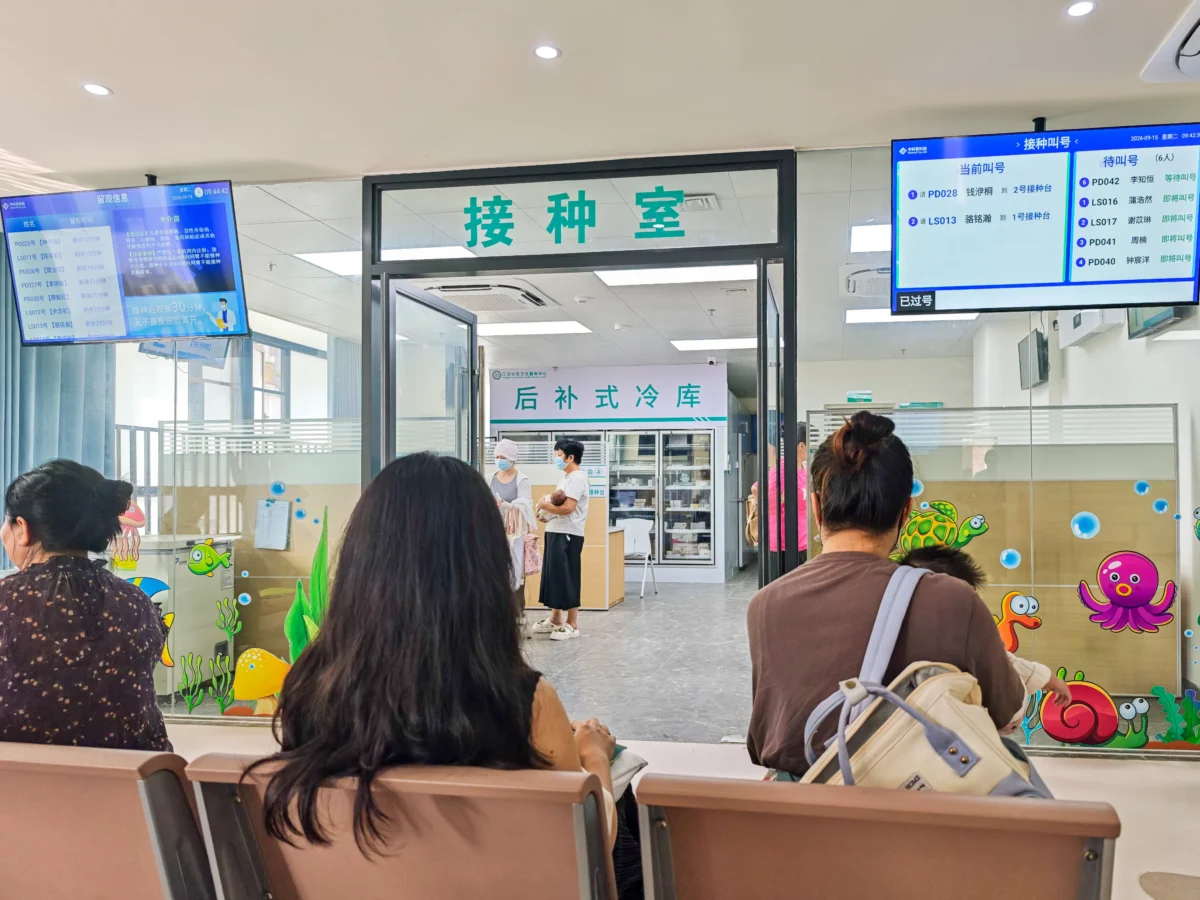
The IMF’s research, published in September 2026, reveals that the financial burden of healthcare is particularly acute in rural areas of China. Here, an alarming 8.7% of disposable income is allocated to healthcare expenses, positioning China’s rural sector second only to the United States among 20 major global economies. The U.S. currently leads worldwide, with approximately 9.9% of disposable income directed towards healthcare. Urban China, while faring somewhat better, still ranks third globally, with 5.4% of disposable income spent on healthcare, slightly surpassing Canada. This analysis paints a stark picture of the financial anxieties faced by Chinese households, particularly those outside major urban centers, where access to comprehensive and affordable medical services remains a pressing issue. The image of children and adults receiving vaccinations at the Jiangbei Community Health Service Center in Huizhou, Guangdong province on September 15, 2026, while indicative of preventative health efforts, implicitly highlights the broader healthcare landscape that necessitates significant personal expenditure.
The Disparity in Healthcare Burden: A Closer Look
The severity of China’s healthcare burden becomes even more pronounced when juxtaposed with international per capita income levels. As of the end of the previous year, the per capita disposable income in the U.S. stood at a substantial $68,289. In stark contrast, China’s per capita disposable income, in U.S. dollar terms, was approximately $6,400 (equivalent to 43,377 yuan), representing more than a tenfold difference. This vast income disparity means that even a smaller percentage of income spent on healthcare in China translates into a significantly heavier financial strain on households compared to their counterparts in wealthier nations. The situation is further exacerbated in China’s countryside, which officially emerged from extreme poverty in 2020, yet continues to grapple with substantial economic disadvantages. Official data accessed via Wind Information indicates that urban China recorded more than twice the disposable income of rural areas, with 56,502 yuan versus 24,456 yuan, respectively. This profound urban-rural economic divide directly translates into vastly different capacities for absorbing healthcare costs.
Historical Context of China’s Healthcare Evolution
China’s healthcare system has undergone several dramatic transformations over the past decades. Prior to the economic reforms initiated in the late 1970s, the country operated largely under a state-provided, low-cost healthcare model, often referred to as the "barefoot doctor" system in rural areas. However, with the transition to a market-oriented economy in the 1980s and 1990s, the healthcare sector also began to marketize. Government funding for public hospitals decreased, leading to increased reliance on user fees, drug sales, and other charges to cover operational costs. This shift gradually eroded the affordability and accessibility of medical services for many, particularly in rural regions where collective medical schemes collapsed.
The early 2000s saw a growing recognition of the social and economic consequences of these reforms, particularly after the SARS outbreak in 2003 exposed significant weaknesses in the public health infrastructure. This spurred a renewed commitment to healthcare reform. In 2009, China launched a massive healthcare reform initiative with the ambitious goal of achieving universal health coverage by 2020. Key pillars of this reform included:
- Expanding Basic Medical Insurance: Efforts were made to significantly increase enrollment in schemes like the New Rural Cooperative Medical Scheme (NRCM) and the Urban Resident Basic Medical Insurance (URBMI), which later merged to form the Basic Medical Insurance for Urban and Rural Residents (BMURR). Alongside the Urban Employee Basic Medical Insurance (UEBMI), these schemes aimed to cover a vast majority of the population.
- Strengthening Primary Healthcare: Investments were directed towards improving community health centers and rural clinics.
- Public Hospital Reform: Initiatives focused on reducing reliance on drug markups and promoting essential drug lists.
- Addressing Catastrophic Illnesses: Measures were introduced to provide supplementary insurance for major diseases, although out-of-pocket expenses for serious conditions often remained substantial.
Despite these reforms, the IMF’s latest findings indicate that significant gaps persist, particularly concerning the actual out-of-pocket expenses borne by households, which continue to drive precautionary savings.
The Hukou System and Social Welfare Disparities
A critical factor exacerbating healthcare disparities and influencing savings rates is China’s unique hukou (household registration) system. This system, which ties individuals to their place of birth or ancestral origin, dictates access to a wide array of social welfare benefits, including education, housing, and crucially, healthcare. Migrant workers from rural areas who move to cities for employment often retain their rural hukou, denying them access to the more generous urban social welfare provisions. This creates a two-tiered system where migrant workers, despite contributing to urban economies, often rely on less comprehensive and more expensive healthcare services, or must travel back to their rural hometowns for medical treatment.
Yizhi Xu, an economist in the north Asia division of the IMF’s Asia and Pacific Department, and Fan Zhang, the IMF’s deputy resident representative in Beijing, highlighted this disparity in their contribution to the IMF book. They observed a savings rate of around 14% for people from rural areas working in China’s cities, significantly higher than the approximately 6% for people with urban hukou residency rights. This stark difference underscores how the lack of guaranteed social welfare benefits, including healthcare, compels migrant workers to save a larger proportion of their income as a safety net against unforeseen expenses. The hukou system, originally designed to control internal migration and manage resource distribution, has become a structural impediment to equitable social security and a major contributor to economic insecurity for a large segment of the population.
Broader Economic Implications: The Consumption Conundrum
The IMF’s analysis extends beyond healthcare costs, integrating them into China’s broader economic challenges. China’s leadership has repeatedly emphasized the need to rebalance the economy away from its traditional reliance on exports and investment towards domestic consumption as a primary growth engine. However, high household savings rates, largely fueled by anxieties over healthcare, education, and old-age support, directly impede this transition. When households save more, they spend less, dampening domestic demand and hindering the growth of service sectors and consumer industries.
"China’s social spending is low compared with international peers, and increasing that spending would lift consumption," Xu and Zhang wrote. This statement encapsulates the IMF’s core recommendation: a robust social safety net, particularly in healthcare, is not merely a social policy but a crucial economic tool for stimulating domestic demand. The fear of "catastrophic medical expenses" – the sudden, debilitating costs associated with serious illnesses – is a significant psychological and financial barrier to spending. Without adequate insurance and accessible, affordable medical care, households are compelled to accumulate precautionary savings, diverting funds that could otherwise contribute to economic activity.
Furthermore, the IMF economists noted that "declining house prices in recent years continue to weigh on consumption and contribute to elevated household savings." The property market, once a reliable avenue for wealth accumulation, has faced significant headwinds, leading to a loss of confidence among some households. This, combined with healthcare anxieties, creates a powerful incentive to save, further entrenching the consumption challenge. The confluence of these factors – healthcare insecurity, hukou-induced disparities, and property market uncertainty – creates a complex web of economic disincentives for consumption.
Policy Recommendations and the Path Forward
The IMF’s report offers clear policy prescriptions. Citing prefecture-level analysis, the Fund argues that "targeted measures to raise government spending on health and social security in rural areas can significantly reduce the savings rate in rural households." This suggests a strategic focus on strengthening social safety nets where they are weakest, thereby directly addressing the root causes of precautionary saving. Such measures would involve not just increased funding but also improvements in the efficiency and equity of social welfare distribution.
For China, implementing these recommendations presents a multifaceted challenge. While the government has made considerable strides in expanding basic health insurance coverage, the quality and generosity of benefits, particularly in rural areas, often fall short of fully alleviating financial burdens. Enhancing government spending on healthcare and social security would require significant fiscal commitments, potentially necessitating reallocations from other areas of public expenditure or adjustments to the tax system.
Moreover, addressing the structural issues of the hukou system is crucial. Gradual reforms aimed at decoupling social welfare benefits from household registration, and ensuring equal access to healthcare for all residents regardless of their hukou status, would be instrumental in fostering a more equitable and consumption-friendly environment. Such reforms would not only improve the welfare of migrant workers but also unlock their consumption potential.
The Broader Impact and Future Outlook
The IMF’s findings resonate beyond China’s borders. As the world’s second-largest economy, China’s economic rebalancing efforts have significant global implications. A successful pivot to a consumption-driven model would create new markets for global goods and services, reduce reliance on export-led growth that can lead to trade imbalances, and contribute to a more stable global economy. Conversely, a failure to address underlying issues like healthcare costs could prolong the current economic challenges and dampen global growth prospects.
For the ordinary Chinese citizen, the ongoing debate over healthcare costs is deeply personal. The fear of illness and the financial ruin it can bring profoundly shapes life choices, from career paths to family planning. Ensuring accessible, affordable, and high-quality healthcare for all is not just an economic imperative for China; it is a fundamental aspect of social justice and human well-being. The IMF’s 2026 report serves as a timely reminder that economic prosperity, social equity, and public health are inextricably linked, and that investing in the latter is essential for achieving the former. As China continues its journey "Toward a New Economic Growth Model," the trajectory of its healthcare reforms will undoubtedly be a defining factor.

