
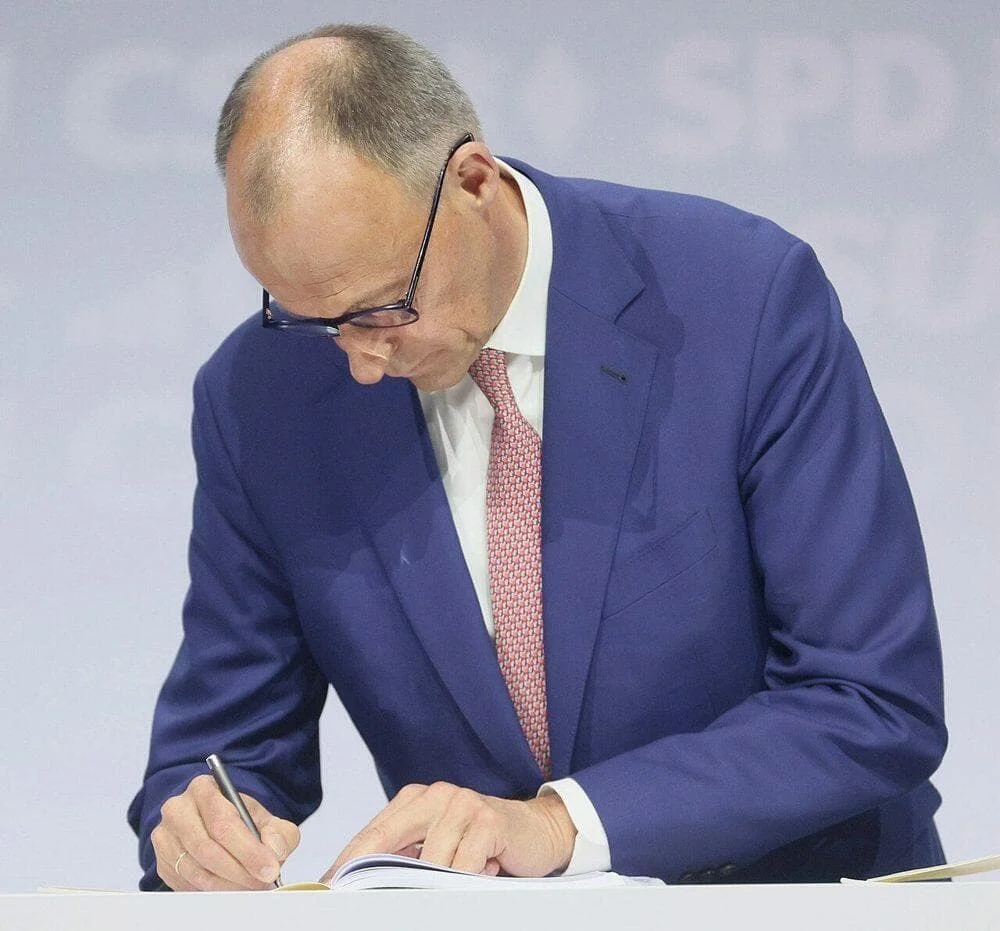
The German political landscape, already fractured and reeling from a series of unprecedented electoral defeats, was further destabilized this week as Labour Minister Bärbel Bas abruptly resigned from her post and her co-chairmanship of the Social Democratic Party (SPD). Her departure, announced on Monday, delivered a significant blow to the fragile CDU-SPD grand coalition, led by Chancellor Friedrich Merz, just as his Christian Democratic Union (CDU) gathered its top brass for an urgent "regrouping" session following a historically disastrous September. Bas cited the profound personal toll of her stepdaughter’s sudden death, compounded by what she described as relentless "public attacks," including sustained criticism from within the ranks of Merz’s own CDU/CSU bloc, which she said continued throughout her period of mourning and rendered her situation unbearable. The 58-year-old politician, a prominent figure within the junior coalition partner SPD, will retain her seat in the Bundestag.
A Minister’s Exit Amidst Personal Tragedy and Political Turmoil
Bärbel Bas’s resignation underscores the deepening malaise within Germany’s governing coalition and the increasingly toxic political climate. Her decision to step down from both her ministerial portfolio and her party leadership role, effective immediately, sent ripples through Berlin. Bas, known for her pragmatic approach and dedication to social policy, had been a key architect of the government’s ambitious reform agenda, particularly in the critical areas of pension and working-time legislation. Her public statement, delivered with a mix of sorrow and frustration, highlighted the unbearable pressure exerted by a political environment that seemingly offered no respite even during personal grief. According to reports from Reuters, the intensity of the "public attacks" made her continued service untenable, painting a stark picture of the challenges facing public servants in an era of heightened political polarization. The specifics of these attacks, while not fully detailed by Bas, are understood to revolve around accusations of delays in implementing coalition agreements, particularly concerning the pension overhaul.
Her departure coincides with a period of intense introspection for the CDU, whose leadership retreat was designed to chart a course forward after a month that saw the party’s fortunes plummet to historic lows. The timing of Bas’s resignation amplified the sense of crisis engulfing the government, metaphorically tearing another "load-bearing wall" from an already structurally compromised edifice.
The SPD’s Response and a Contentious Succession
In the immediate aftermath of Bas’s resignation, the SPD moved swiftly to name her successor, though not without controversy. Finance Minister and fellow SPD co-chair Lars Klingbeil nominated Alexander Schweitzer, the former premier of Rhineland-Palatinate, to take over the Labour Ministry. Schweitzer’s appointment, however, immediately raised eyebrows given his recent electoral history. He had just lost the state premiership of Rhineland-Palatinate to the CDU in March, a defeat that saw the CDU gain significant ground and the SPD’s influence wane in a traditionally strong region. Critics were quick to point out the irony of promoting a politician who had recently suffered an electoral setback as a solution to the coalition’s broader crisis. This decision, while perhaps intended to project continuity and experience, instead highlighted the SPD’s current struggles to cultivate new, electorally successful leadership.
Despite these concerns, business groups, often critical of the current government’s economic policies, cautiously welcomed Schweitzer’s appointment, viewing it as an opportunity for a "new start" and potentially a more decisive approach to the much-needed economic and social reforms. Klingbeil, visibly shaken by Bas’s resignation, publicly condemned the "indecent" attacks on his former co-chair, stating they were "poisoning our political culture." His sentiments reflected a broader concern within the SPD about the increasingly aggressive tone of political discourse, particularly from the opposition. The need for a stable and respected leadership within the SPD became even more urgent, prompting Klingbeil to propose an extraordinary party congress in December or January to re-elect the entire party leadership. Sources familiar with internal discussions suggested that the next co-chair would likely be a woman from the party’s left wing, though Manuela Schwesig, a prominent figure, was reportedly too preoccupied with crucial coalition talks in Mecklenburg-Western Pomerania to be considered. The urgency of the situation forced Klingbeil to scrap a planned trip to India, and his attendance at upcoming international meetings, including the IMF/World Bank and G20 gatherings in Bangkok, remained uncertain.
A September of Catastrophe: The CDU’s Electoral Freefall

Bärbel Bas’s departure is not an isolated incident but rather a symptom of a deeper, systemic crisis gripping Germany’s traditional mainstream parties. The month of September 2026 proved to be historically catastrophic for Chancellor Merz’s CDU. The regional elections delivered results that sent shockwaves across the political establishment, laying bare the profound disillusionment of voters with the centrist parties and the surging appeal of the far-right Alternative for Germany (AfD).
In Saxony-Anhalt, the AfD achieved an unprecedented victory, securing a staggering 43.8% of the vote. This result propelled the populist party into a dominant position within the state parliament, marking a seismic shift in German regional politics. For the CDU, once a bastion of conservative power, the outcome was humiliating: the party slumped to a mere 17.2%, its worst performance ever in the state. This dramatic reversal of fortunes highlighted the CDU’s struggle to connect with voters, particularly in the former East German states, where economic anxieties and a sense of being left behind have fueled anti-establishment sentiment.
Just two weeks later, the CDU suffered another devastating blow in Mecklenburg-Western Pomerania. Chancellor Merz himself was forced to admit a "disaster" as his party scored a paltry 4.9% of the vote. This abysmal result meant that the CDU, for the first time in its storied history, failed to enter a state parliament, falling below the crucial 5% threshold required for representation. The implications of this defeat were profound, raising serious questions about the CDU’s long-term viability and its ability to act as a unifying force in German politics. The repeated electoral failures underscored a growing disconnect between the CDU’s policy platform and the concerns of the electorate, particularly in regions grappling with economic stagnation and demographic shifts.
National Trends and the Erosion of the "Firewall"
The bleak picture painted by regional elections is mirrored, and in some aspects amplified, at the national level. Recent polls indicate a dramatic shift in voter sentiment, with the AfD now commanding a significant lead over the traditional parties. A GMS poll showed the AfD reaching an unprecedented 30% national support, placing it a formidable 10 points ahead of the CDU/CSU bloc. This substantial lead suggests that even a hypothetical "black-red" grand coalition of CDU/CSU and SPD would struggle to secure a majority, further complicating Germany’s political future. The traditional two-party dominance has been irrevocably shattered, leading to a fragmented and unpredictable electoral landscape.
Adding to the government’s woes, Chancellor Merz’s personal approval ratings have plummeted. An Insa survey revealed that a staggering 78% of Germans believe Merz is not the right leader for the country, reflecting deep dissatisfaction with his performance and leadership style. This widespread disapproval severely weakens his mandate and complicates his ability to steer the coalition through turbulent waters.
Perhaps most alarmingly, the long-standing "firewall" against the AfD, a bipartisan commitment by mainstream parties to exclude the far-right from governing coalitions, is visibly crumbling. In Saxony-Anhalt, four CDU lawmakers broke ranks last week to help elect an AfD speaker, a move that shattered decades of political convention. Furthermore, these same lawmakers have reportedly agreed to back the AfD’s Ulrich Siegmund for state premier in December, signaling a dangerous normalization of cooperation with the far-right. This development is not merely a regional anomaly; it represents a profound challenge to the democratic norms and consensus-based politics that have characterized post-war Germany. The potential for an AfD state premier, once unthinkable, now looms as a distinct possibility, further emboldening the populist movement and undermining the credibility of the established parties.
The Unraveling Reform Agenda and Economic Pressures
Bärbel Bas’s resignation leaves a gaping hole at the heart of the government’s reform agenda, particularly concerning Germany’s welfare system. As Labour Minister, Bas was responsible for overseeing crucial legislation on pensions and working-time, which are central to the coalition’s efforts to modernize the economy and address demographic challenges. The government had set an ambitious goal to pass the broader pension overhaul by year-end, a deadline that now appears increasingly difficult to meet.

The pension reform is not merely a technical adjustment; it is a critical response to Germany’s aging population and the long-term sustainability of its social security system. With a declining birth rate and increasing life expectancy, the current pension model faces immense pressure. Reforms typically involve contentious debates over raising the retirement age, adjusting contribution rates, or exploring new investment models – all politically sensitive issues. CDU politicians had openly accused Bas’s ministry of "dragging its feet" on measures agreed upon by coalition leaders back on July 1. These accusations, thinly veiled criticisms of her performance, are now seen as a direct contributor to the "attacks" Bas referenced in her resignation statement. Her departure will undoubtedly delay the already complex legislative process, potentially eroding public trust in the government’s ability to deliver on its promises.
Compounding these internal political struggles are significant external economic pressures. Germany, long celebrated as an industrial powerhouse and export champion, is facing intensifying global competition. Data indicates a concerning trend where China has already surpassed Germany in exports of industrial machinery and equipment, as well as specialized industrial machinery. Projections suggest that China is on the verge of overtaking Germany in its share of road vehicle exports. This erosion of Germany’s competitive edge in key sectors, often dubbed the " Mittelstand" backbone of its economy, poses a severe long-term threat to its prosperity. The reforms intended to rescue the economy are thus occurring against a backdrop of declining industrial competitiveness, making their successful implementation even more critical – and their failure even more costly.
Broader Implications: A "Historic Test" for German Democracy
The departure of a single minister, while significant, is not expected to immediately collapse the government. Coalition leaders, recognizing the gravity of the situation, issued a joint statement last week vowing to carry on through the "historic test" facing German democracy. However, the political calendar presents a brutal gauntlet of challenges that could further destabilize the CDU-SPD coalition and reshape Germany’s political future.
The upcoming SPD leadership contest in December or January will be a crucial moment for the junior coalition partner. The search for a new co-chair will inevitably expose internal divisions and ideological fault lines within the party, potentially distracting it from its governing responsibilities. Meanwhile, the prospect of an AfD state premier in Saxony-Anhalt in December represents an unprecedented constitutional and political challenge, forcing mainstream parties to confront the reality of populist power.
Beyond these immediate hurdles, five more regional elections are scheduled for the next year. These contests will serve as critical barometers of public sentiment and will significantly impact Chancellor Merz’s control over the Bundesrat, the upper house of parliament representing the German states. A loss of control in the Bundesrat could severely hamper the government’s ability to pass legislation, leading to further political gridlock and deepening the sense of paralysis.
As Nomura’s Andrzej Szczepaniak warned last month, Europe has entered an 18-month election cycle in which politics is demonstrably "lurching toward populism," with Germany positioned as the main event. The country, a traditional anchor of European stability, is now grappling with unprecedented political fragmentation, the rise of extremist parties, and a deep erosion of public trust in its established institutions. The confluence of these factors creates an environment of profound uncertainty, not just for Germany but for the wider European Union, which relies heavily on German political and economic stability.
The ongoing political instability, exacerbated by Bas’s resignation, casts a long shadow over Germany’s ability to tackle its pressing economic and social challenges. The year-end deadline for the critical pension overhaul has effectively become the first casualty of this deepening crisis. A government that struggles to maintain the cohesion of its own cabinet and faces such widespread public disapproval for its leadership is fundamentally ill-equipped to sell voters on the necessity of working longer or undertaking other difficult reforms. The path ahead for Germany’s CDU-SPD coalition appears fraught with peril, with the very fabric of its democratic stability being tested on multiple fronts.

