

The integration of rigorous financial tracking and strategic early childhood education has emerged as a primary focus for the Thames household, as evidenced by the release of their comprehensive May expenditure report and literacy milestone update. The data reveals a total monthly expenditure of $4,641.49, a figure that reflects a calculated balance between strict frugality and value-based spending on home maintenance, community engagement, and educational resources. Central to this month’s report is the transition of the family’s eldest child, pseudonymously referred to as Kidwoods, into complex narrative literature, marking a significant developmental achievement.

Literacy Milestones and the Strategic Introduction of Epic Narrative
The household’s approach to literacy is characterized by a structured, multi-year progression designed to foster both technical proficiency and a deep-seated appreciation for literature. The primary strategist behind this initiative, the household patriarch, has long cited the sharing of classic literature as a fundamental motivation for child-rearing. This month, the eldest child began reading J.R.R. Tolkien’s The Hobbit aloud to her father, a transition that follows a deliberate sequence of preparatory texts.
The curriculum began with the Fern Hollow series by John Patience, chosen for its accessible world-building, followed by the more complex Redwall series by Brian Jacques. The move to The Hobbit represents a shift into "high fantasy," a genre known for its sophisticated vocabulary and ethical complexity. To commemorate this milestone, the family deviated from their standard "zero-new-book" policy to purchase a high-quality, illustrated hardcover edition. While the majority of the family’s library is sourced from public institutions or secondary markets, the acquisition of this specific volume was categorized as a "legacy gift," intended to be a permanent fixture in the child’s personal collection.

Observations by the parents indicate that reading aloud has served as a critical diagnostic tool. It allows for real-time monitoring of phonetic accuracy, pronunciation, and the internalization of context. Furthermore, the narrative has provided a framework for discussing social dynamics and moral philosophy; the child has reportedly begun to identify and articulate the "bad behavior" of certain characters, demonstrating an advanced grasp of narrative ethics for a seven-year-old.
The Economics of the Secondary Market: Vermont Yard Sale Season
Concurrent with these educational developments, the household has intensified its participation in the regional secondary market. With the onset of spring in Vermont, the family has utilized yard sales and thrift stores as their primary procurement channels for clothing, household goods, and recreational equipment. This strategy is not merely a cost-saving measure but is rooted in a broader economic philosophy that prioritizes sustainability and psychological well-being.
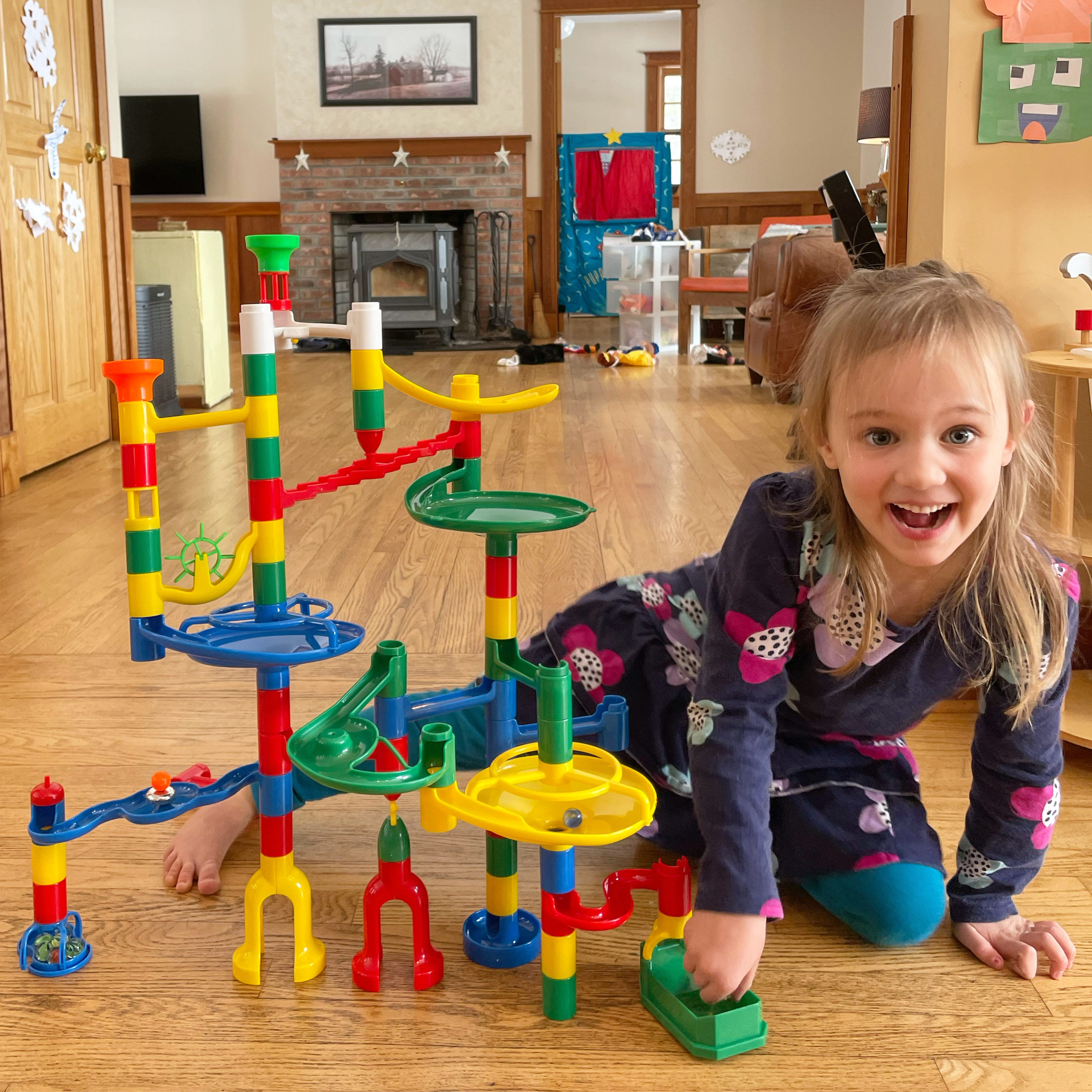
The household’s "buy used" mandate is supported by several key psychological and economic principles:
- Reduction of Decision Fatigue: Citing research popularized by NPR and various social scientists, the family notes that infinite consumer choice often leads to paralysis and decreased satisfaction. By limiting options to what is available in the immediate secondary market, the household minimizes the cognitive load associated with modern shopping.
- Environmental Mitigation: By opting for pre-owned goods, the family actively participates in the "circular economy," reducing the demand for new manufacturing and the associated carbon footprint of logistics and packaging.
- The Endowment Effect: This psychological bias causes individuals to overvalue items they own. By purchasing used goods at a lower price point, the family reduces the emotional and financial stakes associated with material possessions, making it easier to decommission or hand down items when they are no longer needed.
- Community Cohesion: The process of sourcing goods from neighbors and local thrift shops fosters a sense of communal interdependence. This is particularly evident in the "hand-me-down" culture that permeates their social circle, creating a self-sustaining network of resource sharing.
Comprehensive Financial Analysis: May Expenditures
The May budget highlights the realities of maintaining a rural homestead while raising young children. The total spend of $4,641.49 is distributed across several high-impact categories.

Food and Sustenance
The household spent $879.72 on groceries and $493.81 at restaurants. The restaurant expenditure, while higher than in previous months, is framed as a "value-based" choice, allowing for social interaction and domestic reprieve. An additional $204.54 was allocated to beer and wine, and $118.54 was spent on coffee shops and social lunches, emphasizing that frugality is not synonymous with deprivation but rather with selective spending.
Home Maintenance and Infrastructure
A significant portion of the May budget was dedicated to "defensive" home maintenance—repairs necessitated by the wear and tear of young children. This included $17.71 for replacement cabinet hinges and $12.71 for a new toilet paper holder, both of which had reached mechanical failure due to high-impact use.

Outdoor maintenance was also a priority. The family invested $293.15 in a battery-powered string trimmer and $126.94 in a pole saw attachment. These tools are essential for managing the encroachment of vegetation on the property and for the pruning of fruit trees, which form a component of the family’s long-term food security strategy.
Telecom and Utility Optimization
The household continues to demonstrate an extreme efficiency in recurring costs. The total bill for two mobile phone lines was $28.24. This was achieved through the use of a Mobile Virtual Network Operator (MVNO), which resells cellular service at a fraction of the cost of major carriers. Furthermore, the electric bill was maintained at a base grid-tie fee of $36.59, thanks to the family’s previous investment in a solar array.

Supporting Financial Strategies: Banking and Credit
To offset the necessary expenditures, the family employs a sophisticated banking and credit strategy. By utilizing a cash-back rewards credit card for all possible purchases, the household earned $81.64 in May—a 2% return on their monthly spend. While seemingly modest, this represents a consistent, passive income stream that compounds annually.
Additionally, the household manages its liquid assets through high-yield savings accounts. At current interest rates of approximately 4%, the family advocates for the "optimization of idle capital." By moving funds from traditional low-interest accounts to high-yield vehicles, they generate significant interest income with zero risk, a tactic they describe as "making money while sleeping."

Broader Impact and Socio-Economic Implications
The Thames household’s model of "frugal weirdness" offers a counter-narrative to the standard American consumer experience. Their data suggests that a high quality of life can be maintained—and even enhanced—through the deliberate rejection of consumerist norms.
The implications of this lifestyle are twofold. First, it provides a high degree of financial resilience. By maintaining low fixed costs and a high savings rate, the family is insulated against economic volatility. Second, it prioritizes "time wealth" over material wealth. The time saved by not shopping at traditional retailers or working excessive hours to fund high-consumption habits is redirected toward high-value activities, such as the afternoon reading ritual that has accelerated the eldest child’s literacy.

As the family looks toward the summer months, their focus remains on the "Vermont yard sale season" and the continued education of their children. The "furious" reaction of the youngest child, pseudonymously called Littlewoods, to her current inability to read suggests that the household’s culture of literacy is successfully being transmitted to the next generation. This commitment to intellectual development, funded by rigorous financial discipline, serves as a blueprint for values-based living in the 21st century.
Conclusion
The May report from the Thames household stands as a testament to the power of intentionality. Whether through the selection of a 1937 fantasy novel or the choice of a $14-a-month cell phone plan, every decision is measured against long-term goals of financial independence and family cohesion. The $4,641.49 spent this month is not merely a tally of costs, but a reflection of a strategy that leverages the secondary market and modern financial tools to build a life of purpose and stability.

