
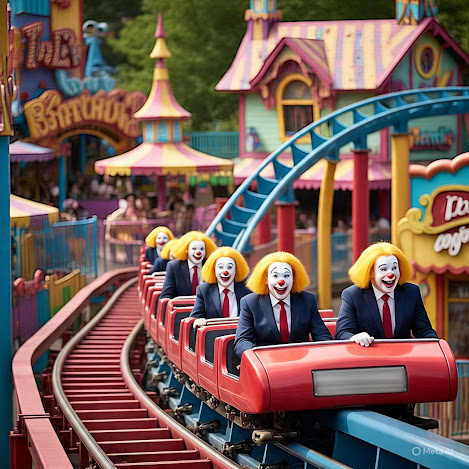
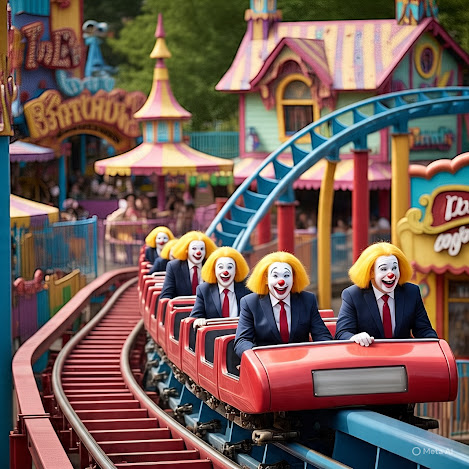
The global financial markets have experienced an extraordinary period of volatility since early 2025, culminating in a dramatic rollercoaster ride for investors worldwide. Following a multi-year climb that peaked in February 2025, the market plunged by a staggering 20% at its lowest point, only to miraculously recover to near its previous peak as of mid-year. This unprecedented turbulence, characterized by some of the steepest drops and swiftest recoveries in modern financial history, has a clear and widely acknowledged catalyst: the aggressive implementation of tariffs by the U.S. administration. The economic world, likened to a circus tent in a hurricane, has been whipped into a frenzy, prompting widespread concern and debate among businesses, policymakers, and individual investors about the future trajectory of the global economy and personal wealth.
A Volatile Timeline: From Peak to Plunge and Recovery
The year 2025 began with an air of cautious optimism, building on a sustained period of growth. However, this sentiment was dramatically disrupted. On February 25, 2025, a crucial market update noted the culmination of a significant bullish trend. Just weeks later, on April 2nd, the U.S. administration announced a series of sweeping new tariff hikes, famously dubbed "Liberation Day" by proponents, targeting a broad range of imported goods from key trading partners, most notably China and the European Union. This announcement triggered an immediate and severe market reaction, with major indices experiencing their sharpest single-day decline since 1932. The Dow Jones Industrial Average plummeted several thousand points, wiping out trillions in market capitalization.
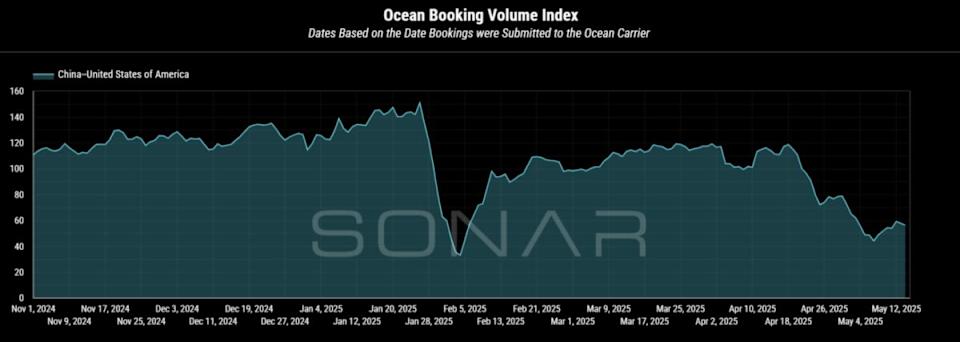
The subsequent weeks saw a period of intense uncertainty. As the administration continued to issue conflicting statements—sometimes threatening even higher tariffs, then signaling potential rollbacks—the market reacted with extreme sensitivity. Each indication of escalating trade tensions sent stocks downward, while any hint of de-escalation or a potential truce fueled significant rebounds. This pattern of sharp drops followed by equally sharp recoveries ultimately led the market to reclaim much of its lost ground, illustrating a profound belief among investors that the current trade conflict, despite its severity, is ultimately temporary. The Freightwaves Ocean Shipping Index (OSI), a critical indicator of global trade activity, showed a significant decrease in imports into the U.S. following the tariff announcements, reflecting businesses’ immediate response to the changing trade landscape.
Defining the Tariff: A Closer Look at Trade Barriers
At its core, a tariff is a tax imposed by a government on goods and services imported from other countries. These import duties are typically paid by the importing company or individual, whether it’s a consumer purchasing an e-bike directly from overseas or large corporations like Amazon, Walmart, or Apple bringing in shiploads of products. However, the economic burden of tariffs ultimately falls on the end consumer. As import costs rise for retailers and manufacturers, these increased expenses are inevitably passed on through higher prices for goods and services.
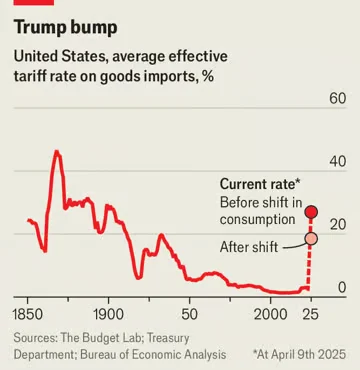
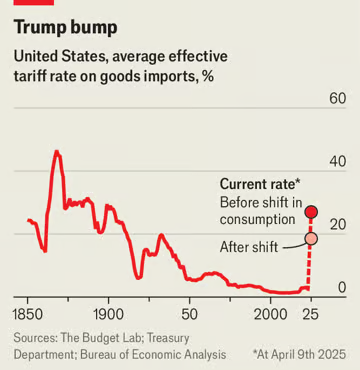
Beyond consumer products, tariffs also significantly impact industrial sectors. For instance, large-scale construction projects, from new Home Depot stores to Chevron oil rigs, face higher material costs due to tariffs on imported steel, copper, and lumber. The housing market, heavily reliant on a global supply chain for building materials, also experiences upward pressure on prices. On average, tariffs act as a broad-based sales tax, leading to higher overall prices, which can slow economic activity and reduce consumer spending power. While tariffs generate revenue for the government, potentially aiding national budgets or reducing deficits, their economic efficiency and fairness are subjects of continuous debate. Historically, periods of very low tariffs have characterized much of the post-World War II economic boom, fostering global trade and interconnectedness, as demonstrated by historical tariff data from The Economist showing a significant decline in average U.S. tariff rates over the last 75 years. The current rates, even without the initially rumored "145% nonsense," are substantially higher than this historical norm.
The Dual Nature of Tariffs: Protectionism vs. Economic Drag
Governments sometimes employ tariffs as a protectionist measure to safeguard domestic industries from foreign competition. By making imported goods more expensive, tariffs can give local producers a competitive advantage, potentially leading to increased sales, job creation, and investment in domestic manufacturing. This strategy can be deemed "strategic" when applied to critical sectors like national defense (e.g., taxing imported fighter jets to support Boeing and Lockheed) or "corrupt" when driven by political influence from specific industries seeking to protect their profits.
However, the consensus among most economists is that tariffs generally result in a net economic loss. While specific domestic industries might see short-term gains, the broader economy often suffers from increased prices, reduced consumer choice, and decreased efficiency. For example, a substantial tariff on imported automobiles might boost sales for domestic manufacturers like General Motors, leading to new hires and factory expansions. Yet, this comes at the expense of consumers paying more for potentially "shittier cars and trucks" and the ripple effect of higher transportation costs for businesses like Amazon. Furthermore, reduced competition can stifle innovation and efficiency within protected industries, making them less dynamic in the long run.
A prominent example cited in the original discussion is the tariff on imported solar panel components, initially imposed by Joe Biden and further increased by Donald Trump. Such tariffs raise the cost of a technology that offers cheap energy and long-term economic benefits, illustrating how "boneheadedness can be bipartisan" in trade policy. Economists argue that blocking the free flow of such beneficial technologies ultimately harms overall economic growth and living standards.
The Administration’s Rationale and Skepticism
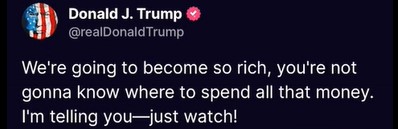
The U.S. administration, particularly under figures like Donald Trump, has articulated an economic philosophy that seemingly contradicts mainstream economic principles. The belief espoused is that tariffs, far from being a drag, will somehow make the nation "wealthier" by prioritizing first-order effects like domestic job growth while largely disregarding the broader economic inefficiencies and increased costs they impose. This "Bizarro Opposite Universe" belief system has been a source of confusion for many.
The market’s reaction, however, tells a different story: when larger tariffs are announced, share prices typically decline because businesses and investors anticipate reduced profitability. Conversely, pauses or reductions in tariffs often lead to market rallies. This pattern suggests that the investment community largely views tariffs as a national sales tax that diminishes overall economic efficiency rather than a strategic weapon for prosperity. This divergence fuels theories that the administration’s tariff policy is less about genuine economic conviction and more about political leverage or a negotiating tactic to force concessions from trading partners, aiming to rebalance trade agreements in the U.S.’s favor.
Broader Economic and Geopolitical Implications
The current tariff regime extends its impact far beyond stock market fluctuations and consumer prices, creating a cascade of effects across the global economy:
- Supply Chain Disruptions: Businesses are grappling with the need to diversify supply chains, either by "re-shoring" production to the U.S. or "near-shoring" to allied countries, leading to increased costs and logistical complexities. The initial stockpiling of goods before tariffs hit, as evidenced by a surge in imports, provided a temporary buffer, but this inventory is rapidly depleting. This signals impending shortages and price hikes for various essential goods, from tools to machinery, potentially by summer or fall.
- Sectoral Impacts: Industries heavily reliant on international trade, such as agriculture (facing retaliatory tariffs), automotive (higher component costs), and electronics, are experiencing significant pressure. Many U.S. farmers have faced reduced demand for their products abroad due to retaliatory duties, necessitating government aid programs.
- Currency and Interest Rates: Trade tensions can lead to currency fluctuations as investors move capital in response to perceived economic risks. Central banks may also find their monetary policy decisions complicated by tariff-induced inflation or slowed growth.
- Geopolitical Strain: The aggressive use of tariffs strains international relations, challenging multilateral trade frameworks like the World Trade Organization (WTO). Major trading blocs like the European Union and individual nations such as China, Canada, and Mexico have responded with their own retaliatory tariffs, risking a full-blown global trade war and undermining decades of efforts towards open markets and economic cooperation.
The Constitutional Battle and the Future of Trade Policy
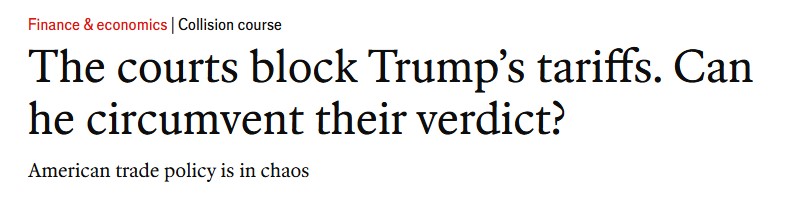
The unprecedented executive actions on tariffs have also ignited a crucial debate about the separation of powers within the U.S. government. Critics argue that the administration’s broad application of tariffs bypasses Congress’s constitutional authority over trade, effectively transforming the economic policy-making process into a "tariff dictatorship." This has led to legal challenges, with various industry groups and international bodies questioning the legality and scope of these executive powers. As reported by The Economist, legal battles are already underway in the court system, testing the limits of presidential authority and seeking to restore the balance of power envisioned by the U.S. Constitution. The outcome of these legal challenges will be pivotal in determining the long-term framework for U.S. trade policy.
Charting Two Potential Futures: Dark Side and Bright Side
The current economic landscape presents two distinct pathways for the global economy, each with profound implications:
1. The Protracted Trade Conflict Scenario:
If the current high tariffs persist and escalate, the global economy could face a period of significant contraction. This scenario envisions:
- Economic Stagnation: Sustained higher prices, reduced consumer spending, and diminished business investment leading to prolonged economic slowdowns or even recessions.
- De-globalization: A retreat from interconnected global supply chains, fostering more expensive, less efficient domestic production.
- Job Market Shifts: While some domestic industries might see job gains, overall employment could decline due to reduced international trade and broader economic contraction. Export-oriented sectors would be particularly vulnerable.
- Reduced Innovation: Protection from foreign competition can diminish the incentive for domestic industries to innovate and improve efficiency.
- Geopolitical Isolation: Escalating trade wars could lead to increased political tensions, reduced diplomatic cooperation, and a more fragmented global order.
2. The De-escalation and Return to Free Trade Scenario:
This scenario, which market behavior suggests investors are betting on, anticipates a resolution to the trade conflict, leading to a return to lower tariffs and more open trade. This would likely entail:
- Market Stabilization and Recovery: Renewed investor confidence and a more predictable trade environment would stabilize financial markets and foster economic recovery.
- Supply Chain Normalization: Businesses could re-establish efficient global supply chains, leading to lower costs and improved product availability.
- Renewed Economic Growth: The benefits of comparative advantage and free exchange of goods and services would stimulate global economic growth, benefiting all participating nations.
- Repaired International Relations: A return to multilateral trade agreements would help mend diplomatic ties and strengthen international cooperation.
As the adage "This too shall pass" suggests, economic cycles and political shifts are inevitable. The ultimate question is how the current trade tensions will resolve. The U.S. market’s remarkable rebound to near all-time highs, despite tariffs still being approximately seven times higher than pre-conflict levels, underscores investor confidence in a future truce and a resumption of free international trade. This optimism, however, remains contingent on the eventual cessation of "emergency tariff dictatorship" and a return to a more stable, predictable, and democratically governed trade policy.
The Imperative of Informed Discourse
The current economic turbulence also highlights a critical lesson for individuals: the danger of forming opinions based solely on sensationalized news headlines. In an era where media outlets are increasingly driven by clicks and attention, the primary goal often shifts from accurate information to generating outrage and fear. This commercial imperative can lead to politically biased or fundamentally inaccurate reporting, as illustrated by the starkly different portrayals of economic events by various news channels.
To navigate this landscape, individuals are encouraged either to largely disengage from constant news cycles and focus on their personal lives or to become subject matter experts in areas they care about. By delving into original sources and understanding the complexities of issues, one quickly realizes the extent to which popular media narratives often misrepresent or oversimplify reality. Ultimately, informed decision-making, whether in personal finance or civic engagement, requires a commitment to critical thinking and a skepticism towards emotionally charged headlines. As the dust settles on this economic rollercoaster, the ability to discern fact from sensationalism will remain paramount.

