
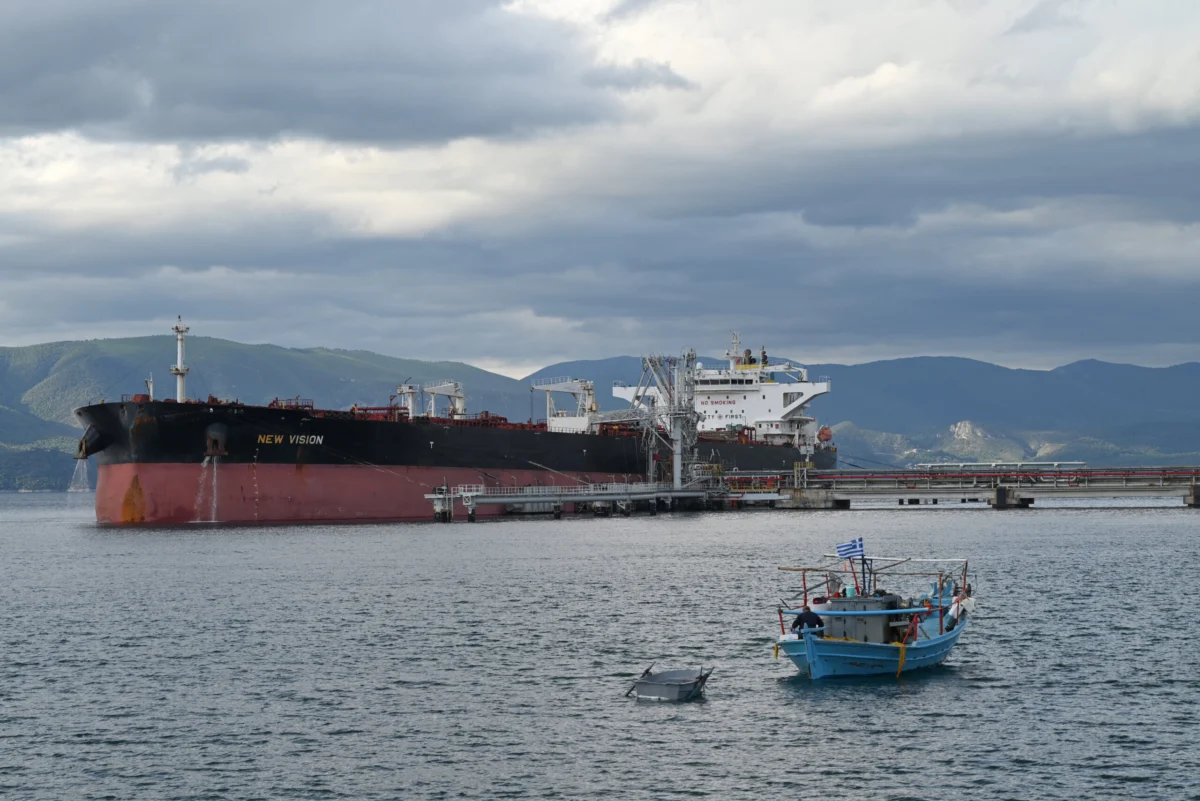
Global oil prices experienced significant fluctuations, initially showing a rebound earlier in the week before trending downwards on Monday, as market participants weighed a complex interplay of geopolitical developments and evolving supply forecasts. Brent crude, the international benchmark, fell 2% to $93.90 per barrel on Monday, while West Texas Intermediate (WTI) crude, the U.S. benchmark, slipped 1.8% to approximately $87 per barrel. This downturn follows a period of heightened sensitivity, where prices had initially risen last Wednesday after falling to two-month lows, driven by oscillating hopes for de-escalation in the Iran conflict juxtaposed with persistent concerns over shipping security in the strategically vital Strait of Hormuz. The current Monday decline reflects a perceived recovery in shipments through this critical waterway and a continued stalemate in the broader tensions between Iran and the United States, easing immediate supply fears.
Recent Market Dynamics and Geopolitical Undercurrents
The oil market’s rollercoaster week underscores its deep susceptibility to geopolitical events, particularly those affecting the Middle East, a region central to global energy supply. Last Wednesday, oil prices had seen an uptick, stemming from speculative movements related to potential de-escalation in the protracted conflict involving Iran. Traders, ever vigilant, were quick to react to any perceived lessening of regional hostilities, which could, in theory, stabilize oil flows. However, this optimism was tempered by the enduring reality of sporadic attacks on maritime vessels in the Strait of Hormuz, maintaining a geopolitical risk premium in crude valuations. The subsequent decline on Monday indicates a re-evaluation of these factors, with market participants now leaning towards a view of more stable shipping operations and a prolonged, albeit contained, diplomatic impasse between Washington and Tehran.
The U.S.-Iran relationship remains a pivotal, yet volatile, element in global oil market calculations. Decades of strained relations, exacerbated by the U.S. withdrawal from the Joint Comprehensive Plan of Action (JCPOA), or Iran nuclear deal, in 2018 and subsequent re-imposition of sanctions, have significantly curtailed Iran’s oil exports. While not explicitly mentioned in the daily price movements, the underlying "stalemate" between the two nations refers to the ongoing diplomatic deadlock over the nuclear program, regional influence, and sanctions relief. Any escalation or de-escalation in this broader geopolitical context sends ripples through the market, affecting not only the perceived security of shipping but also the potential for Iranian crude to return to global markets, which could fundamentally alter supply dynamics.
The Strait of Hormuz: A Global Chokepoint
The Strait of Hormuz, a narrow waterway connecting the Persian Gulf with the Arabian Sea, is arguably the world’s most critical oil transit chokepoint. Approximately one-fifth of the world’s total petroleum liquids consumption, or about 21 million barrels per day, passes through this strait. Its strategic importance cannot be overstated; disruptions here can trigger immediate and severe impacts on global energy prices and supply chains.
Over the past several years, the Strait has been a focal point of regional tensions. Incidents have ranged from tanker seizures and attacks on commercial vessels to naval confrontations, often attributed to or involving Iranian forces. For instance, in 2019, a series of attacks on oil tankers near the Strait and the seizure of a British-flagged vessel sent oil prices soaring, highlighting the vulnerability of this crucial maritime artery. These events typically inject a "risk premium" into oil prices, reflecting the increased cost of insurance and the perceived threat of supply interruptions. The current market reaction to "recovering" shipments suggests that, for now, the immediate threat of significant disruption has receded, allowing this risk premium to abate somewhat. However, the historical precedent of swift escalation means market vigilance remains exceptionally high. International naval patrols and diplomatic efforts are continuously deployed to ensure the free flow of commerce, but the inherent geopolitical fragility of the region persists as a foundational concern for energy security.
International Energy Agency Realigns Supply Forecasts
Adding another layer of complexity to the market outlook, the International Energy Agency (IEA) issued a significant revision to its long-term forecast. On Friday, the IEA, an autonomous intergovernmental organization established in the framework of the Organisation for Economic Co-operation and Development (OECD), announced that it now expects global oil supply to exceed 1.7 million barrels a day in the fourth quarter of 2026. This projection marks a crucial reversal from its earlier forecast, which had anticipated a deficit. The IEA’s revised outlook is predicated on the assumption that Middle East exports will recover faster than global demand growth, even as isolated shipping attacks might continue.
The IEA’s analysis is critical for policymakers and market participants alike. Its mandate is to ensure reliable, affordable, and clean energy for its member countries and beyond. A shift from a projected deficit to a surplus in such a short timeframe signals a fundamental recalibration of supply-demand dynamics. This recovery in Middle East exports likely factors in increased production capacities from key OPEC+ members and potentially, though implicitly, a long-term view that regional geopolitical risks, while present, may not lead to sustained, large-scale supply outages that would cripple production. The agency’s acknowledgment that "shipping attacks continue" but are unlikely to derail the overall supply recovery suggests a belief that these incidents will remain localized and managed, rather than escalating into broader regional conflicts impacting overall export volumes.
Russia’s Resurgent Production and OPEC+ Dynamics
Further contributing to the shifting supply landscape is the unexpected resilience and recent increase in Russia’s crude oil production. According to the IEA, Russia’s output rose to 8.73 million barrels a day in October, representing a substantial 210,000-barrel-a-day surge. This increase is particularly noteworthy given the extensive international sanctions imposed on Russia following its invasion of Ukraine. While Western nations have attempted to cap prices and reduce reliance on Russian energy, Russia has successfully rerouted its exports to other markets, particularly in Asia, often utilizing a "shadow fleet" of tankers and alternative payment mechanisms.
Russia’s elevated production levels pose a challenge to the collective efforts of the OPEC+ alliance, a group of major oil-producing countries led by Saudi Arabia and Russia, which has frequently implemented production cuts to stabilize or support global oil prices. The IEA’s figures suggest Russia’s output is not only robust but also capable of significant fluctuations, adding an element of unpredictability to the global supply picture. This dynamic impacts OPEC+’s strategy, as any unilateral increase by a major member like Russia could undermine coordinated efforts to manage market supply, potentially putting downward pressure on prices if global demand does not keep pace.
Goldman Sachs’ Long-Term Outlook
Echoing the IEA’s sentiment regarding a future surplus, investment banking giant Goldman Sachs provided its own long-term forecast in a Sunday note to clients. The bank expects Brent crude to average $88 a barrel in 2027 and to fall further to $78 by December 2027, projecting a return to a market surplus. Goldman Sachs attributes this anticipated surplus primarily to an expected rise in "idle East supply" above its 2025 average.
The bank’s analysis suggests that producers, particularly in the Middle East, will increasingly leverage innovative logistical solutions such as ship-to-ship transfers and expand pipeline capacity to circumvent potential chokepoints and increase export flexibility. Ship-to-ship transfers, where crude oil is offloaded from one tanker to another at sea, offer greater operational agility and can help mitigate risks associated with specific ports or transit routes. Concurrently, investments in new pipeline infrastructure provide alternative routes for oil transportation, reducing reliance on vulnerable maritime passages like the Strait of Hormuz. These developments enhance the resilience of the global supply chain, potentially increasing the overall available supply even in the face of localized disruptions. Goldman Sachs’s influential forecast often guides investor sentiment and strategic planning within the energy sector, suggesting a longer-term trend towards a more balanced, if not oversupplied, market.
Economic and Geopolitical Implications
The fluctuating trajectory of oil prices carries significant economic and geopolitical implications globally. For consumers, lower oil prices translate into reduced costs at the pump, cheaper transportation, and potentially lower prices for goods and services due to decreased shipping expenses. This can provide a boost to consumer spending and overall economic growth, particularly in major oil-importing nations. Conversely, higher prices fuel inflation, erode purchasing power, and can stifle economic activity, sometimes even triggering recessions.
For oil-exporting nations, price movements directly impact national revenues, influencing government budgets, social programs, and infrastructure investments. A sustained period of lower prices, as projected by Goldman Sachs, could compel these nations to diversify their economies away from over-reliance on oil exports, a long-term goal for many Middle Eastern states.
Geopolitically, stable and predictable oil flows are crucial for global stability. Disruptions, or the threat thereof, often lead to increased tensions, naval deployments, and diplomatic maneuvering. The ongoing challenges in the Strait of Hormuz serve as a constant reminder of the fragility of energy security. Nations heavily reliant on Middle Eastern oil, particularly in Asia and Europe, are keen observers of any developments that could impact supply. The IEA’s revised forecast of a future surplus, if realized, could reduce the geopolitical leverage of individual producers, potentially shifting dynamics in international relations. However, the short-term volatility driven by regional conflicts ensures that energy security remains a top priority for most governments.
The Road Ahead: Balancing Supply, Demand, and Risk
The global oil market stands at a complex crossroads, influenced by a confluence of short-term geopolitical risks and long-term structural shifts in supply and demand. The immediate future will likely see continued sensitivity to developments in the Middle East, particularly concerning the U.S.-Iran relationship and the security of maritime passages like the Strait of Hormuz. Any perceived escalation or de-escalation will continue to inject volatility into prices.
In the medium to long term, the market will grapple with the implications of increased supply from traditional producers, as evidenced by Russia’s recent output surge and the IEA’s revised forecasts. The ability of major producers to enhance export infrastructure and leverage flexible shipping solutions will be critical in shaping the future supply landscape. Simultaneously, global demand growth, influenced by economic cycles, energy transition policies, and the adoption of electric vehicles, will play a crucial role.
Expert consensus suggests that while the long-term trend might lean towards a more balanced or even oversupplied market, short-term shocks remain an inherent risk. The ongoing energy transition also adds a layer of complexity, as investments in fossil fuel production may dwindle over time, potentially creating new supply constraints in the distant future even as demand for traditional fuels declines. For now, market participants, policymakers, and consumers must remain vigilant, navigating a landscape where geopolitical tensions, production realities, and economic forecasts constantly redefine the price of crude.

