

In the rural landscapes of Vermont, a longitudinal experiment in early childhood financial literacy is unfolding, utilizing the traditional county fair as a microcosm for global consumerism. As families across the United States grapple with declining financial literacy rates among young adults, specialized pedagogical approaches are being implemented within domestic settings to bridge the gap between abstract mathematical concepts and real-world economic application. By transforming routine activities—ranging from livestock exhibitions to school book fairs—into structured "money management laboratories," parents are testing the efficacy of early intervention for children as young as five and seven years of age.
The Vermont Model: A Structural Overview of the Family Money Philosophy
The foundational element of this educational framework is the "Family Money Philosophy," a bifurcated system that distinguishes between essential parental obligations and discretionary child-led spending. Under this model, the household economy is divided into two distinct sectors: the "Sustenance and Security Sector" and the "Discretionary Consumer Sector."
In the Sustenance and Security Sector, the parental units act as the primary providers, covering all fundamental costs. This includes housing, healthcare, nutrition, clothing, and educational resources. Furthermore, the parents subsidize cultural and social capital by paying for admission to venues such as museums and county fairs.

The Discretionary Consumer Sector, however, shifts the burden of cost to the child. This sector encompasses three primary categories of expenditure:
- Premium Consumables: Items such as desserts at restaurants or specialized snacks that exceed standard nutritional provisions.
- Novelty and Souvenir Goods: Non-essential items purchased at gift shops or community events.
- Primary Market Media: New books purchased through school-sanctioned events like the Scholastic Book Fair, contrasting with the "secondary market" books provided by parents through libraries and used book sales.
This clear demarcation serves to eliminate the ambiguity often found in household spending, forcing children to confront the reality of limited resources from an early age.
The Domestic Labor Market: Compensation and Quality Control
To participate in the consumer economy, children must first enter the domestic labor market. This system moves beyond the traditional "allowance" model—often criticized by economists for decoupling income from productivity—and instead implements a fee-for-service structure.
The labor market within this Vermont household is seasonal and adaptive. Children are offered chores at "fair market value," with room for collective bargaining. For instance, a recent negotiation resulted in a $10.00 lump-sum contract for the comprehensive organization of kitchen cabinetry. Other available tasks include:

- Sanitation Services: Emptying household trash receptacles and cleaning bathroom surfaces.
- Agricultural Support: Stacking firewood and processing garden yields.
- Interior Maintenance: Vacuuming common areas and cleaning windows.
A critical component of this labor model is the "Quality Assurance" requirement. Compensation is only rendered upon the successful completion of the task to an adult standard. If a worker fails to meet the specified criteria—such as spilling debris while transporting refuse—they are required to perform remedial labor without additional pay. This introduces the concept of professional accountability and the "cost of error" in a controlled environment.
Furthermore, the model distinguishes between "Family Contribution Labor" and "Market Labor." Daily tasks such as bed-making, laundry management, and egg collection are classified as unpaid civic duties essential to the functioning of the family unit. Only tasks that provide a surplus benefit to the parents, such as cleaning parental laundry or organizing shared spaces, are eligible for monetary compensation.
Case Study: The Inflatable Unicorn and the Mechanics of Debt
One of the most significant pedagogical breakthroughs in this experiment occurred during a previous iteration of the Vermont county fair. This event, now cited as a pivotal case study in "visceral economic learning," involved the purchase of a $13.00 inflatable unicorn by a seven-year-old subject.
At the time of the desired purchase, the child possessed only $9.00 in liquid assets. To facilitate the transaction, the parents acted as a lending institution, providing a $4.00 micro-loan. However, the loan was issued with strict "garnishment" terms: the child was required to perform mandatory labor until the debt was satisfied.
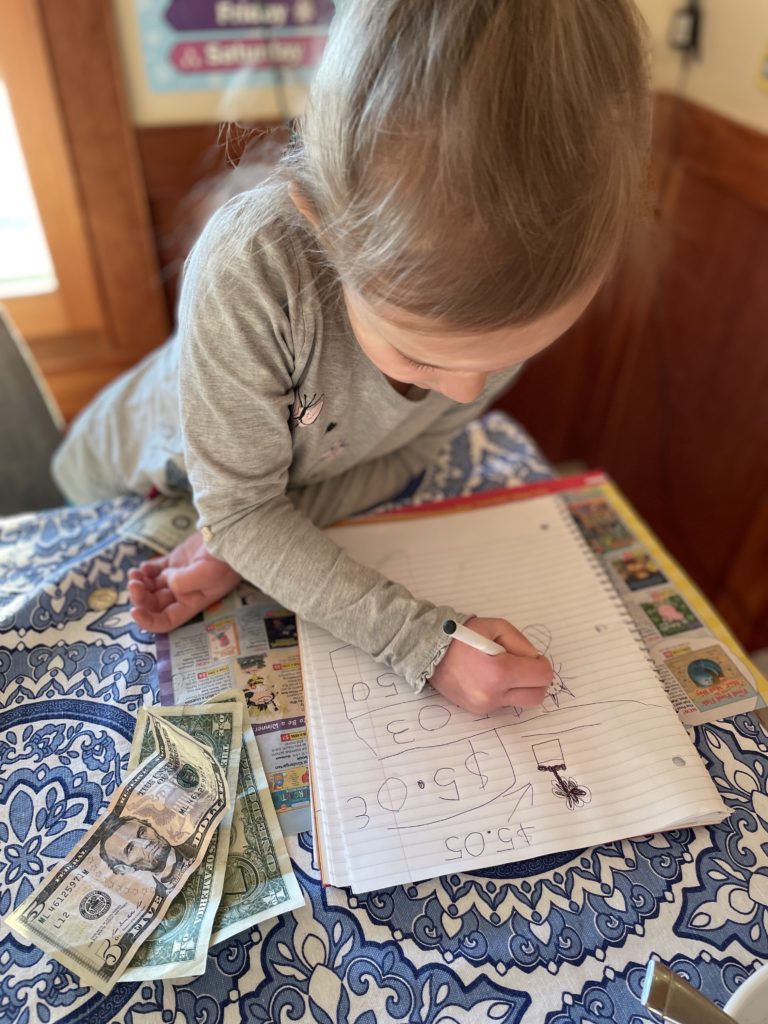
The psychological impact of this debt was immediate. Upon returning home, the child expressed significant dissatisfaction with the labor process, noting that working to pay for an item already in one’s possession lacked the motivational incentive of saving for a future goal. This "pain of paying" after the point of consumption provided a practical lesson in the disadvantages of credit-based purchasing. Data suggests that such early experiences with debt can significantly alter a consumer’s future propensity for high-interest credit card usage. Since this incident, the subjects have not requested further loans, demonstrating a shift toward a "cash-and-carry" philosophy.
Chronology of Financial Maturity: From Counting to Collaboration
The educational timeline of the Vermont model shows a clear progression from basic numeracy to complex social negotiation.
Phase I: Denomination and Value (Ages 4-5)
Initial lessons focused on the physical properties of currency. Children were taught to identify different denominations and understand that "Mama works and is paid money for her work," which is then exchanged for family needs. This phase demystifies the origin of wealth and connects labor to the availability of groceries and toys.
Phase II: Independent Transaction and Responsibility (Ages 5-6)
The children were tasked with managing their own physical currency. This led to "crisis events," such as the misplacement of a wallet at a science museum. The recovery of the wallet served as a lesson in asset protection, while the parents reinforced the reality that, in most commercial environments, lost currency is rarely recovered.

Phase III: Cost-Sharing and Negotiation (Ages 6-7)
A recent development involved the purchase of desserts during community "pizza nights." The seven-year-old subject realized that she was unilaterally funding a dessert that her five-year-old sister was also consuming. This led to a negotiated "cost-sharing agreement." Because the $7.00 price point was not easily divisible by two in whole-dollar amounts, the children were forced to utilize coin denominations, further reinforcing their understanding of fractional currency.
Broader Context: The National Financial Literacy Landscape
The Vermont experiment arrives at a time when financial literacy is becoming a focal point of legislative action across the United States. According to the 2023 Survey of the States by the Council for Economic Education, 35 states now require students to take a course in personal finance to graduate, a significant increase from previous years.
However, many experts argue that classroom instruction is insufficient without "experiential scaffolding." A study by the FINRA Investor Education Foundation suggests that individuals who had early experiences with money—such as managing an allowance or a bank account—tend to have higher financial literacy scores in adulthood. The Vermont model takes this a step further by removing the "safety net" of parental subsidization for non-essentials, forcing the "visceral understanding" of market forces.
Implications and Future Projections: The Bank of Parental Units
As the subjects master the basics of earning and spending, the experiment is set to enter a new phase: the introduction of "The Bank of Parental Units." This internal banking system will introduce the concept of interest rates and long-term capital appreciation.

By offering a high-yield interest rate on savings kept within the "Parental Bank," the parents aim to incentivize delayed gratification. Currently, the subjects spend approximately 90% of their earned income on immediate consumer goods. The introduction of interest is designed to shift the behavioral needle toward capital accumulation.
The broader impact of this domestic economic model is the "demystification of money." By treating currency as a tool rather than a source of anxiety or status, the parents are equipping the next generation with the psychological resilience needed to navigate a complex global economy. The project suggests that while "boring meetings" and "tedious chores" are the engines of wealth, the ultimate goal is the agency and independence that financial literacy provides.
As this model continues to evolve, it serves as a compelling argument for the integration of economic principles into the earliest stages of child development. The transition from "cuddling cows" at the fair to "calculating interest" in the home represents a significant leap in cognitive and social maturation, one that may define the financial health of these Vermont residents for decades to come.

