
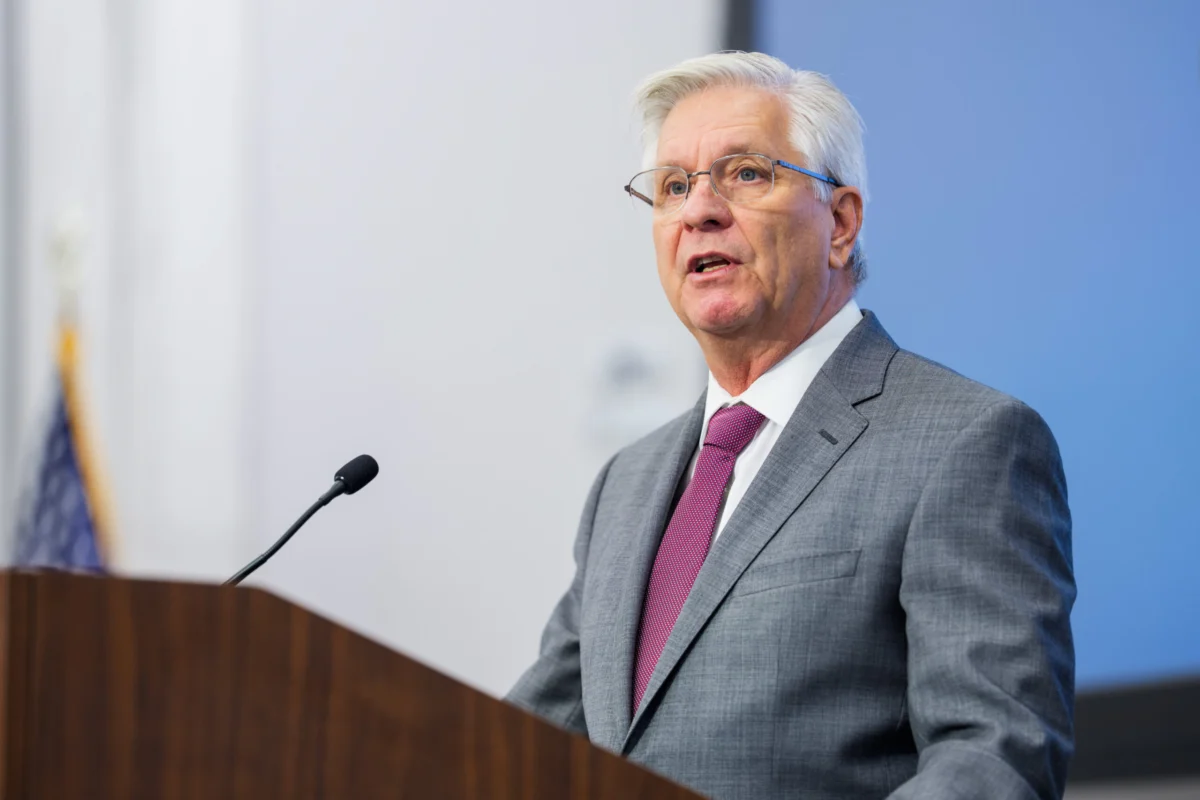
Federal Reserve Governor Christopher Waller, previously a vocal proponent for interest rate reductions, has tempered his outlook, now advocating for a more conservative approach to monetary policy in light of recent developments in the labor market and heightened uncertainty stemming from the escalating war with Iran. Despite this newfound caution, Waller maintains that opportunities for rate cuts could still emerge later this year, provided economic conditions align favorably. His remarks, made during a Friday interview on CNBC’s "Squawk Box," underscore the Federal Reserve’s delicate balancing act as it navigates complex domestic economic signals and volatile international events. This shift in Waller’s stance, a prominent voice within the Federal Open Market Committee (FOMC), reflects the broader challenges facing central bankers globally.
Waller’s Evolving Stance: A Deeper Dive
Governor Waller’s position represents a significant pivot from his earlier, more dovish leanings. Just months prior, he had been a leading advocate for easing monetary policy, even dissenting in January from an FOMC decision to maintain the federal funds rate at its elevated level. However, the rapidly changing economic landscape and geopolitical environment have prompted a reevaluation. "It doesn’t mean that I’m going to stay put for the rest of the year," Waller stated, emphasizing that his current caution is a temporary measure. "I just want to wait and see where this goes, and if things go reasonably well and the labor market continues to be weak, I would start advocating again for cutting the policy rate later this year." This conditional commitment highlights the data-dependent nature of modern monetary policy, where policymakers must remain agile in response to incoming information. Waller’s willingness to adjust his views based on evolving data is a hallmark of the Federal Reserve’s approach, aiming to guide the economy towards its dual mandate of maximum employment and price stability.
The Shadow of Geopolitics: The Iran War and Oil Prices
A primary catalyst for Waller’s revised outlook is the unpredictable trajectory of the war with Iran. Geopolitical conflicts, particularly in energy-rich regions, inherently introduce significant uncertainty into global economic forecasts. The ongoing conflict has already led to a notable surge in oil prices, a critical inflationary pressure point. Historically, spikes in crude oil costs can feed directly into consumer prices through higher transportation and production expenses, thereby complicating the Fed’s efforts to bring inflation down to its 2% target. The indeterminate duration of the conflict further exacerbates this uncertainty, making it challenging for policymakers to project future inflation trends and economic growth. Markets have reacted sharply to this geopolitical backdrop, almost entirely dampening expectations for rate reductions through the remainder of 2026 and well into 2027. This marks a stark reversal from sentiment prior to the war’s intensification, when traders had largely anticipated two or three rate cuts this year, reflecting a much more optimistic view of economic normalization. The interplay between international stability and domestic economic policy underscores the interconnectedness of the global economy, making the Fed’s task increasingly complex.
Labor Market Dynamics: A Mixed Picture

Another crucial factor influencing Waller’s cautious approach is the evolving state of the U.S. labor market. While his earlier dovish position was partly driven by a perceived weakening in employment, characterized by nearly no net job growth in 2025, his current assessment acknowledges a more nuanced reality. Waller noted on Friday that while job growth might appear sluggish, the labor force itself is not expanding significantly. This "net zero" growth scenario, in his view, can still leave the unemployment rate largely unchanged, even in the face of specific declines such as the 92,000 drop in nonfarm payrolls reported for February.
However, Waller outlined a critical threshold for future policy adjustments related to employment data. "If we get another 90,000 jobs decline in the next jobs report, that’ll be like four negative reports out of five. To me, that’s not zero. So at that point, you need to start thinking about this labor market isn’t good," he articulated. This statement provides a clear indicator of the specific data points that would trigger a renewed push for rate cuts from the Governor. The Federal Reserve closely monitors a range of labor market indicators, including the unemployment rate, labor force participation, wage growth, and initial jobless claims, to form a comprehensive picture of employment health. The current situation presents a conundrum: while headline job numbers might show declines, the underlying dynamics of a non-expanding labor force suggest that the existing demand for labor might still be sufficient to prevent a rapid surge in unemployment, thus mitigating the immediate urgency for rate cuts from a full employment perspective.
Inflation Outlook: Sanguine but Vigilant
Despite the concerns emanating from the labor market and geopolitical instability, Governor Waller remains generally sanguine about the trajectory of inflation. He largely attributes current inflationary pressures to "one-off effects" stemming from tariffs, rather than a structural, persistent rise in prices. His expectation is that these tariff-related effects will naturally dissipate, allowing inflation to resume its structural movement towards the Fed’s long-term 2% target. This perspective suggests that the current inflationary environment, while elevated in certain sectors, is not fundamentally derailing the broader trend of disinflation.
Nevertheless, Waller’s optimism is tempered by a healthy dose of vigilance. He explicitly outlined a scenario that would trigger significant concern: "If those tariff effects don’t roll off by the second half of the year, and then inflation starts rising then, then you’re in this tricky business of like, do we worry about inflation? Take a chance on recession or not?" This statement highlights the perennial dilemma faced by central bankers: balancing the risks of inflation against the risks of economic contraction. If inflation proves more sticky than anticipated, the Fed might be forced to maintain higher interest rates for longer, potentially stifling economic growth and increasing the likelihood of a recession. Therefore, while Waller sees a path to the 2% target, his focus remains sharply on incoming inflation data, particularly beyond the first half of the year, to ensure that current price pressures are indeed transient.
Monetary Policy Divergence: Waller vs. Bowman
Waller’s cautious stance stands in notable contrast to the more aggressively dovish position articulated by his fellow Federal Reserve Governor, Michelle Bowman. Bowman, like Waller, was nominated to the Fed’s Board of Governors by President Donald Trump. In a separate Fox Business interview on the same Friday, Bowman expressed her belief that the Fed could implement three rate cuts this year. Such a move would significantly reduce the benchmark federal funds rate, potentially bringing it below what FOMC officials generally consider the "neutral level"—a theoretical rate that neither stimulates nor restricts economic growth.

Bowman’s rationale for her optimistic outlook on rate cuts is rooted in her expectation of "strong growth" for the year, which she attributes to "the supply-side policies that this administration is putting into place." This perspective suggests that structural enhancements to the economy’s productive capacity could allow for lower interest rates without igniting inflationary pressures. However, Bowman’s view represents a minority within the FOMC. According to the updated "dot plot" grid released earlier in the week, she is one of only three out of 19 policymakers who anticipate such an aggressive series of rate reductions this year. The "dot plot" visually represents each FOMC participant’s projection for the appropriate federal funds rate at the end of the current year and over the next several years, offering insights into the diverse range of opinions within the committee. The divergence between Waller and Bowman underscores the ongoing internal debate within the Fed about the appropriate path for monetary policy, reflecting different interpretations of economic data and varying outlooks on future growth and inflation.
Market Reaction and Future Projections
The shift in rhetoric from influential Fed officials like Governor Waller has profoundly impacted market expectations. Prior to the recent escalation of geopolitical tensions and the release of mixed labor market data, financial markets had largely priced in the expectation of two to three rate cuts in 2026. This would have translated to a reduction of 50 to 75 basis points in the federal funds rate, moving it from its current range of 5.25%-5.50% to potentially 4.50%-5.00% by year-end. Such a move would have provided significant relief to borrowers, stimulated investment, and potentially boosted asset prices.
However, the confluence of the Iran war, soaring oil prices, and the Fed’s increasingly data-dependent posture has led to a dramatic repricing of these expectations. Traders have now almost entirely "doused" the chance of rate reductions through the balance of 2026 and well into 2027, with some models even suggesting a possibility of further hikes if inflation proves stubborn. This sudden shift reflects the market’s sensitivity to both economic fundamentals and perceived risks. The forward guidance from the Federal Reserve, often communicated through speeches, minutes, and the "dot plot," plays a crucial role in shaping these expectations. When that guidance becomes more cautious or divergent, market volatility often ensues as participants adjust their positions to align with the new reality. The current outlook suggests that businesses and consumers should prepare for a potentially longer period of elevated borrowing costs than previously anticipated.
Broader Implications for the U.S. Economy
The prospect of delayed or fewer interest rate cuts carries significant implications for various sectors of the U.S. economy. For consumers, sustained higher interest rates mean that borrowing costs for mortgages, auto loans, and credit card debt will remain elevated. This can dampen consumer spending, particularly on big-ticket items, which in turn could slow economic growth. Businesses, especially those reliant on financing for expansion or inventory management, will also face higher costs of capital, potentially leading to reduced investment, slower hiring, and tighter profit margins. Start-ups and growth-oriented companies, which often depend on readily available and affordable capital, could find the fundraising environment more challenging.
The housing market, which is particularly sensitive to interest rates, could see continued stagnation or even a downturn if mortgage rates remain high. While some argue that a slower housing market helps cool inflation, a prolonged period of high rates could make homeownership less accessible for many, impacting wealth creation. Furthermore, a longer period of restrictive monetary policy increases the risk of an economic downturn or recession, even if mild. The Fed aims for a "soft landing," where inflation is brought under control without triggering a significant recession, but the path to achieving this becomes narrower when faced with external shocks and conflicting domestic data. The uncertainty created by geopolitical events adds another layer of complexity, making long-term planning difficult for both individuals and corporations.

Historical Context of Fed Policy
The Federal Reserve has a long history of navigating periods of economic uncertainty and adapting its monetary policy stance in response to evolving conditions. During times of geopolitical conflict, such as the oil crises of the 1970s or the Gulf War, the Fed has often had to contend with supply-side shocks that fuel inflation while simultaneously risking economic slowdowns. The current environment echoes some of these historical challenges, albeit with its unique nuances. The Fed’s dual mandate—to achieve maximum employment and price stability—often presents a trade-off, especially when inflation is elevated and employment figures are mixed. The committee’s ability to communicate its strategy clearly and build consensus, despite internal divergences, is crucial for maintaining market confidence and guiding economic expectations. The present situation underscores the dynamic nature of central banking, where decisions are rarely static and require constant re-evaluation in the face of new data and unforeseen global events.
Looking Ahead: Key Economic Indicators and Fed Meetings
As the Federal Reserve moves forward, the focus will intensify on a series of critical economic indicators and upcoming FOMC meetings. Beyond the monthly jobs reports, policymakers will closely scrutinize inflation data, particularly the Consumer Price Index (CPI) and the Personal Consumption Expenditures (PCE) price index, the latter being the Fed’s preferred measure of inflation. Core inflation metrics, which strip out volatile food and energy prices, will be particularly important for assessing underlying price trends. Wage growth, consumer spending data, manufacturing and services sector surveys, and global economic developments will also factor heavily into the FOMC’s deliberations.
The next few FOMC meetings will be pivotal. Each meeting provides an opportunity for the committee to reassess the economic outlook, adjust its policy rate, and update its forward guidance. The minutes from these meetings, along with post-meeting press conferences by the Fed Chair, offer valuable insights into the committee’s thinking and the factors driving its decisions. Investors, businesses, and consumers will be keenly watching for any shifts in rhetoric or policy, particularly Waller’s next statements regarding the labor market and inflation, as well as the broader consensus emerging from the FOMC. The path of interest rates in the latter half of 2026 and beyond will depend critically on how these economic and geopolitical uncertainties resolve, dictating whether Waller’s cautious optimism for future cuts will ultimately materialize.

