
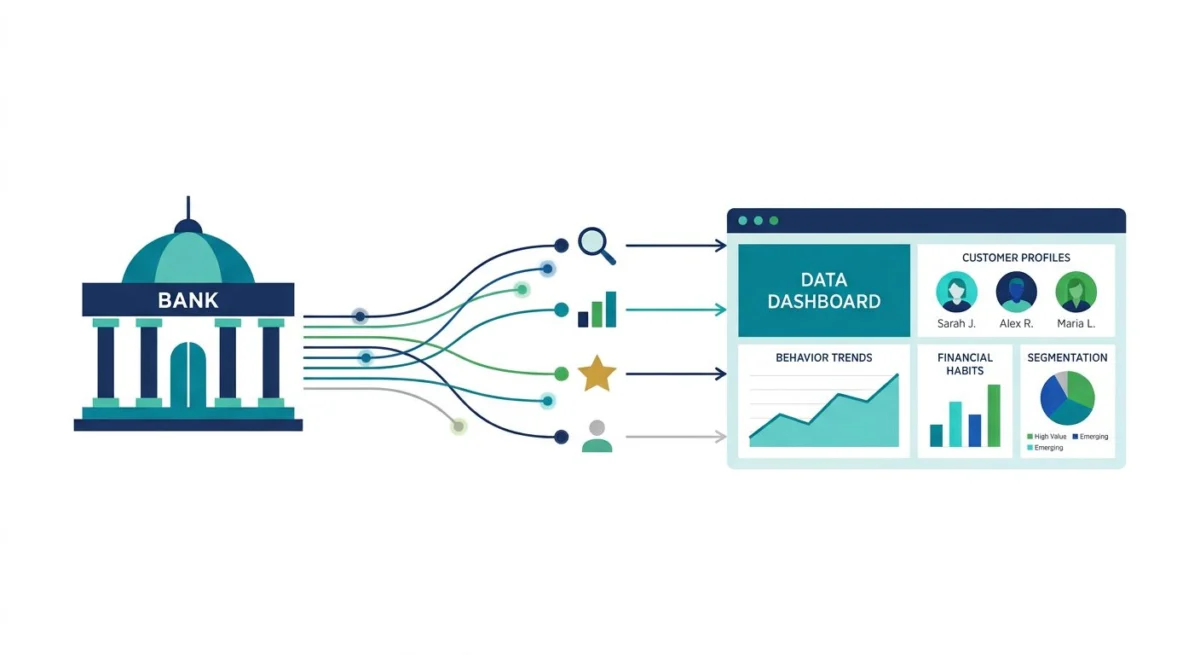
Bud Financial, a prominent provider of customer intelligence technology for the global banking sector, has announced a strategic investment from BankTech Ventures, a leading US-based venture capital firm focused on accelerating fintech adoption among community and regional banks. While the specific financial terms of the deal were not immediately disclosed, the partnership represents a critical turning point for Bud as it seeks to scale its presence across the United States. This capital infusion is earmarked for the acceleration of Bud’s growth within the American banking and credit union ecosystem, alongside the deeper development of its proprietary data ontology and advanced generative artificial intelligence (AI) capabilities. Central to this roadmap is the refinement of Bud’s "Revenue Agents," an AI-driven toolset designed to identify and execute revenue-generating opportunities under the strict regulatory and operational control of the financial institution.
The investment arrives at a time when the global financial services industry is undergoing a paradigm shift, moving away from simple digital transactions toward data-driven hyper-personalization. For many US financial institutions, particularly those outside the "Big Four" banks, the challenge has long been how to utilize the vast amounts of transactional data sitting within legacy core systems. Bud’s technology is designed to act as an intelligence layer that sits atop these existing infrastructures, bypassing the need for costly and time-consuming "rip-and-replace" core migrations. By transforming raw data into actionable intelligence, Bud enables banks to compete with both large-scale national institutions and agile neo-banks.
Bridging the Intelligence Gap in Modern Banking
The core of Bud’s value proposition lies in its ability to enrich transaction data, turning cryptic strings of text into clear, categorized, and contextual insights. In the current retail banking landscape, many institutions struggle with data that is siloed or unrefined. Bud’s platform identifies specific attributes such as merchant names, spending categories, geographical locations, and the regularity of transactions. This enrichment process creates a readable input for Large Language Models (LLMs), allowing banks to leverage generative AI to understand the "financial DNA" of their customers.
Edward Maslaveckas, CEO and Co-Founder of Bud, emphasized that the current reliance on traditional Customer Relationship Management (CRM) systems has often failed to deliver on the promise of truly personalized banking. According to Maslaveckas, CRMs often lack the real-time, transaction-level depth required to predict a customer’s needs accurately. By deploying models across Core, CRM, and Credit Risk Assessment (CRA) data, Bud allows bank staff—or automated AI agents—to segment customers with high precision. This ensures that the right products, such as mortgages, high-yield savings accounts, or personal loans, are offered at the exact moment they are most relevant to the consumer’s financial journey.
The Strategic Role of BankTech Ventures
BankTech Ventures occupies a unique position in the US venture capital landscape. The firm is backed by a consortium of community banks and industry leaders, specifically focusing on technologies that can be integrated into the operations of community and regional financial institutions. Their investment in Bud is a clear signal that the US banking sector is increasingly prioritizing AI-driven customer intelligence as a defensive and offensive strategy.
Carey Ransom, Managing Director of BankTech Ventures, noted that modern customers now expect relevance and real value in every digital interaction. For a community bank to survive and thrive, it must offer the same level of digital sophistication as a global tech giant while maintaining its local, relationship-based identity. Ransom highlighted Bud as a "key enabler" of this transformation, providing the organized intelligence layer necessary to understand every transaction across a bank’s entire system. The partnership is expected to provide Bud with direct access to a network of US bank executives who are actively seeking to modernize their data strategies.
A Chronology of Growth and Innovation
Founded in London in 2015, Bud has spent over a decade evolving from an open banking pioneer into a sophisticated data intelligence firm. The company’s journey reflects the broader evolution of the fintech industry:
- 2015–2019: Bud established itself as a leader in the UK’s burgeoning open banking scene, initially focusing on helping banks connect to third-party services.
- 2020–2023: The company shifted its focus toward data enrichment and intelligence, recognizing that the true value of open banking lay in the insights derived from the data rather than the connection itself.
- 2024: Bud made its official debut at FinovateFall 2024, where it showcased its "Drive" solution. This platform was a significant leap forward, utilizing a generative AI interface to democratize access to data insights for bank employees who may not have technical data science backgrounds.
- Early 2026: The company began a rapid expansion into the US market, securing major partnerships with First Fidelity Bank and Jack Henry. The partnership with Jack Henry, a leading provider of technology solutions for the financial services industry, was particularly notable as it integrated Bud’s enrichment capabilities into a platform used by thousands of US financial institutions.
- Current Milestone: The investment from BankTech Ventures solidifies Bud’s position as a critical infrastructure player for the next generation of US banking.
Supporting Data: The AI Imperative in Finance
The demand for Bud’s technology is supported by broader industry trends. According to recent market analysis, the global market for AI in fintech is expected to reach over $50 billion by 2030, growing at a compound annual growth rate (CAGR) of over 20%. Furthermore, a 2025 survey of US community bank executives revealed that "data analytics and AI" ranked as the top priority for technology investment, surpassing even mobile banking enhancements and cybersecurity.
Financial institutions are increasingly finding that customer retention is directly linked to the "intelligence" of the digital experience. Research indicates that personalized financial insights can increase customer engagement by up to 30% and significantly lower the cost of customer acquisition by identifying "pre-qualified" leads based on real-time spending behavior. Bud’s Revenue Agents are designed to capitalize on these metrics, acting as a virtual sales force that identifies when a customer might be paying too much for a service elsewhere or when they have a cash surplus that should be moved into an investment vehicle.
The Impact of "Revenue Agents" and Autonomous Banking
One of the most significant aspects of the new funding is the accelerated development of "Revenue Agents." This technology represents the transition from passive data analysis to active financial orchestration. Unlike traditional marketing automation, which sends generic emails based on broad demographics, Revenue Agents operate with a level of autonomy. They can spot a specific event—such as a large deposit or a recurring payment to a competitor—and immediately prompt a tailored action.
Crucially, these agents operate under the "bank’s control," addressing a major concern in the industry regarding AI safety and regulatory compliance. In a highly regulated environment like the US, banks cannot afford "black box" AI that makes decisions without oversight. Bud’s framework provides the transparency required for audit trails, ensuring that every AI-generated recommendation is grounded in verifiable data and follows the bank’s internal policy guidelines.
Broader Implications for the US Banking Landscape
The entry of Bud into the US market at scale, backed by BankTech Ventures, suggests a narrowing of the "tech gap" between community banks and global tier-one institutions. Historically, only the largest banks had the budget to build custom AI models and data lakes. Bud’s model democratizes this capability, providing "AI-as-a-service" that is specifically tuned for the nuances of financial data.
For the consumer, this shift means a more intuitive and helpful banking experience. Instead of a simple list of transactions, users will see a curated financial narrative. For the bank, it means a shift from being a "utility" where money is stored to being a "partner" that actively helps manage financial health. This transition is essential as banks face increasing competition from "Big Tech" firms entering the financial space.
As Bud continues to deepen its data ontology—the complex mapping of how different financial data points relate to one another—the accuracy of its insights is expected to improve further. This will likely lead to more sophisticated risk management tools, allowing banks to assess creditworthiness based on real-time cash flow rather than just static credit scores.
In conclusion, the investment from BankTech Ventures into Bud Financial is more than just a funding round; it is a strategic alignment aimed at redefining the technological baseline for US financial institutions. By turning data into a proactive asset, Bud is helping banks move toward an AI-first future where every transaction is an opportunity for engagement, and every customer relationship is powered by deep, actionable intelligence. As the company scales its US operations throughout 2026 and beyond, the industry will be watching closely to see how this "intelligence layer" transforms the competitive dynamics of American retail banking.

