
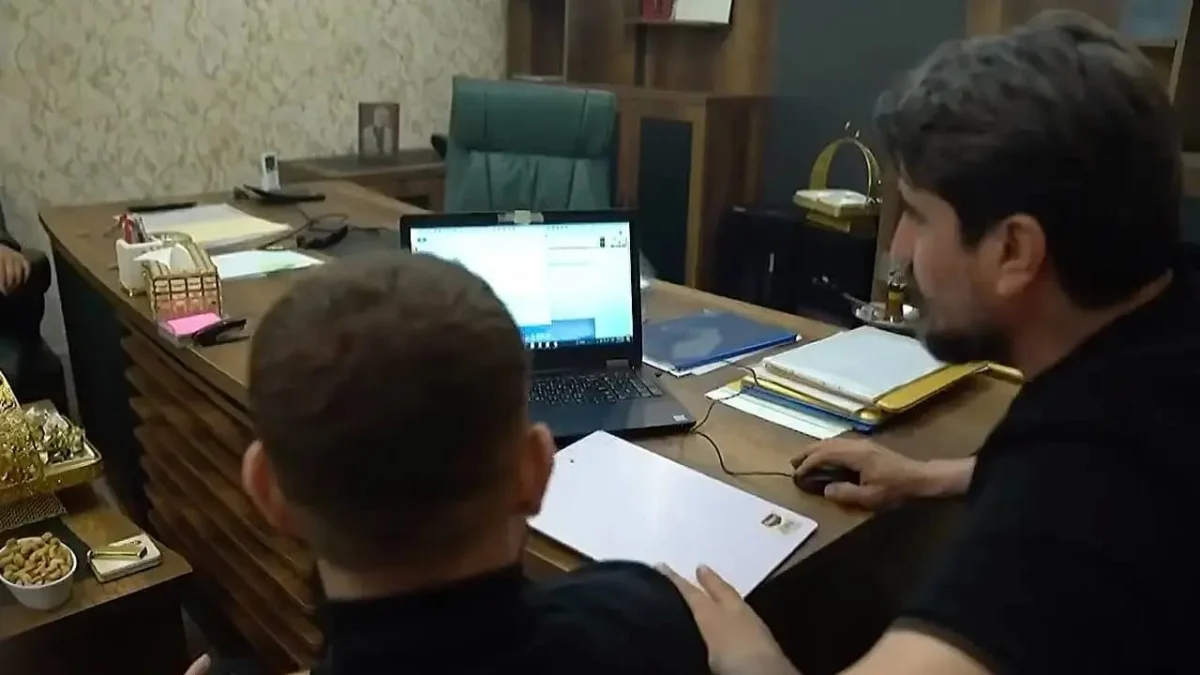
Federal prosecutors have unveiled startling evidence revealing a sophisticated, Iran-linked network orchestrating real-time terrorist attacks against targets in Europe and the United States from what appears to be a Middle Eastern boardroom. Videos released by authorities depict individuals gathered around screens, issuing precise instructions to operatives on the ground, highlighting a significant evolution in the methodology of state-sponsored terrorism. This development cuts through years of official skepticism regarding the reach and operational capabilities of imported Islamist networks, presenting a tangible and immediate threat to Western security.
The "Boardroom Jihad" Unveiled: A New Operational Model
The released footage paints a chilling picture: men identified as operatives, purportedly tied to Iran’s Islamic Revolutionary Guard Corps (IRGC) and the Iraqi Kata’ib Hizballah, are seen directing attacks via live video calls. This sophisticated, almost corporate, approach to terrorism stands in stark contrast to the traditional image of isolated, clandestine cells or lone-wolf actors. Instead, it suggests a centralized command-and-control structure capable of recruiting and paying local individuals to execute acts of arson, stabbings, and bomb plots primarily targeting American forces and Jewish communities.
This operational model has been dubbed a "gig-economy" form of terrorism, characterized by remote direction, paid recruits, and rapid dissemination of propaganda. It leverages modern communication technologies to bypass traditional border controls and makes detection significantly more challenging until after an incident has occurred. The remote-control nature of these operations allows the masterminds to operate from relative safety, providing tactical guidance and immediate feedback to perpetrators who may have little direct ideological commitment beyond financial incentive. This decentralization of execution, coupled with centralized strategic direction, presents a formidable challenge to intelligence agencies and law enforcement worldwide.
Behind the Network: Iran’s Proxy Apparatus
The Islamic Revolutionary Guard Corps (IRGC) is a major military, political, and economic force in Iran, designated as a terrorist organization by the United States. Established after the 1979 Iranian Revolution, its primary role is to protect the Islamic Republic’s system, and it exerts significant influence through various proxy groups across the Middle East. Kata’ib Hizballah, an Iraqi Shiite paramilitary group, is one such prominent proxy, known for its close ties to the IRGC’s Quds Force and its history of attacks against US forces in Iraq. Both organizations share a common ideological alignment with Iran’s anti-Western and anti-Israel foreign policy objectives.
For decades, Iran has utilized a network of proxy forces to project power, destabilize rival states, and conduct asymmetric warfare, often maintaining plausible deniability. This strategy allows Iran to exert influence and inflict damage without direct military engagement, thereby minimizing the risk of retaliation against its own territory. The discovery of a "boardroom" directing attacks in Europe and the US suggests an alarming expansion of this proxy strategy into the heart of Western nations, indicating a brazen escalation of Iranian-backed aggression.
Unfolding the Conspiracy: A Timeline of Attacks and Indictments
The investigation has linked nearly 20 attacks and attempted attacks across Europe and the United States to this network. These incidents began in early March 2026 with an arson attack on a Belgian synagogue and quickly spread to the Netherlands, France, and the United Kingdom. Targets were overwhelmingly Jewish and Israeli-linked, reflecting a clear antisemitic and anti-Zionist agenda.
Key incidents attributed to the group include:
- A near-fatal stabbing of Jewish men in London.
- Firebombings of multiple synagogues and a Jewish charity across Europe.
- An attempted bombing of a Manhattan synagogue, thwarted by law enforcement.
- A foiled plot against RAF Fairford, a critical British base housing US aircraft and personnel.
An eight-count superseding indictment unsealed in Manhattan federal court has named three key figures in this alleged conspiracy:
- Mohammad Baqer Saad Dawood al-Saadi: A dual Iranian-Iraqi national, currently in US custody after his arrest earlier this year. He is already charged with promoting about 18 European attacks and the attempted New York synagogue bombing.
- Mohsen Mohajeri: An Iranian national, believed to be at large in Iran.
- Mohammad Ali al-Hassani: An Iraqi national, also believed to be at large in Iran.
Prosecutors allege that these men directed attackers during live video calls, subsequently distributing propaganda materials. In one particularly chilling session, projected onto a large screen bearing the logo of a front group called Harakat Ashab al-Yamin al-Islamiya (HAYI), al-Hassani was recorded coaching a perpetrator with the instruction to "Light it up like a Christmas tree." The perpetrator subsequently ignited an improvised device and threw it at a London synagogue. Another video shows the group meticulously studying a map of London, with al-Hassani telling Mohajeri, "We need to get focused on London." HAYI has publicly claimed responsibility for multiple London attacks, including the torching of Jewish ambulances in Golders Green and the synagogue arson. Seven of the roughly 18 European attacks linked to the group occurred in Britain.
In a particularly audacious development, al-Saadi, even after his initial arrest and while in a Brooklyn jail cell, allegedly continued to coordinate the plot against RAF Fairford. He reportedly used coded messages conveyed through family members, demonstrating the network’s resilience and commitment to its objectives. The RAF Fairford plot involved five British men who were arrested near the base in September 2026 after suspicious vans loaded with fuel were spotted. Fortunately, the plot was foiled before it reached the perimeter, and US bombers stationed at the base were subsequently withdrawn as a precautionary measure. British authorities have charged local individuals in connection with some of these incidents, highlighting the recruitment of disaffected or ideologically susceptible individuals within host countries. In one instance, a 17-year-old who set a synagogue alight later claimed he was unaware of the building’s purpose, underscoring the deceptive and exploitative nature of the recruitment process.
Official Condemnation and Legal Ramifications
US Attorney Jamie McDonald characterized this operation as "the new threat that we’re facing today," explicitly stating, "What we’ve alleged here is that this is an Iran, an IRGC affiliated network of terrorist organizations." In a separate statement, McDonald affirmed that the defendants "helped orchestrate a campaign of terror on behalf of terrorist organizations affiliated with Iran that targeted Jewish communities in Europe and the United States, and the British military base, RAF Fairford, housing American service members." He further emphasized the gravity of the situation: "The threat presented by Iran and Iran-backed terrorist groups to America and our allies is not hypothetical – it is very real."
Attorney General Todd Blanche delivered a stern warning to potential perpetrators: "Anyone who plans a terrorist plot on a military base housing American servicemembers will be prosecuted by the United States government." These statements underscore the US government’s commitment to holding perpetrators and their state sponsors accountable, signaling a robust response to this evolving threat. The legal proceedings against al-Saadi and the ongoing pursuit of Mohajeri and al-Hassani represent a critical step in dismantling this transnational network and deterring future acts of terrorism. The evidence presented, particularly the direct video footage, is considered a significant breakthrough, cutting through years of ambiguity surrounding the extent of Iranian-backed terrorist operations on Western soil.
Broader Implications for Western Security
The emergence of this "boardroom jihad" model poses profound challenges for Western security. The ability of hostile state actors to direct attacks remotely, utilizing local recruits, complicates traditional counter-terrorism strategies focused on identifying and neutralizing established cells. It necessitates enhanced intelligence sharing between international partners, advanced digital forensics, and a deeper understanding of recruitment and radicalization pathways within diverse communities. The overwhelming targeting of Jewish and Israeli-linked institutions also highlights the alarming rise in antisemitic violence across Europe, exacerbated by geopolitical tensions. This requires increased vigilance and protection for vulnerable communities, alongside robust efforts to combat hate speech and extremist ideologies.
A Voice at the United Nations: Challenging Human Rights Abuses
In a separate yet thematically linked development, Yemeni-Swedish journalist Luai Ahmed (also known as Louis) delivered a rare and powerful address to the UN Human Rights Council (UNHRC), directly challenging Muslim-majority governments on their human rights records. Speaking as a Muslim, Ahmed posed pointed questions that are infrequently voiced in such a forum, particularly by an individual from within the Muslim community. The UNHRC, while a vital platform for human rights advocacy, often faces criticism for political selectivity and a reluctance to address certain issues head-on, making Ahmed’s directness particularly noteworthy.
Ahmed courageously questioned Iran over the violent suppression and killing of protesters demanding fundamental freedoms. He pressed Qatar on its alleged harboring and funding of Hamas, the terrorist organization responsible for the brutal October 7 massacre in Israel. He also confronted Syria regarding the systematic slaughter of Alawites, Druze, and other minority groups within its borders. His remarks were a stark reminder that human rights abuses are a global concern, transcending geopolitical alliances and requiring universal scrutiny.
Pakistan’s Blasphemy Laws: The Case of Shagufta Kiran
A significant portion of Ahmed’s address focused on Pakistan, specifically highlighting the egregious case of Shagufta Kiran, a Christian woman sentenced to death under the country’s controversial blasphemy laws. Ahmed directly challenged Pakistan: "Pakistan, if you care about religious freedom, why did you sentence a Christian woman to death, Shagufta Kiran, for allegedly sharing a WhatsApp message about the age issue in Islamic marriage?" He also critically noted the prolonged tenure of Mahmoud Abbas, who remains in the 22nd year of a four-year term as President of the Palestinian Authority.
Shagufta Kiran, a Christian mother of four and former nurse, was arrested in 2021 after a Muslim complainant alleged she forwarded blasphemous content in a WhatsApp group. In September 2024, an Islamabad court sentenced her to death under Section 295-C of Pakistan’s blasphemy laws, which mandate the death penalty for insulting the Prophet Muhammad. She also received a fine and additional years under cybercrime statutes. Her defense team maintains that she merely forwarded a message without reading or authoring its content, asserting her innocence.
Naeem Yousaf Gill of the National Commission for Justice and Peace (NCJP) expressed deep disappointment, stating, "Justice has not been served in Shagufta’s case. She will take her case to the High Court. The sentence is harsh." Her lawyer further highlighted the injustice that the original author of the alleged blasphemous message remains free, while Kiran faces execution for merely sharing it.
Pakistan’s blasphemy laws have long been a subject of intense international criticism. Human rights organizations and legal experts argue that these laws are frequently misused to settle personal vendettas, target religious minorities (including Christians, Hindus, and Ahmadis), and incite mob violence. While the state has not carried out an execution under blasphemy laws in recent years, extrajudicial killings and vigilante justice remain a pervasive and deadly threat to those accused. Dozens of individuals, many of whom are members of minority faiths, currently face death sentences under these statutes. Luai Ahmed’s decision to speak out on such issues at the UN carries significant weight, especially given that similar statements can carry severe penalties, including death sentences or extrajudicial risks, in many countries applying Sharia-based criminal law.
Connecting the Threads: Global Threats and Domestic Vulnerabilities
The "boardroom jihad" and Luai Ahmed’s brave stance at the UN Human Rights Council, though distinct events, collectively illuminate the complex and interconnected challenges facing liberal democracies today. The first highlights the evolving nature of transnational terrorism, where state-sponsored actors leverage technology and local recruits to project violence directly into Western societies. It underscores the critical need for enhanced national security measures, robust intelligence sharing, and sophisticated counter-terrorism strategies to combat these externally directed threats.
The second narrative, focusing on human rights abuses in Muslim-majority countries and the plight of individuals like Shagufta Kiran, points to deeper ideological and societal issues. While not directly linked to terrorist attacks in the West, the prevalence of extremist interpretations of religious law and the suppression of fundamental freedoms in certain regions raise crucial questions about the compatibility of diverse cultural and legal systems within pluralistic democracies. It underscores the importance of rigorous screening processes for individuals entering Western nations, not as an act of bigotry, but as a prudent measure to safeguard national security and uphold democratic values. Furthermore, it highlights the necessity of supporting voices like Luai Ahmed’s that advocate for universal human rights, while simultaneously addressing the challenges of radicalization and integration within diverse societies.
The alternative to a comprehensive, multi-faceted approach is grim: more real-time video calls directing attacks on synagogues and military targets, and continued silence from the international community while individuals face severe human rights abuses for perceived transgressions. Addressing these intertwined challenges demands a commitment to robust security measures, unwavering advocacy for human rights, and a nuanced understanding of the complex global landscape.

