
The global financial landscape has been gripped by unprecedented volatility in recent months, largely attributed to escalating international trade tensions and the widespread implementation of tariffs. Following a multi-year bull run that culminated in a significant peak in February 2025, the U.S. stock market embarked on a tumultuous journey, experiencing some of the steepest drops and subsequent recoveries in recent history. At its lowest point, market indices shed approximately 20% of their value, only to rebound remarkably, approaching pre-crisis peaks as of this writing. This whipsaw pattern has left investors, businesses, and policymakers grappling with uncertainty, with tariffs emerging as the primary catalyst for this economic turbulence.
Understanding Tariffs: A Fundamental Economic Overview
At its core, a tariff is a tax levied by a government on imported goods or services. This import duty is typically paid by the importing entity—be it an individual purchasing an e-bike directly from an overseas supplier or a multinational corporation like Amazon, Walmart, or Apple bringing in container loads of products. While initially paid by the importer, the financial burden of tariffs ultimately falls on the end consumer. Companies facing increased costs of goods due to tariffs invariably pass these expenses on through higher retail prices to maintain profit margins.
Beyond consumer goods, tariffs also directly impact industrial sectors. Construction projects, for instance, face elevated costs when tariffs are imposed on essential materials such as steel, copper, and lumber, which are often sourced internationally. This ripple effect can extend to housing costs, as a significant portion of building materials originates from diverse global supply chains.
The general economic consensus is that tariffs, functioning much like a broad-based sales tax, tend to lead to higher prices across the board. This inflationary pressure can diminish consumer purchasing power and slow overall economic activity. On the revenue side, the collected tariff funds contribute to the national treasury, potentially aiding in budget funding and deficit reduction. However, the optimal level of taxation, encompassing sales, income, and corporate taxes, is generally understood to be one that is as low, fair, and predictable as possible. This stability and clarity are crucial for incentivizing hard work, fostering business investment, and enabling long-term economic planning. The current tariff regime, characterized by frequently changing and high tariff rates, introduces significant unpredictability, challenging these fundamental economic principles.
Historical Context and Strategic Uses of Tariffs
While often viewed as a modern policy tool, tariffs have a long history as instruments of economic and geopolitical strategy. Historically, nations have employed tariffs to protect nascent domestic industries from more established foreign competition. For example, a tariff on imported automobiles like Hondas could theoretically grant a competitive advantage to domestic manufacturers such as General Motors, potentially leading to increased sales, production, and job creation within the domestic auto sector. However, this often comes at the expense of consumers, who face higher prices and reduced product selection.
Such protectionist measures can be driven by strategic national interests, such as ensuring a robust domestic defense industry by taxing imported military aircraft components, thereby supporting companies like Boeing and Lockheed Martin. Conversely, tariffs can also be the result of political lobbying and corruption, where specific industries or their benefactors influence policy decisions to protect their profits.
It is important to note that the use of tariffs transcends political party lines. While the current administration under Donald Trump has prominently utilized tariffs, previous administrations, including that of Joe Biden, also implemented import duties. A notable example under the Biden administration was the tax on imported solar panel components, which was subsequently increased further by the Trump administration. Critics argue that taxing such essential components, which facilitate access to cheap and sustainable energy, hinders economic growth and increases the cost of living by making energy more expensive.
The Economic Debate: Tariffs and Job Creation
The argument for tariffs often centers on their potential to stimulate domestic job growth. Returning to the hypothetical $5,000 tariff on imported Hondas, such a significant price hike could steer consumers towards domestically produced alternatives. Increased demand for GM vehicles would necessitate higher production, leading to new hires and factory expansions. This could, in theory, foster skill development and create a virtuous cycle of industrial growth.

However, this localized benefit is usually accompanied by broader economic costs. The increased price of vehicles affects not only individual consumers but also businesses reliant on transportation, such as Amazon’s delivery fleet, which would face higher operational costs that are ultimately passed on to consumers. Moreover, a less competitive environment, where domestic companies are shielded from foreign rivals, can reduce incentives for innovation and efficiency improvements. This can lead to a slower overall trajectory for the protected industry, even if its profits increase in the short term.
Most economists generally concur that tariffs should be applied sparingly due to their propensity to cause unintended economic damage, reduce overall employment, and slow economic growth. While there are legitimate exceptions, such as for food security or national defense, where the costs might be deemed acceptable, the widespread application of tariffs typically leads to a less efficient and more expensive economy.
The Current Administration’s Stance and Market Reaction
The current administration’s enthusiastic embrace of tariffs has perplexed many economic observers. President Trump has often articulated a belief that tariffs enhance national wealth, focusing on the immediate, first-order effects like increased domestic employment, while seemingly downplaying or disregarding the broader economic inefficiencies and increased costs they impose.
Market responses, however, tell a different story. Announcements of higher tariffs have consistently been met with declines in share prices, reflecting the consensus among corporate leaders and investors that such measures generally reduce profitability and economic outlook. Conversely, any indication of tariff reductions or pauses typically triggers a rally in stock prices. This pattern suggests that the market views tariffs not as a strategic advantage but as a national sales tax that impedes economic dynamism. The oscillation between tariff threats and partial retreats has created a climate of instability, leading many to speculate on the underlying motivations, including the possibility that tariffs are primarily a negotiating tactic designed to exert leverage in international trade talks.
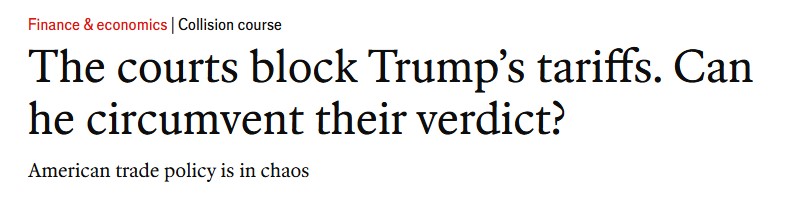
This scenario raises significant questions about the concentration of economic power. When the entire economy becomes susceptible to the arbitrary decisions of a single individual, it challenges the foundational principles of a democratic system, particularly the checks and balances intended by a tripartite government structure. While presidents have historically sought to expand their executive powers, the current situation has prompted legal challenges, as highlighted by reports in publications like The Economist, which indicate that courts are beginning to scrutinize and, in some cases, block tariff implementations that overstep constitutional boundaries.
Magnitude of Current Tariffs and Lagging Price Impacts
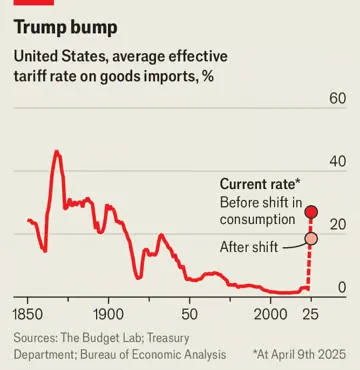
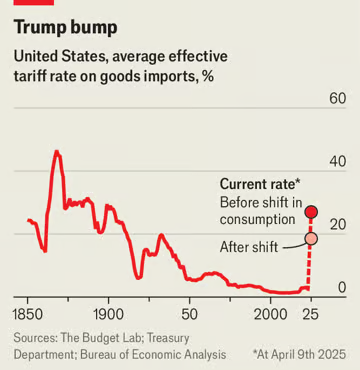
Despite the recent market rebound, current U.S. tariffs remain substantially higher than historical averages, particularly over the last 75 years. The contemporary U.S. economy has been meticulously built upon principles of very low tariffs and relatively free trade, making the current regime a significant departure from established norms. While precise, real-time tariff figures are fluid and subject to constant change, the overarching trend indicates a substantial increase in trade barriers.
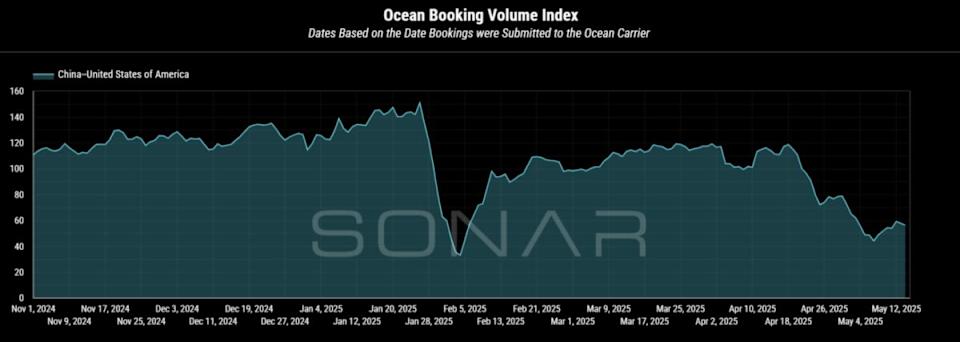
The delayed impact on consumer prices has been a point of curious observation. The vast U.S. economy, often likened to a massive cargo ship, possesses considerable inventory and takes time to alter its course. In normal circumstances, the nation maintains several months’ worth of inventory for most goods. Anticipating the imposition of tariffs, importers actively stockpiled goods, leading to an initial surge in orders. Subsequently, as tariffs took effect, import volumes significantly decreased. Currently, the U.S. economy is drawing down these accumulated inventories. However, as these stockpiles deplete, and with sustained lower import levels, shortages and price increases are projected to become more noticeable, potentially surfacing throughout the upcoming summer or fall. While the absence of certain non-essential imported goods might be easily absorbed, a disruption in the supply of critical items like tools and industrial machinery could precipitate more severe economic consequences.
Future Scenarios: Dark Side and Bright Side Outlooks
The prevailing sentiment in U.S. politics and economics often echoes the adage, "This too shall pass." The exact trajectory of the current trade tensions remains uncertain, but several plausible scenarios can be outlined:
1. The Persistence of High Tariffs:
This scenario, while less probable given the economic pressures, envisions the current high tariff regime becoming a long-term fixture. Such an outcome could fundamentally reshape global supply chains, pushing companies to relocate production facilities to the U.S. or other non-tariffed countries. This domestic production might generate some jobs but would likely result in higher consumer prices due to increased labor and production costs compared to previous international sourcing. The U.S. economy could become more insular, potentially leading to reduced trade volumes, strained international relations, and a slower overall growth rate as the benefits of global specialization diminish. Inflationary pressures would likely intensify, impacting household budgets and corporate profitability across various sectors.
2. A Return to Lower Tariffs Through Negotiation:
This is the more optimistic and widely anticipated scenario, positing that the current tariffs are primarily a strategic negotiating tool. Under this outlook, the trade disputes would eventually culminate in a truce or comprehensive trade agreements, leading to a substantial reduction or elimination of the current tariffs. Such an outcome would likely be met with a renewed surge in investor confidence, as businesses would benefit from stable and predictable trade policies. Supply chains would normalize, and the downward pressure on consumer prices would alleviate, fostering economic growth and greater international cooperation. The U.S. and global economies would revert to a system that emphasizes the free exchange of goods and services, recognizing the mutual prosperity derived from collaborative trade relationships.
Epilogue: Market Resilience and Media Scrutiny
The stock market’s journey since the "Liberation Day" announcement on April 2nd, which triggered a significant downturn, has been characterized by remarkable resilience. Despite initial panic that led some investors to lock in substantial losses, the market has steadily recovered over the subsequent two months. Each indication of a potential reduction or pause in tariffs has correlated with an uptick in stock prices, signaling investor confidence in a future characterized by more open international trade. The U.S. stock market’s current proximity to its all-time high, despite tariffs remaining significantly elevated compared to pre-crisis levels, underscores the market’s collective belief in an eventual resolution and a return to free-ish international trade.
This period of economic uncertainty also highlights a critical lesson regarding information consumption. Modern journalism, particularly in click-funded commercial media, has increasingly prioritized attention-grabbing headlines over factual accuracy. This bias often manifests as a tendency to generate outrage and fear, as these emotions tend to drive higher engagement and advertising revenue. To navigate this landscape, individuals are encouraged either to disengage from constant news cycles and focus on personal well-being or to become subject matter experts in areas of genuine interest. A deeper understanding of specific fields often reveals the inaccuracies and sensationalism prevalent in many media narratives, reinforcing the importance of consulting original sources and exercising critical discernment.

Ultimately, the long-term outlook for the U.S. economy remains tied to its ability to adapt and uphold democratic principles. As long as the system eventually corrects abuses of power and re-establishes balance, the nation’s economic future is likely to remain robust. Investors, including those fully invested in the market, are betting on this inherent resilience and the eventual return to a more stable and predictable trade environment.

