
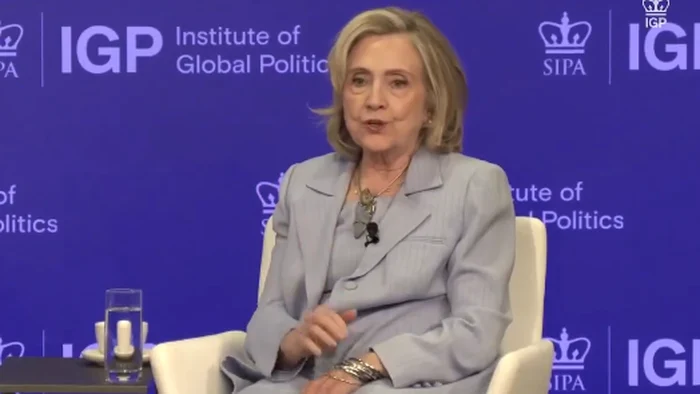
Clinton, who now teaches crisis decision-making at Columbia’s Institute of Global Politics, was prompted by a moderator to reflect on whether the American public was adequately served by the Patriot Act and the AUMF, and to recount her memories of the deliberations that led to their passage. "I think what you just heard is such a reminder about how difficult decision-making is in the midst of a crisis," Clinton stated during the panel, titled "The 9/11 Attacks 25 Years Later: Lessons Learned, Lessons Forgotten," held at the Columbia SIPA Institute of Global Politics. She further elaborated, drawing a parallel to her academic role, "And that’s the course that the dean and I teach every day, or every week, because hindsight is always perfect. But it’s got as much bias as anything else. And so looking back and saying shoulda, coulda, woulda doesn’t really help us." This perspective highlights the immense pressure faced by policymakers in the immediate aftermath of an unprecedented national tragedy, where the demand for swift and decisive action often overshadowed extensive debate.
The Immediate Aftermath of 9/11 and the Legislative Response
The horrific events of September 11, 2001, in which hijacked commercial airliners struck the World Trade Center towers in New York City, the Pentagon in Arlington, Virginia, and crashed in a field in Shanksville, Pennsylvania, plunged the United States into a state of shock and grief. Nearly 3,000 lives were lost in the deadliest terrorist attack on American soil. The attacks, orchestrated by al-Qaeda, immediately shifted the nation’s focus to national security, counter-terrorism, and the perceived need for robust governmental powers to prevent future atrocities. Public sentiment overwhelmingly favored strong action, with polls indicating unprecedented levels of public support for military intervention and increased surveillance to protect national security. For instance, a Gallup poll conducted in the immediate weeks after 9/11 showed over 80% of Americans supporting military action and significant increases in government powers.
Hillary Clinton, then a freshman Senator representing New York, the state most directly impacted by the attacks, found herself at the epicenter of this national crisis. Her experience as a senator from the affected state likely colored her perspective and urgency in responding to the perceived threat. Within days and weeks of the attacks, Congress moved with extraordinary speed to pass two landmark pieces of legislation: the Authorization for Use of Military Force (AUMF) and the USA Patriot Act.
The Authorization for Use of Military Force (AUMF): A Legal Blank Check
The AUMF, passed on September 14, 2001, just three days after the attacks, represented a near-unanimous congressional declaration of war, albeit without the formal declaration of war against a specific nation. The Senate cleared the AUMF by a vote of 98-0. The House of Representatives passed it with an equally overwhelming majority of 420-1. This authorization granted the President the authority "to use all necessary and appropriate force against those nations, organizations, or persons he determines planned, authorized, committed, or aided the terrorist attacks that occurred on September 11, 2001, or harbored such organizations or persons, in order to prevent any future acts of international terrorism against the United States by such nations, organizations or persons."
The only dissenting vote in Congress came from Representative Barbara Lee (D-CA), who famously stood alone in opposition, arguing prophetically that the resolution was too broad and could lead to an open-ended war. Her statement at the time warned, "As we act, let us not become the evil that we deplore… Some of us must urge caution and deliberation… I am convinced that military action will not prevent further acts of international terrorism against the United States." Lee’s prescience would be borne out over the next two decades, as the 2001 AUMF became the legal foundation for a vast and prolonged "War on Terror," spanning multiple administrations and authorizing military operations far beyond Afghanistan, the initial target.
The AUMF was invoked to justify military actions in Iraq, Yemen, Somalia, and numerous other countries, leading to criticisms from both sides of the political spectrum regarding its scope and the erosion of congressional war powers. Successive presidents, from George W. Bush to Barack Obama, Donald Trump, and Joe Biden, utilized the 2001 AUMF to justify a range of military engagements, from drone strikes to special forces operations, often without seeking specific new congressional authorizations. Efforts by lawmakers in both parties to repeal or replace the outdated AUMF, or to limit its application, have repeatedly stalled, highlighting the institutional challenges of reasserting congressional oversight over military deployments initiated under a broad post-crisis mandate. The lack of a clear sunset clause and its expansive interpretation transformed it into what many critics termed a "legal blank check" for American military adventurism.
The USA Patriot Act: Expanding Domestic Surveillance Powers
Signed into law on October 26, 2001, the Uniting and Strengthening America by Providing Appropriate Tools Required to Intercept and Obstruct Terrorism (USA PATRIOT) Act was another swift legislative response to 9/11. The Senate passed the Patriot Act by a vote of 97-1, with Hillary Clinton joining the vast majority of her colleagues in support. The lone dissenting vote in the Senate came from then-Senator Russ Feingold (D-WI). Feingold, a staunch civil libertarian, articulated his concerns about the bill’s potential to infringe upon civil liberties and privacy rights, stating, "While I am not unmindful of the need to provide law enforcement with additional tools in the wake of the horrific attacks of September 11th, I am also ever mindful of the importance of protecting the constitutional rights of the American people." He warned against sacrificing fundamental freedoms in the name of security, a concern that would echo in subsequent debates.
The Patriot Act significantly expanded the surveillance and investigative powers of law enforcement and intelligence agencies. Its provisions included enhanced abilities to conduct electronic surveillance, obtain business records, and track financial transactions. Among its most controversial elements was Section 215, often referred to as the "business records" provision. This section allowed the FBI, under orders from the Foreign Intelligence Surveillance Act (FISA) Court, to compel third parties (such as telephone companies, internet service providers, and financial institutions) to turn over "any tangible things" relevant to a terrorism investigation.
Timeline of Controversy and Reform: From Implementation to Snowden and Beyond
- October 26, 2001: President George W. Bush signs the USA Patriot Act into law.
- 2001-2013: The National Security Agency (NSA) secretly establishes and operates a program of bulk collection of American phone records, relying on a broad interpretation of Section 215 of the Patriot Act. This program collected metadata—information about who called whom, when, and for how long—on millions of Americans, without specific suspicion of terrorist ties.
- 2005: Key provisions of the Patriot Act, including Section 215, are set to expire. After contentious debate, Congress reauthorizes the act with some minor modifications.
- 2008: The Foreign Intelligence Surveillance Act (FISA) Amendments Act is passed, granting immunity to telecommunications companies that cooperated with government surveillance programs after 9/11.
- June 2013: Edward Snowden, a former NSA contractor, leaks classified documents to the media, revealing the existence and scope of the NSA’s bulk collection program. These revelations sparked a global debate about government surveillance, privacy rights, and the balance between security and liberty. The Guardian newspaper, among others, published extensive details based on Snowden’s disclosures, confirming widespread domestic data collection under Section 215.
- 2013-2015: Public outcry and legal challenges mount against the NSA’s programs. A Presidential Review Group on Intelligence and Communications Technologies recommends significant reforms to surveillance practices. Federal courts, including the Second Circuit Court of Appeals in 2015, rule that the government’s interpretation of Section 215 to justify bulk collection of metadata was unlawful and exceeded the authority granted by Congress.
- June 2, 2015: Congress passes the USA Freedom Act, which President Obama signs into law. This act scales back some of the Patriot Act’s surveillance authorities, most notably ending the NSA’s bulk collection of telephone metadata. Instead, it required intelligence agencies to obtain a court order to request specific metadata from telephone companies, which would then hold the data.
- March 15, 2020: Several key provisions of the Patriot Act, including those governing roving wiretaps and the "lone wolf" surveillance authority, as well as the modified Section 215 of the USA Freedom Act, are allowed to lapse after Congress fails to reauthorize them. This marked a significant, albeit quiet, rollback of some post-9/11 surveillance powers.
Broader Impact and Implications
The Patriot Act and the AUMF fundamentally reshaped American law, national security policy, and the relationship between the government and its citizens.
Impact on Civil Liberties and Privacy: The Patriot Act, particularly its Section 215, generated intense scrutiny from civil liberties advocates. Organizations like the American Civil Liberties Union (ACLU) consistently argued that the act overstepped constitutional boundaries, enabling unwarranted surveillance of ordinary Americans and eroding privacy protections. The Snowden leaks confirmed many of these fears, revealing the vast scale of government data collection, which critics argued created a "surveillance state" where virtually every digital communication could potentially be monitored. While the USA Freedom Act and the eventual lapse of key provisions offered some redress, the debate over government access to private data remains a central feature of modern civil liberties discourse.
Expansion of Executive Power: Both the AUMF and the Patriot Act contributed to a significant expansion of executive power. The AUMF allowed presidents to engage in military actions globally without requiring repeated, specific congressional authorizations, effectively shifting the balance of war powers towards the executive branch. The Patriot Act provided the executive branch with unprecedented tools for domestic surveillance and intelligence gathering, often with limited judicial or congressional oversight in practice, especially prior to the Snowden revelations. This expansion raised concerns about unchecked governmental authority and accountability.
Foreign Policy and the "War on Terror": The 2001 AUMF laid the groundwork for a protracted and costly "War on Terror" that has spanned over two decades, involved operations in dozens of countries, and cost trillions of dollars. It normalized a state of perpetual conflict against non-state actors, blurring the lines between traditional warfare and counter-terrorism operations. The broad mandate allowed for the justification of controversial tactics, including drone warfare and indefinite detention, with profound implications for international law and human rights. The long-term costs, both human and financial, continue to be debated and analyzed, with many arguing that the expansive interpretation of the AUMF led to mission creep and destabilization in various regions.
Congressional Oversight and Accountability: The passage of these laws in a climate of national emergency also highlighted challenges in congressional oversight. The speed with which they were enacted meant that detailed scrutiny and robust debate were often curtailed. In the years that followed, Congress struggled to rein in the powers it had initially granted, illustrating the difficulty of retracting authority once it has been vested, especially in matters of national security. The failure to replace or repeal the 2001 AUMF despite bipartisan calls underscores this ongoing institutional inertia.
Conclusion: A Lingering Legacy
Hillary Clinton’s recent comments at Columbia University serve as a reminder that the decisions made in the immediate aftermath of 9/11 continue to resonate in contemporary political and legal discourse. Her defense of those choices, framed within the context of crisis decision-making and the inherent biases of hindsight, offers a window into the mindset of policymakers grappling with unimaginable threats. However, the enduring criticism from civil liberties advocates, the revelations of widespread surveillance, and the prolonged military engagements authorized by the AUMF demonstrate that the legacy of these legislative actions is far from settled.
The debate over the Patriot Act and the AUMF encapsulates a fundamental tension in a democratic society: how to balance national security with individual liberties, and how to grant the executive branch necessary powers to confront threats without sacrificing democratic accountability. As the nation reflects on the quarter-century mark of the 9/11 attacks, the lessons learned and forgotten from these legislative responses remain central to understanding the evolution of American power, privacy, and foreign policy in the 21st century. The complex interplay of urgent necessity, political pressure, and the unforeseen consequences of broad legislation continues to fuel a critical re-evaluation of the policies forged in the crucible of national crisis.

