

The financial world has experienced a profound shift as interest rates, after a protracted period of near-zero levels, have rapidly ascended to their highest points in over two decades. This dramatic recalibration by central banks, particularly the U.S. Federal Reserve, marks a significant departure from the economic environment that defined much of the post-2008 era, ushering in a new set of considerations for businesses, investors, and consumers alike. The move signals a concerted effort to combat persistent inflation, but it also introduces new challenges and uncertainties across various economic sectors.
The Federal Reserve’s Pivotal Shift: A Chronology of Action
For nearly fourteen years, following the Global Financial Crisis of 2008, global economies benefited from an era of extraordinarily low interest rates. Central banks, including the U.S. Federal Reserve, implemented aggressive monetary policies, such as near-zero benchmark interest rates and extensive quantitative easing programs, to stimulate economic recovery and foster growth. This "easy money" policy made borrowing exceptionally cheap, fueling investment, encouraging consumer spending, and supporting asset prices, particularly in real estate. Mortgages became more affordable, incentivizing homeownership and new construction, while businesses found capital readily available for expansion, innovation, and hiring. This period, from roughly 2009 to early 2022, was characterized by sustained prosperity, technological advancements, and a generally robust employment market.

However, the economic landscape began to transform dramatically in late 2021 and early 2022. A confluence of factors—including unprecedented fiscal stimulus measures during the COVID-19 pandemic, significant supply chain disruptions, shifts in consumer demand patterns, and geopolitical events—led to a rapid and sustained surge in inflation. The Consumer Price Index (CPI) in the United States, for instance, peaked at 9.1% year-over-year in June 2022, far exceeding the Federal Reserve’s long-standing target of 2%.
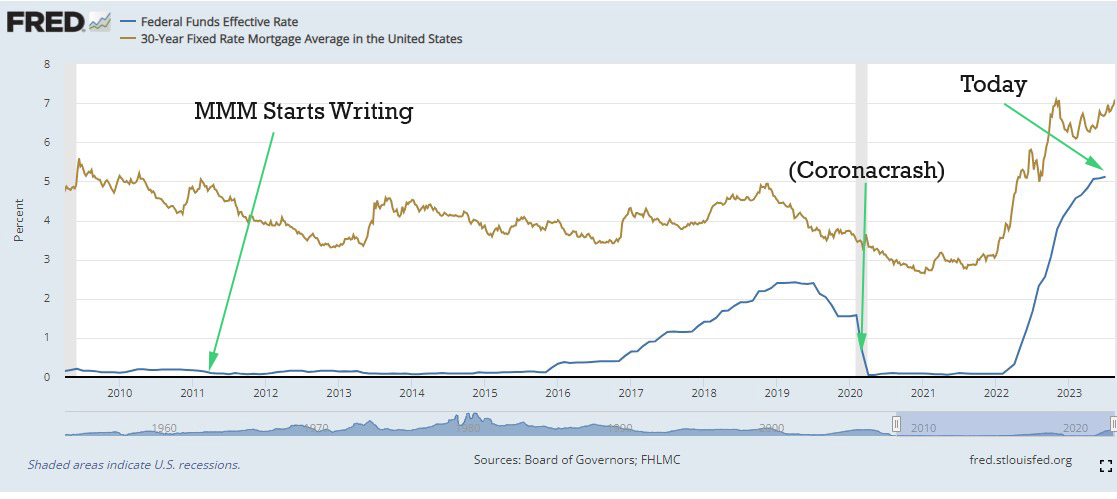
Recognizing the severity of the inflationary pressures, the Federal Reserve, under Chairman Jerome Powell, initiated a series of aggressive interest rate hikes beginning in March 2022. The federal funds rate, which had been held near zero (0-0.25%), was steadily increased in subsequent meetings, reaching a range of 5.25-5.50% by mid-2023. This rapid tightening cycle aimed to cool down an overheated economy by making borrowing more expensive, thereby reducing demand and bringing inflation back down to target levels. This marks one of the fastest and most substantial monetary policy shifts in recent history, effectively reversing more than a decade of accommodative policy.
Economic Ripple Effects: Navigating a New Financial Environment
The swift increase in interest rates has generated widespread economic ripple effects, fundamentally altering the calculus for various stakeholders.
Impact on Borrowing Costs
The most immediate and direct consequence has been the dramatic rise in borrowing costs across the board. Mortgage rates, which hovered around 3% for a 30-year fixed loan in late 2020 and early 2021, soared to over 7.5% by mid-2023. This significant increase has drastically altered housing affordability. For instance, a $400,000 mortgage at 3% would have carried a monthly principal and interest payment of approximately $1,686. The same mortgage at 7.5% would push that payment to around $2,797, representing a staggering 66% increase in monthly costs without any change in the home’s price. This has priced many prospective buyers out of the market and significantly cooled demand.
Similarly, corporate borrowing costs have surged, impacting business investment decisions. Companies face higher expenses for loans, bonds, and venture capital, leading to a scaling back of expansion plans, new factory construction, and hiring initiatives. Consumer credit, including credit card rates and auto loans, has also become more expensive, potentially dampening consumer spending.
Housing Market Dynamics
The housing market, a primary beneficiary of low rates, has experienced a profound slowdown. Higher mortgage rates have reduced buyer demand, leading to a sharp decline in sales volume. Existing homeowners, many of whom locked in historically low mortgage rates (e.g., 3-4%), are now less inclined to sell, creating a "golden handcuffs" effect that limits housing inventory. This dynamic creates a complex situation where demand is suppressed by high rates, but supply is also constrained by existing homeowners’ reluctance to move.

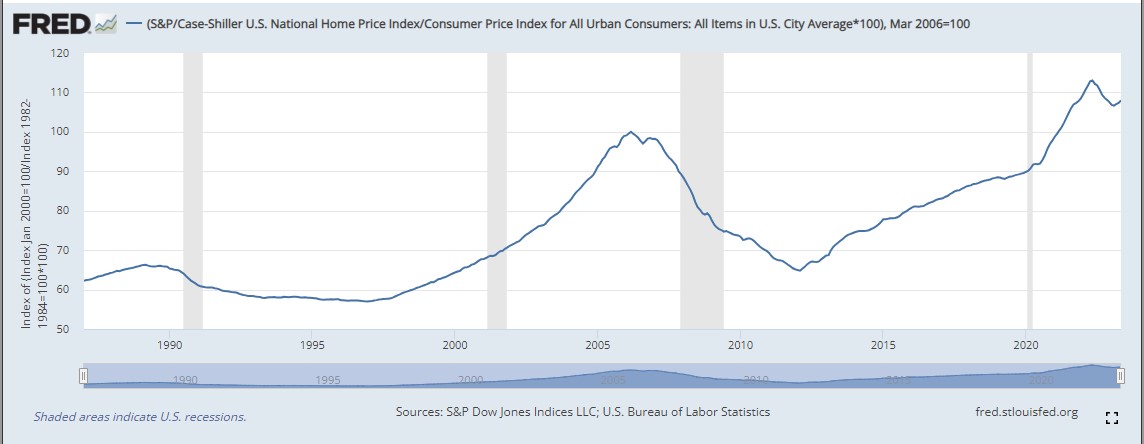
While the expectation is for prices to stabilize or even decline in many areas, the exact trajectory remains uncertain. The national median home price, adjusted for inflation, remains near all-time highs. Economists suggest that any "fall" in prices might manifest as a period of stagnation, where prices remain flat for an extended duration, effectively becoming cheaper relative to inflation and rising incomes over time. The fundamental drivers of housing supply—construction costs, land availability, and local regulatory hurdles—continue to play a critical role in price determination. Building costs, while benefiting from some technological efficiencies, are often offset by increasing red tape and restrictive zoning laws, which limit new construction and exacerbate housing shortages in many desirable urban and suburban areas.
Business Investment and Employment
The tightening monetary policy has prompted many companies to reassess their growth strategies. Major technology firms, which expanded aggressively during the low-rate era, have announced significant layoffs. For example, Facebook (Meta) laid off over 10,000 employees, and Amazon shed 27,000, signaling a broader trend of cost-cutting and efficiency drives across industries. Venture capital funding has also contracted, making it harder for startups to secure capital.
Despite these headwinds, the broader U.S. labor market has demonstrated remarkable resilience. The unemployment rate has remained near 50-year lows, confounding predictions of a significant economic downturn. This robust employment picture, coupled with continued wage growth, indicates an underlying strength in the economy, even as the Fed works to cool inflationary pressures. This phenomenon has led to varied interpretations among economists, with some suggesting a "soft landing" for the economy might still be achievable.

Banking Sector Stability
The rapid increase in interest rates also contributed to a miniature banking crisis in early 2023. Several mid-sized U.S. banks, most notably Silicon Valley Bank, Signature Bank, and First Republic Bank, failed due to a combination of interest rate risk mismanagement and concentrated customer bases. These institutions held large portfolios of long-term bonds purchased during the low-rate environment. As interest rates rose, the market value of these bonds plummeted, creating significant unrealized losses. When customers, primarily tech startups, began withdrawing deposits en masse, these banks faced liquidity crises, triggering fears of broader financial contagion. Swift intervention by the Federal Reserve and other regulatory bodies helped to stabilize the situation, but the episode highlighted the vulnerabilities inherent in a rapidly changing interest rate environment.
Investment Strategies in a High-Rate Environment
For investors, the shift to higher interest rates necessitates a re-evaluation of portfolio strategies, though core principles of long-term investing largely remain unchanged.
Stock Market Volatility
The stock market initially reacted negatively to the prospect of higher rates, as rising borrowing costs can depress corporate earnings and future growth prospects. From its peak in early 2022 to mid-2023, the overall U.S. market (e.g., S&P 500) experienced a decline of approximately 10%. However, financial analysts generally advise against attempting to "time the market" by moving in and out of stocks based on short-term interest rate fluctuations. Historical data consistently demonstrates that the stock market tends to appreciate over the long run, albeit with unpredictable periods of volatility. Market downturns, when stock prices are lower, are often viewed by long-term investors as opportunities to acquire assets at a discount. Maintaining a diversified portfolio and a consistent investment strategy, such as dollar-cost averaging into index funds, remains a widely recommended approach.

Fixed Income’s Resurgence
One notable change is the renewed attractiveness of fixed-income investments. When interest rates were near zero, savings accounts, money market funds, and many bonds offered negligible returns, pushing investors towards riskier assets like stocks for yield. With rates now significantly higher, these "safe" assets are offering compelling returns. High-yield savings accounts are paying upwards of 4.5%, and short-term Treasury bills offer even higher yields. This creates a more balanced investment landscape, where investors can earn substantial, low-risk returns on cash and bonds, providing a viable alternative to equities for a portion of their portfolio. The decision between allocating capital to stocks (which offer potential for higher long-term growth but also greater volatility) versus fixed-income assets (which provide stability and now competitive yields) has become more complex and dependent on individual risk tolerance and financial goals.
The Future Outlook: House Prices and Interest Rate Projections
Forecasting the future trajectory of house prices and interest rates is inherently challenging, as both are influenced by a multitude of economic, social, and policy factors.
Housing Market Trajectory
The future of house prices is a subject of intense debate. While higher interest rates exert downward pressure on demand, persistent housing shortages in many regions, driven by factors such as slow construction rates, restrictive zoning, and increasing population, could provide a floor for prices. Some economists predict a modest correction, perhaps a 10-15% decline from peak levels, while others anticipate a prolonged period of flat prices that, when adjusted for inflation and rising incomes, would make housing effectively more affordable over time. The supply-demand imbalance, exacerbated by regulatory hurdles that make new construction difficult and expensive, suggests that a dramatic collapse in prices similar to 2008 is unlikely in many areas, unless accompanied by a severe economic recession and widespread job losses.
Interest Rate Forecasts
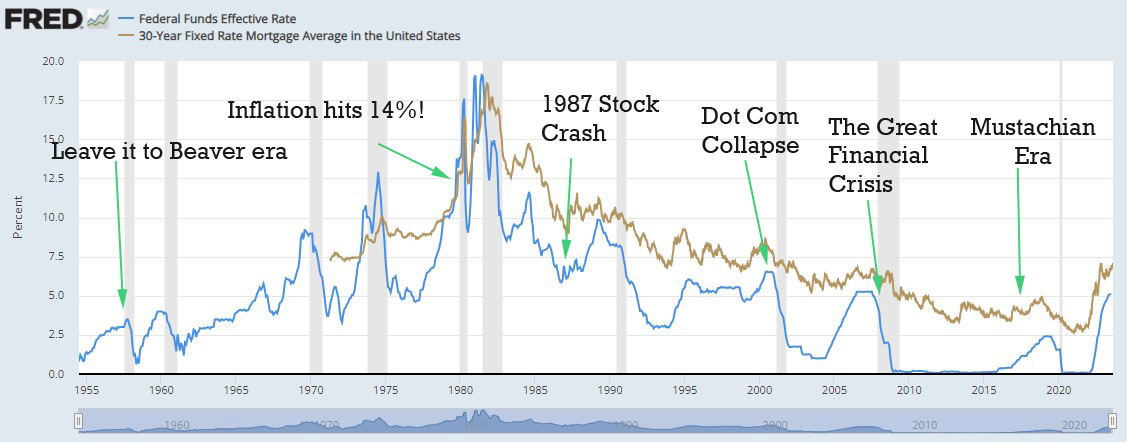
Regarding interest rates, the current "high" rates are, in a broader historical context spanning 70 years, actually closer to the long-term average. The period of near-zero rates was an anomaly. Therefore, rates may not necessarily "go back down" to pre-2022 levels for a considerable time.
However, market participants offer valuable insights into future expectations. The U.S. Treasury Yield Curve, which typically slopes upward (meaning longer-term bonds offer higher yields than shorter-term ones), has recently exhibited an "inverted" shape. In an inverted yield curve, short-term bonds yield more than long-term bonds (e.g., 1-year Treasury at 5.4% vs. 10-year Treasury at 4.05%). This unusual configuration indicates that bond investors collectively anticipate interest rates will fall in the future, often signaling an expectation of an economic slowdown or recession that would prompt the Federal Reserve to cut rates. Historically, an inverted yield curve has been a remarkably accurate predictor of recessions, preceding 10 out of the last 11 U.S. recessions over the past 75 years.
Based on market sentiment and historical indicators, many economists and analysts project that the Federal Reserve may begin to cut interest rates within the next 18-24 months, particularly if inflation shows sustained signs of moderating and the economy experiences a more pronounced slowdown or enters a recession. The Fed’s decisions will remain data-dependent, closely monitoring inflation, employment, and overall economic activity.
Long-Term Financial Resilience: Beyond Market Fluctuations
While the current interest rate environment presents new dynamics, the fundamental principles of sound personal financial management remain paramount. For individuals nearing or in retirement, who are largely finished with significant borrowing, the immediate impact of fluctuating rates on their daily finances may be less direct. However, for those still accumulating wealth, making large purchases, or carrying debt, strategic planning is crucial.
Cultivating a lean and happy lifestyle, focusing on robust savings, and minimizing reliance on debt provide a strong foundation regardless of economic conditions. The ability to accumulate actual savings, rather than solely relying on high income for loan qualification, offers significant advantages. It empowers individuals to seize opportunities, whether it’s a potential real estate acquisition during a market correction or simply navigating unexpected financial challenges without stress. This financial independence allows individuals to be less susceptible to the whims of interest rate changes and market volatility. Even with ample cash, the option to take out a mortgage or other loans remains if the prevailing rates align with personal financial goals.
Ultimately, while interest rates and house prices are significant economic indicators, they are largely outside individual control. Much more impactful are personal choices regarding earning, saving, healthy living, and where one chooses to reside. By establishing robust financial habits and maintaining a long-term perspective, the inevitable fluctuations in interest rates and financial news can be viewed as minor ripples on the surface, rather than overwhelming tides. The emphasis shifts from reacting to external forces to proactively building internal financial resilience.

