
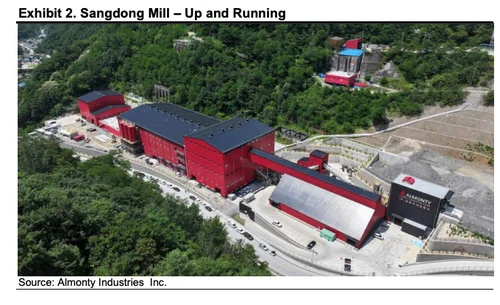
Almonty Industries has strategically transformed from a nascent junior miner into an established tungsten producer, positioning itself as a pivotal pure-play investment against a backdrop of escalating geopolitical tensions, the imperative of Western supply chain resilience, and a surging demand for critical minerals across defense, AI infrastructure, and advanced manufacturing. As global powers, particularly Western governments, intensify their efforts to disentangle from China-dominated supply chains for essential resources, Almonty’s operational mines and the strategic ramp-up of its Sangdong project in South Korea and its Panasqueira mine in Portugal are poised to make it an indispensable supplier to the Western world.
The Genesis of the Tungsten Squeeze: Beijing’s Strategic Leverage
The current upheaval in the global tungsten market found its primary catalyst in February 2025, when Beijing formally tightened export controls on the critical metal. Citing broad national security concerns, China implemented stringent regulations that have severely curtailed the availability of tungsten on the international market. This move, echoing previous Chinese restrictions on rare earth elements, immediately triggered a pronounced squeeze in the physical market, driving global tungsten prices to unprecedented levels, surpassing $3,125 per ton as of Wednesday morning. The restrictions underscore China’s dominant position in the tungsten supply chain, controlling approximately 80% of the world’s production and an even larger share of its processing capacity. This leverage is now being actively deployed as a strategic tool in an increasingly competitive geopolitical landscape.
Tungsten, renowned for its exceptional hardness, high melting point, and density, is an indispensable material across a vast array of industrial and strategic applications. Its role spans from superalloys in aerospace and automotive industries to cutting tools, armor-piercing ammunition, and crucial components in electronics. The sudden reduction in supply from the world’s largest producer has sent shockwaves through industries reliant on this versatile metal, forcing a frantic search for alternative sources.
Western Governments Scramble for Supply Chain Security
The ripple effects of China’s export controls were felt almost immediately across Western strategic sectors. Earlier this year, the United States Defense Logistics Agency (DLA), the federal agency responsible for managing critical stockpiles of strategic materials, initiated inquiries into potential large-scale tungsten purchases. This move, intended to bolster national reserves, paradoxically highlighted the extreme tightness of the market. According to industry commentary circulated by Almonty, the DLA ultimately refrained from proceeding with the massive purchase after industry stakeholders raised significant alarm bells. Experts warned that a government acquisition of such magnitude could further exacerbate supply shortages and send prices spiraling even higher, creating a feedback loop detrimental to private sector stability.
The DLA’s experience underscored a stark reality: much of the tungsten supply available outside China is already locked into long-term contracts, leaving virtually no free supply for strategic government stockpiling. This revelation has intensified the urgency for Western nations to cultivate robust, non-Chinese critical mineral supply chains, a goal that has been articulated through various policy initiatives, including the US CHIPS Act and the Inflation Reduction Act, which aim to incentivize domestic production and secure supply from allied nations.
Japan’s Predicament and the Global Scrap Market
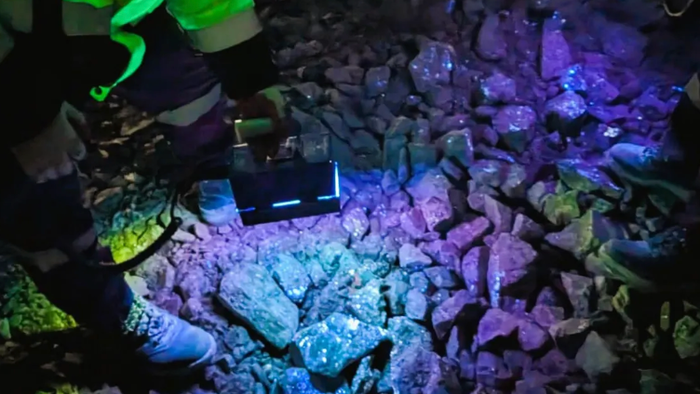
The impact of China’s export restrictions has been particularly acute in Japan, a nation highly dependent on imported raw materials for its advanced manufacturing sector. Reports indicate that shipments of Chinese Ammonium Paratungstate (APT), a crucial white-powder intermediate used to create a wide range of tungsten products, have ceased entirely since the beginning of this year. This abrupt halt has placed immense pressure on Japan’s vital hard-metal and tool manufacturers, many of whom are integral to global automotive, electronics, and precision engineering supply chains.
In response, Japan has sought to mitigate the crisis by increasing its imports of tungsten scrap. However, this compensatory strategy was met with another significant hurdle from the United States. The US Department of Commerce’s Bureau of Industry and Security recently issued a new rule mandating that US suppliers allocate 100% of their tungsten scrap to domestic buyers. This protective measure, aimed at securing domestic supply for US industries, effectively closes off a crucial alternative source for Japanese manufacturers, further highlighting the escalating resource nationalism and the global scramble for critical materials. The move underscores the interconnected yet competitive nature of critical mineral supply chains among allied nations.
Almonty Industries: A Strategic Alternative to China
Amidst this landscape of escalating scarcity and geopolitical maneuvering, Almonty Industries has emerged as a uniquely positioned entity, offering a pure-play investment in ex-China tungsten supplies. The company’s strategic advantage is anchored by two key assets: the Sangdong Mine in South Korea and the Panasqueira Mine in Portugal.
The Sangdong Mine, historically one of the world’s largest tungsten mines outside of China, is rapidly advancing towards full production. Located in a geopolitically stable allied nation, this project is anticipated to become a major, reliable source of non-Chinese tungsten for Western defense manufacturers and critical-mineral supply chains. Its revival and modernization represent a significant step towards diversifying global tungsten supply. The mine’s capacity, once fully operational, is projected to meet a substantial portion of the West’s strategic tungsten requirements, reducing reliance on volatile external sources.
Complementing Sangdong, Almonty also operates the Panasqueira Mine in Portugal, a site with an extraordinary legacy as one of the world’s longest continuously producing tungsten mines. Its established operations provide immediate, albeit limited, non-Chinese supply and underscore Almonty’s proven expertise in tungsten extraction and processing. Together, these assets position Almonty as a cornerstone in the West’s strategic efforts to rebuild its critical mineral independence.
Tungsten’s Multifaceted Strategic Importance: Defense, AI, and Semiconductors

The escalating "great tungsten squeeze" is not merely an economic issue; it has profound implications for national security and technological advancement. The metal’s importance spans several critical sectors:
-
Defense Rearmament Supercycle: Global geopolitical instability, marked by conflicts such as the war in Ukraine and rising tensions in the Indo-Pacific, has triggered an unprecedented defense rearmament supercycle in Western nations. Depleted stockpiles and the urgent need to resupply and modernize military capabilities are driving immense demand for tungsten. It is a vital component in armor-piercing projectiles, tank ammunition, missile systems, and hard alloys for aircraft and naval vessels due to its superior density and strength. Almonty’s ability to provide a secure, non-Chinese supply directly addresses a critical vulnerability in the Western defense-industrial base.
-
AI Infrastructure Boom: A less obvious but equally critical link connects tungsten to the burgeoning Artificial Intelligence (AI) infrastructure boom. The rapid expansion of AI necessitates ever more powerful and complex semiconductor chips. Tungsten hexafluoride (WF6) is an essential precursor gas used in the fabrication of advanced memory chips, particularly in creating microscopic interconnects within the intricate architecture of modern processors. These interconnects are crucial for the speed and efficiency of data transfer within the chip. As global leaders like Samsung, SK Hynix, and other major chipmakers race to meet the escalating demand for AI-specific hardware, the secure supply of WF6, and thus tungsten, becomes a foundational element. Almonty’s role in the tungsten supply chain, therefore, ties it directly to the future of AI and the global technological arms race.
-
Advanced Manufacturing: Beyond defense and AI, tungsten is indispensable for high-performance cutting tools, drilling equipment, and wear-resistant parts used in various heavy industries, including mining, construction, and automotive manufacturing. A disruption in its supply can have cascading effects across the entire industrial ecosystem.
Almonty’s Financial Performance and Strategic Shareholder Value Initiatives
Against this backdrop of heightened demand and supply constraints, Almonty Industries has demonstrated robust financial performance. The company’s existing operations benefited significantly from record tungsten prices during the second quarter. Revenue surged by an impressive 498% year-over-year, reflecting the strong market conditions and the strategic value of its producing assets.
Almonty reported a net income of approximately $182 million. However, it is important to note that the majority of this figure reflected a non-cash accounting gain related to convertible securities, rather than purely operational profit. Nevertheless, the substantial revenue increase underscores the favorable market environment and the operational effectiveness of Almonty’s mines in capitalizing on the current price surge.
In a move signaling confidence in its future prospects and a belief that its market valuation does not fully reflect its underlying asset value, Almonty’s Board of Directors authorized a $300 million stock buyback program at the start of the week. This program allows the company to repurchase up to 5% of its outstanding shares over the next three years.

Lewis Black, CEO of Almonty Industries, articulated the rationale behind this strategic decision in a public statement: "The Board authorized this program because we do not believe today’s share price reflects the underlying value of this Company or the assets behind it." He further emphasized the company’s strategic importance, stating, "Almonty controls one of the largest and highest-grade tungsten deposits outside of China at precisely the moment Western governments and defense manufacturers are rebuilding their critical minerals supply chains around non-Chinese sources." Black concluded, "With Sangdong advancing toward full capacity, we believe our own shares are one of the most attractive investments available to us at current market pricing, and repurchasing them is a direct way to build value for the shareholders who own this business alongside us."
The buyback initiative comes at a time when Almonty’s share price has shown a notable divergence from the soaring global tungsten prices since late April, suggesting that the market may not yet fully appreciate the company’s strategic positioning and future potential amidst the tightening supply environment.
The Broader Geopolitical Landscape: China Decoupling and Strategic Minerals
Almonty’s unfolding narrative is inextricably linked to the broader "China decoupling" theme—a significant geopolitical and economic trend characterized by Western nations seeking to reduce their economic and strategic reliance on China. This trend is widely expected to accelerate, particularly with the potential for future administrations, such as a hypothetical Trump administration, advocating for renewed reindustrialization of the US and further securing critical supply chains.
The underlying strategic imperative driving this decoupling is a proactive effort to mitigate exposure to Chinese supply chain disruptions, especially in the context of a potential future conflict or geopolitical escalation, such as a Chinese invasion of Taiwan. Such an event could severely disrupt global access to strategic minerals, advanced semiconductors, and other materials deemed essential to the Western defense-industrial base and, increasingly, the foundational infrastructure for AI and advanced computing. By securing non-Chinese sources of critical minerals like tungsten, Western powers aim to build resilience, reduce strategic vulnerabilities, and ensure uninterrupted access to materials vital for their economic stability, national security, and technological leadership.
Outlook and Future Implications
The global tungsten market is at a critical inflection point. China’s export controls have fundamentally reshaped supply dynamics, creating an urgent and persistent demand for non-Chinese sources. This shift has not only driven prices to record highs but has also elevated tungsten to a status of strategic national importance for numerous Western countries.
Almonty Industries, with its substantial, high-grade deposits in South Korea and Portugal, is uniquely positioned to capitalize on this tectonic shift. As Sangdong approaches full operational capacity, Almonty is set to become a linchpin in the West’s strategy to secure its critical mineral supply chains, supporting both the burgeoning defense rearmament supercycle and the foundational requirements of the AI revolution. The company’s recent financial performance and strategic share buyback underscore management’s confidence in its long-term value proposition within this evolving geopolitical and economic landscape. The trajectory of Almonty Industries will likely serve as a significant indicator of the broader success of Western efforts to build resilient, independent critical mineral supply chains in the years to come.

