
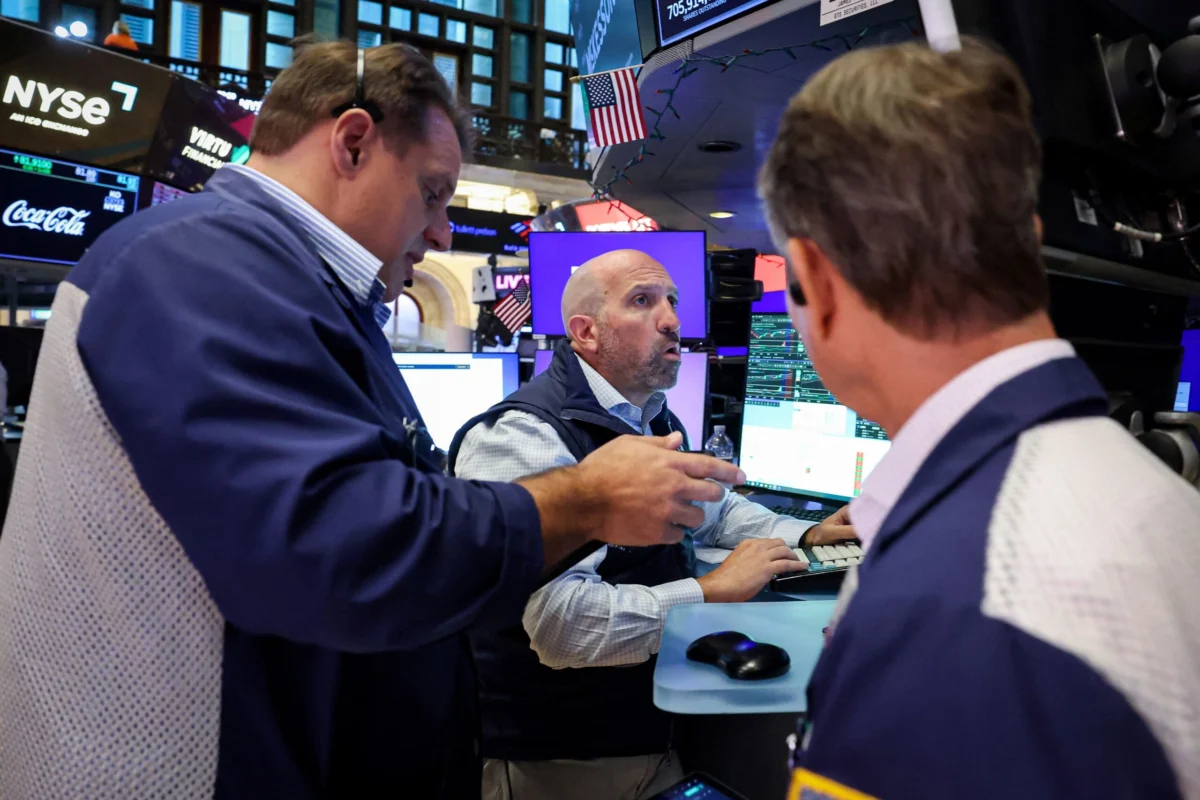
Major U.S. stock indexes experienced a sharp decline on Thursday, July 23, 2026, as investors abruptly shifted their focus to the escalating and potentially protracted conflict in the Middle East. This marked a significant departure from weeks of market resilience, triggered by a confluence of rising oil prices, surging Treasury yields, and alarming reports of maritime attacks in a critical shipping lane. The S&P 500, a bellwether for the broader market, was poised for its steepest one-day drop in a month, reflecting a renewed apprehension over global economic stability and the potential for a return to inflationary pressures.
For twelve consecutive nights leading up to this market pivot, the United States had conducted targeted strikes against Iran, a series of actions that had already begun to push global oil prices and Treasury yields higher. Yet, domestic equities had largely managed to "brush off" these developments, maintaining relatively flat trajectories even as crude oil saw significant upward momentum. This equilibrium shattered on Thursday as Brent Crude futures surged past the critical $100 per barrel threshold, trading at $101.50 at its peak. Concurrently, the benchmark 10-year Treasury yield breached 4.7%, hitting 4.72%, levels not seen since January 2025. Adding to the market’s unease, the 30-year Treasury yield solidly surpassed 5%, trading at 5.03%. These dramatic shifts were immediately preceded by credible reports of attacks on oil tankers off the coast of Saudi Arabia in the Red Sea, a development that directly threatened global energy supply chains and underscored the grave risks of the intensifying regional tensions.
The Breaking Point: When Geopolitics Becomes Unignorable
"These problems became too big to ignore," remarked Steve Sosnick, chief strategist at Interactive Brokers, articulating the sentiment that swept through trading floors. "It’s too hard to ignore $100 oil. It’s too hard to ignore 10-year rates that are above 4.70%. It’s too hard for the stock market to ignore 30-year rates that are solidly above 5%." His comments underscore a pivotal moment where geopolitical risk transcended its previous categorization as a secondary concern, forcing investors to re-evaluate their portfolios based on tangible threats to economic stability. The Dow Jones Industrial Average fell over 500 points, or 1.4%, while the tech-heavy Nasdaq Composite also saw significant losses, dropping 1.8%, reflecting a broad-based retreat from risk assets.
Western Texas Intermediate (WTI) Crude futures mirrored Brent’s ascent, jumping a substantial 6% to settle at $92 per barrel. This latest increase pushes WTI more than 28% higher from its lows below $70 per barrel recorded earlier in July. The S&P 500, which had demonstrated remarkable resilience since mid-March, is now down approximately 2% since the U.S. began its nightly strikes on July 12. The immediate trigger for Thursday’s sharp sell-off—reports of attacks on tankers in the vicinity of Saudi Arabia’s Red Sea coast—highlighted the vulnerability of global energy transit routes, particularly the Strait of Hormuz, a narrow choke point through which approximately 20% of the world’s daily petroleum consumption passes. While specific details of the attacks remain under investigation by international maritime authorities, with some reports suggesting drone or mine attacks, the mere occurrence sent shockwaves through the markets, reigniting fears of severe supply disruptions and sustained higher energy costs.
A Chronology of Conflict and Market Volatility
The current market turmoil is not an isolated event but rather a resurgence of anxieties first felt months ago. The U.S.-Iran conflict initially escalated significantly in March 2026, following a series of regional provocations and counter-actions. This sparked immediate and severe market repercussions. During that period, the S&P 500 plummeted by more than 7.5% at its lowest point, as global oil prices surged by nearly 70%, pushing Brent crude briefly above $100 per barrel for the first time in years. Investors grappled with the specter of "stagflation," a debilitating economic scenario characterized by high inflation, stagnant economic growth, and elevated unemployment. The concern was that soaring energy prices would not only reignite inflationary pressures but also significantly dampen consumer spending due to increased costs at the gas pump and for household utilities, potentially pushing the U.S. economy into a recession.
However, the market’s trajectory shifted dramatically in April and May. A series of diplomatic efforts, including back-channel talks facilitated by neutral parties in Switzerland and "de-escalation announcements" between Washington and Tehran, raised hopes for a peaceful resolution. These efforts reportedly focused on de-confliction mechanisms in key regional hotspots like Lebanon and a roadmap for broader engagement. Concurrently, a "reignited faith in the artificial intelligence trade" provided a powerful domestic catalyst, with leading chipmakers and AI-related stocks experiencing unprecedented rallies. This combination drove the S&P 500 to a ferocious rebound, achieving one of its best quarters in years and recovering most of its March losses. This recovery occurred even as underlying hostilities continued intermittently, with market participants largely betting on a political "off-ramp" that would prevent a full-blown regional war.
The "Trump Off-Ramp" Theory Under Scrutiny
A significant factor underpinning the market’s earlier optimism was the widespread belief, particularly among institutional investors, that President Donald Trump would ultimately find a diplomatic solution to end the conflict, thereby avoiding the severe economic and political consequences of a prolonged war. This sentiment was encapsulated in a note from JPMorgan equity strategists earlier in the month, who advised clients to "use the equity weakness brought on by the Iran conflict to buy into, as the off-ramp and the eventual deal were likely, in our view." They further suggested that "the risks of renewed flareups remain, but we believe one should keep using any dips on the back of adverse geopolitical headlines in order to add."
This strategy, while profitable for a period, now faces a stern test. The latest escalation, particularly the tanker attacks and the sustained U.S. military presence, suggests that a quick diplomatic resolution might be more elusive than previously assumed. The sustained military action by the U.S. (12 consecutive nights of strikes) and the apparent retaliatory or escalatory actions attributed to Iran or its proxies indicate a deepening commitment to confrontation, challenging the narrative of an imminent de-escalation. Analysts at global security firms like Stratfor and Janes Information Group suggest that both sides may be testing each other’s resolve, increasing the risk of miscalculation. The political calculus for President Trump, especially in an election year, would be complex; a prolonged conflict could severely impact his administration’s economic legacy, while an abrupt withdrawal might be perceived as weakness or embolden adversaries. The prospect of renewed instability in the Middle East also draws attention from other global powers, with China and European nations expressing concern over the disruption of trade routes and energy supplies.
Reignited Economic Fears: Stagflation and Fed Action

The resurgence of geopolitical tension has prompted a rigorous re-evaluation of economic risks. Sameer Samana, head of global equities and real assets at Wells Fargo Investment Institute, now believes traders must reconsider the economic fears that dominated in March. He warns that investors should be seriously concerned about both higher inflation and the detrimental impact that persistently elevated gas prices could have on consumer spending and confidence. Samana explicitly stated that the reignited conflict provides a compelling reason to prepare for a potentially larger drawdown in equity markets, suggesting that the initial belief in economic resilience might have been premature.
Further compounding the economic outlook, the market is also pricing in a significantly tighter borrowing environment. Sosnick noted that stocks on Thursday were likely reflecting an increased probability of interest rate hikes by the Federal Reserve. According to CME’s FedWatch tool, the chances of a rate hike by the central bank at its next meeting, scheduled for the following week, are now approaching 38%. Looking further ahead, the odds for a hike at the Fed’s September meeting have surged to over 80%. Just a week prior, these probabilities stood at approximately 12% and 53%, respectively. This dramatic shift indicates that the market now anticipates the Fed will be forced to act more aggressively to combat inflation, which could be exacerbated by rising energy costs, even at the risk of slowing economic growth. A higher interest rate environment directly impacts corporate borrowing costs, consumer credit, and overall economic activity, adding another layer of headwind for equity valuations and potentially raising the cost of government debt.
Historical Context and Divergent Views on Resilience
Back in March, many analysts expressed surprise that the stock market did not react more severely to the initial outbreak of the conflict. This led some, including prominent financial commentators like Jim Cramer, to conclude that the U.S. economy was in a more robust position than in previous decades to absorb energy shocks. This perspective suggested that structural changes, such as increased domestic energy production through fracking, a less energy-intensive economy driven by technology, and improved supply chain diversification, might buffer the impact of rising oil prices.
Michael Tanney, CEO at investment advisory firm Pereon Wealth, continues to hold a cautiously optimistic view, betting on the economy’s underlying resilience. "In the short term, the elevated spike is more meaningful to the headlines than client portfolios," Tanney stated. He draws a crucial distinction, suggesting a price point where the economic damage becomes undeniable: "If we have a sustained price above $120, that’s the breaking point where you’ll see serious trickle-down effects." This threshold would likely trigger more widespread consumer belt-tightening and corporate cost pressures, validating the most severe stagflation fears and potentially forcing a deeper economic contraction.
However, the current geopolitical climate, characterized by direct military action and attacks on shipping, introduces variables that might challenge historical parallels. The 1970s oil shocks, for instance, led to prolonged periods of stagflation, fundamentally altering economic policy and consumer behavior. While the global economy is undoubtedly different today, the core mechanisms through which energy shocks transmit to inflation and growth remain potent. The specter of widespread supply chain disruptions, beyond just oil, due to conflict in a vital region, also adds complexity that was not fully present in earlier energy crises. The International Monetary Fund (IMF) and World Bank have already issued warnings about the potential for geopolitical tensions to derail global growth forecasts, emphasizing the interconnectedness of energy security and economic stability.
Broader Implications and the Path Ahead
The ripple effects of this intensified conflict extend beyond oil prices and bond yields. Global shipping and insurance costs are expected to rise significantly, impacting trade and supply chains worldwide. Companies relying on just-in-time inventory systems face increased risks of delays and higher operational expenses. Countries heavily reliant on Middle Eastern oil, particularly in Asia (e.g., Japan, South Korea, India, China) and Europe, face increased energy insecurity and potential economic slowdowns, forcing them to explore alternative supply routes or strategic reserves. International diplomatic efforts, including those by the United Nations and various European powers, are likely to intensify in an attempt to de-escalate the situation, but their effectiveness remains uncertain given the entrenched positions of the parties involved and the high stakes.
For businesses, the uncertainty poses significant challenges to investment planning and operational stability. Higher input costs and potential demand destruction from inflation could compress profit margins, especially for sectors sensitive to energy prices and consumer discretionary spending, such as transportation, manufacturing, and retail. Consumers, already grappling with elevated living costs and potentially tighter credit conditions, face the prospect of further erosion of their purchasing power.
The Federal Reserve and other central banks globally are now confronted with a difficult policy dilemma: how to manage inflation driven by supply-side shocks without inadvertently pushing their economies into recession. The increased probabilities of Fed rate hikes suggest that controlling inflation has become the paramount concern, even if it entails a tighter financial environment and potential sacrifices in economic growth. This tightening stance, if widely adopted by other central banks, could lead to a synchronized global slowdown.
The situation remains highly fluid, with markets poised for further volatility. The resolution of the conflict, whether through renewed diplomatic efforts or further escalation, will dictate the trajectory of global markets and the world economy in the latter half of 2026 and beyond. Investors, once sanguine about a swift resolution, are now forced to confront the harsh realities of a prolonged geopolitical standoff with potentially profound economic consequences. The coming weeks will be critical in determining whether the current market sell-off is a temporary correction or the harbinger of a more sustained period of economic turbulence.
— CNBC’s Deena Zaidi, Tanaya Macheel, and Ananya Chetia contributed reporting.

