
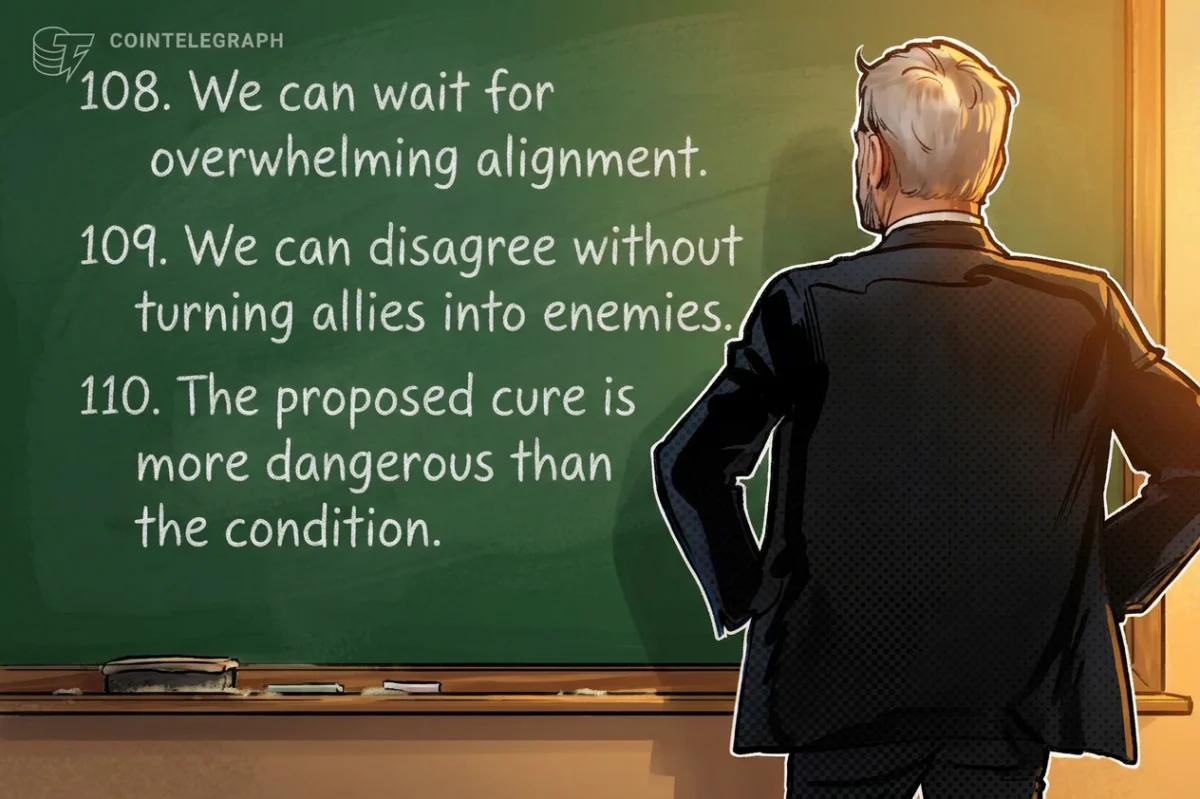
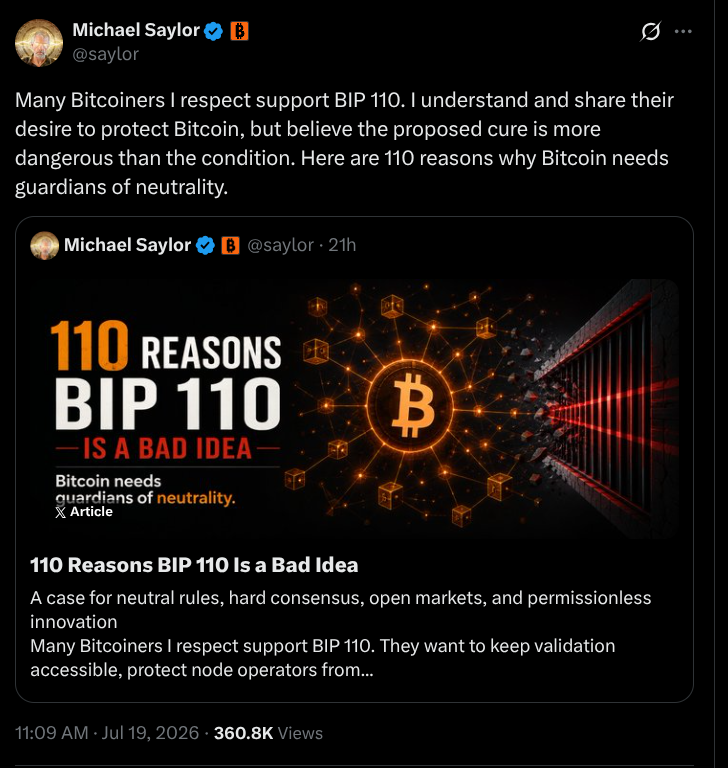
Michael Saylor, the influential Executive Chairman of MicroStrategy and a prominent Bitcoin advocate, has publicly presented a comprehensive argument against Bitcoin Improvement Proposal 110 (BIP-110), a contentious proposal aimed at temporarily limiting non-monetary transactions on the Bitcoin network. In a detailed social media post, Saylor outlined what he termed "110 reasons" why he believes this proposed fork is detrimental to the core principles and future of Bitcoin. His intervention marks a significant moment in the ongoing debate within the Bitcoin development community, drawing parallels to past contentious protocol discussions.
BIP-110, introduced in December 2025, seeks to address concerns about the increasing use of the Bitcoin blockchain for activities beyond its primary function as a peer-to-peer electronic cash system. Specifically, the proposal targets the proliferation of non-fungible token-like "Ordinals" inscriptions and other arbitrary data that proponents argue are congesting the network and driving up transaction fees, potentially undermining Bitcoin’s utility as a scalable payment network. The proposal’s architects envision it as a temporary measure to "cleanse" the network and reaffirm its core purpose.
Saylor’s extensive rebuttal, spanning approximately 3,700 words on the social media platform X.com, articulated his vision for Bitcoin’s evolution based on what he described as "neutral rules, hard consensus, open markets, and permissionless innovation." His position, coming from the leader of the largest corporate holder of Bitcoin (BTC), carries considerable weight and is likely to influence the ongoing discourse among developers, miners, and the broader Bitcoin community.
The Core of the Dispute: Network Utility and Philosophical Divides
At the heart of the BIP-110 debate lies a fundamental disagreement about the optimal use of the Bitcoin blockchain. Proponents of BIP-110, including pseudonymous developer "Dathon Ohm" and Ocean Protocol founder Luke Dashjr, express serious concerns about the network’s long-term health and accessibility. They argue that the increasing volume of data inscriptions, such as Ordinals, leads to "bloat" and higher transaction fees, making Bitcoin less affordable for everyday peer-to-peer transactions. Their objective is to preserve Bitcoin’s primary function as a sound money and a robust payment system, free from what they perceive as "spam" or non-essential data storage.
Saylor, while acknowledging the validity of these concerns, fundamentally disagrees with the proposed solution. He stated, "Many Bitcoiners I respect support BIP 110. They want to keep validation accessible, protect node operators from unwanted costs and content, preserve affordable payments, and keep Bitcoin focused on sound money rather than general-purpose data storage. Those are serious concerns. I share the objectives. I disagree about the remedy." This statement underscores a shared desire to protect Bitcoin’s core principles but a divergence on the means to achieve it. Saylor’s critique emphasizes a commitment to open markets and permissionless innovation, suggesting that any attempt to arbitrarily restrict usage could be counterproductive and philosophically unsound within the Bitcoin ethos.
The debate over BIP-110 has quickly become one of the most significant protocol-level disputes within the Bitcoin development community since the infamous "Blocksize Wars" of 2015-2017. During that period, the community grappled with the question of whether to increase the block size limit to enhance scalability, a debate that ultimately led to hard forks and the creation of Bitcoin Cash. The current discussion around BIP-110, while not directly about block size, touches upon similar themes of network control, censorship resistance, and the definition of Bitcoin’s primary utility.
BIP-110: The Mechanics and the Threshold for Activation
BIP-110 proposes a temporary fork designed to limit the types of data that can be inscribed onto the Bitcoin blockchain. The technical details suggest a mechanism that would effectively disincentivize or prevent the inscription of arbitrary data, thereby reducing network congestion and transaction costs associated with these activities. The goal is to create a more efficient and cost-effective environment for monetary transactions.
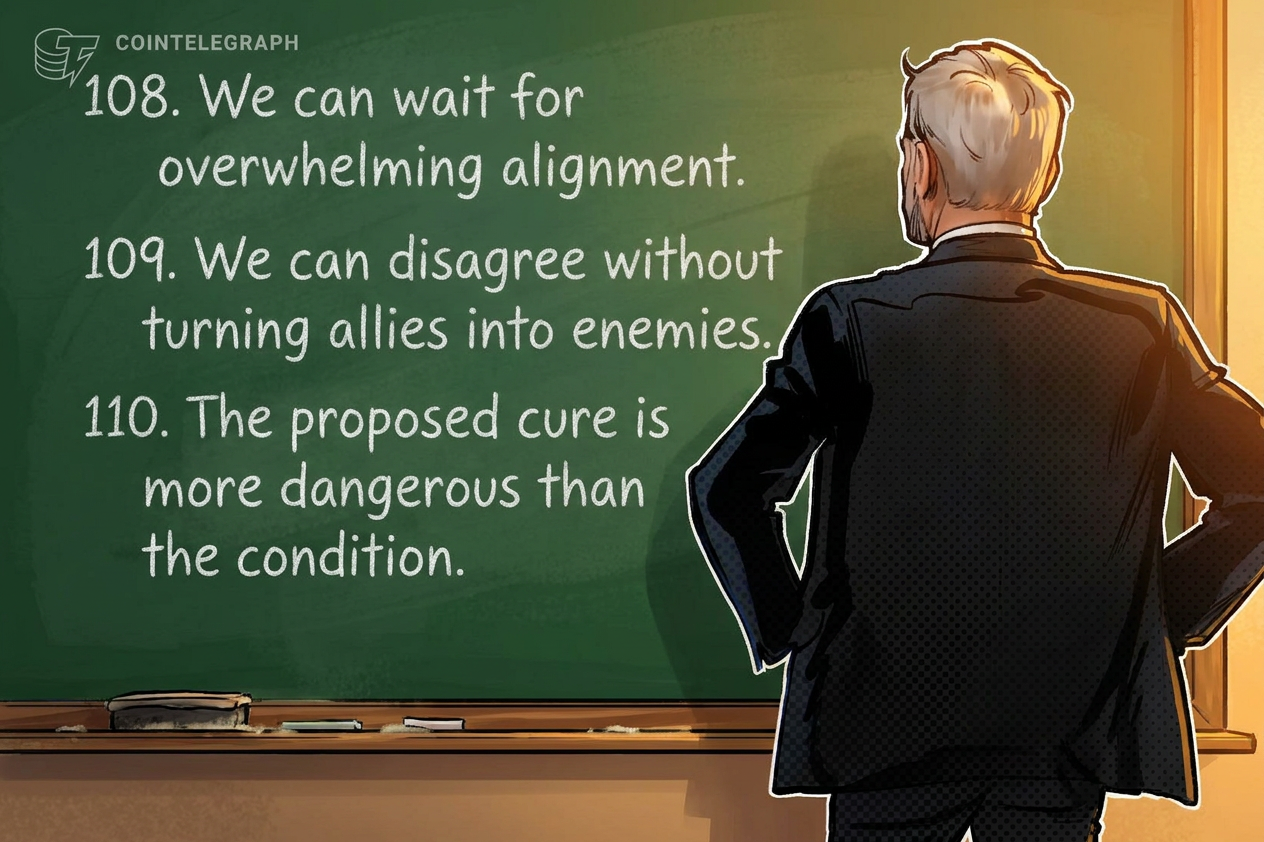
For BIP-110 to be activated, it requires a substantial level of consensus within the network. Specifically, the proposal stipulates that it will only be implemented if 55% of Bitcoin nodes validating blocks signal their support during a designated "period." This period is defined by a specific range of Bitcoin blocks. However, recent data indicates a significant lack of widespread support. In the most recent period analyzed (period 475, spanning blocks 955,584 to 957,599), only 1% of blocks demonstrated support for BIP-110. This low adoption rate suggests that, at present, the proposal faces considerable opposition or indifference from the node-operating community.
The Ordinals Phenomenon: A Catalyst for Debate
The controversy surrounding BIP-110 is intrinsically linked to the rise of Ordinals, a protocol that allows for the inscription of data, such as images and text, onto individual satoshis (the smallest units of Bitcoin). Launched in early 2023, Ordinals gained rapid popularity, leading to a surge in on-chain activity and transaction fees. While some view Ordinals as a novel and innovative use of Bitcoin’s underlying technology, others see it as a strain on the network’s resources, diverting block space away from traditional financial transactions.
The peak of Ordinals activity in August 2023 saw over 400,000 inscriptions daily. However, recent data from Dune Analytics indicates a significant decline, with fewer than 10,000 Ordinals being inscribed on a daily basis over the past month. This downturn in Ordinals activity might influence the urgency or perceived necessity of BIP-110, although the underlying concerns about network utility and cost remain a point of contention.
Voices of Opposition and Support
The discourse surrounding BIP-110 is characterized by a diverse range of opinions from prominent figures in the Bitcoin ecosystem.
Adam Back, CEO of Blockstream and a veteran cryptographer, has been a vocal critic of BIP-110. He has described the proposal as a "quest to police other people," arguing that it runs counter to Bitcoin’s fundamental principles of decentralization and censorship resistance. Back believes that in a decentralized network, no single entity or group should have the power to impose its views on others or restrict legitimate uses of the protocol. He views such restrictions as incompatible with the cypherpunk ethos that underpins Bitcoin’s creation.
On the other side, Luke Dashjr, a prominent Bitcoin developer and founder of Ocean Protocol, along with others who support BIP-110, views the proliferation of Ordinals as a "serious threat" to the network’s integrity and accessibility. They argue that the current trajectory of data inscription is unsustainable and necessitates an "imminent fix." These supporters contend that BIP-110 would not necessarily lead to a chain split, a common fear associated with protocol changes. They also emphasize that the proposed fork is temporary, with a one-year limit, and would not invalidate fee-paying transactions in the long term. Their focus is on safeguarding the network’s primary function and ensuring its continued viability as a monetary system.
Saylor’s "110 Reasons": A Deep Dive into the Argument
Michael Saylor’s extensive critique delves into a multitude of arguments against BIP-110, touching upon economic, philosophical, and technical aspects. While the specific details of all 110 reasons are extensive, the overarching themes revolve around the principles of decentralization, permissionless innovation, and the inherent strength of Bitcoin’s open market dynamics.
One of Saylor’s core arguments likely centers on the idea that Bitcoin, by design, is a neutral protocol. Any attempt to filter or restrict certain types of transactions, even those deemed "non-monetary," introduces a form of gatekeeping that could be expanded or abused in the future. He emphasizes that the market, through its participants, should ultimately decide what constitutes valuable use of the network by paying for it. If certain transactions are economically viable and people are willing to pay the associated fees, then the network should accommodate them.
Furthermore, Saylor’s stance is likely rooted in the belief that restricting innovation stifles Bitcoin’s potential for broader adoption and utility. He has consistently advocated for Bitcoin as a technological innovation with a wide range of applications, and BIP-110 could be seen as a step backward, limiting its evolutionary capacity. His emphasis on "hard consensus" implies that changes to the protocol should be driven by widespread, organic agreement rather than imposed by a segment of the community.
Saylor also highlights the potential economic ramifications of such a fork. He might argue that attempting to artificially suppress transaction volume could lead to unintended consequences, such as driving innovation and capital to alternative blockchain networks or creating new avenues for censorship. His perspective often emphasizes the long-term, store-of-value narrative for Bitcoin, where robust security and unalterable rules are paramount. Introducing a temporary fork, even with good intentions, could set a precedent for future interventions that erode this fundamental trust.
Broader Implications and Future Outlook
The debate over BIP-110 serves as a crucial test for the Bitcoin development community’s ability to navigate complex technical and philosophical challenges. The outcome will likely have significant implications for the future direction of Bitcoin development and its perceived role in the digital economy.
If BIP-110 were to be activated, it could signal a shift towards a more curated and restricted use of the Bitcoin blockchain, potentially prioritizing its function as a monetary network above all else. This could lead to a more stable and predictable fee market for traditional transactions but might also alienate segments of the community interested in exploring new use cases.
Conversely, if BIP-110 fails to gain sufficient support, it would reinforce the existing paradigm of permissionless innovation and open markets, suggesting that the community is largely comfortable with the dynamic evolution of Bitcoin’s utility, driven by market forces and user demand. This outcome would likely preserve the current landscape where various applications, including Ordinals, continue to coexist, with the market dictating transaction fees.
The current low level of node support for BIP-110 suggests that, at present, the broader community is not coalescing around this specific solution. However, the discourse initiated by figures like Michael Saylor and the ongoing engagement from developers and users indicate that the fundamental questions about Bitcoin’s scalability, utility, and governance are far from settled. The historical parallels to the Blocksize Wars serve as a reminder that these debates can be prolonged and have profound consequences for the trajectory of the world’s leading cryptocurrency. The coming months will likely reveal whether BIP-110 gains traction or fades as another chapter in Bitcoin’s ongoing evolution.

